All About Love: New Visions
bell hooks
 English
An ancient Indian guide that treats love and sensual pleasure as subjects worth studying. It covers choosing a partner, patience in early marriage, pleasure for both partners and a frank catalog of practices, reaching well beyond its fame for positions.
1 min 02 sec
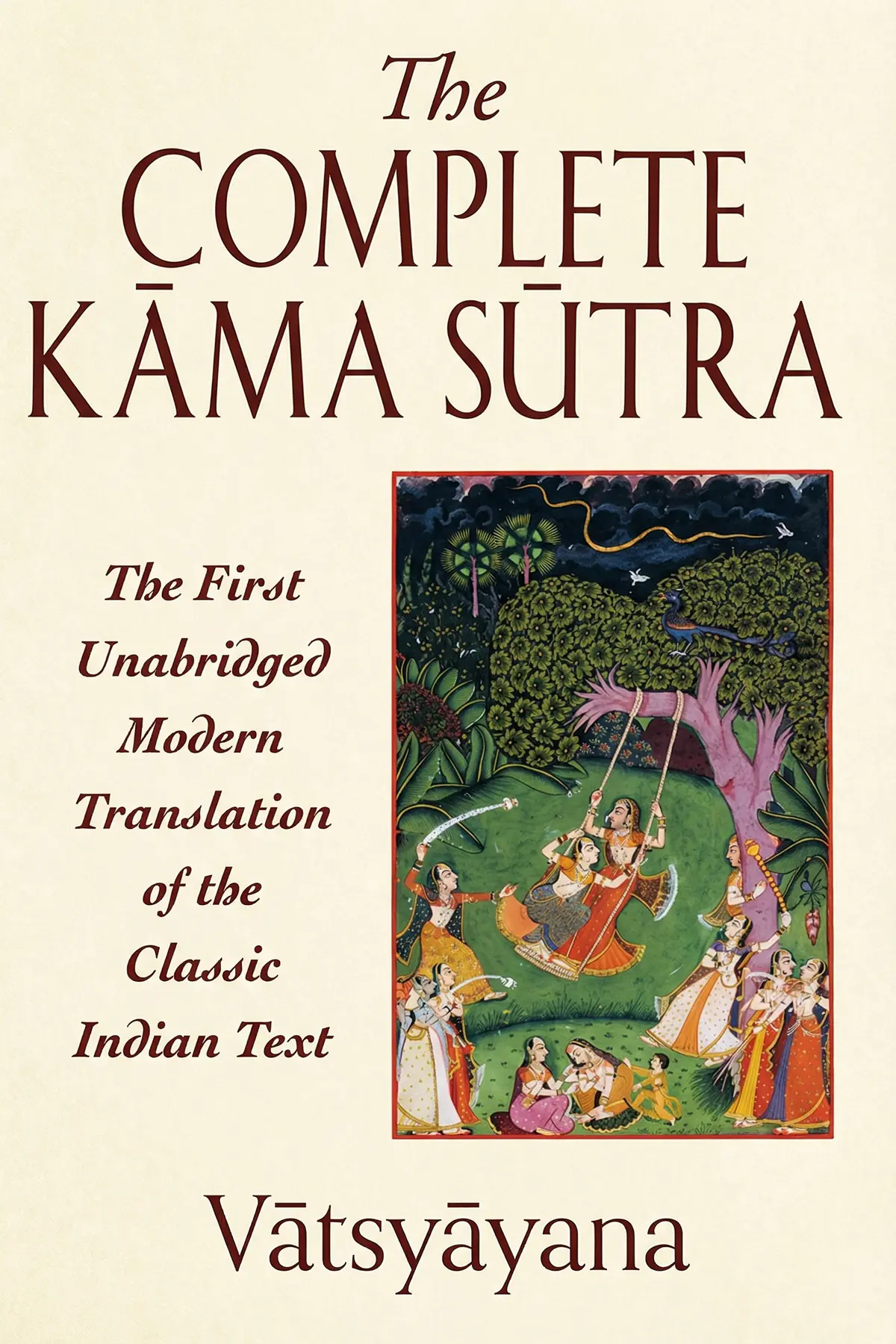
If all you know of the Kama Sutra is its reputation for acrobatic positions, you know the smallest part of it. The positions take up only a few words, and most of the text is about living a sensual life with care. In The Complete Kama Sutra, the classic compiled by Vātsyāyana in India no later than the fourth century, love and pleasure are treated as subjects to be studied, like dance or carpentry, rather than left to instinct.
The argument runs from the choice of a partner to the first nights of marriage, from slow foreplay to frank notes on affairs. Pleasure is one of three aims of life, alongside virtue and wealth, and it rewards patience, self-control and attention to the other person. Much of the book belongs to a vanished world of betel leaf and harems. Yet its counsel on trust, pacing and shared pleasure could have been written last year, and it carries easily into a modern relationship.
2 min 02 sec
Animals feel desire and need no instructions, so why would people? An ancient answer ties sex to food, to self-control and to a childhood curriculum that included carpentry and polishing metal.
1 min 53 sec
An ancient matchmaking guide weighs family, wealth and some surprising physical details. Its most moving advice comes after the wedding, when a married couple is told to hold back a little longer.
1 min 52 sec
Nearly two thousand years ago, one writer named a problem lovers still complain about, and he called it a failure. His remedy involves 64 techniques and an embrace named after two grains.
2 min 04 sec
The section that built the book’s reputation is surprisingly short. It ranges from an easy embrace to moves that require practice, and it points to an unlikely source of fresh ideas.
1 min 54 sec
An ancient manual lists practices it plainly disapproves of, others it allows only in certain places, and some that startle any modern reader. Its tone may be more useful than any single rule.
1 min 56 sec
Affairs, paid companionship and love potions sound like a scandal sheet, yet an ancient author discussed them in an even voice. His frankness reveals which worries belong to his age and which belong to everyone.
1 min 18 sec
Behind the reputation sits a book about how to live. Nearly two thousand years ago, young men and women were expected to study it before marriage, alongside dance, drawing and carpentry, because pleasure was thought too important to leave to instinct. The positions that made it notorious fill only a small corner. Most of the text concerns balance between virtue, wealth and love, the choice of a partner, patience, and an unshocked look at what people actually do.
Some of it should stay in the past. Yet the commentaries added much later, by Yashodhara around the twelfth century and Devadatta Shastri in the twentieth, show readers kept finding it relevant, and what travels well is plain. Give closeness time to grow, the way the newlyweds waited three nights. Start slowly and treat your partner’s pleasure as equal to your own, since Vātsyāyana counted a lover left unsatisfied as a failure. And let sex be a subject you can study and discuss calmly, as his readers did, so that passion stays in proportion with the rest of life.
The image to keep is the end of that first night: two shy people, an arm around a shoulder, talking softly until late.
The Kama Sutra is famous as a manual of acrobatic sex positions, and parts of it do fit that reputation. But the positions fill only a small part of a much larger work. Vātsyāyana compiled it in India no later than the fourth century, drawing on older authors. It is a guide to the whole sensual life: why pleasure matters, how to choose and court a partner, how newlyweds should behave and what partners owe each other. Vātsyāyana sets love beside virtue and wealth as one of life's three aims. He argues that humans, unlike animals, need study and self-control to reach the spiritual side of pleasure. He advises waiting three nights after the wedding and starting slowly so both partners are satisfied. He also records a striking range of practices, from the rice and sesame embrace to affairs and courtesans, mostly without moral judgment. Daniélou's complete translation, published in 1994, includes two later commentaries. Readers get a window onto a vanished world of betel leaf, harems and love potions. They also get a surprising amount of advice on patience and shared pleasure that still applies.
Couples who want a slower, more attentive approach to intimacy and shared pleasure.
Curious readers who know the Kama Sutra only by its reputation and want the full picture.
Students of history and culture interested in daily life, marriage and sexuality in ancient India.
Vātsyāyana lived in India no later than the fourth century CE and compiled the Kama Sutra, drawing on earlier writers, Babhravya among them. According to the text's final lines, he was a religious student in Benares. He asked readers to hold virtue, worldly wealth and pleasure in balance, and warned against using his work only as a means to satisfy desire.
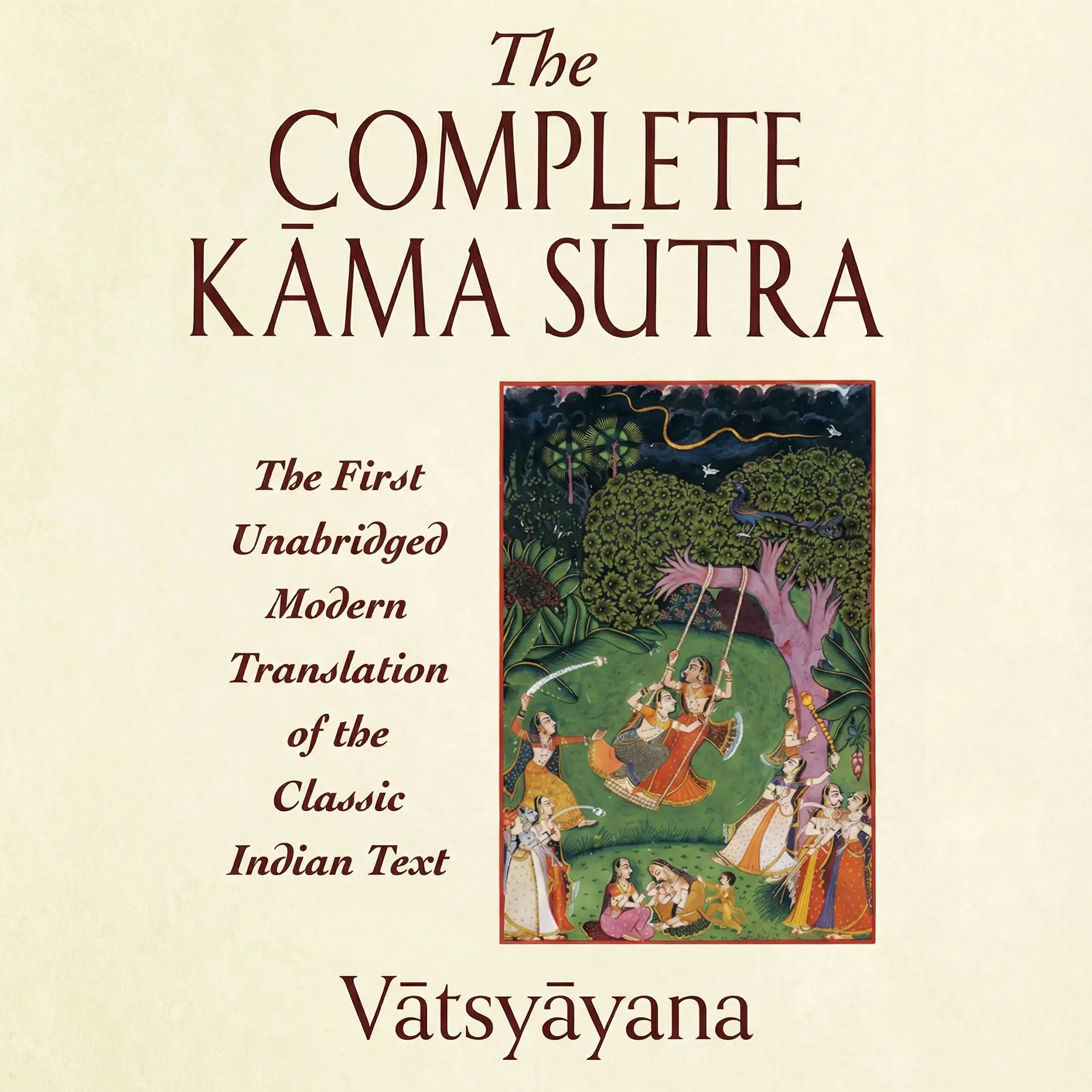
Listeners find this edition of the Kama Sutra to be both educational and captivating, with one listener highlighting its value as a historical study. Furthermore, the caliber of the writing is well-regarded, as one listener points out that it contains Vatsyayana's complete text. On the other hand, listeners hold differing views regarding the volume's length and readability, with some describing it as very long and difficult to read. There is also varied feedback concerning visual elements, as several listeners mention the lack of illustrations. Finally, physical durability draws split opinions; while some listeners report excellent condition, others mention ripped covers.
Finally got around to reading this foundational text, and I must say it functions more as a fascinating history lesson than a mere manual. While modern media portrays this as purely a guide to positions, Vātsyāyana’s complete work covers the entire spectrum of social life, from marriage to the arts. The quality of the translation is impressive, capturing the scholarly tone of ancient India without losing the reader in overly dense jargon. Frankly, the depth of the chapters on courtship and citizenship surprised me. It provides a holistic view of human desire that is deeply rooted in the Hindu dharma and cultural tradition. It’s a sturdy, well-bound volume that deserves a spot on any serious bookshelf for its anthropological value alone. Truly an essential read for those curious about the origins of erotic science.
Show moreThis book is a masterpiece of world literature that has been unfairly maligned by those seeking cheap thrills. Vātsyāyana’s approach to the science of love is clinical, exhaustive, and surprisingly insightful regarding the human psyche. The translation here is top-notch, providing the original sutras alongside traditional commentaries that clarify the more obscure cultural references. I found the section on the 'twining creeper' and other poetic positions to be beautifully written, even without the aid of illustrations. It serves as a brilliant history lesson on the Gupta Empire's sophisticated social hierarchy. Despite its age, the core message about the importance of mutual pleasure and consent remains relevant. This is the complete, unadulterated text, and it is a must-own for anyone interested in the intersection of religion, culture, and sexuality. It arrived in perfect condition and was worth every penny.
Show moreAs someone who appreciates ancient philosophy, I found this edition to be quite a comprehensive look at the three aims of life. The book arrived in excellent condition, though some might find the sheer length of the commentaries a bit overwhelming at times. It’s not just about the bedchamber; there is a wealth of information on the roles of courtesans and even discussions on homosexuality that feel surprisingly ahead of their time. Got to say, the translator did a wonderful job keeping the prose fluid despite the repetitive nature of the original sutras. It isn’t always a quick read, but it offers a poignant window into a culture that viewed pleasure as a virtue rather than a sin. Some sections are a bit thorny regarding gender roles, but that is to be expected from a medieval text.
Show moreThe chapter on the various ways to scratch and bite your partner was a total eye-opener for me. I picked this up thinking it would be a bit of a joke, but the level of detail Vātsyāyana puts into the 'erotic science' is genuinely impressive. This version includes the full text and commentaries, which helps ground the more bizarre suggestions in their proper historical context. Not gonna lie, some of it is pretty weird, especially the parts about using spicy peppers for enhancement. However, the book is a beautiful example of how ancient cultures approached intimacy with both seriousness and a sense of play. It’s a bit long-winded in the middle, and the lack of pictures might bore some, but the writing style is surprisingly engaging for such an old piece of literature.
Show moreIn my experience, people who dismiss this book as pornography haven't actually bothered to read the words on the page. It is a deeply spiritual guide to fulfilling one's desires within the framework of a virtuous life. This specific edition is quite sturdy and the print is clear, which makes navigating the dense verses much easier. I was fascinated by the discussion of marriage and the rights of the wife, which felt more progressive than I anticipated. Sure, some points are demeaning or just plain confusing, but you have to respect the historical scope of the work. It’s a lot more than just a list of animal positions; it’s a philosophy of pleasure. I’d recommend it to anyone who wants to look past the media's interpretation and find the real truth of the text.
Show moreLook, this isn't exactly the spicy bedroom companion most people think they are buying when they click purchase. Most of the content is actually quite repetitive and focuses on strange social rituals or outdated advice for cuckolding enemies. I enjoyed the sections on animal-named positions for their sheer novelty, but many of the instructions are so vague they are practically useless. The truth is, the book feels more like a religious textbook than anything else. I was also disappointed to find a few pages were poorly cut, making it hard to flip through the middle sections. It’s an interesting cultural artifact, but I wouldn't call it a page-turner. It provides a unique perspective on human behavior, even if some of the 'righteous conduct' described feels very demeaning to women in a modern context.
Show moreTo be fair, the ancient recipes for potions involving peacock excrement and red arsenic are more likely to kill you than help your love life. I found myself laughing out loud at some of the more 'batshit crazy' advice that reads like the original version of a spam email. While the book is informative from a historical standpoint, it is incredibly difficult to read for long stretches due to the formatting of the commentaries. Personally, I found the sections on the 'sixty-four arts' to be the most interesting part of the entire volume. It shows that being a good lover in ancient India required being a poet, a musician, and a scholar as well. It’s a mixed bag of profound wisdom and absolute nonsense that probably won't change your life but will definitely entertain you.
Show morePicked this up on a whim after seeing it on a 'must-read' list, but the physical condition was a letdown. My copy arrived with a ripped cover, which was frustrating given that the internal text quality is actually quite decent. The book is an interesting dive into medieval Indian mores, though it is far less erotic than its reputation suggests. Frankly, it’s a bit of a slog to get through the sections on how to properly manage a household or how to deceive a king's daughter. There are no illustrations here, so don't expect a visual guide. It functions well as an anthropology text, but as a manual for modern love, it feels very dated. I appreciated the inclusion of the ancient authorities' commentaries, even if they made the book much longer than it needed to be.
Show moreEver wonder why this is so famous when it contains almost zero actual illustrations to guide the reader? I was expecting something visually engaging, but the edition I received was just wall-to-wall text that felt incredibly long and difficult to parse. To be fair, it’s an important piece of history, but the physical quality of the book left a lot to be desired with its flimsy cover and thin paper. If you are looking for a 'how-to' guide, you will be disappointed because this is more of a dry sociological study. The lack of pictures makes the complex animal-named positions nearly impossible to visualize without outside help. It is definitely not the erotic manual the media makes it out to be, and I found the writing quite antiquated.
Show moreTruth is, I found the actual reading experience quite taxing because the pages were essentially stuck together when it arrived. Beyond the physical flaws, the content itself is a strange mix of antiquated social theories and religious dharma that often feels demeaning to modern women. Many people buy this expecting a manual of positions, but it’s actually a dense religious text that feels more like a guide for medieval Indian elites. Frankly, it obscures more than it reveals about human connection because the tone is so detached and academic. I wanted a poignant explanation of love, but instead, I got a thorny list of rules that felt misleading and difficult to navigate. It is fascinating as a cultural artifact, yet it definitely clouds your judgment if you're looking for practical romance advice.
Show moreIt is an ancient Indian guide to love and sensual pleasure, compiled by Vātsyāyana no later than the fourth century. Sex positions take up only a small part. Most of the text covers why pleasure matters as one of life’s three aims, how to choose and court a partner, how newlyweds should behave, what spouses owe each other, and a nonjudgmental record of practices from affairs to courtesans.
Vātsyāyana grants that animals feel desire by instinct. But he argues that humans also have a spiritual life, and reaching the higher, spiritual side of pleasure takes study and rules. He also warns that unchecked lust leads to ruin. Learning the subject properly, starting in childhood alongside the 64 arts, is how a person keeps passion balanced with virtue and wealth.
After a wedding before a priest’s sacred fire, the couple are advised to wait three nights before making love. Each evening they grow a little closer, so both can relax and build trust. The text describes the couple feeling shy afterward, the husband putting an arm around his wife, and the two talking softly into the night.
Set aside what belongs to its era, such as harems, biting marks and rules about organ size. Keep the advice on pacing: let trust grow before intimacy and begin slowly with kissing and caressing. Vātsyāyana treats leaving a partner unsatisfied as a failure, so aim for both people’s pleasure, and let imagination guide experiment rather than fixed routine.
It suits couples looking for a patient, attentive approach to intimacy, and readers curious about what the famous text actually says. It also rewards anyone interested in ancient Indian life, from the wealthy townsman’s daily routine of baths, betel leaf and evening music to the duties of wives and the social standing of courtesans.
AUDIO SUMMARY AVAILABLE
Get the key ideas from The Complete Kama Sutra by Vātsyāyana, plus 5,000+ more nonfiction titles.