
15 min 09 sec
Available in: English
 ไทย
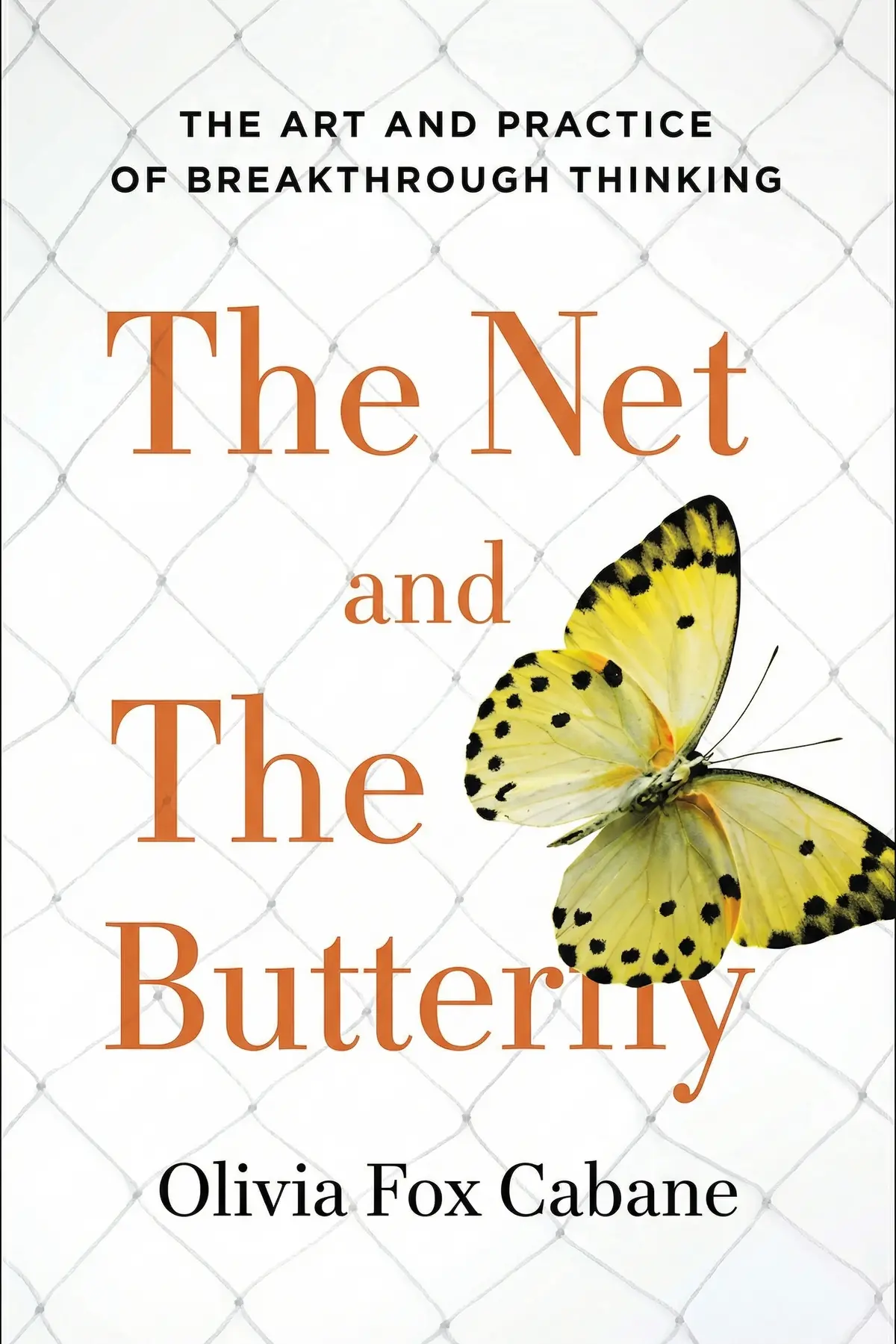
EnglishไทยThe Charisma Myth: How Anyone Can Master the Art and Science of Personal Magnetism
Shows that charisma is a learnable set of behaviors, mostly body language driven by your inner state. It offers practical tools for presence, power, warmth, first impressions and calming the discomfort that blocks them.
Table of Content
1. Introduction
1 min 00 sec
Some people walk into a room and everyone turns toward them, while others leave a meeting feeling they were never really seen. In The Charisma Myth, author and speaker Olivia Fox Cabane argues that this difference is not fixed at birth. Charisma, she says, is a set of behaviors, most of them body language, and anyone can learn them.
The payoff is broad. Cabane reports that charismatic people tend to earn more and feel less stress, that coworkers rate their work highly, and that their followers often give far more than their jobs require. The difficulty is that these signals cannot be faked, because the body reveals what the mind feels. So the real work happens inside: building presence, power and warmth, then clearing away the discomfort that hides them.
Ahead are a way to make a stranger feel heard in five minutes, a style to choose before delivering bad news, and a plan for the meeting where the sun is in your eyes.
2. Stop waiting to be born magnetic
1 min 39 sec
One of the most famous faces of the twentieth century once rode a crowded train without a single person noticing her. What she did when she stepped back onto the street says a lot about where magnetism really comes from.
3. Change your inner state and your body follows
1 min 36 sec
You cannot command every muscle in your face, and other people can tell when you try. Cabane’s way around that problem relies on a strange weakness in how the brain separates fact from fantasy.
4. Win a stranger's trust in five minutes
1 min 37 sec
Almost everyone has felt the sting of talking to someone whose mind was elsewhere. The skill that prevents it sounds simple, yet one study suggests most of us lose it for nearly half of our waking hours.
5. Pair strength with warmth to draw people in
1 min 36 sec
Two brilliant politicians had dinner with the same woman on different nights. Both impressed her, but only one left her feeling something about herself, and that difference decided an election.
6. Choose the charisma style that suits you
1 min 39 sec
A presidential candidate tried to make himself more approachable and ended up losing the people who already liked him. Picking the wrong kind of charisma can hurt more than showing none at all.
7. Make the first meeting set the tone
1 min 41 sec
The author once showed up to a presentation dressed perfectly and was told to change. That small embarrassment points to what people look for first in a stranger, and why their first verdict is so hard to shift.
8. Keep a hot room from costing you the deal
1 min 40 sec
A consultant nearly lost a multimillion-dollar contract, and his expertise had nothing to do with it. The real cause was so ordinary that he never thought to plan for it, and neither do most of us.
9. Quiet the inner critic before your face shows it
1 min 37 sec
Shame drains power, warmth and presence all at once, and it often arrives exactly when you need them. Even a famously calm Buddhist monk admitted to feelings that would surprise his followers.
10. Conclusion
1 min 04 sec
Cabane’s case turns charisma from a trait you either own or lack into something closer to a daily practice. The magnetic people we admire are mostly people whose inner state is right at that moment, and whose bodies broadcast it. Monroe did not become someone else on that New York street. She changed what she was signaling.
That moves the effort to a different place. It belongs in the state behind your gestures, and in clearing away whatever blocks it: a wool suit in summer, a mind already rehearsing failure, a sense of shame that tells you to shrink.
Two habits carry much of the weight. In your next conversation, give the other person five minutes of full attention and notice how differently they respond. Before your next high-stakes moment, picture a past success vividly enough to feel it, then plan for your comfort and decide in advance how you will explain any distraction.
Disraeli’s dinner guest went home believing she was the cleverest person in England. Giving someone that feeling is the charisma anyone can learn.
About this book
What is this book about?
Most people assume charisma is something you either have or lack, a natural glow handed out at birth. Olivia Fox Cabane argues the opposite. Charisma, in her account, is a set of behaviors, most of them body language, that rise and fall from day to day and can be learned by anyone willing to practice. The catch is that these signals are hard to fake. The body reveals what the mind feels, so a forced smile or a distracted glance gives you away. Cabane's method works from the inside out. She explains how to develop presence, how to blend power and warmth, how to pick a charisma style suited to both your personality and the moment, and how to leave a lasting first impression. Her examples range from Marilyn Monroe on the New York subway to a British dinner guest comparing Gladstone and Disraeli. She also tackles what gets in the way: physical discomfort, anxiety, self-criticism and shame. Readers get concrete techniques such as visualization, rewriting reality, and a three-part routine for spotting and fixing discomfort before it costs them a meeting, a sale or a relationship.
Book Information
Who it's for
Professionals feeling overlooked
Professionals who feel overlooked in meetings and want people to listen when they speak.
New managers and leads
New managers and team leads who need to project authority without seeming cold.
Visibly nervous or self-critical
Anyone whose nerves or self-criticism show on their face at job interviews, pitches or first meetings.
About the Author
Olivia Fox Cabane
Olivia Fox Cabane is a Paris-born author and public speaker who treats charisma as a skill that can be learned and breaks it into its basic parts. She previously served as Director of Innovative Leadership for StartX, the student accelerator at Stanford University, and is a cofounder of the KindEarthTech Foundation. She also co-wrote The Net and the Butterfly, on the neuroscience of innovation, and her books have been translated into 32 languages.
Ratings & Reviews
Ratings at a glance
What people think
Listeners find this book to be an outstanding resource that offers useful frameworks for interacting with others along with concrete, actionable advice and illustrations. This well-supported work contains valuable insights and features simple, applicable exercises at the conclusion of every chapter. Listeners value the positive influence it has on their personal lives and its ability to build charisma, with one listener highlighting how it explores the behaviors and psychology underlying personality.
Top reviews
Ella
Ever wonder why some people just command a room the moment they step inside? I used to think it was magic, but Cabane breaks it down into actionable science. As an introvert who usually hides in the corner at networking events, the section on 'Focus Charisma' was a total game-changer for me. It’s not about being the loudest person; it’s about making the person you’re talking to feel like they are the only person in the world. I love that she focuses on the internal mental state rather than just fake body language tricks. Some of the visualization exercises, like the one about imagining everyone with angel wings, felt a little silly at first. However, once I actually tried them before a big presentation, I noticed a massive drop in my anxiety levels. This isn't just fluffy self-help; it's a practical manual for social survival.
Show morePairot
Wow, I didn't expect a book about charisma to spend so much time talking about self-compassion and mental health. Cabane hits on a vital point: you cannot be truly charismatic if you are constantly criticizing yourself in your own head. The way she links internal discomfort to negative body language helped me understand why I sometimes come across as aloof when I'm actually just nervous. I’ve been practicing the 'Presence' exercises—just noticing the sensations in my toes to ground myself—and it’s remarkably effective during high-stakes conversations. Look, it’s not a magic wand that will turn you into Steve Jobs overnight, but it gives you a very clear roadmap. I’ve already recommended this to several colleagues who want to improve their leadership presence without feeling like they are putting on an act.
Show moreBun
After finishing 'The Charisma Myth,' I feel much more equipped to handle social situations that used to drain me completely. The book’s greatest strength is its focus on the three pillars: Presence, Power, and Warmth. It taught me that charisma isn't about being 'on' all the time; it’s about being fully engaged in the moment. I especially loved the section on 'warmth' because it feels the most authentic to who I am. By focusing on being genuinely curious about others, I’ve found that I don't have to worry so much about what I’m going to say next. The author’s tone is encouraging and the structure is logical, making it a very easy read. It’s rare to find a self-help book that is both this practical and this grounded in cognitive science.
Show moreClaire
Finally got around to finishing this, and I have to say the psychological approach Cabane takes is refreshing. Most books on this topic just tell you to smile more or stand up straight, but this one explains that your external behavior is a direct result of your internal state. If you are feeling insecure or distracted, people will pick up on that 'micro-leakage' in your body language no matter how hard you try to mask it. I specifically appreciated the 'responsibility transfer' technique for dealing with social anxiety. It sounds simple, but visualizing yourself handing over your worries to a higher power or the universe really does clear your head. There were a few chapters that felt like they were trying too hard to sell me on the author’s coaching services, but the core content is strong enough to ignore the marketing.
Show moreKasemsan
As someone who struggles with public speaking, I found the practical suggestions in this book to be incredibly grounding. Cabane argues that charisma isn't an innate gift you're born with, but a set of behaviors that can be practiced and mastered over time. The distinction between Authority, Kindness, and Visionary charisma was particularly eye-opening because it showed me I don't have to be a loud, 'alpha' type to be influential. I can lead through warmth and focused attention instead. To be fair, some of the research cited feels a little dated, and the writing style can be a bit dry in the middle sections. However, the exercises at the end of each chapter make it easy to actually apply what you're learning. I’ve started mirroring people more subtly in meetings, and the rapport-building effect is definitely real.
Show moreBoy
This book is a deep dive into the mechanics of human interaction that goes far beyond simple 'people skills.' After hearing a lot of mixed reviews, I decided to give it a shot and was pleasantly surprised by the depth of the psychological insights. The author breaks down the myth that you have to be an extrovert to be charismatic, which is a huge relief for those of us who need a lot of alone time to recharge. I found the 'Authority' charisma tips particularly useful for my new management role, though I have to balance it with 'Kindness' so I don't just come across as cold. My only real gripe is that the book is quite repetitive toward the end, and she could have probably cut fifty pages without losing any value. Still, the core framework is excellent.
Show morePong
The chapter on body language was worth the price of the book alone. I never realized how much my physical posture was signaling my internal stress to everyone around me. Cabane explains that you can't just 'fake it' because our brains are wired to detect tiny inconsistencies between words and movements. To fix this, she gives you specific mental visualizations to change your internal state first. I’ve been using the technique of 'posturing like royalty' before meetings, and it surprisingly changes how I feel and how others react to me. Not gonna lie, some parts of the book are a bit tedious, especially when she goes into the different settings like 'charisma on a boat.' But if you focus on the foundational chapters, there is a wealth of knowledge here.
Show moreOrawan
The Charisma Myth promised to demystify a personality trait I’ve always found elusive, but it didn't quite hit the mark for me. Truth be told, if you have already read 'How to Win Friends and Influence People,' you’ve already encountered about sixty percent of the advice here. Cabane introduces the pillars of Presence, Power, and Warmth, which are solid concepts, yet she spends far too much time on repetitive examples that feel like padding. The second half of the book essentially just lists different scenarios—like talking on the phone or giving a speech—and repeats the same three points over and over. I found some of the 'mind hacks' a bit too whimsical to take seriously in a professional corporate environment. It’s a decent primer for someone who has never thought about their social presence, but seasoned professionals might find it a bit thin.
Show moreSuvannee
Picked this up to help with my interview anxiety and found some of the reframing techniques quite helpful. Instead of obsessing over everything that could go wrong, Cabane suggests thinking about the situation as a challenge your boss or the interviewer believes you can handle. This subtle shift in perspective really helps in projecting confidence rather than desperation. I will say, however, that reading the book is only half the battle. You really need to commit to the weird exercises, like the 'staring into eyes' practice, to see any results. In my experience, it’s hard to do this solo without a coach or a partner to give you feedback on how you’re actually coming across. It’s a solid 3-star read—good info, but definitely requires a lot of self-discipline to implement.
Show moreSuda
Not what I expected after hearing all the hype on various podcasts. Frankly, the entire book felt like one long infomercial for the author’s consulting business. A lot of the 'science' presented feels like pop-psychology buzzwords rather than rigorous research. If you want the condensed version, just go find the Art of Manliness article on this topic and save yourself ten hours of reading. The author spends a lot of time bragging about her high-profile clients, which gets grating after the third chapter. Plus, the advice to imagine people with angel wings is just bizarre and didn't help me in a real-world boardroom setting. It’s basically a modernized, less charming version of Dale Carnegie. If you’re brand new to self-improvement, you might get something out of it, but otherwise, you can safely skip this one.
Show moreQuestions about this book
What is the main idea of The Charisma Myth?
Olivia Fox Cabane argues that charisma is not inborn. It is a set of behaviors, mostly body language, that anyone can learn and practice until they become instinctive. Because the body reveals what the mind feels, the work starts inside: create the right mental state, and charismatic signals such as presence, power and warmth follow naturally. She shows that even famous figures like Steve Jobs built their charisma over years.
What are the four charisma styles in The Charisma Myth?
Cabane describes focus charisma, which shows you are fully present, as with Bill Clinton; visionary charisma, which makes people believe in something, as Steve Jobs did; kindness charisma, which makes others feel seen and accepted, like the Dalai Lama; and authority charisma, which convinces people you can change their lives. She advises choosing by personality, goal and situation, and testing new styles only when little is at stake.
Why does charisma need both power and warmth?
Cabane traces it to survival: people have always looked for others who both want to help them and are able to. Power alone can seem arrogant or cold, and warmth alone can seem overeager or servile. Her example is the 1868 British election, where a dinner guest found Gladstone impressive but felt clever herself after dining with Disraeli, who combined power with presence and warmth and went on to win.
How can I become more charismatic according to Olivia Fox Cabane?
Start with presence: give people your full attention, since Cabane argues five minutes of it can create a real bond. Use visualization to recall a moment of success before important events. Match the dress and language of the people you meet, open with compliments or open-ended questions, and plan for physical comfort. When anxiety or shame appears, dedramatize, destigmatize and neutralize it so it does not show in your body language.
Who should read The Charisma Myth?
It suits people who believe charisma is something others were born with and want proof they can build it. Job seekers, managers, consultants, doctors, students and parents all appear in Cabane’s examples. It is especially useful for anyone whose nerves, distraction or self-criticism undermine how they come across, because much of the book deals with clearing away those obstacles.
Readers also enjoyed






AUDIO SUMMARY AVAILABLE
Listen to The Charisma Myth in 15 minutes
Get the key ideas from The Charisma Myth by Olivia Fox Cabane, plus 5,000+ more nonfiction titles.
- 5,000+ titles
- Listen as much as you want
- 7-day free trial
- Cancel anytime









