
15 min 07 sec
Available in: English
The Borderline Personality Disorder Workbook: An Integrative Program to Understand and Manage Your BPD
A psychologist's practical program for living with borderline personality disorder: how to spot your triggers, calm intense reactions, dispute the beliefs behind them and rebuild steadier relationships, used as support alongside professional therapy.
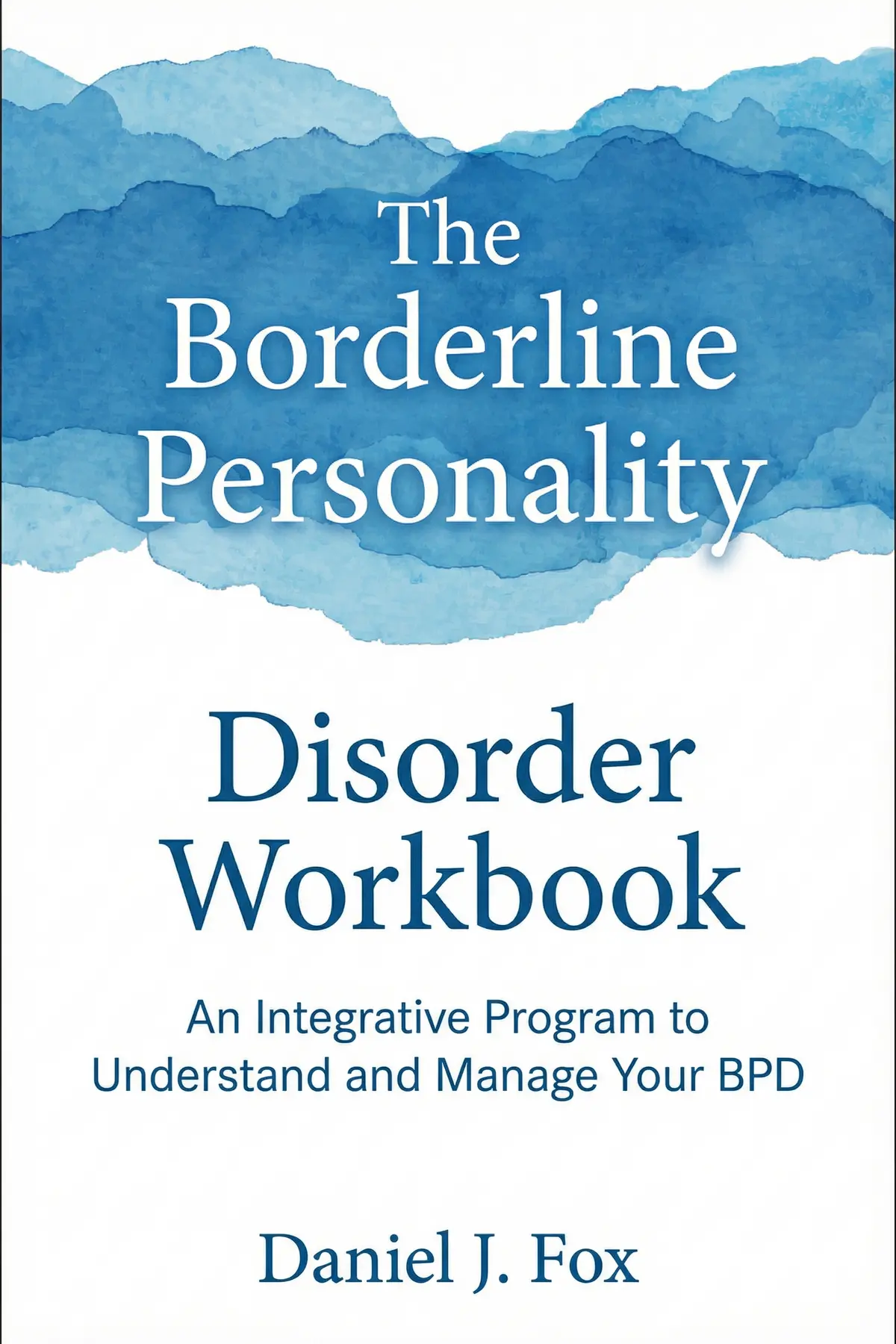
Table of Content
1. Introduction
1 min 03 sec
Living with borderline personality disorder can feel like being steered by emotions that arrive faster than any decision. In The Borderline Personality Disorder Workbook, psychologist Daniel J. Fox argues that this feeling, real as it is, does not have to last, because BPD can become a manageable condition once its patterns are visible. His starting point is a pattern many people with BPD will recognize: reactions that bring relief in the moment and damage over time, like clinging to a partner until the partner leaves.
Fox traces those reactions to beliefs learned early, often in chaotic childhoods, and then gives the reader tools to interrupt them: naming triggers, buying time before reacting, disputing old beliefs and practicing new habits with the people who matter. He is clear that the workbook supports therapy and does not replace it.
What follows is a working map of your own reactions, from the button that gets pressed to the calmer response you can rehearse in advance.
2. Name your symptoms so you can work on them
1 min 54 sec
A slow reply to a text ended a relationship overnight and turned a loved partner into a villain. The way that happened shows why a clear picture of the condition has to come before any attempt to change it.
3. Understand how your past shapes you without defining you
1 min 55 sec
Some children learn that care only arrives when they are visibly in pain. Fox explains how that lesson travels into adult love, and why understanding it is the opposite of being trapped by it.
4. Spot the habits that soothe now and hurt later
1 min 49 sec
A man who calls his girlfriend many times a day is trying to feel safe, and for a while it works. Then the same behavior produces the exact outcome he feared most.
5. Five ways to cool a pressed emotional button
1 min 48 sec
When an old wound gets touched, the reaction often comes before the thought. Fox offers simple ways to win back a few minutes, and one rule about timing: practice them before a triggering situation arises, not during it.
6. Argue back against beliefs that bend reality
1 min 42 sec
A colleague’s kind offer of help was heard as an attack, and a friendly moment turned into an angry one. Fox shows how to catch the belief doing the twisting, and what to put in its place.
7. Relationships that hold steady under strain
2 min 04 sec
BPD tends to sort people into all good or all bad. A simple written audit of your relationships challenges that sorting, and a short sentence of acknowledgment can calm an argument before it grows.
8. Protect your progress from setbacks and bad company
1 min 41 sec
Progress rarely runs in a straight line, and some of the biggest obstacles are people. One woman’s realization about a partner shows how a healthier self-image changes what you are willing to accept.
9. Conclusion
1 min 11 sec
The workbook’s central image is a button: something pressed in the present that answers to the past. Betty’s anger at a kind colleague, Tony’s endless phone calls and Betty’s tolerance of an abusive boyfriend all followed the same logic. A belief learned in childhood produced a reaction that brought relief and then confirmed the belief. Fox’s claim is that this logic can be seen, and once seen, interrupted. BPD has deep roots, but patterns that were learned can be gradually replaced.
The work starts small. Write down one trigger and the reaction it usually produces, then rehearse a different response while you are calm, whether that is a walk around the block or a single sentence that reminds you where the feeling comes from. Take one belief that keeps hurting you, list the facts that contradict it, and put its healthier replacement somewhere you will see it every morning. And the next time someone close to you is upset, try naming their feeling before defending yourself.
Setbacks will come. Each one is another chance to pause before the old reaction takes over, and with support, that pause can grow into a different life.
About this book
What is this book about?
Borderline personality disorder can make life feel run by emotions that arrive before any choice is possible: sudden anger, a desperate fear of being left, relationships that swing from love to rejection. Many people carry the diagnosis without understanding it, and the condition is often misread by others too. Psychologist Daniel J. Fox sets out to make it understandable and then manageable. He explains the symptoms clinicians look for, the mix of genes, brain function and childhood experience behind them, and the loop that keeps them going: a belief learned early drives a behavior that brings quick relief and later confirms the belief. Through the stories of Betty and Tony, he shows that loop in friendships, romance and work. The workbook then gives readers concrete tools: mapping triggers, five ways to create space before reacting, a method for disputing dysfunctional beliefs, a relationship audit, validation and rehearsal through visualization. Fox presents it as a starting point or a companion to therapy, never a replacement, and he expects setbacks along the way.
Book Information
Who it's for
Newly diagnosed with BPD
Adults recently diagnosed with BPD who want to understand their symptoms and start practical work alongside therapy.
Caught in relationship swings
People whose relationships keep swinging between closeness and sudden rupture and who want calmer ways to react.
Families and partners
Family members and partners who want to see how BPD patterns form and what helps.
About the Author
Daniel J. Fox
Daniel J. Fox, PhD, is a licensed psychologist in Texas and the founder of Applied Psychological Services, with offices in Houston and The Woodlands. His clinical work centers on assessing and treating personality disorders in children and adults. He studied psychology at Florida State University, earned his doctorate at West Virginia University, has led seminars in the US and abroad on managing complex clients and preventing burnout, and wrote The Clinician's Guide to the Diagnosis and Treatment of Personality Disorders.
Ratings & Reviews
Ratings at a glance
What people think
Listeners find this workbook educational and straightforward to complete, assisting them in grasping and regulating their BPD. They value the thorough self-help methodology; one listener highlights how it explains brain processes, while another points out how it provides comfort that they aren't isolated. Listeners observe major improvements in their mental well-being, with one listener saying it aided in behavioral management and others reporting feeling significantly more tranquil after using it. The guide earns praise for its compassionate and gentle tone, and listeners believe it is a worthwhile investment.
Top reviews
Om
This workbook feels like a lifeline for anyone currently drowning in the chaos of a BPD diagnosis. Dr. Fox has a way of explaining the complex neurological components behind our triggers that actually makes sense, rather than just listing symptoms in a dry, clinical way. Truth be told, I was terrified this would be another judgmental medical text, but it is incredibly kindhearted and empathetic throughout every single page. The section on the nine official symptoms, especially regarding the frantic fear of abandonment and chronic emptiness, helped me realize I wasn't just being "difficult" or "crazy." It’s worth every penny for the way it breaks down internal push-pull dynamics without making you feel like a lost cause. If you've felt alienated by other psychological literature, this is the resource you need to finally start feeling calmer and more in control of your daily life.
Show moreNannapat
Wow, I never expected a clinical workbook to feel so much like a warm hug from someone who actually understands the BPD brain. Dr. Fox manages to explain how our neurological pathways contribute to those intense emotional outbursts without ever sounding condescending or cold to the reader. Frankly, the suggestion to use positive affirmation post-it notes was a game-changer for my daily routine, even if it sounds simple to an outsider. I've spent years feeling like a "problem patient" in various clinics, but this book reassures you that your symptoms are just survival mechanisms that aren't serving you anymore. The way it treats the fear of abandonment and the "push-pull" of attachment types is both profoundly insightful and incredibly easy to digest. Since starting the exercises, I have noticed a significant shift toward becoming much calmer during stressful social interactions.
Show moreMint
The chapter on unstable relationships was a total eye-opener for me personally, especially the part about the push-pull of attachment styles. It turns out that my tendency to distance myself while simultaneously fearing abandonment is a common internal conflict for those with BPD. This book doesn't just list what's wrong with you; it explains the "why" behind your behavior in a way that feels incredibly validating and grounding. The most important takeaway for me was realizing that I'm not alone in these feelings of chronic emptiness and stress-related paranoia. The visualization exercises are helping me build better habits, even if the progress feels slow and some days are still a struggle. It’s a comprehensive guide that feels like it was written by someone who truly cares about the recovery and well-being of his readers.
Show moreRohan
Direct and informative, this is exactly what I needed to understand my diagnosis better without the stigma usually attached to BPD. The way Dr. Fox explains brain processes and how they link to our intense emotional reactivity is brilliant and very easy to follow. Not gonna lie, I was skeptical about whether a workbook could actually help me become calmer, but the mental health benefits have been undeniable so far. It helps you see your symptoms as manageable challenges rather than permanent character flaws that you're stuck with forever. Each worksheet is designed to provide insight into your own specific patterns, making the whole experience feel tailored to your unique needs. If you’re willing to put in the work and be truthful with yourself about your family history, this book is worth every single cent.
Show moreBua
Ever wonder why your emotions feel like a high-speed roller coaster you can't get off? This workbook offers a clear, heartwarming roadmap for anyone looking to step off that ride and find some genuine internal peace. Dr. Fox avoids all the clinical jargon that usually makes these books feel like homework and instead speaks directly to the reader's experience. The focus on visualization and practicing empowering habits has really helped me manage my stress-related paranoia more effectively than any other book I've tried. Frankly, it’s refreshing to see a professional focus on our strengths and potential for growth rather than just our list of problematic behaviors. It is an essential tool for anyone wanting to build a life worth living while managing the complexities of a personality disorder. Total 5-star resource for the BPD community.
Show morePornthip
Finally got around to finishing the exercises on relationship factors and I have to say, the insights on page 88 really are a highlight of the whole thing. While some parts of the text can feel a bit repetitive or recycled from general therapy handouts, the specific focus on how BPD affects interpersonal dynamics is remarkably sharp and helpful. To be fair, I still think Marsha Linehan’s DBT worksheets are the gold standard for pure skill-building, but Fox provides a much more accessible narrative for the average reader. It’s a solid 4-star resource because it bridges the gap between clinical theory and actual lived experience with a non-judgmental voice. I did find a few sections a bit "copy-pasted" as other reviewers mentioned, but the insight into my fractured self-image was worth the price of admission. It’s much more user-friendly for someone working alone without a therapist present.
Show moreRungrat
After hearing so much hype on social media, I decided to give this a shot to manage my impulsive behaviors and unstable self-image. The workbook is exceptionally comprehensive, covering everything from the genetic roots of the disorder to specific visualization techniques for creating more empowering habits. In my experience, the most valuable part was the breakdown of the nine official symptoms, which helped me identify exactly where my triggers are located. While it's a fantastic self-help tool, I did find some of the worksheets a bit redundant after the first fifty pages or so. Still, the user-friendly layout makes it easy to jump around to the chapters that feel most relevant to your current mental state. It definitely provides a sense of clarity and mental health benefit that is often missing from more academic textbooks on personality disorders. I would recommend this to anyone just starting their healing journey.
Show moreDarius
As someone who has struggled with a fractured sense of self for years, I found these exercises quite helpful for regaining some internal stability. The author takes a very structured approach to managing emotional instability and the turbulent relationships that often define our lives. To be fair, there are no smiley face stickers included—which was a hilarious disappointment mentioned by another reviewer—but the actual content is top-tier. I particularly appreciated the focus on how unhealthy patterns offer short-term relief but cause long-term harm, which is a hard pill to swallow but necessary for growth. Some of the language is a bit repetitive, and the formatting could be cleaner, but the message is solid and supportive. It’s a great companion to therapy, helping you stay focused on your goals between sessions with your actual counselor.
Show moreSupranee
Is it just me, or does this book ask too many questions without giving enough concrete answers? Look, I appreciate that Dr. Fox is trying to be inclusive and non-judgmental, but my mind often goes completely black when I'm asked to reflect on my family history or childhood environment. If I knew how to solve these deep-seated patterns of emotional reactivity on my own, I wouldn't be buying a self-help book in the first place! The information on genetic and environmental factors was interesting, but the actual worksheets felt a bit overwhelming when you're in the middle of a mental health crisis. Not gonna lie, I was hoping for more direct solutions and fewer open-ended prompts that leave me feeling more frustrated than when I started. It’s an okay resource for general knowledge, but it didn't provide the immediate relief I was desperately seeking.
Show moreSuthee
Picked this up during a particularly rough patch where I was questioning everything about my mental health and searching for any kind of answer. While the book is clearly well-written and empathetic, I realized after the first few chapters that I don't actually meet the criteria for BPD. My issues are much more rooted in general anxiety, so most of the specific exercises for things like self-harm or paranoia didn't really apply to my life. Truth is, the book became fairly uninteresting to me once the initial curiosity wore off, though I can see how it would be a godsend for the right person. The research on genetic and environmental factors was a good read, but the rest felt like a bit of a slog for someone without the diagnosis. I'd give it three stars because it's a high-quality resource, just not the right fit for my specific situation.
Show moreQuestions about this book
What is the main idea of The Borderline Personality Disorder Workbook?
Daniel J. Fox argues that BPD, though it can feel like it controls your whole life, can become manageable. Its symptoms often run on beliefs learned in childhood that drive automatic reactions, which bring short-term relief and long-term harm. By recognizing triggers, creating space before reacting, disputing those beliefs and practicing healthier relationship habits, a person can gradually change the pattern, ideally with professional help.
What causes borderline personality disorder according to Daniel J. Fox?
Fox describes a mix of genetic, environmental and neurological factors. Studies suggest a hereditary component in 37 to 60 percent of cases, and brain imaging shows altered activity in areas linked to emotion regulation, impulse control and aggression. A difficult childhood is the most common root, especially homes marked by abuse, abandonment and inconsistent affection, where care came mainly when a child was visibly suffering.
How can I manage BPD triggers in the moment?
Fox offers five strategies: stepping away from the situation, mindfulness such as focusing on the texture of an object, writing everything out in a venting diary, positive self-statements like reminding yourself you are safe, and strategic distraction such as calling a friend or exercising. He stresses rehearsing them in advance by picturing a trigger and practicing a calmer response before a real situation arises.
Does the workbook replace therapy for BPD?
No. Fox recommends that people with BPD seek professional help, and he presents the workbook either as a place to begin or as supplementary material during treatment. Its exercises, from mapping triggers to challenging dysfunctional beliefs and auditing relationships, are meant to complement that work. He also expects setbacks and encourages readers to treat them as chances to use their new skills while keeping their self-acceptance.
Readers also enjoyed

A Liberated Mind: How to Pivot Toward What Matters
Steven C. Hayes


ADHD an A-Z: Figuring It Out Step by Step
Leanne Maskell




AUDIO SUMMARY AVAILABLE
Listen to The Borderline Personality Disorder Workbook in 15 minutes
Get the key ideas from The Borderline Personality Disorder Workbook by Daniel J. Fox, plus 5,000+ more nonfiction titles.
- 5,000+ titles
- Listen as much as you want
- 7-day free trial
- Cancel anytime









