

14 min 54 sec
Available in: English
The Big Disconnect: Protecting Childhood and Family Relationships in the Digital Age
Shows how screens, the child's and the parent's, interfere with empathy, attention, play and trust from infancy to the teenage years, and what parents can do to stay connected and keep children safe online.
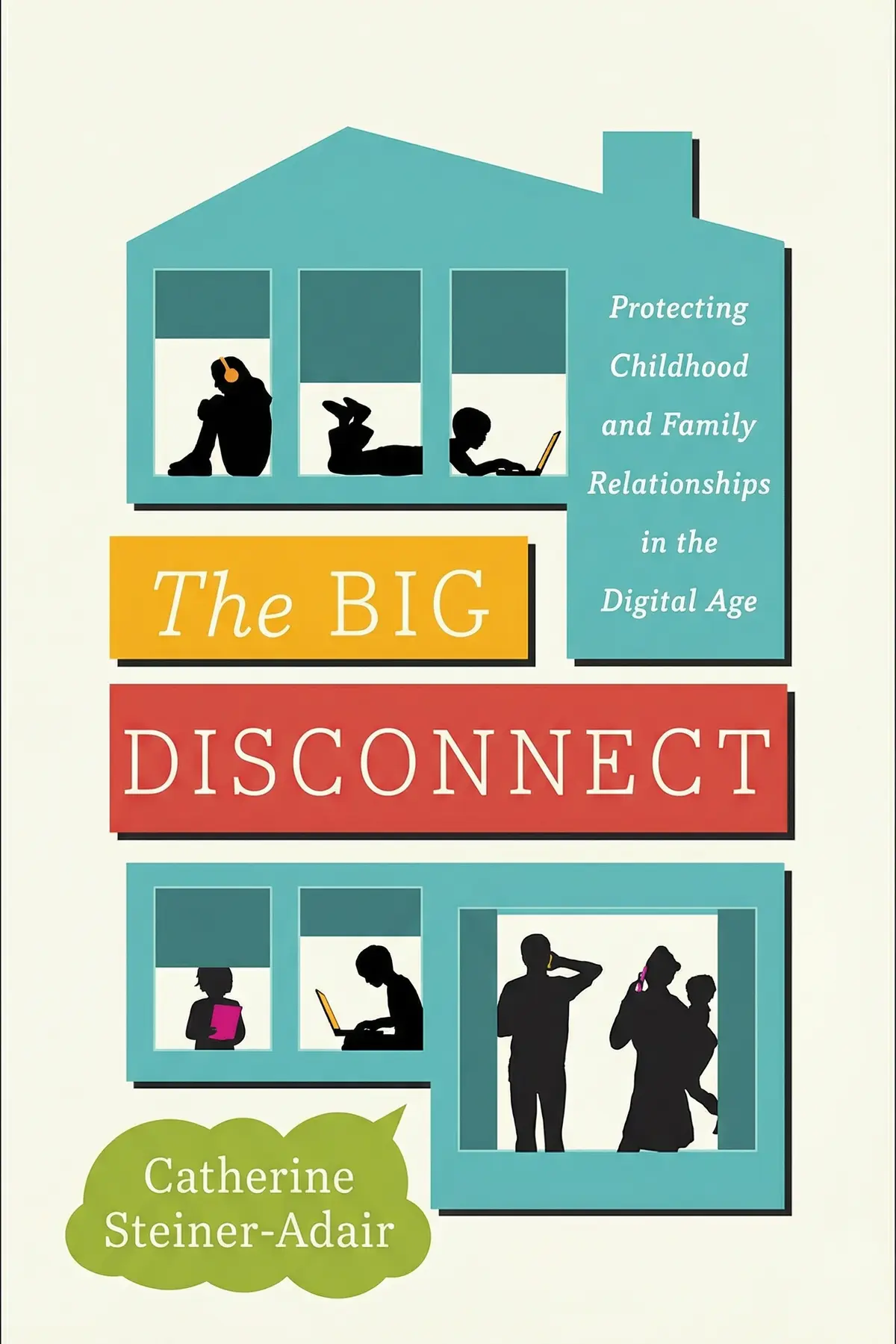
Table of Content
1. Introduction
1 min 02 sec
If your child spends evenings on a tablet while you answer email on your phone, the cost may be higher than a few lost hours. In The Big Disconnect, clinical psychologist Catherine Steiner-Adair points to a review of Stanford studies showing that empathy among US college students fell by 40 percent between 1979 and 2009, with technology named as one of the main causes.
Her argument is that children learn empathy, focus and trust through real contact with people, and that screens, both theirs and ours, keep crowding that contact out. She traces the problem from the first months of life, when a baby studies a parent’s face, through preschool play, to the bullying, invented identities and sexual pressure teenagers meet online. Along the way she shows what parents can actually do at each age, and why the strongest protection is a child who trusts you enough to tell you when something goes wrong.
2. Screens can shrink a child's empathy and focus
1 min 55 sec
Strangers online insult each other with a freedom few would show face to face. A review of three decades of research suggests that habit is spreading, and that children pay the highest price.
3. Give your baby your face, not your screen
1 min 52 sec
A baby can read something in a parent’s expression that the parent never meant to send. The look we wear while scrolling, it turns out, resembles a signal infants have long found alarming.
4. Real play builds the skills school depends on
1 min 49 sec
Preschool teachers report a strange change: children who wait for instructions instead of inventing games. What looks like a small shift in playtime may decide how well they do once real school begins.
5. Shield children from online cruelty and stereotypes
1 min 53 sec
A ten-year-old boy began receiving vicious emails from an address nobody recognized. The sender turned out to be closer than anyone guessed, and the harm lasted far longer than the messages.
6. Prepare preteens for exposure they cannot control
1 min 49 sec
A harmless lunchtime photo of three 11-year-old girls became the talk of their school for the worst reasons. Their story shows how quickly a preteen can lose control of their own image.
7. Protect teen friendships and romance from screen harm
1 min 43 sec
For two years, a teenage girl leaned on her best friends for advice about a stormy relationship. Then one Facebook post revealed a truth that cost her those friendships for good.
8. Become the parent your child will confide in
1 min 39 sec
A father speeding and texting on the school run thinks he is just getting the girls to class on time. He is also teaching them something that will matter the day they face trouble online.
9. Conclusion
1 min 12 sec
The Big Disconnect is finally a book about faces. A baby learns meaning from a parent’s smile, a preschooler learns friendship over a half-built marble run, and a teenager decides whether to speak up by reading a parent’s expression at the worst moment of their week. Steiner-Adair does not cast technology as the enemy; she grants that it gives children real opportunities. The trouble starts when screens replace those faces, on the child’s side or on ours.
That points to a few things worth doing. Keep young children away from digital media until about five, and give them real play with other children instead. Notice your own blank screen face, and put the phone away when a child is looking at you. With older children, ask what their games and feeds teach about bodies, girls and people who look like them, and make yourself the calm adult they can tell when something goes wrong online.
Her simplest advice is to take the whole family somewhere the devices stay behind, camping or a trip to the sea. The connection a child needs most is the one across the table.
About this book
What is this book about?
Phones and tablets now sit at the center of family life, and most parents sense that something is off without knowing what. Clinical psychologist Catherine Steiner-Adair argues that the real cost of the digital age falls on the human contact children need to grow: the faces, play and conversations through which they learn empathy, concentration and trust. She follows the problem stage by stage. Babies need a parent's responsive face, not a blank one bent over a screen. Preschoolers need messy, shared play with other children, not games that hand them instructions. Older children need protection from cruel messages and from media that teaches them stereotypes about bodies, girls and race. Teenagers face public humiliation, early sexual content, invented online identities and relationships stripped of empathy. Her answer is not panic or total control. She recommends keeping young children away from digital media until about five, and asks parents to earn the kind of trust that makes a frightened child come to them. That means following the rules you set and reacting calmly when bad news arrives. Readers get a clear picture of what screens displace at each age and practical ways to stay the adult their children confide in.
Book Information
Who it's for
Baby and toddler parents
Parents of babies and toddlers who wonder how much screen time is too much, including their own.
Preteen and teen parents
Parents of preteens and teenagers worried about cyberbullying, sexual content and secrets kept from them.
Educators and school counselors
Teachers and school counselors who see the effects of screens on play, focus and friendship.
About the Author
Catherine Steiner-Adair
Catherine Steiner-Adair is a clinical psychologist with a private practice in Massachusetts. She consults for schools and is affiliated with Harvard Medical School and McLean Hospital. She also speaks to teachers, health professionals, parent-teacher associations, religious groups and nonprofits, which gives her a wide view of how families and schools are dealing with children's lives online.
Ratings & Reviews
Ratings at a glance
What people think
Listeners find this title a mandatory resource for raising children in our tech-heavy era, blending high-quality research and scientific findings with real-world case studies. They view it as vital material for parents across all stages and value the practical guidance, with one listener mentioning that it offers concrete strategies for families. The work earns praise for its eye-opening information and the depth of its dialogue, as one review points out its effectiveness in cultivating invaluable conversation skills in kids. Opinions are divided, however, regarding the book's impact on family bonding.
Top reviews
Narong
Finally got around to reading this because I’ve been struggling with my own screen time habits around my kids. The anecdote about the seven-year-old girl who feels lonely because her parents are always on their phones hit me like a ton of bricks. Steiner-Adair isn't just wagging her finger; she's showing us the neurological stakes. In my experience, the book shines when it focuses on how we, as parents, can model better behavior to foster empathy in our children. Truth be told, I was worried it would be too anti-tech, but it’s actually more about being intentional. I’ve already started leaving my phone in the drawer during dinner, and the difference in our conversation quality is palpable. Highly recommend for anyone feeling the silvery shine of gadgets taking over their living room.
Show moreAna
Wow, this was exactly the wake-up call I needed to re-evaluate our family’s relationship with the digital world. Steiner-Adair provides a treasure trove of information regarding how tech affects developmental years, particularly concerning empathy and social cues. The chapter on teens was graphic and difficult to read, but it’s a necessary look at the dangers of unchecked internet access. Gotta say, I've already implemented the no phones at breakfast rule and our mornings are significantly calmer. It isn't just about banning devices; it's about being there for our kids when they need us most. This book is a must-read for any parent who feels a disconnect growing between them and their children. It’s enlightened, well-researched, and ultimately very hopeful.
Show moreAnchalee
The chapter on teens and sexting was incredibly eye-opening and provided a much-needed reality check for parents of older kids. Steiner-Adair doesn't hold back on the graphic reality of what kids are exposed to online, which is frightening but essential to know. Truth is, we often assume our kids are safe just because they're in the next room, but the internet brings the whole world into their bed. I loved the emphasis on humanizing our children through consistent engagement and active listening. After reading this, my husband and I have completely redesigned our home's tech boundaries. It has transformed our evening routine into something much more connected and meaningful. This is a vital resource for the modern parent.
Show moreGame
Steiner-Adair provides a much-needed framework for the digital era that goes beyond simple yes or no screen time rules. The book is brimming with insights into how we can nurture invaluable conversation skills in an age of constant distraction. Actually, the most surprising thing for me was learning about how the brain prunes social connections if they aren't used. We always think of tech as an addition, but she shows how it can also be a subtraction of essential human experiences. The family bonding aspect of her advice is incredibly practical, offering scripts and strategies that feel natural rather than forced. It’s a deep dive into the psychology of connection that every parent, teacher, and caregiver should have on their shelf.
Show moreDuang
As a mother of two toddlers, I found the section on neural pruning and empathy development to be both fascinating and terrifying. The idea that we are literally wired for connection through face-to-face interaction is a powerful reminder to put the iPad away. Personally, I appreciated how the author didn't just blame the kids, but instead turned the mirror on the parents’ own distracted behaviors. Not gonna lie, some of the case studies felt a bit extreme and catered to a very specific, wealthy demographic. Despite that, the practical advice on creating tech-free zones is something every modern family can benefit from immediately. It’s a dense read, but the insights into how texting replaces real emotional growth are worth the effort.
Show moreChamlong
Is tech actually ruining our kids' ability to feel empathy? That’s the question Steiner-Adair tackles with a mix of clinical expertise and real-world case studies. While I found her good old days nostalgia a bit grating, the core message about the importance of face-to-face communication is undeniable. The book explains how neural networks for empathy are built through repeated interaction, and how screens can interrupt that vital process. Frankly, it made me rethink how often I check my email while my daughter is trying to tell me about her day. It’s a thick book with a lot of academic language, but the sections on tweens and the hookup culture are particularly eye-opening. Definitely worth a read, even if you don't agree with every single conclusion.
Show moreKiattisak
Picked this up because I've been feeling guilty about my own phone use, and it certainly validated those feelings in a big way. The author’s focus on parental behavior as the primary driver of family disconnect is what sets this apart from other screen time books. In my experience, most parenting guides just tell you what to take away from your kids, but this one tells you what to change about yourself. The case studies are heartbreaking, specifically the quotes from children who feel like they come second to a smartphone. It’s a bit repetitive in the middle, and she definitely skews toward the anti-tech side of the spectrum. Still, the actionable scripts for talking to your kids about online safety are worth the price alone.
Show morePla
The first half of this book is a bit of a slog, filled with the saddest stories ever about preschoolers and their online lives. Look, I get it; we are all too plugged in, but the hyperbole is a bit much to handle for 300 pages. To be fair, if you can make it past the initial alarmist tone, Chapter 8 offers some genuinely actionable steps for reclaiming family time. I found the discussion on gorenography and the lack of empathy in digital communication to be the most compelling parts of her argument. It’s a mixed bag of great research and outdated Luddite sentiments. If you’re already a cautious parent, this might just stress you out more than it helps. I’d suggest skimming the first half.
Show moreLevi
Not what I expected from a Harvard-trained psychologist, as it felt less like a scientific study and more like a collection of pearl-clutching anecdotes. Frankly, Steiner-Adair comes across as incredibly nostalgic for a golden age of parenting that probably never existed for most people. While the warnings about cyberbullying and sexting are valid, the tone is so alarmist that it’s hard to take the advice seriously at times. She seems shocked that a seven-year-old knows how to download an app, which makes me wonder if she’s spent any time with actual children lately. To be fair, there are some decent tips in the final chapters about setting boundaries. However, the first two hundred pages are a repetitive slog of horror stories that feel designed to trigger parental guilt rather than offer solutions.
Show moreSakura
Look, I wanted to like this, but Steiner-Adair is just so out of touch with how modern families actually function. The entire premise seems to be that if you aren't living in a 1950s nuclear family bubble, you're destroying your child's brain. Not only is the book lacking in hard data, but it relies almost entirely on annecdata from her private practice. I found her tone toward parents who use technology as a tool to be incredibly condescending and elitist. Most of us are just trying to get through a flight or a grocery run, not neglecting our children’s souls. If you enjoy feeling guilty for letting your kid watch a movie, then by all means, buy this book. Otherwise, just use some common sense and skip the expensive therapy session in print.
Show moreQuestions about this book
What is The Big Disconnect by Catherine Steiner-Adair about?
It examines how digital media affects children and family life from infancy to the teenage years. Steiner-Adair argues that children develop empathy, focus and trust through real faces and real play, and that screens, both the child’s and the parent’s, crowd that contact out. She covers babies, preschoolers, preteens and teenagers, and closes with how parents can earn the trust that makes children bring them their online problems.
At what age does The Big Disconnect suggest children start using digital media?
Steiner-Adair argues that kids do better when they stay away from digital media until at least the age of five. Before then, she says, they should spend their time socializing and playing so they build the emotional skills they need. Educational shows give toddlers visual stimulation but do not activate all the brain areas needed for speaking and reading, the way a parent’s engaged face does.
How does a parent's phone use affect a baby?
Babies learn through mirroring, copying a parent’s smiles and expressions. Patricia Kuhl of the University of Washington found that babies are very distressed by a parent’s blank, emotionless face, which is the face people wear while looking at a screen. Steiner-Adair warns that babies who see it often grow up in an emotionally insecure environment, so she urges parents to put devices away during time with infants.
How can parents get children to tell them about problems online?
Steiner-Adair says children confide only in parents they can rely on. That means following the rules you set, unlike the father she describes who speeds and texts while driving his daughters. It also means not overreacting or taking over when a child shares something, since fear of anger or punishment keeps children silent about bullying, pornography or stalkers. Her advice is to be trustworthy, calm and approachable.
What practical advice does The Big Disconnect give families?
Keep young children off digital media until about five and favor real play with other children. Watch what games and media teach children about weight, beauty, gender and race. Talk with preteens about photos, privacy and adult content. Model the habits you want, and react calmly when children bring you problems. The author also recommends regular breaks from technology, such as camping or a trip to the sea with devices left at home.
Readers also enjoyed









AUDIO SUMMARY AVAILABLE
Listen to The Big Disconnect in 15 minutes
Get the key ideas from The Big Disconnect by Catherine Steiner-Adair, plus 5,000+ more nonfiction titles.
- 5,000+ titles
- Listen as much as you want
- 7-day free trial
- Cancel anytime









