

13 min 42 sec
Available in: English
 ไทย
EnglishไทยThe Best Minds: A Story of Friendship, Madness, and the Tragedy of Good Intentions
A memoir of a childhood friend whose brilliance carried him through Yale Law School despite schizophrenia, and whose care ran out. It shows how admiration, freedom and goodwill failed to protect him.
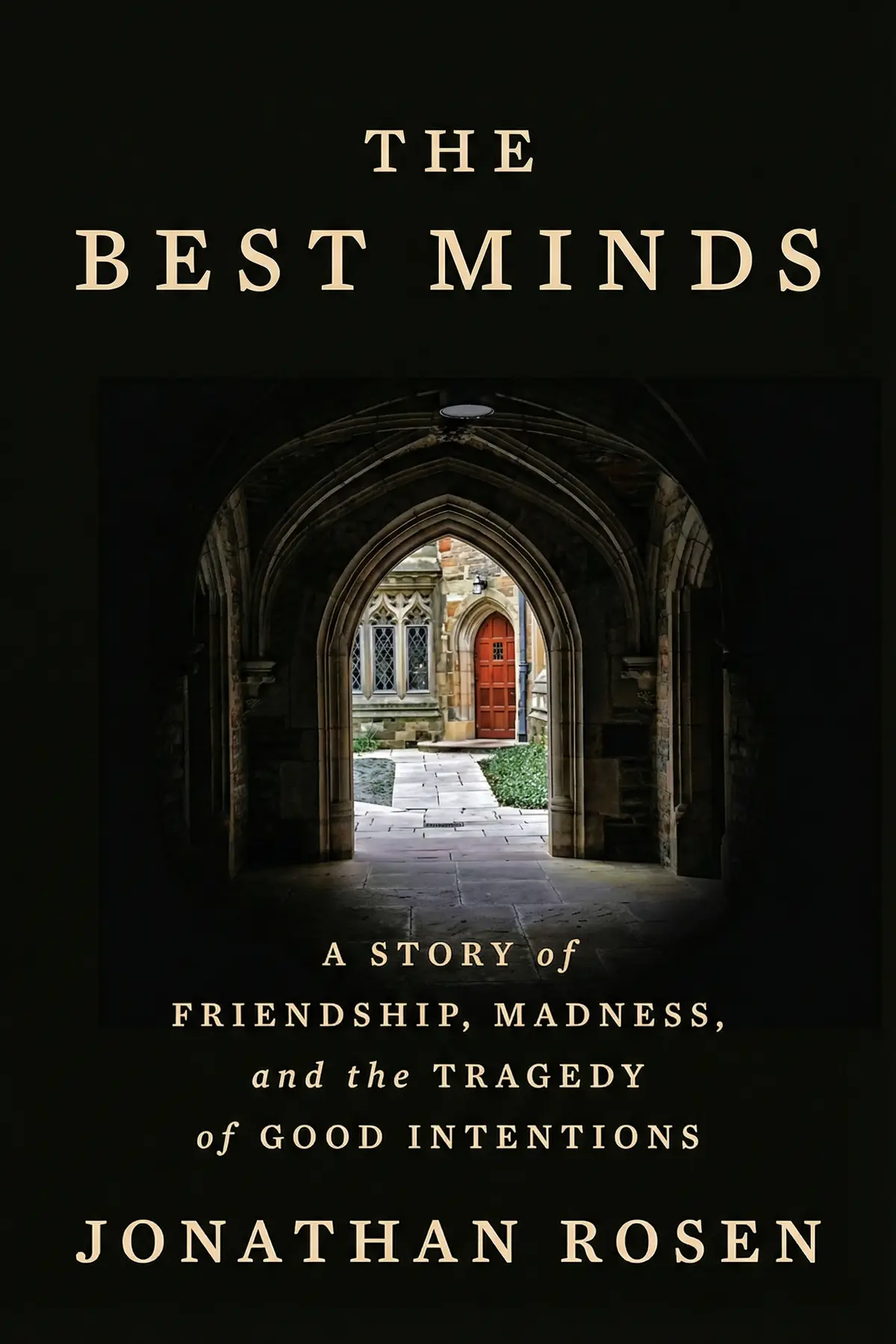
Table of Content
1. Introduction
1 min 01 sec
Most of us assume a brilliant mind is a sturdy one, and that talent plus loyal friends can carry anyone through a crisis. In The Best Minds, writer and editor Jonathan Rosen tells the story of his childhood friend Michael Laudor, and it shows how wrong both assumptions can be. Michael graduated from Yale Law School with schizophrenia and became national news for it. A few years later he was national news again, for stabbing his pregnant girlfriend to death while psychotic.
Rosen’s book is a memoir of friendship, and it is also an argument. The people and ideas around Michael meant well, from a doctrine that emptied psychiatric hospitals to a public hungry for a triumph story. Together, those good intentions bet on his intellect instead of his treatment, until help came too late. Following Michael from the suburbs to a locked forensic ward teaches you to read the signals that someone is slipping, and to tell admiration apart from care.
2. See how early brilliance can hide real fragility
1 min 56 sec
Two bookish boys in a leafy suburb seemed set for great things, and one of them looked unbreakable. A small newspaper election hinted at how little his confidence could actually hold.
3. Notice the first signs of a mental break
1 min 53 sec
A star graduate walked away from an elite consulting job convinced his old firm was still watching him. The people around him saw charm first, and that turned out to be the problem.
4. Leaving hospital is where the real danger begins
1 min 57 sec
After eight months on a locked ward, Michael was free again. What waited for him outside was supposed to be better than an institution. Rosen asks what it actually offered.
5. Learn what loving support can and cannot do
1 min 56 sec
A dean, a circle of professors and a devoted girlfriend carried Michael to an honors degree. It looks like the happy ending. Rosen shows what all that generosity was leaving out of the picture.
6. A triumph story can crush its own hero
1 min 51 sec
A front-page profile, a major book deal and a movie star weighing the lead role arrived just when Michael needed a break. His oldest friend watched the good news with growing dread.
7. Recognize when waiting for danger costs lives
1 min 56 sec
Everyone close to Michael could see him slipping, and the law told them to wait. Rosen traces what that waiting meant for Carrie, for Michael and for the friends left asking what they missed.
8. Conclusion
1 min 12 sec
What makes Rosen’s account so painful is that almost no one in it is cruel. A family friend opened her home. A dean promised a ramp. Professors gave private lessons, a girlfriend chose to stay, a newspaper told an uplifting story and advocates cheered. Each act was generous, and each rested on the same hope: that a mind this gifted could think its way out of schizophrenia. The system around them, designed to keep people out of institutions and unable to step in until danger was obvious, let that hope carry a weight it could not bear. Carrie Costello paid with her life.
The story leaves a few things worth keeping. If someone you care about grows paranoid or quietly drops their medication, treat it as an emergency in the making, however articulate they still sound. Be careful about praising a person mainly for overcoming an illness, since the praise can become one more demand. And keep asking a plain question: who is actually treating them this week?
Michael’s motto was that he was crazy but not stupid. His friend’s book shows that intelligence was never the part of him that needed protecting.
About this book
What is this book about?
Jonathan Rosen and Michael Laudor met as boys in a New York suburb in 1973, two bookish Jewish kids with professor fathers and big plans. Michael was the dazzling one. He graduated summa cum laude from Yale, joined a top consulting firm and then, within a year, began to lose his grip on reality. Rosen follows his friend through a first psychotic break, a locked ward, a halfway house and an unlikely comeback at Yale Law School, where professors and classmates rallied around him. A front-page New York Times profile turned Michael into a symbol of triumph over schizophrenia, with a book deal and Hollywood interest to match. Then the pressure grew, the medication stopped, and Michael stabbed his pregnant girlfriend, Carrie Costello, to death. The book is a memoir of friendship and an argument about care. Rosen shows how a movement to move patients out of institutions, laws that waited for danger, and the hope that intelligence could beat illness all came from good intentions. Readers come to see why admiration and freedom cannot replace steady treatment, and how to recognize when someone they love is slipping.
Book Information
Who it's for
Learning the warning signs
Readers with a loved one living with serious mental illness who want to recognize warning signs.
Interested in real-world policy
Students and professionals curious about how mental health policy plays out in one real life.
Drawn to friendship memoirs
Memoir readers drawn to friendship, ambition and the cost of being the brilliant one.
About the Author
Jonathan Rosen
Jonathan Rosen is an American author and editor who studied at Yale University before starting his writing career. For ten years he was editorial director of the English edition of the Forward, and his novels include Joy Comes in the Morning. The Best Minds is his memoir of his friendship with Michael Laudor, a friendship that ended in tragedy.
Ratings & Reviews
Ratings at a glance
What people think
Listeners describe this work as exceptionally well-researched and educational, specifically highlighting the thorough exploration of mental health theories over time. They find the narrative both gripping and heartbreaking as it examines the various dimensions of mental illness and how it is handled by society. The prose is masterful and empathetic, with one listener observing it is written in a scholarly yet personal point of view. While numerous listeners remain engrossed throughout, some find it painfully boring.
Top reviews
Chee
Jonathan Rosen has crafted a masterpiece that is both an intimate portrait of a lost friend and a scathing indictment of our mental health system. The way he juxtaposes the competitive, brilliant atmosphere of Yale with Michael Laudor’s terrifying descent into psychosis is nothing short of breathtaking. I was particularly struck by the detailed history of legal cases that shaped our current landscape of care—or lack thereof. While the book is undoubtedly long and occasionally academic, every tangent feels designed to illustrate the complexity of Michael’s world. It is a heartbreaking read, especially regarding the fate of Carrie Costello, but it’s a necessary one for anyone trying to understand the intersection of genius and madness. Truly profound.
Show moreSirirat
The contrast between the brilliance of Michael Laudor’s rise and the darkness of his eventual psychotic break is hauntingly portrayed here. Rosen’s writing is sensitive and incredibly thorough, moving from the suburban streets of their childhood to the high-stakes world of Hollywood deals and Ivy League success. I appreciated the scholarly yet personal point of view, which helped ground the more abstract theories of mental illness in a very human reality. The tragedy of what happened to Carrie is never far from the surface, even when the book explores broad social issues. It is a massive, sprawling work, but I found myself captivated by the sheer depth of the research. Truly one of the best books on mental health I’ve encountered in years.
Show moreViolet
Rarely do you find a book that balances personal grief with such rigorous intellectual history. Rosen manages to honor his childhood friend while also being brutally honest about the ego and the illness that led to an unspeakable crime. The way he explores the 'anti-stigma' movement in contrast to the reality of severe schizophrenia is incredibly bold. It challenges the reader to look past the easy narratives of recovery and see the catastrophic potential of untreated psychosis. The prose is elegant and the research is exhaustive, covering everything from eugenics to the Jewish family experience. This is a vital contribution to our understanding of mental health in America. It's heart-wrenching, but I couldn't put it down.
Show morePiyanart
After hearing about the Laudor case years ago, I wasn't prepared for how much this book would challenge my views on schizophrenia. This isn't just a story about a tragedy; it’s an exhaustive, sensitive examination of how our society handles the 'best minds' when they start to break. Rosen manages to weave together his own memories of their childhood in Connecticut with a sprawling history of psychiatric law and the failures of deinstitutionalization. Some might find the scholarly tone a bit much, but I found the deep research added necessary weight to the narrative. It’s a haunting, brilliant piece of non-fiction that stays with you long after the final page.
Show moreWittaya
Picking this up, I expected a standard true crime memoir, but it's more like a deep dive into the legal and psychiatric failures of the 20th century. Rosen does an excellent job explaining how well-intentioned policies, like those signed by JFK, ultimately left people like Michael Laudor without a safety net. The writing is sophisticated and clearly comes from a place of deep personal pain and scholarly rigor. My only real complaint is that the book sometimes loses sight of the victim, Caroline Costello, in favor of intellectualizing Michael’s schizophrenia. Still, as a history of 'psycho-law' moments, it’s incredibly informative and better than most textbooks on the subject. A very strong, albeit heavy, four-star read.
Show moreSupachai
As someone who follows mental health advocacy, I found the discussion on deinstitutionalization particularly enlightening. Rosen doesn't just tell a story; he provides a context for why our system fails the most vulnerable. The detailed account of Michael’s success—the New York Times profile, the movie deal—makes his eventual break even more devastating to read about. I did feel that some of the literary theory sections were a bit pretentious and could have been trimmed without losing the book's impact. However, the emotional core of the story is strong enough to carry the reader through those slower moments. It’s a sobering look at how even the 'best minds' can be destroyed by a lack of proper intervention.
Show moreTern
Look, the story of Michael Laudor is one of the most tragic events in recent Yale history, but this book feels oddly detached at times. Because Rosen and Michael weren't particularly close during the years leading up to the murder, much of the account relies on interviews and old reports rather than personal memories. This gives the book a journalistic feel, which is great for facts but sometimes lacks the emotional punch I expected. That said, the exploration of how the legal system and the university tried to 'save' Michael while ignoring the warning signs is fascinating. It’s a complicated, dense, and deeply researched book that raises more questions than it answers. Definitely worth your time if you enjoyed Vince Granata's work.
Show moreParichat
Truth be told, this book desperately needs a stronger editor to trim the fat from its 500-plus pages. The core tragedy—Michael Laudor’s rise as a Yale Law genius and his horrific descent into violence—is absolutely gripping and heart-wrenching. However, Rosen frequently drifts into long-winded tangents about postmodernism and literary deconstruction that feel completely disconnected from the main plot. I understand he’s trying to set the intellectual scene of the era, but it often reads more like a dry textbook than a memoir. When he focuses on Michael and the failures of the mental health system, the book is brilliant. Unfortunately, those moments are buried under too much autobiography. It’s still worth a read for the history, but be prepared for some slow sections.
Show moreAnawin
Does this book really need to be 500 pages long? The story of Michael’s descent into madness is inherently compelling, but the author takes so many divergent paths that I often lost the thread. One minute we’re at Yale Law, and the next we’re getting a lecture on the history of the Socialist Patients' Collective or Foucault’s views on AIDS. To be fair, Rosen is a brilliant writer, and his research into the legal system is thorough. But the 'friendship' aspect felt secondary to his desire to write an intellectual history. I felt more like I was reading a very long New Yorker article that refused to end. It’s informative, but definitely not a light read.
Show moreTak
I wanted to find this as compelling as Hidden Valley Road, but it simply fell flat for me. Frankly, the narrative gets bogged down in Rosen’s own life story rather than focusing on the more fascinating, albeit tragic, trajectory of Michael Laudor. While the sections on the history of psychiatric treatment in America were well-researched, they were often interrupted by unnecessary name-dropping of literary theorists. I found myself skimming through pages of graduate school anecdotes just to get back to the core story of the 1990s. The title suggests a deep exploration of friendship, yet the distance between the two men for most of their adult lives makes that theme feel a bit forced. It’s a dense read that could have benefited from a much tighter edit.
Show moreQuestions about this book
What is The Best Minds by Jonathan Rosen about?
It is Rosen’s memoir of his childhood friend Michael Laudor, a brilliant student who developed schizophrenia after Yale, graduated with honors from Yale Law School anyway, and became a celebrated symbol of triumph over mental illness. Under the pressure of fame he stopped his medication and killed his pregnant girlfriend, Carrie Costello. Rosen uses the story to show how well-meant ideas and a thin care system failed him.
What does The Best Minds say about deinstitutionalization?
Rosen shows a movement with good aims and weak follow-through. Jane Ferber, a family friend, believed in moving care from hospitals into communities, a shift that grew after the Community Mental Health Act of 1963. But after Michael left a locked ward, he faced a halfway house, an overloaded bureaucracy and disability payments, and later laws that blocked forced treatment until he was clearly dangerous.
What happened to Michael Laudor?
After stabbing Carrie Costello to death during a psychotic episode, Michael drove to Cornell University and told campus police he might have killed someone. Forensic psychiatrist Park Dietz found him insane at the time, and he pleaded not responsible by reason of mental disease. He avoided trial and was committed indefinitely to the Mid-Hudson Forensic Psychotherapy Center, where Rosen later visited him.
What lessons can readers apply from The Best Minds?
The book suggests watching for growing paranoia and stopped medication even when a person still seems charming and sharp. It warns that leaving hospital begins a hard period that needs steady support. And it cautions against turning someone into a symbol of recovery, since public praise for Michael became pressure that helped push him back into psychosis.
Readers also enjoyed

A Promised Land
Barack Obama


A River in Darkness: One Man’s Escape from North Korea
Masaji Ishikawa

A Spy Among Friends: Philby and the Great Betrayal
Ben Macintyre

A Liberated Mind: How to Pivot Toward What Matters
Steven C. Hayes


A Year in the Life of William Shakespeare: 1599
James Shapiro

AUDIO SUMMARY AVAILABLE
Listen to The Best Minds in 15 minutes
Get the key ideas from The Best Minds by Jonathan Rosen, plus 5,000+ more nonfiction titles.
- 5,000+ titles
- Listen as much as you want
- 7-day free trial
- Cancel anytime









