
11 min 24 sec
Available in: English
 ไทย
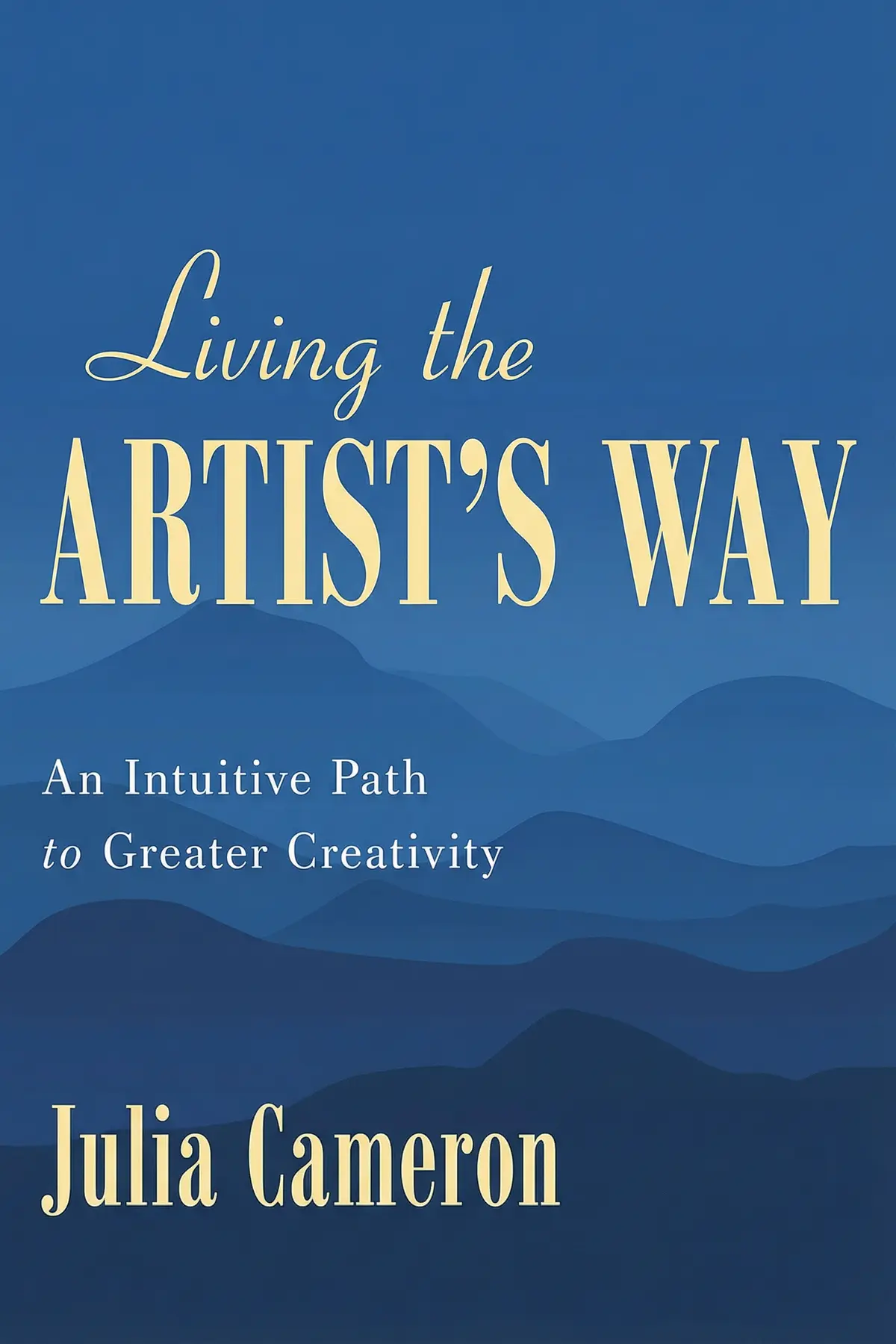
EnglishไทยThe Artist’s Way: A Spiritual Path to Higher Creativity
Shows how to recover a creative side you set aside, through daily morning pages, weekly solo artist dates and practical ways to face fear, old hurts, perfectionism and the people who drain your confidence.
Table of Content
1. Introduction
1 min 00 sec
If you once drew or sang for hours as a child and now spend your days in work that leaves that side of you silent, Julia Cameron’s The Artist’s Way says the artist is still there. Her first tool is plain: soon after waking, write down whatever comes into your head, with no aim of being good.
Cameron, a poet, playwright and filmmaker, treats creativity as something buried that you can recover, starting with very small steps. The work runs along three lines. Simple daily and weekly practices restart the flow. Facing the fears, old hurts and draining people that blocked it keeps it moving. And treating ideas as seeds you find and tend lifts the pressure to be brilliant.
What follows gives you a morning habit to begin tomorrow, a way to read your own discomfort as progress, and a better question to ask yourself at the end of each day.
2. Write morning pages before your critic wakes
1 min 26 sec
Most people trying to be creative again aim straight at a big project and freeze. Cameron’s first step is so modest it sounds pointless, and that modesty is exactly what makes it hard to avoid.
3. A weekly date that refills your imagination
1 min 21 sec
Your creative side usually gets whatever time is left over, which is often none. Cameron proposes treating it like someone you are courting, and the plan involves beaches, old films and the route you take home.
4. Name the old hurts that made you a shadow artist
1 min 38 sec
A millionaire in finance who fills his life with paintings and painters is missing something money cannot buy. Cameron explains how people end up living beside their art, and the first step back.
5. Read anger and blocks as signs of progress
1 min 38 sec
Recovering a creative life rarely feels pleasant. Furious reactions, critics who lash out and a blank page that still scares a veteran novelist all show up, and Cameron insists each one means something is working.
6. Let your ideas grow by tending them, not forcing them
1 min 34 sec
Michelangelo described his most famous statue in a way that sounds almost modest. Cameron builds on it to take away the heaviest weight a creative person carries, then shows where your own part begins.
7. Swap impossible goals for one honest daily question
1 min 39 sec
A plan to write a whole novel over a holiday sounds ambitious and inspiring. Cameron shows how it can end a creative life instead, along with two habits many people mistake for dedication.
8. Conclusion
1 min 08 sec
The Artist’s Way rests on a hopeful premise: the person who sang and drew for hours as a child never left. Cameron offers a way back open to anyone, starting with steps small enough to take tomorrow and kept up with regular, kind attention. The blocks are real, from a parent’s warning about money to a crazymaker’s belittling, but each one has an answer you can practice.
The most useful change may be the question you end the day with. Instead of measuring yourself against someone else’s success, ask whether you showed up for your own work today, even for a single page. Begin with tomorrow’s morning pages, written as soon as you wake up, with your inner critic set aside. Book a couple of hours alone this week somewhere that feeds your eyes or ears. And the next time anger or fear rises while you create, treat it as a sign that something buried is coming to the surface.
In Cameron’s picture, the artist works like a gardener. The seeds are already out there. Your part is to find one and keep it alive.
About this book
What is this book about?
Many adults remember a childhood spent drawing, singing or writing in secret, and a working life where that side of them went silent. Some ended up in jobs close to the art they loved. Others make art for a living but keep hitting blocks. Julia Cameron argues that the creative self is buried, and that anyone can dig it out. Her method starts small. Morning pages, written freely each day, push the inner critic aside. Weekly artist dates, spent alone, feed the imagination with new sights and sounds. From there Cameron turns to what blocks people: the stigma absorbed from parents, old wounds to self-confidence, crazymakers who belittle, and self-made traps such as impossible goals, workaholism and competitiveness. She frames creativity in spiritual terms, describing ideas as seeds found in the universe and tended by the artist, with a higher power helping those who act. Readers get a set of concrete practices to start this week, a way to read anger and fear as signs of progress, and a gentler, more useful question to judge each day by.
Book Information
Who it's for
Office workers missing art
Office workers who loved to draw, write or play music as children and miss it.
Working beside their art
Shadow artists in jobs next to the art they wanted, such as copywriters who meant to be poets.
Working artists feeling stuck
Working artists stuck in creative blocks, perfectionism or comparison with rivals.
About the Author
Julia Cameron
Julia Cameron, born in 1948 in Illinois, has worked as a poet, playwright, novelist, filmmaker, composer and journalist, writing fiction, nonfiction, essays, musicals and screenplays. Her screen credits include an episode of Miami Vice, and she wrote, produced and directed God's Will, an independent feature. She has taught film at Northwestern University and Columbia College, and she runs Julia Cameron Live, an online course and community for artists.
Ratings & Reviews
Ratings at a glance
What people think
Listeners find this work highly effective for reigniting their inner spark and staying consistent with their artistic work, while also serving as a powerful self-improvement tool. Furthermore, the material offers practical tips and spiritual prompts that assist in dismantling creative hurdles and shifting mindsets, with one listener remarking how three pages can change one's life. Additionally, the guide proves beneficial for all kinds of creators, and listeners value the specific writing prompts, with one mentioning how the process helped them finish screenplays.
Top reviews
Jai
After hearing so much about the 'morning pages' from every creative person I know, I finally committed to the full twelve-week program. This book is essentially a roadmap for anyone who feels stuck in a sterile rut and needs to rekindle their inner fire. The core practice of writing three pages every single morning acts as a spiritual drain for the brain, clearing out all the debris and self-doubt that usually prevents me from starting a project. It’s not just about art; it’s a valuable self-help resource for staying on track with your overall life goals. While the tone is a bit flowery at times, the results are undeniable. I found myself finishing a long-neglected screenplay within two months. If you actually do the work and follow the exercises, it will transform your process completely.
Show moreBenjamin
This book is a transformative and wise guide that speaks to healing and growth far beyond any particular pursuit of an art form. Truth is, those three pages can change your life if you let them. I was skeptical of the New Age vibe at first, but the shift in my mindset has been profound. The universe seems to support affirmative action once you stop getting in your own way. I am now more self-aware, less fearful of judgment, and finally having fun with my work again. It’s a gentle but firm encouragement to stop pouting and start creating. Whether you’re an actor, an entrepreneur, or a gardener, this program offers the tools to reclaim your creative mojo. Truly life-changing stuff here.
Show moreRoo
Wow, I didn't expect a book written decades ago to resonate so deeply with my current struggles as a freelance designer. The Artist's Way is less of a book and more of an experience that forces you to confront your own fears. I’ve started wearing clothes I actually like and treating myself to solo trips, and the impact on my output has been incredible. My mental blocks are dissolving because I’m finally giving myself permission to be a 'recovering' artist. The spiritual exercises are a bit 'woo-woo,' but they serve a purpose in getting you to trust the process. I’ve already recommended this to three friends who were feeling stuck. If you’re an artist of any type, this is a must-read for your personal library.
Show moreTakeshi
Finally got around to finishing the full course, and the shift in my daily life is night and day. I used to be stuck in a cycle of procrastination, but the daily discipline of the morning pages has completely cleared the mental fog. Now, I’m not just finishing my old screenplays; I’m actually taking acting lessons, planting a garden, and even started knitting again! It’s about a total reclamation of joy. While some of the religious aspects felt a bit dated, the results are undeniable. The book provides the structure needed to stay on track when your 'sensible' self tries to talk you out of your dreams. If you are serious about creative recovery, this is the gold standard.
Show moreAnucha
Picked this up during a massive creative rut where I couldn't even look at my easel without feeling a sense of dread. The structure of the book is modeled after a 12-step recovery program, which might feel strange to some, but it provides a much-needed sense of discipline. Cameron’s focus on process over product is a total game-changer for perfectionists who are too scared to make a mess. I didn't resonate with every spiritual exercise, but the 'morning pages' have become a non-negotiable part of my daily routine. They act as a mirror for your own subconscious. It’s a slow burn, but it is effective at helping you show up for your craft day after day. Definitely worth the time if you are struggling with apathy.
Show moreMind
Ever wonder why you're constantly sabotaging your own progress just when things start getting interesting? This book dives deep into the psychology of self-sabotage and provides a structured way to fight back against your 'inner censor.' The writing exercises are surprisingly effective at unearthing long-buried passions. I particularly liked the idea of 'true north' and finding your own lodestone to guide your work. Some parts feel like a slice of outdated hippie culture, and the name-dropping of unspecific 'friends' can be annoying, but the core message is solid. It teaches you to value the act of doing rather than the final result. It’s not a magic wand, but it’s a very sturdy shovel for digging yourself out of a creative hole.
Show moreJom
Look, if you can look past the outdated terminology and the flowery prose, there's some serious gold buried in these chapters. Cameron essentially adapted the AA 12-step model for the creative soul, and for the most part, it works brilliantly. It’s about more than just painting or writing; it’s about becoming a person who is open to the world. I found the 'Artist Dates' to be much more effective than the 'Morning Pages,' but both served to break my rigid routine. My only real gripe is the serene confidence that the universe is always benevolent. Sometimes the universe is indifferent, and you have to find the strength within yourself. Still, it’s a valuable resource for anyone looking to transform their life through a more creative lens.
Show moreValentina
To be fair, I went into this expecting a practical manual on writing techniques, but what I got was a heavy dose of spiritual guidance. Julia Cameron relies heavily on the idea of 'God the Creator,' and if you aren't comfortable with religious undertones, some chapters will be a slog to get through. Personally, I found the constant repetition of the 'artist's child' phrase to be a bit grating and somewhat patronizing after a while. However, I can't deny that the 'Artist Dates' are a fantastic idea. Taking time for solo adventures really did help me overcome some significant mental blocks. It’s a mixed bag of useful suggestions and outdated psychobabble. Take what works for you and leave the rest behind, because there is definitely some gold buried in the fluff.
Show moreRotjanee
The chapter on the 'Artist’s Child' almost made me put the book down for good because the phrasing felt so repetitive and patronizing. It reminded me too much of the 'inner goddess' tropes found in modern pop-fiction, which I really can't stand. That said, I did find value in the 12-week course format. It kept me accountable during a time when I wanted to give up on my knitting and photography. Not gonna lie, the God talk is heavy-handed and won't appeal to everyone, especially if you view creativity as an internal drive rather than a gift from the universe. It’s a bit of a slog, but there are some genuinely helpful insights on overcoming sloth and despair. A decent read if you can filter out the fluff.
Show moreGun
Frankly, the assumption that every creative block can be cured by sheer willpower and a few prayers to 'the Creator' feels incredibly out of touch. Cameron writes from a position of immense privilege, assuming that everyone has the luxury to simply rearrange their schedule for 'Artist Dates' without worrying about survival or childcare. Her model suggests that if you aren't succeeding, you’re simply 'resisting' the healing process, which is a very frustrating and borderline dangerous sentiment for those dealing with actual health issues. The prose is excessively flowery and the constant 'inner child' talk felt like something out of a bad soap opera. While the morning pages are a decent journaling habit, the rest of the book is a collection of pseudo-psychotherapeutic talk that lacks real-world nuance. It just wasn't for me.
Show moreQuestions about this book
What is the main idea of The Artist's Way?
Julia Cameron argues that everyone has a creative self that can be recovered, even after years of neglect. She recommends starting small, with daily morning pages and weekly solo artist dates, then facing what blocked you: old hurts, stigma about artists, fear, draining people and habits like workaholism. She also frames ideas as seeds found in the universe, which the artist tends rather than invents.
What are morning pages in The Artist's Way?
Morning pages are a daily writing practice done soon after waking. You write whatever comes to mind, without trying to be artistic or brilliant, and if nothing comes you write about having nothing to say. Cameron compares the practice to meditation. Its aim is to quiet the critical, logical part of the mind so the playful artist-brain can take over and the creative flow can start.
What is an artist date?
An artist date is a couple of hours set aside each week to spend alone with your inner artist. Cameron suggests simple outings such as a trip to the beach, an old movie, a gallery visit or a walk. The point is to relax and let your mind drift. She pairs it with a habit of seeking new sights, sounds, smells and tastes, even by taking a different route home.
Who are shadow artists and crazymakers?
Shadow artists are people steered away from art, often by parents worried about money, who settle for related or unfulfilling work, like a would-be poet writing copy, and stay haunted by the life they missed. Crazymakers are people who feed on your attention while belittling you. Cameron notes they are often successful artists who gather talented but less confident people around them.
How can I apply The Artist's Way when I feel blocked?
Cameron offers several practical moves. Ask someone for a prompt, as a writer might when an editor requests a story about Prague. Replace comparison with a better question: did I work on my project today? Avoid unrealistic goals such as finishing a novel over a holiday. When frustrated, stop, breathe deeply and plan what you can still do, and make room for fun to restart your creativity.
Featured in
Readers also enjoyed




AUDIO SUMMARY AVAILABLE
Listen to The Artist’s Way in 15 minutes
Get the key ideas from The Artist’s Way by Julia Cameron, plus 5,000+ more nonfiction titles.
- 5,000+ titles
- Listen as much as you want
- 7-day free trial
- Cancel anytime









