

A Long Way Gone: Memoirs of a Boy Soldier
Ishmael Beah
 English
Shows why infertility is far more common and painful than most people assume, and what adoption and IVF really demand, so you can understand, and better support, anyone trying to become a parent.
1 min 06 sec
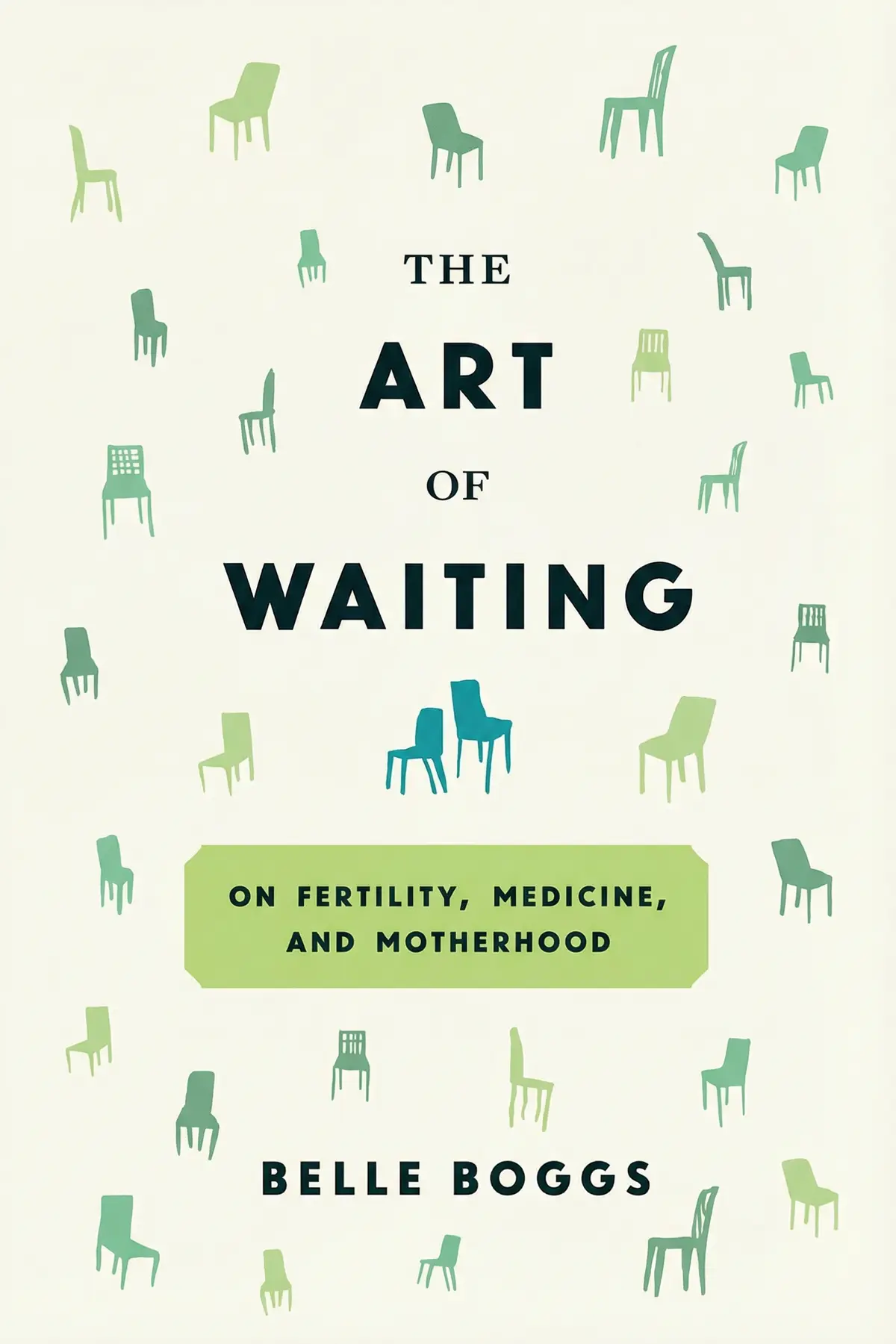
When someone you care about wants a child and cannot have one, it is easy to say the wrong thing. One fact from The Art of Waiting by Belle Boggs changes that conversation: about one in every eight couples has trouble conceiving, so infertility is anything but rare. Boggs, a writer and teacher, gathers the stories most people never hear about trying to become a parent.
Her argument is that our cultures raise us to see children as the center of life while also teaching us to prevent them. The people caught between those messages carry hidden grief, a painful history and hard, costly routes to parenthood, and every one of those routes deserves equal respect.
Along the way come a scientific quarrel over whether a childbearing instinct exists, a veteran sterilized by his state at 14, the reasons adoption is slower and harder than it looks, and the real price of IVF. What you gain is a clearer sense of what friends, colleagues and relatives may be living through, and better words to offer them.
2 min 10 sec
Long before adulthood, most of us absorbed one message about children from religion, art and school, and a very different one from the same school. The tension between them shapes how people judge every family that breaks the script.
2 min 00 sec
Women who never planned on children report a sudden, unwanted longing for a baby. A century-old scientific argument and a recent Finnish study try to explain where that pull comes from, and neither side has won.
2 min 10 sec
Most people picture infertility as rare and limited to one kind of woman. The real numbers say otherwise, and a therapist’s term for the pain involved explains why so few people ever speak about it.
2 min 10 sec
Just adopt sounds like kind, practical advice. The waiting lists, the price, the shortage of newborns and one couple’s heartbreak when a father freed from prison claimed their adopted child show why it often lands as anything but kind.
2 min 12 sec
A bird rehearses its dance for nearly a decade, and a fish swims upstream as its own body decays. Human parents-to-be have gentler options, yet the months, the drugs and the bills tell a striking story of their own.
1 min 14 sec
The Art of Waiting widens the picture of how families begin. For at least 35,000 years, cultures have told one story: children are the center of life, and they arrive naturally. Boggs shows how many people live outside that story, from the one couple in eight who struggle to conceive, to Willis Lynch, sterilized at 14, to parents waiting years for an adoption or paying for yet another round of IVF. Birth and parenthood, she argues, are far more complicated than the traditional narrative admits, and every path to them matters equally.
That view changes small, everyday moments. When a friend or coworker goes silent on the subject of children, you can hold back the question of when, and hold back adoption as an easy answer. When someone shares a loss the world barely recognizes, you can treat it as the grief Marni Rosner describes, real and worth mourning out loud. And if you are the one waiting, the book offers a kind of company, because the longing you feel is ancient, widely shared and still debated by scientists.
For millions of people, the waiting in the title is where the hardest work of becoming a parent happens.
From childhood we hear that children are the future, and in the same classrooms we learn how to avoid having them. For the many people who want a child and cannot have one, that mixed message turns into confusion, silence and shame. Belle Boggs, a writer and teacher, sets out the stories that rarely get told. She follows the scientific argument over whether humans have a childbearing instinct, from Edward Westermarck in 1891 to a recent Finnish study of baby fever. She shows that infertility touches about one in eight couples, falls hardest on poorer and minority groups, and affects men as often as women. She recalls a darker history too: state sterilization programs, including North Carolina's, which took the chance of children from people like Willis Lynch at age 14. Readers also get a clear look at the practical routes to parenthood. Adoption turns out to be slow, expensive and uncertain, and harder still for LGBT couples. IVF can cost $50,000 to $100,000 across several cycles. The book's case is that every path to a family counts, and that understanding these paths changes how we treat the people walking them.
People facing infertility who want their experience named and explained.
Friends, partners and coworkers who want to support someone trying for a child without saying the wrong thing.
Readers weighing adoption or IVF who want an honest look at the time, money and uncertainty involved.
Belle Boggs grew up in King William County, Virginia, and teaches at North Carolina State University. She is the author of the novel The Gulf and the story collection Mattaponi Queen, which won the Bakeless Prize. The Art of Waiting was a finalist for the PEN/Diamonstein-Spielvogel Award for the Art of the Essay. Her stories and essays have appeared in Harper's, Orion and the Paris Review, and she has received a fellowship from the National Endowment for the Arts.
Listeners find this title to be an excellent choice for individuals newly facing fertility challenges, offering a reflective narrative that blends personal anecdotes throughout. Furthermore, the work is commended for its meticulous research, exceptional composition, and elegant prose. Listeners also value the book's informative depth, with one listener observing how it examines assisted reproductive technology via family-centered stories, while another emphasizes that it flawlessly depicts the diverse dimensions of infertility.
Few books capture the silent, agonizing weight of infertility as beautifully as this one. Boggs doesn't just tell her own story; she weaves a tapestry of literature, science, and sociology that makes the reader feel part of a larger, older human experience. The way she compares our primate ancestors' behavior to our own modern medical interventions was particularly striking and gave me a fresh perspective on my own body. While the prose is undeniably sublime and dense with research, it remains accessible enough for anyone currently navigating the labyrinth of ART. I especially appreciated how she broadened the scope to include families that don't fit the traditional heteronormative mold. It’s an educational and deeply moving piece of work that I’ll be recommending to everyone in my support group.
Show moreAs someone who has navigated the exhausting world of fertility treatments, I found Boggs’ voice to be a soothing balm. This isn't your typical 'misery memoir'; it is a well-rounded evaluation of the reproductive experience in North America today. She captures the many aspects of infertility—from the psychological toll to the scientific breakthroughs—with such grace and precision. I loved the way she integrated stories of nontraditional families alongside her own narrative. The research is impeccable, and the writing is so beautiful that I found myself highlighting passages just to remember the phrasing. It’s a work of art that sheds light on a topic that is still, unfortunately, far too under-discussed in our society.
Show moreBelle Boggs has crafted a masterpiece that transcends the typical fertility struggle genre by looking at the much bigger picture. As usual, Graywolf Press has published something that is both intellectually rigorous and deeply moving. This book is a must-read for anyone interested in the sociology of motherhood and the barriers facing those who deviate from the norm. Boggs covers everything from the financial derivatives of IVF payment plans to the specific challenges faced by single parents of color. The prose is absolutely sublime, making even the most technical biological explanations feel like poetry. It’s an educational journey that perfectly captures the complex mixture of hope and despair that defines the art of waiting for a child.
Show morePicked this up because I wanted more than just a personal memoir, and Boggs certainly delivers a deep, researched dive. Personally, I found the inclusion of LGBT struggles and the discussion of racial bias in reproductive healthcare to be the strongest parts of the book. It’s refreshing to see an author acknowledge that IVF isn’t a level playing field for everyone. The writing is incredibly polished, and she manages to balance the technicalities of assisted reproduction with a very human sense of longing. My only real complaint is that the second half gets a bit bogged down in the minutiae of medical procedures. Despite that, it’s a wise exploration of what it means to want a child in the 21st century.
Show moreEver wonder how biology and culture collide when it comes to the 'nuclear family' ideal? The Art of Waiting offers a lucid and wise investigation into that exact intersection. Boggs uses her own IVF journey as a launching pad to discuss the financial barriers and ethical concerns that most people never have to think about. I was particularly fascinated by the chapter on insurance mandates and how they shape reproductive choices across different states. The book is gorgeous and thoughtful, though I do agree with other reviewers that it leans heavily into a pro-natalist perspective by the end. Still, for anyone newly diagnosed with fertility issues, this provides an excellent educational foundation wrapped in truly sublime prose.
Show moreThe chapter on the reproductive habits of other species, specifically gorillas, was an unexpected highlight that really reframed the human experience for me. In my experience, books on this topic can be overly sentimental, but Boggs maintains a calm and analytical voice throughout. She effectively deconstructs the medical misogyny that often accompanies the treatment of female bodies in fertility clinics. While the second half of the book gets a bit dense with technicalities, the overall message remains powerful and inclusive. She doesn't shy away from the privilege inherent in accessing IVF, even if she doesn't fully solve the ethical dilemmas she raises. It’s a thoughtful, insightful read that manages to be both personal and professional.
Show moreWhile the prose is undeniably elegant, I struggled with the structure of this collection because it felt quite scattered. I went in expecting a focused memoir, but instead, I found myself wading through three-page tangents about obscure literature that didn't always seem relevant to the main point. To be fair, Boggs is a gifted writer, yet her tone occasionally slides into an academic register that feels a bit cold or even condescending to the average reader. There were moments where the narrative felt like a chore rather than an emotional journey. If you enjoy deep research and intellectual detours, you’ll likely love this, but if you’re looking for a raw, heart-on-sleeve account of infertility, this might feel a bit too detached and plodding for your taste.
Show moreFrankly, this felt more like a series of interconnected research essays than a cohesive narrative about the experience of waiting. I appreciated the intellectual depth, but the author jumps around so much that it’s hard to stay grounded in her personal story. One moment you're reading about her follicle counts, and the next you're on a ten-page tangent about 19th-century literature. It’s clearly well-researched and the writing is high-quality, but the tone can feel a bit clinical for such an emotional subject. I wish there had been more focus on the internal psychology of the wait rather than the external mechanics of the industry. It’s an okay read, just not the emotional companion I was looking for.
Show moreLook, if you’re searching for a step-by-step emotional survival guide, you might want to look elsewhere. The truth is that this book is much more of a 'research essay' than a self-help manual or a traditional memoir. While I found the information about assisted reproductive technology to be very educational, the narrative structure was all over the place. I struggled with how the author justified her own privilege while only briefly gesturing toward the realities of disadvantaged mothers. The writing is definitely gorgeous, but the plodding dialogue in the later chapters made it feel like a bit of a chore to finish. It’s an insightful book, but you have to be in the right headspace for its academic tone.
Show moreNot what I expected given the title, which suggests a philosophical guide to coping with the crisis of waiting. However, instead of tools for emotional survival, we get a highly technical exploration of the author’s specific path to success. It felt a bit like a guide to self-pity at times, jumping between the author's life and biological facts without a clear destination. I really wanted a deeper dive into the psychology of loss, but the narrative seemed more interested in literary references than actual emotional support. Because she achieves her 'final happy ending' so quickly, the book might feel alienating to those who have been struggling for many years without success.
Show moreIt explores the struggles of people who want children but cannot easily have them. Boggs looks at how culture teaches us to value children while also teaching contraception, the scientific debate over a childbearing instinct, the hidden grief of infertility, the history of forced sterilization in the United States, and the real demands of adoption and IVF. Her conclusion is that every path to parenthood deserves equal respect.
Boggs reports that about one in eight couples have difficulty conceiving. She also corrects common myths: infertility is not mainly a white, upper-middle-class problem, since it disproportionately affects minorities, poorer people and those with less education, and it affects men and women equally. Shame keeps it hidden, which therapist Marni Rosner describes as disenfranchised grief.
Adoption can cost tens of thousands of dollars, and applicants often wait years. Most hopeful parents want newborns, but far fewer newborns are available than families waiting, and birth mothers often change their minds after delivery. LGBT couples face extra barriers, and only seven states take explicit steps to protect LGBT families in adoption. Around 120,000 US adoptions still happen each year.
Boggs puts the average IVF cycle at around $10,000, and insurance rarely covers it. Most people go through several cycles before succeeding or stopping, so the total can reach $50,000 to $100,000 depending on insurance and the plan chosen. Preparation also takes months of research, financial planning and medication, with no guarantee of success.
The book suggests treating infertility as a real loss rather than a private embarrassment. Because people rarely discuss it, those affected often grieve without support. Avoid assuming adoption is an easy fix, since it is slow, costly and uncertain, and avoid joking about test-tube babies, a label many IVF parents dislike because it hides how grueling the process is.
Ishmael Beah

James Herriot


Barack Obama


Masaji Ishikawa

Ben Macintyre



James Shapiro
AUDIO SUMMARY AVAILABLE
Get the key ideas from The Art of Waiting by Belle Boggs, plus 5,000+ more nonfiction titles.









