
All About Love: New Visions
bell hooks
 English
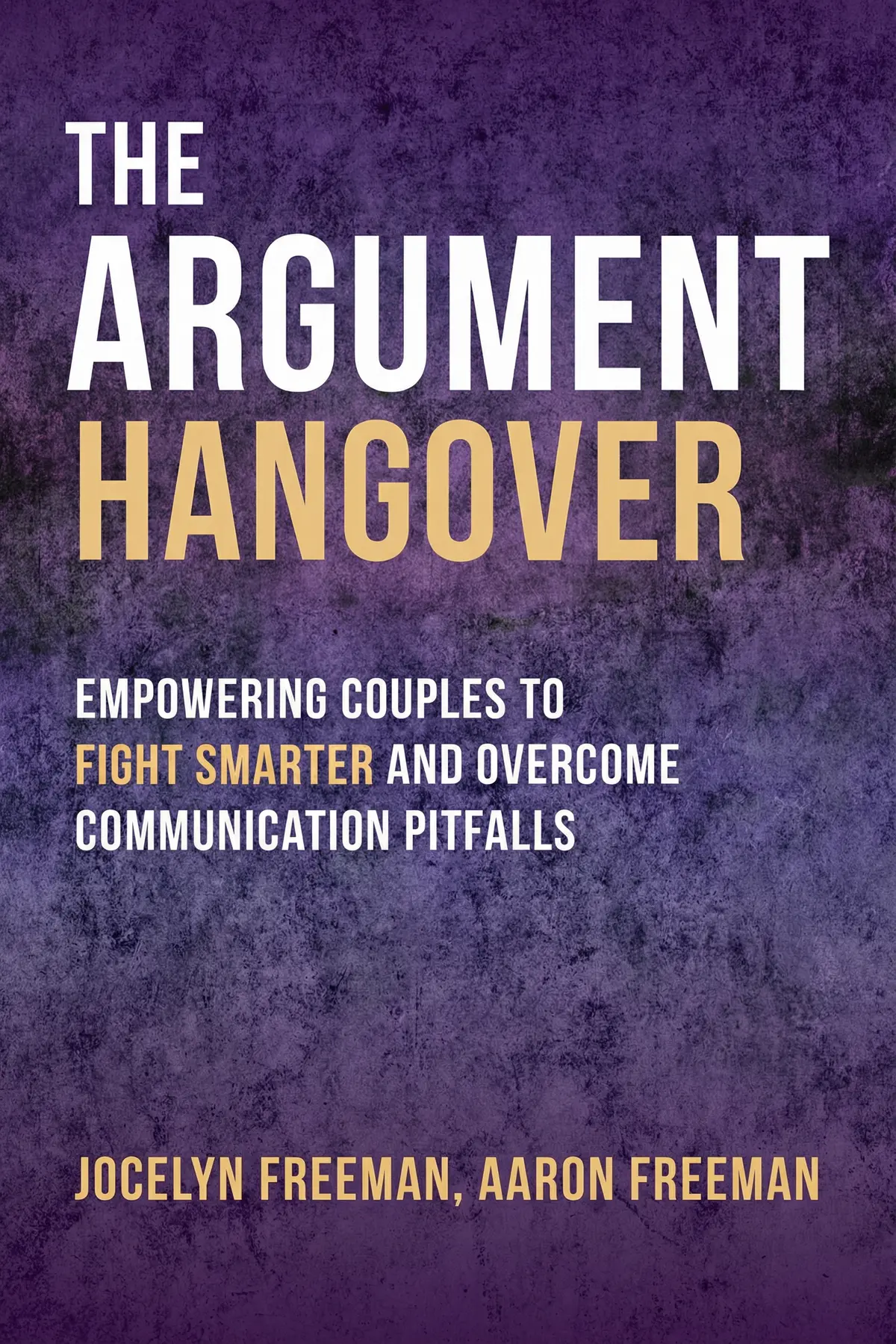
Shows couples how to shorten the uneasy days after a fight by spotting their own triggers, listening before defending, and repairing with five steps that go further than a quick apology.
1 min 01 sec
The worst part of a fight with your partner is often the days afterward, when you’re both sad, nobody quite apologizes the right way and home doesn’t feel normal. Relationship coaches Jocelyn and Aaron Freeman call that stretch the argument hangover. In The Argument Hangover they argue it can be short, and that a fight handled well can leave a couple closer than before.
Their case is that conflict is just two people seeing something differently, and that the damage depends on how you prepare, how you listen and how you repair. Each stage has a method, illustrated with examples that include a couple from their own marriage: an orange that explains why old wounds spill out in arguments, an evening with a friend where one offhand remark caused days of hurt, and five steps that do what a quick sorry can’t. Use them and the next fight becomes something the two of you recover from quickly, with a better plan on the other side.
1 min 25 sec
Newlyweds hear the same advice again and again: choose carefully which fights are worth having. It sounds wise and keeps the peace for a while. The Freemans think it slowly does the opposite.
1 min 31 sec
Most couples argue as if someone has to win, chasing the last word or the line that ends the discussion. Replaying one tense moment about money shows how a single changed reply can steer the whole conversation elsewhere.
1 min 38 sec
A question about squeezing a piece of fruit sounds too simple to matter. Jocelyn Freeman found it explained a jealousy she had carried for years, and why her anger had so little to do with her husband.
1 min 26 sec
A friend’s question while the couple were entertaining one evening led to days of anger that Aaron Freeman couldn’t make sense of. How he finally answered his wife is the opposite of what most people do when they feel accused.
1 min 43 sec
Saying sorry feels like it should close the matter, yet the cold distance and small digs often continue for days. The Freemans explain what an apology leaves out and what has to happen around it.
1 min 09 sec
In the Freemans’ account, the uneasy stretch after a fight can sometimes feel almost worse than the fight itself, yet both can be turned toward something useful. A happy relationship, they argue, was never a state of constant bliss. It takes steady effort from two people who keep choosing to listen and to repair.
Some of that effort can start tonight. Before the next disagreement, name the trigger that gets to you fastest and trace it back to where it began, the way Jocelyn traced her jealousy to an old betrayal. When your partner is upset, try Aaron’s answer first: say you can see why they’re hurt and ask to hear more. And when a plain sorry hasn’t cleared the air, work through the steps, from reflecting and owning your part to finding what the fight gave you.
The authors also offer a one-minute exercise for showing you’re paying attention. Get up from the couch and sit facing your partner. Say nothing, keep your face relaxed, and simply look into each other’s eyes for a full minute. It is a small way to see someone fresh, and to remember what you love about them.
Every couple fights, and many people find the days after a fight worse than the fight itself. Partners avoid each other, trade sharp remarks and wait for things to feel normal again. Jocelyn and Aaron Freeman call this the argument hangover, and they argue it does not have to drag on or do lasting harm. Their starting point is that conflict is simply two people seeing something differently, so avoiding it only lets resentment build. From there they give couples a method for each stage. Before a fight, learn what sets you off and where that reaction really comes from. During a fight, listen until your partner feels understood, then say clearly what bothers you. After a fight, go beyond sorry with five steps: reflect, take responsibility, reconnect, remind and reconcile. The book illustrates its ideas partly with examples from the authors' own marriage, including Jocelyn's jealousy and a remark about children that left her angry for days. Readers get a practical way to make arguments shorter, calmer and more useful to the relationship.
Couples who spend days in cold silence after an argument and want a faster way back.
Partners who avoid raising problems to keep the peace and feel resentment building.
Busy people whose fights keep circling back to money, family or jealousy.
Jocelyn and Aaron Freeman are a married pair of relationship coaches who both hold master's degrees in psychology. For about a decade they have guided couples through different seasons of their relationships, with a focus on helping busy partners talk to each other more effectively. They have led more than forty in-person and more than sixty online couples workshops, and their coaching has reached over 800,000 couples around the world. Their podcast has ranked among the top 20 relationship podcasts on iTunes, and they are also the authors of Same Team.

Listeners describe this as an incredible resource for relationships that assists couples in communicating better and enhancing their life together. The material is actionable and straightforward, making it essential listening for all partners. They value the high standard of the writing, with one listener highlighting that every page offers fresh insights.
Wow. This really hit home for us because that "hangover" feeling after a fight is something we’ve struggled to name for years. The Freemans describe that cold period of silence so perfectly, but they don’t just leave you in the gloom. I found the "orange juice" metaphor—what comes out when you're squeezed—to be a total wake-up call regarding my own internal baggage. While some of the advice feels like things you should already know, having it laid out in such a structured way makes it actually usable during a heated moment. We’ve already started using the 5 Rs to shorten our recovery time. It's not about never fighting, but about how you come back together.
Show moreFinally got around to finishing this and it’s easily one of my best finds this year for my marriage. The way the authors talk about the "heat of the moment" and how to prepare before the fight happens is a game changer for reactive people like me. I love that they include real examples from their own lives, like the story about the "having kids" comment, which made the advice feel authentic rather than preachy. Truth is, we often expect love to be enough to carry us through, but this book proves that skills are what keep the bond strong. The charts and lists are great for visual learners who need a quick reference.
Show moreThis book is a genius yet common-sense approach to the hardest part of being in a long-term partnership. Jocelyn and Aaron Freeman don't promise that you'll stop fighting, which I found refreshing and realistic. Instead, they teach you how to make those fights constructive so you emerge closer than before. The actionable items, like the eye-contact exercise, provide a much-needed break from the typical "I feel" statements taught in every other book. I felt like the authors were talking directly to me throughout the entire text. It’s rare to find a self-help book that is this engaging and devoid of unnecessary filler.
Show moreEver wonder why a simple argument about the dishes turns into a three-day cold war? Jocelyn and Aaron Freeman explain that this "argument hangover" is actually a lack of emotional reconnection, and they provide a roadmap to fix it. To be fair, I thought some of the sections were a bit repetitive, and the writing style is very conversational, which might not be for everyone. However, the actionable steps, like the eye-contact exercise and the specific "responsibility" phase of an apology, are incredibly grounded. It’s a quick read that doesn’t hide behind complex psychological jargon. My partner and I actually sat down and took the communication style quiz together last night.
Show moreAfter hearing about the Freemans on a podcast, I decided to grab a copy to see if it could help with our communication rifts. The book is very relatable and the advice is presented in a way that doesn't feel like you're being lectured by a clinical therapist. I especially liked the section on identifying triggers—realizing that my anger over the credit card bill was actually about past insecurity was a huge breakthrough. The only downside is that some of the "win-win" solutions suggested feel a bit idealistic compared to the messy reality of life. Nevertheless, the emphasis on showing understanding before defending yourself is a habit everyone should adopt.
Show moreThe chapter on the "Five Rs" is worth the price of the book alone because it gives you a concrete path out of the post-fight funk. We used to spend days walking on eggshells, but now we have a vocabulary to talk about why we’re feeling disconnected. I gotta say, the "reconnect" step involving physical touch was awkward to read at first, but it actually works to break the tension. The writing is clear and the chapters are short enough to read in small bursts, which is perfect for busy parents. It isn’t a magic wand that stops all fights, but it definitely makes the aftermath less painful. Every couple should have this on their shelf.
Show moreAs someone who hates conflict and usually resorts to the "silent treatment," this book was a difficult but necessary mirror to look into. I’ve realized that my "argument hangovers" were actually just me punishing my partner rather than seeking a resolution. The advice to speak clearly and show understanding even when you disagree is something I’m still practicing, but the results are already visible. My only minor complaint is that some of the examples feel a bit repetitive towards the end of the book. Regardless, the core message is vital: how much life are you willing to lose to the period of unease after a fight?
Show moreLook, I've picked up dozens of relationship books over the years, and many of them are just fluff and flowery language. This one stands out because it actually treats conflict as a tool for growth rather than a failure of the relationship. Personally, I think the "Five Rs" framework is the strongest part of the book, especially the emphasis on taking responsibility regardless of who "started" it. I gave it three stars because a lot of the initial chapters felt like common sense that could have been summarized in a long blog post. Still, the focus on triggers and childhood wounds is handled with a lot of grace. It's a solid resource if you're feeling stuck in a cycle of resentment.
Show morePicked this up during a particularly rough patch and found the "Responsibility" section to be quite convicting. It's so easy to point fingers, but the authors challenge you to look at your own behavior during a conflict. While I enjoyed the practical nature of the "Five Rs," I felt that the book lacked a bit of depth when it came to more serious, long-term relationship issues. It’s definitely more of a "tune-up" guide than a deep-dive into trauma or complex attachment styles. To be fair, it’s a quick, easy read that sparked some good conversations between me and my husband. A solid three-star choice for those needing a communication refresh.
Show moreNot what I expected, to be honest. While the concept of an "argument hangover" is a great hook, the actual content felt a little too basic for a couple that has already done some therapy or deep self-reflection. Frankly, the "orange juice" analogy was a bit cheesy and the solutions for things like finances seemed oversimplified for real-world complexities. I did appreciate the reminder that "picking your battles" is a bad idea, as that’s a trap many of us fall into. But overall, I found myself skimming through large chunks of the text to find something new. It’s probably a better fit for younger couples just starting out.
Show moreJocelyn and Aaron Freeman use the term for the uncomfortable stretch after a fight with your partner, before the two of you truly feel resolved. It resembles the aftermath of too much drink or rich food, since it is unpleasant and may linger for several days. Unlike that kind, they argue, it is a chance to strengthen the relationship, as long as couples listen to each other and repair properly instead of just moving on.
Not according to the Freemans. They criticize the common advice to pick your battles, because staying silent about what bothers you lets resentment grow and leaves problems unsolved. They define conflict simply as a difference of opinion, which every couple will have. The goal is to make each fight constructive and to keep the hangover that follows short.
The five steps for repairing after a fight are reflect, responsibility, reconnect, remind and reconcile. You think through what really caused the fight, own your share no matter who started it, rebuild closeness with touch and honest talk, reassure each other that you are a team, and look for what the conflict taught you. The authors see these as what a simple sorry leaves out.
The Freemans suggest studying your reactions in advance. Name the situations that set you off, then look for the root cause, which usually lies in your past rather than in the dishes or the phone. Jocelyn traced her jealousy to an unfaithful first boyfriend and cheating in her family. Finally, notice your typical response, such as snapping or going silent, so it no longer catches you off guard.
AUDIO SUMMARY AVAILABLE
Get the key ideas from The Argument Hangover by Jocelyn Freeman, plus 5,000+ more nonfiction titles.