
13 min 28 sec
Available in: English
Daring to Trust: Opening Ourselves to Real Love and Intimacy
By David Richo
Shows why some people trust too easily and others trust no one, and how understanding your past, your needs and your feelings lets you open up to closeness without being ruled by fear.
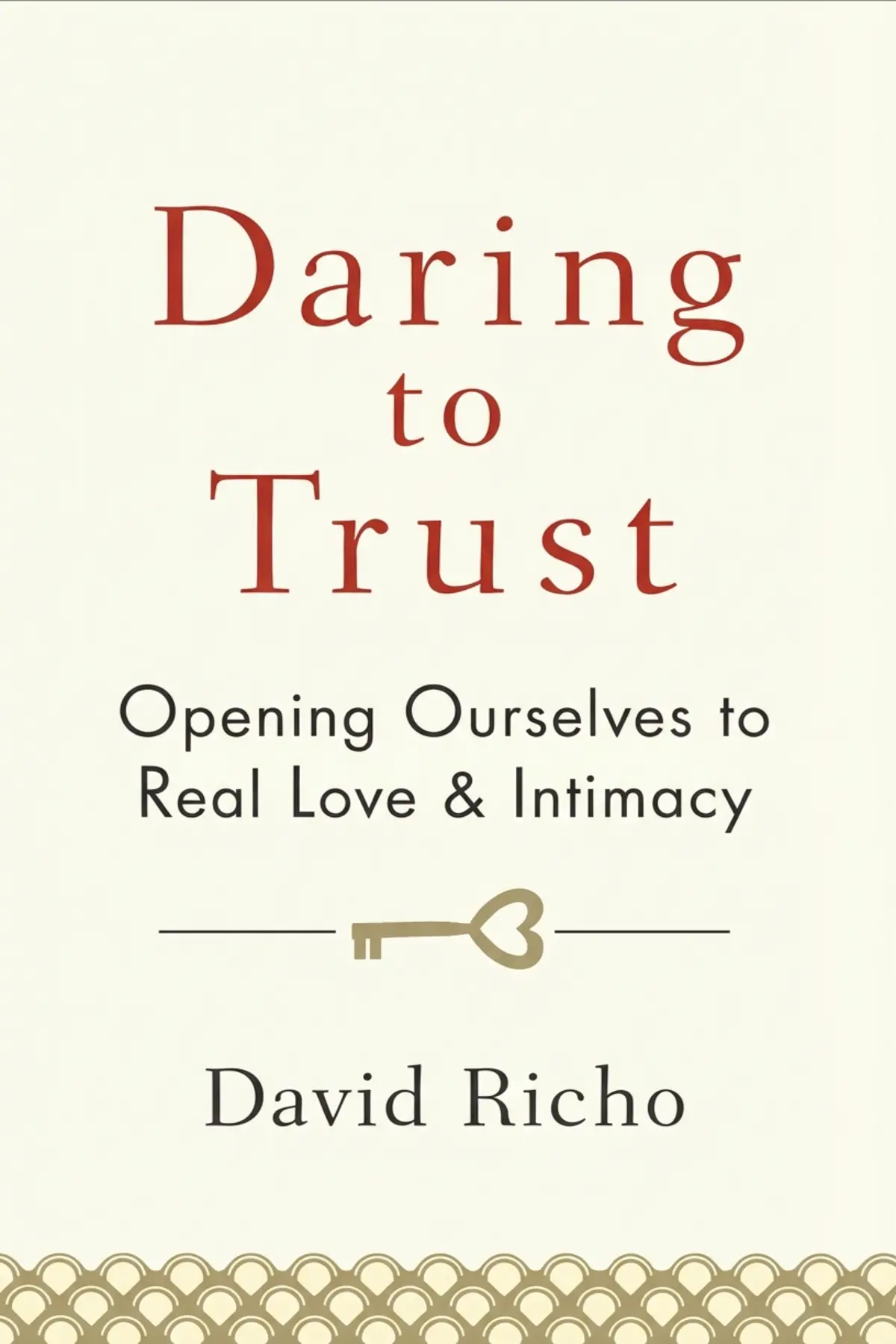
Table of Content
1. Introduction
59 sec
If you swing between trusting people too easily and trusting no one at all, the problem may start somewhere you rarely look: in how far you trust yourself. In Daring to Trust, psychologist and couples counselor David Richo argues that our ability to open up is shaped early, in the arms of the people who raised us, and that adults can still rebuild it. A huge reaction to a partner’s bad mood, he suggests, is often not wrong at all, only aimed at the wrong person.
Richo’s case is that trust in others rests on trust in yourself. Once you understand where your fears come from, know what you need, accept what you feel and believe you can cope with whatever happens, closeness stops feeling like a risk you cannot afford. Along the way he offers a five-part test for a trustworthy partner, a way to read your body under stress, and a new sentence to say to yourself on bad days.
2. Trace your trust back to where it began
1 min 42 sec
Whether you open up to a stranger or keep everyone at arm’s length may depend mostly on what you experienced as a child. Richo points to a weekly family ritual from his own boyhood to show how.
3. Judge a partner by five everyday needs
2 min 00 sec
Films promise that love begins with a rush. Richo thinks the wiser start is slower, and he offers a five-part check that also explains why a partner who pulls away may want something surprising.
4. Learn how your overreactions point back to the past
1 min 54 sec
A partner’s ordinary bad mood can set off panic far bigger than the moment. Richo argues the reaction is often accurate in its feeling and mistaken in its target, and he names a second pain we inflict on ourselves.
5. Name your feelings before they run you
1 min 47 sec
Pushing a hard emotion down can make the day easier, but Richo argues it never really leaves. He explains where it goes, and why your sweaty palms may be the best guide you have.
6. Build a trust that no one can take away
1 min 57 sec
Every relationship carries the risk of pain, and no partner can remove it. Richo describes a different source of safety, one he connects to Buddhism, to Carl Jung and to an idea many people call God.
7. Talk yourself through hard days with new words
1 min 52 sec
When bad news keeps arriving, even opening your inbox can feel like a threat. Richo offers a few minutes of attention and one rewritten sentence that change how the same day feels.
8. Conclusion
1 min 17 sec
Richo describes trust as something that grows from the inside out. The comfort a child felt in a parent’s arms, or never felt, becomes the adult’s sense of whether people are safe. Old wounds make a partner’s bad mood feel like danger. Feelings pushed down return as tension. Each of these can be met: by knowing your history, naming your needs, accepting what you feel and believing you can survive what comes. Closeness then becomes less of a gamble, because your safety no longer rests entirely on someone else.
The practice he supports is modest. When your reaction to someone feels too big, ask whether it belongs to the past. Check whether attention, appreciation, acceptance, affection and freedom are flowing both ways between you and your partner. When stress hits, stop, breathe and let feelings pass without judging them. Above all, accept pain instead of dwelling on it; Richo argues that accepting pain is what lets you move through it and grow.
The boy in the Saturday night bath grew up to carry that warmth into every hard moment. Trusting others starts with trusting that you will be all right.
About this book
What is this book about?
Some people are told they trust too easily. Others trust no one, not even themselves. Either way, a shaky sense of trust can fill life with fear, damage relationships and keep people from becoming who they could be. David Richo, a psychologist and longtime couples counselor, argues that the trust we give others grows out of the trust we have in ourselves. Richo traces that capacity back to early bonds with parents, then shows how old wounds make adults overreact, lie or stay in harmful relationships. He offers a practical test for a trustworthy partner, the Five A's of attention, appreciation, acceptance, affection and allowing freedom, and explains why a partner who keeps you at a distance may actually want more closeness. The second half of the book turns inward. Drawing on Buddhist teaching and on Carl Jung's idea of the higher Self, Richo describes accepting feelings, reading the body's stress signals, breathing to calm down, and building what he calls core trust: the belief that you can cope with whatever happens. Readers get a clearer map of their own reactions and simple practices for meeting fear without letting it decide.
Book Information
Who it's for
Unsure whom to trust
People who feel they trust too easily, or who keep everyone at a distance.
Partners feeling insecure
Partners caught in jealousy, overreactions or a relationship that feels unsafe.
Shaped by childhood hurts
Anyone carrying childhood hurts into adult love who wants calm, practical ways to open up.
About the Author
David Richo
David Richo holds a PhD in clinical psychology and has worked as a licensed counselor for couples, families and children in California since 1976. He runs workshops on personal and spiritual growth, blending Buddhist, Jungian and poetic ideas. He has taught at Santa Barbara City College, the University of California Berkeley and the Esalen Institute, and supervises clinicians at the Community Counseling Center in Santa Barbara. His other books include How to Be an Adult in Relationships, The Five Things We Cannot Change, Shadow Dance and The Power of Coincidence.
Ratings & Reviews
Ratings at a glance

What people think
Listeners find this work to be both perceptive and beneficial, with one listener highlighting that it offers concrete methods to practice its teachings. The content is accessible and straightforward, and listeners value the high quality of the writing. They also appreciate the spiritual content—which one listener calls inspiring—and the approach that explains different levels of trust.
Top reviews
Harper
David Richo has a way of cutting through the noise of modern self-help and offering something much more substantial. I’ve always found the intersection of Jungian psychology and Buddhist mindfulness to be the most effective path for healing, and this book delivers exactly that. Truth is, the concept of unconditional trust in ourselves is what really stuck with me. The book explains different levels of trust so clearly that it becomes a tangible tool rather than just a vague feeling. While the Shakespearean references felt a bit high-brow at times, they added a certain timelessness to the advice. It is a well-written, soulful guide for anyone feeling stuck in a cycle of suspicion. It's truly inspiring and worth every minute of your time.
Show morePawinee
Finally, a book that addresses trust from the inside out rather than just focusing on external red flags. I honestly thought this was going to be a checklist of how to spot a liar, but it ended up being a mirror into my own soul. Not gonna lie, the emphasis on childhood development and its impact on adult trust was difficult to read, but it was necessary. The prose is elegant and flows well, though you have to be in the right headspace for the spiritual elements. For me, the Buddhist insights provided a sense of calm that made the difficult psychological work feel manageable. It’s a practical and meaningful guide for mending a broken heart and moving forward with confidence.
Show moreParichat
Picking this up was a bit of a gamble because most self-help books feel like fluff, but Richo is the real deal. Gotta say, the way he breaks down the delicate process of building, losing, and rebuilding trust is masterful. He doesn't offer easy answers or hacks. Instead, he invites you to look at your history with Erikson’s stages of development. The combination of Jungian theory and mindfulness offers a holistic approach that I found incredibly soothing. Some might find the Buddhist flavor a bit much, but I felt it added a layer of peace to the process. This is a practical book for anyone serious about emotional growth and developing a more resilient sense of self.
Show moreYanin
After struggling through a messy breakup, I found this book to be a grounding presence. Frankly, the realization that trust is more about my own capacity to handle outcomes than the other person's behavior was a total paradigm shift. I really appreciated the focus on the specific exercises, even if writing poems felt a bit cheesy for my taste. To be fair, some of the prose gets a bit dense and academic, which might slow you down if you're looking for a quick fix. However, the psychological depth here is undeniable. It’s not just surface-level advice; it’s a deep dive into how our history shapes our current fears. If you are willing to do the work and engage with the more spiritual elements, this is a goldmine of emotional intelligence.
Show moreLily
The distinction between safety and security in the opening chapters was worth the price of the book alone. Personally, I had never thought about trust in such nuanced terms, and it helped me validate my own needs in my current relationship. Richo argues that trust is an individual capacity we develop, which takes the pressure off finding the perfect person. It’s a very empowering perspective. The book is easy to read if you take it slow, allowing the concepts to marinate. While the Shambhala publishing vibe is definitely present with all the Buddhism and yoga references, the psychological foundations are solid. I left with many tools for taking responsibility for my own emotional well-being and evaluating others.
Show moreSomsak
Who knew that Hamlet could be a roadmap for psychological healing? Richo uses literary and spiritual examples to illustrate complex emotional states, and it works surprisingly well for the most part. Truth is, I found the section on trusting ourselves with whatever happens to be life-changing. It shifts the power dynamic from the other person back to you. I did find the writing style a bit academic in places, which made it a slower read than your average airport self-help book. But the effort is rewarded with deep insights. It’s a well-written exploration of the human condition that goes far beyond simple relationship advice. Definitely worth a read if you want to understand the root of your anxieties.
Show moreJackson
Ever wonder why you keep attracting the same untrustworthy people into your life? This book offers a compelling explanation that avoids blaming and focuses on healing. I’ve become quite the fan of this author lately, even if his style is a bit repetitive across his different books. In this one, the focus on self-trust after a failed relationship was particularly poignant. It reminded me that I can handle whatever comes my way, which is the ultimate form of security. To be fair, the last third of the book gets a bit lost in spiritual philosophy, but the core message remains strong. It’s a meaningful read for the broken-hearted and the perpetually cautious alike.
Show moreOtt
Richo’s exploration of how our early years dictate our adult vulnerabilities is both frightening and enlightening. Frankly, I was skeptical about the spiritual aspect, but the secular Buddhist approach didn't feel like proselytizing. It felt more like a toolkit for staying present and centered during emotional storms. The book provides tangible ways to practice what it teaches, moving beyond theory into real-world application. I did struggle with some of the more flowery language, but the underlying psychology is incredibly sound. It helped me realize that trust isn't a binary yes or no but a spectrum of discernment. This is a solid addition to any self-growth library, especially for those working through intimacy issues.
Show moreTuck
Look, I appreciate the depth of research here, but I found the second half of the book to be quite dry. I’ve read Richo’s earlier work, and I found him repeating several concepts that were covered more effectively in his other titles. The constant pivots toward Zen practices and poetry exercises might alienate readers who aren’t looking for a new age vibe. It feels a bit like he was trying to fill a page count requirement by including those sections toward the end. That said, the initial chapters on the difference between safety and security were enlightening. It’s a decent resource for those new to his philosophy, but seasoned readers might find it a bit redundant and slow-moving.
Show moreElise
Not what I expected at all, and to be honest, I’m quite disappointed. I picked this up hoping for a psychological framework to deal with a specific trust betrayal, but I got a confusing mix of Hamlet analysis and Zen koans. In my experience, someone dealing with real-world paranoia or serious trauma needs more direct, concrete steps. The writing is incredibly dense and at times feels more like a literature dissertation than a self-help manual. Why do I need to write a poem to understand why my partner lied? It feels a bit disconnected from the harsh realities of relationship issues. If you don’t like spiritual or esoteric content, stay far away from this one. It's too much fluff and not enough grit.
Show moreQuestions about this book
What is the main idea of Daring to Trust by David Richo?
Richo argues that our ability to trust others grows from trust in ourselves. Early bonds with parents set our sense of whether the world is safe, and old wounds can make adults overreact or stay in harmful relationships. By understanding that history, knowing our needs, accepting our feelings and building core trust, the belief that we can cope with anything, we can open up to real intimacy.
What are the Five A's in Daring to Trust?
The Five A’s are the basic needs Richo says a trustworthy partner meets: attention, appreciation, acceptance, affection and allowing you the freedom to be yourself. He links them directly to trust. A partner who cannot trust cannot meet these needs, and a partner who fails to meet them cannot be trusted. A jealous partner who controls every move, for example, violates the freedom you need.
Why do people overreact in relationships, according to Richo?
Richo says overreactions often come from past hurt rather than the present moment. His example is a man who feels intense fear whenever his girlfriend gets angry, a fear rooted in a parent who became violent when angry. He also describes do-it-yourself pain, the extra hurt we create with harsh, false stories, such as believing after a breakup that no one will ever love us again.
How can I apply Daring to Trust in daily life?
When a reaction feels too large, ask whether it belongs to someone from your past. Check whether the Five A’s flow both ways in your relationship. Under stress, notice your body’s signals, such as sweaty palms or shallow breathing, and focus on your breath for a few minutes. On bad days, replace a hopeless script with one that recalls the hardships you have already overcome.
Readers also enjoyed


AUDIO SUMMARY AVAILABLE
Listen to Daring to Trust in 15 minutes
Get the key ideas from Daring to Trust by David Richo, plus 5,000+ more nonfiction titles.
- 5,000+ titles
- Listen as much as you want
- 7-day free trial
- Cancel anytime









