

11 min 51 sec
Available in: English
The Answer to Anxiety: How to Break Free from the Tyranny of Anxious Thoughts and Worry
By Joyce Meyer
A Christian guide to stopping everyday worry before it grows. Meyer turns one Bible passage into four daily practices: remembering God's help, praying before anything else, giving thanks on paper and aloud, and protecting God's peace.
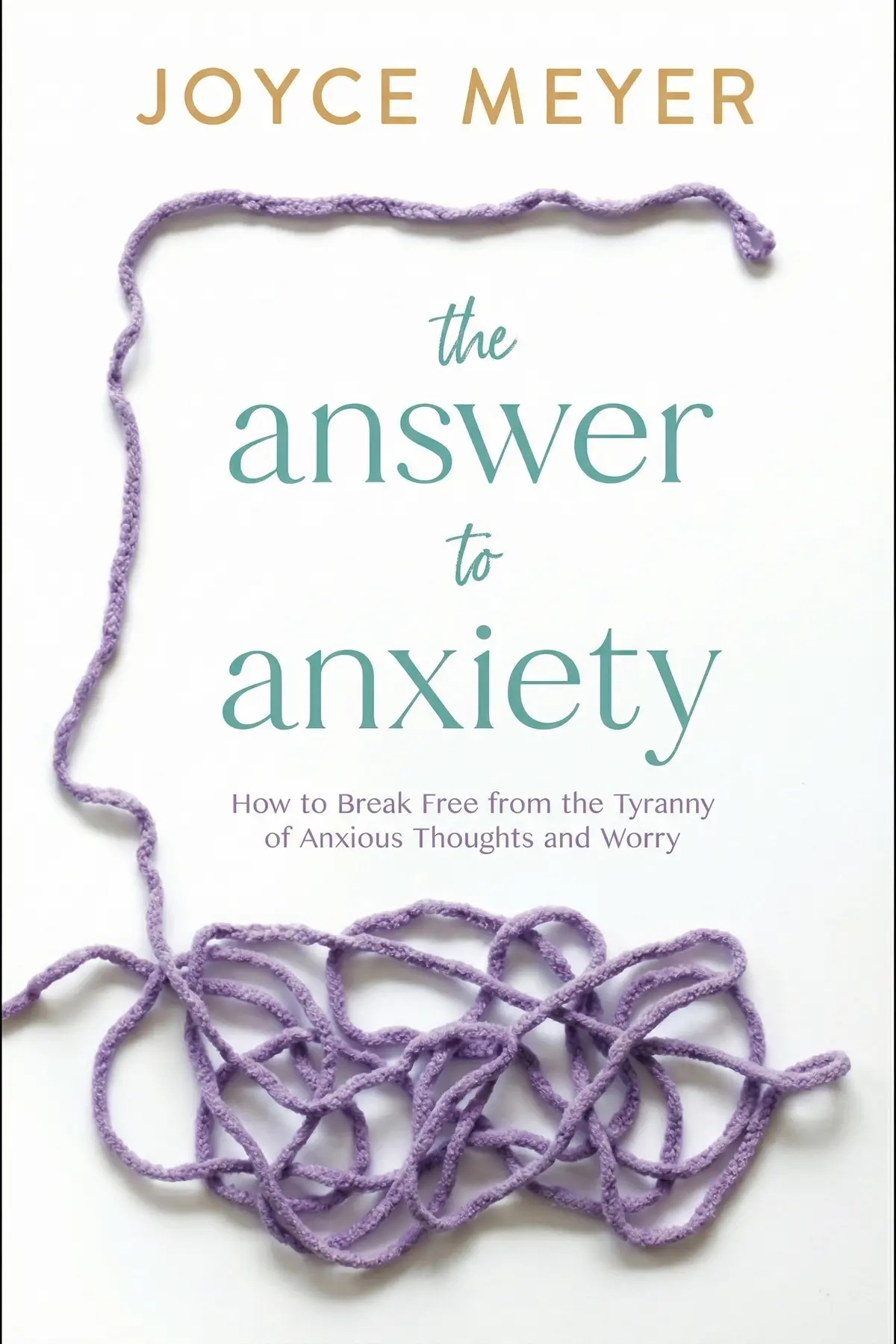
Table of Content
1. Introduction
1 min 05 sec
Worry rarely starts as a crisis. It starts as a small what-if about a driving test or a loved one far from home. Left alone, Joyce Meyer warns, those what-ifs can grow into a disorder that needs professional care. In The Answer to Anxiety, ministry president Meyer argues that the place to stop worry is early, in daily habits, and that the habits are already written in one Bible passage.
That passage is Philippians 4:6-7. In it, believers are told to be anxious for nothing and to bring every request to God in prayer, with thanksgiving. He promises that God’s peace will then guard them. Meyer reads it as four actions in order: refuse anxiety, pray first, give thanks and receive peace.
The book is written for followers of Christ, and its tools are spiritual ones. What it offers is a short routine of remembering, praying and thanking that a believer can start tonight. It also gives a clear way to see what keeps stealing their calm.
2. Name the three things feeding your worry
1 min 47 sec
Anxiety feels like one heavy cloud, yet Meyer traces it to separate sources, and one of them is something people do to themselves. Knowing which one is active changes how you respond.
3. Five habits that stop anxiety at the door
2 min 05 sec
A command to be anxious for nothing can sound impossible when the bills are due or a diagnosis is pending. Meyer pairs it with five daily practices, and the first one looks backward rather than forward.
4. Turn to prayer first, before anything else
1 min 55 sec
Many believers pray, yet Meyer says most of them get the timing wrong, and that mistake keeps them anxious longer than they need to be. Her fix asks for less effort in prayer, not more.
5. Write down your blessings and say thanks aloud
1 min 52 sec
Two words most people say dozens of times a week turn out, in Meyer’s reading, to be one of the four steps out of anxiety. The catch is that complaining comes more naturally.
6. Guard the peace you have already been given
1 min 55 sec
Meyer describes a peace that does not depend on problems going away. She also says you do not need to search for it. The real danger lies in what keeps taking it from you.
7. Conclusion
1 min 12 sec
Meyer turns a single passage into a daily routine. In her account, anxiety grows from small worries that nobody deals with. So she meets it with small acts, repeated: recalling what God has already done, praying before trying anything else, writing and speaking thanks, and protecting a peace that has already been given. None of these asks a believer to feel calm first. The calm is meant to follow the practice.
That makes the book easy to begin. The next time a what-if starts to run, name what is feeding it: a stress, a fear or an impossible standard. Bring it to God at once, in plain words or with the Lord’s Prayer when no words come, and resist the pull to take it back. Before sleep, write down what went right until the page shows more blessings than troubles. And when your calm is gone, ask which thief took it, a circumstance or your own way of thinking.
Meyer’s rainbow image is the one to keep. The gold at the end was never hidden. It was handed over before the walk began, and each day’s prayer and thanks is how a believer holds on to it.
About this book
What is this book about?
Everyone worries about something, whether it is a driving test or a family member far from home. Joyce Meyer's concern is what happens when those small worries are left alone. They pile up, take over a person's thoughts and can become a disorder that needs professional care. Her answer is to deal with worry early, every day, using tools she finds in Scripture. The whole book rests on one passage, Philippians 4:6-7. Meyer reads it as four actions in order. First, refuse anxiety, with five faith-based techniques to help. Second, make prayer the first response to a problem. Third, practice thanksgiving on purpose. Fourth, receive and protect the peace that she says Jesus has already given. The book is written for followers of Christ. Meyer explains where anxiety comes from: stress, fear and perfectionism. She shows how to pray simply, with or without the Lord's Prayer as a model, why writing blessings down changes what a person notices, and how to spot the peace thieves, both outside events and inner thoughts, that undo the rest.
Book Information
Who it's for
Sleepless Christian worriers
Christians whose small daily worries keep turning into sleepless what-if spirals.
Christians wanting prayer sooner
Believers who pray, but only once everything else has failed, and want a simpler, earlier habit.
Perfectionists wanting faith-based help
Readers who hold themselves to impossible standards and want faith-based tools for stress and fear.
About the Author
Joyce Meyer
Joyce Meyer, born in 1943, is president of Joyce Meyer Ministries, a Christian nonprofit based near Fenton, Missouri. A New York Times bestselling author of more than 100 books, she hosts the Enjoying Everyday Life program, broadcast worldwide on television, radio and online. Meyer is a survivor of childhood sexual abuse and has said she found healing by applying the Bible to her own life. In this book, she looks to the Bible for the answer to worry and fear.
Ratings & Reviews
Ratings at a glance

What people think
Listeners find this book accessible and clear, providing realistic guidance that assists in managing everyday anxiety. They value the scriptural foundation, with one listener noting that it is packed with helpful scripture and wisdom. Listeners highly praise the author, with one individual describing her as a gifted speaker and writer, while another highlights how the content moves their hearts.
Top reviews
Arthit
The 2017 health crisis Joyce mentions in the early chapters really hit home for me because it showed that even 'spiritual giants' aren't immune to the physical toll of stress. It’s a vulnerable admission that sets the tone for the rest of the book. Meyer doesn't just preach at you; she shares how she had to relearn the four commands of Philippians 4:6-7 during her own recovery. I found the 'strategy' sections incredibly helpful for everyday coping, especially the parts about dealing with daily troubles quickly before they snowball into full-blown anxiety disorders. Her writing style remains very easy to read and understand, making it perfect for morning devotions. This isn't just a book about theory; it is a practical roadmap for anyone who feels like their peace has been stolen by the world's chaos.
Show moreMattanee
Mama Joyce delivers exactly what my spirit needed during a season where everything felt like it was spiraling out of control. I appreciate how she levels the playing field by talking about her own struggles with stress and illness toward the end of 2017. It makes her advice on trusting God and believing He loves us feel much more authentic. The book is very readable and focuses on casting down the 'awful scenarios' we build up in our heads. I especially liked the reminder that Paul didn’t always pray for problems to go away, but for the strength to bear them with a good attitude. That is a tough pill to swallow but so necessary for spiritual growth. Her insights on prayer as a first resort rather than a last resort are life-changing.
Show moreThanit
Truth is, I’ve always found Meyer’s books to be hits, and this one is no exception for those struggling with worry. She emphasizes that anxiety is rooted in fear and that the miracle of prayer is our greatest weapon against it. One of my favorite parts was the discussion on 'casting down imaginations'—those toxic thoughts that create strongholds in our minds. Meyer gives a great strategy for choosing to believe in God’s love rather than our own fears. She also warns us about people or situations that steal our peace, which is a very practical takeaway for anyone’s social life. It's a quick and easy read that touches your heart. If you need to take the pressure off yourself to be perfect and just trust the Word, this is the book you need on your nightstand.
Show moreRohan
To be fair, I thought I had heard everything there was to say about worry, but Joyce has a way of making the Word feel fresh. The chapter on casting down imaginations was a game-changer for my daily commute anxiety. She teaches you how to stop the 'what-if' scenarios before they take root. I love her honesty about how she had to work through these commands herself, especially during her illness a few years back. It’s a short book, but the impact is huge because it’s so practical. She really highlights the idea that gratitude is spiritual warfare, which changed how I approach my morning prayers. This book is a wonderful tool for anyone wanting to successfully conquer worry and find that peace that passes all understanding.
Show moreBunyarit
If you are looking for a gifted writer who can translate complex spiritual truths into bite-sized daily actions, this is the one. Meyer focuses heavily on the four keys to peace—remembering victories, fighting the good fight, believing God is in control, and trusting Him completely. I really loved the section on why we feel the need to solve problems that aren't ours to solve. It’s a very quick read, but the impact of her scriptural wisdom lingers long after you finish the final page. It touches the heart because it comes from a place of her own struggles. Meyer doesn't just give you 'food for thought'; she gives you a battle plan for your mind. Highly recommended for those who need a biblical anchor during life's many storms.
Show moreWipada
Ever wonder why you can't seem to stop the cycle of 'what-ifs' in your mind? This book breaks down Philippians 4:6-7 in a way that feels actionable rather than just theoretical. Meyer identifies four distinct keys—praying immediately, being thankful, refusing to be anxious, and choosing to enjoy peace. Frankly, the point about gratitude being a form of spiritual warfare was a lightbulb moment for me. I’ve read several of her books, and while her tone can be a bit repetitive at times, the wisdom here is solid. She touches on the importance of not trying to solve problems we were never meant to solve, which is where most of my frustration comes from. It’s a quick read, but packed with enough scriptural wisdom to keep you thinking for weeks.
Show moreSukit
Finally got around to finishing this on my commute, and I have to say, the structure is incredibly user-friendly for busy people. The chapters are bite-sized but packed with helpful scripture. I’ve been a bit overwhelmed lately, and the reminder to 'remember past victories' really helped shift my perspective. Meyer suggests that our frustration often comes from trying to know as much as God, which is a battle we will never win. To be honest, I wish there was a bit more depth in some of the middle chapters, as it felt like she was skimming the surface of complex emotions. However, as a guide for everyday coping through a scriptural lens, it’s a solid resource. She really encourages you to ask God to change you rather than just changing your circumstances.
Show moreSumalee
As someone who has wrestled with chronic anxiety for years, I appreciated that Meyer didn't shy away from mentioning that therapy and medication have their place alongside the Bible. She frames the Word as a tool that works with other helps, not necessarily against them. The focus on Philippians 4 is excellent, and her four keys to overcoming—remembering victories, fighting for faith, believing God is in control, and trusting Him—are easy to memorize. Personally, I found the section on forgiveness and how it relates to peace to be the most convicting part of the book. We often complain about situations without praying about them first, and that hit home. It’s a very encouraging read, even if you’ve heard some of these points in her previous books or sermons.
Show moreYongyut
Not what I expected when I saw the title, as I was hoping for something a bit more clinical mixed in with the faith aspect. This is a very short book, and if you aren't a Christian, you’ll probably find the content way too religious. Meyer is a gifted speaker, but her writing here feels like a transcript of her teachings. She repeats four ways to respond to problems: don’t be anxious, pray, be thankful, and enjoy peace. It’s simple, maybe a little too simple for someone dealing with a diagnosed disorder. I did appreciate that she mentions the value of therapy and medication working in conjunction with faith, as that’s an important distinction. It’s a good reminder to live in peace, but it definitely targets a very specific, church-going audience.
Show moreJin
Look, I pick up books on mental health hoping for a toolkit of cognitive strategies, but this was essentially a long-form sermon. To be fair, if you are a devout follower of Joyce Meyer, you will likely love the heavy emphasis on scripture and the gospel. However, for those of us looking for practical tools that aren't strictly religious, this falls short. The advice boils down to 'don't have anxiety because God loves you' and 'give it to God.' While that sounds nice in theory, it doesn’t provide much help for the physiological reality of a panic attack. I struggled through the audiobook because it relied way too much on looking at scripture for comfort versus actual psychological techniques. If you aren't looking for a Bible study, you might want to skip this one.
Show moreQuestions about this book
What is the main idea of The Answer to Anxiety by Joyce Meyer?
Meyer argues that Philippians 4:6-7 holds a complete response to everyday anxiety. She reads it as four actions: stop being anxious with the help of five faith-based techniques, make prayer your first response, practice thanksgiving on purpose, and enjoy the peace she says Jesus has already given. Dealing with worry early, she believes, keeps it from growing into something far harder to manage.
What causes anxiety according to Joyce Meyer?
Meyer names three main triggers. Stress from events like a big presentation or a breakup makes people rehearse what might happen next. Fear of abandonment, money trouble, career failure or illness feeds worry, even though she believes most feared outcomes never happen. And perfectionism, holding yourself to impossible standards, creates a steady sense of falling short that turns into stress.
How does Joyce Meyer say to pray about anxiety?
Pray first, not as a last resort, and keep it simple: prayer is a heart-to-heart talk with God, with no need for fancy words. Meyer asks believers to forgive others, speak sincerely, ask plainly, pray in faith and with love, and keep God’s will in mind. If you don’t know what to say, use the Lord’s Prayer. Afterward, don’t take the worry back.
How can I apply The Answer to Anxiety in daily life?
Start by naming what is feeding a worry: stress, fear or perfectionism. Pray about it right away, then leave it with God. Write down your blessings until you see that they outnumber your troubles, and thank people aloud. Finally, list your peace thieves and notice which ones come from circumstances and which come from your own mindset, which Meyer calls the biggest thief.
Who should read The Answer to Anxiety?
The book is written for followers of Christ who want to handle worry through faith. It suits believers caught in what-if thinking, people who pray only once other options are exhausted, and perfectionists worn down by their own standards. Meyer frames it as a way to stop daily worries early, while acknowledging that worry left unchecked can become a disorder needing professional help.
Readers also enjoyed





Alcoholics Anonymous
Alcoholics Anonymous World Services


A Force for Good: The Dalai Lama's Vision for Our World
Daniel Goleman


A Liberated Mind: How to Pivot Toward What Matters
Steven C. Hayes
AUDIO SUMMARY AVAILABLE
Listen to The Answer to Anxiety in 15 minutes
Get the key ideas from The Answer to Anxiety by Joyce Meyer, plus 5,000+ more nonfiction titles.
- 5,000+ titles
- Listen as much as you want
- 7-day free trial
- Cancel anytime









