

14 min 01 sec
Available in: English
The Alter Ego Effect: The Power of Secret Identities to Transform Your Life
By Todd Herman
Shows how to perform under pressure by building a deliberate second identity, with its own name, story and trigger object, that brings out the courage and calm your everyday self struggles to reach.
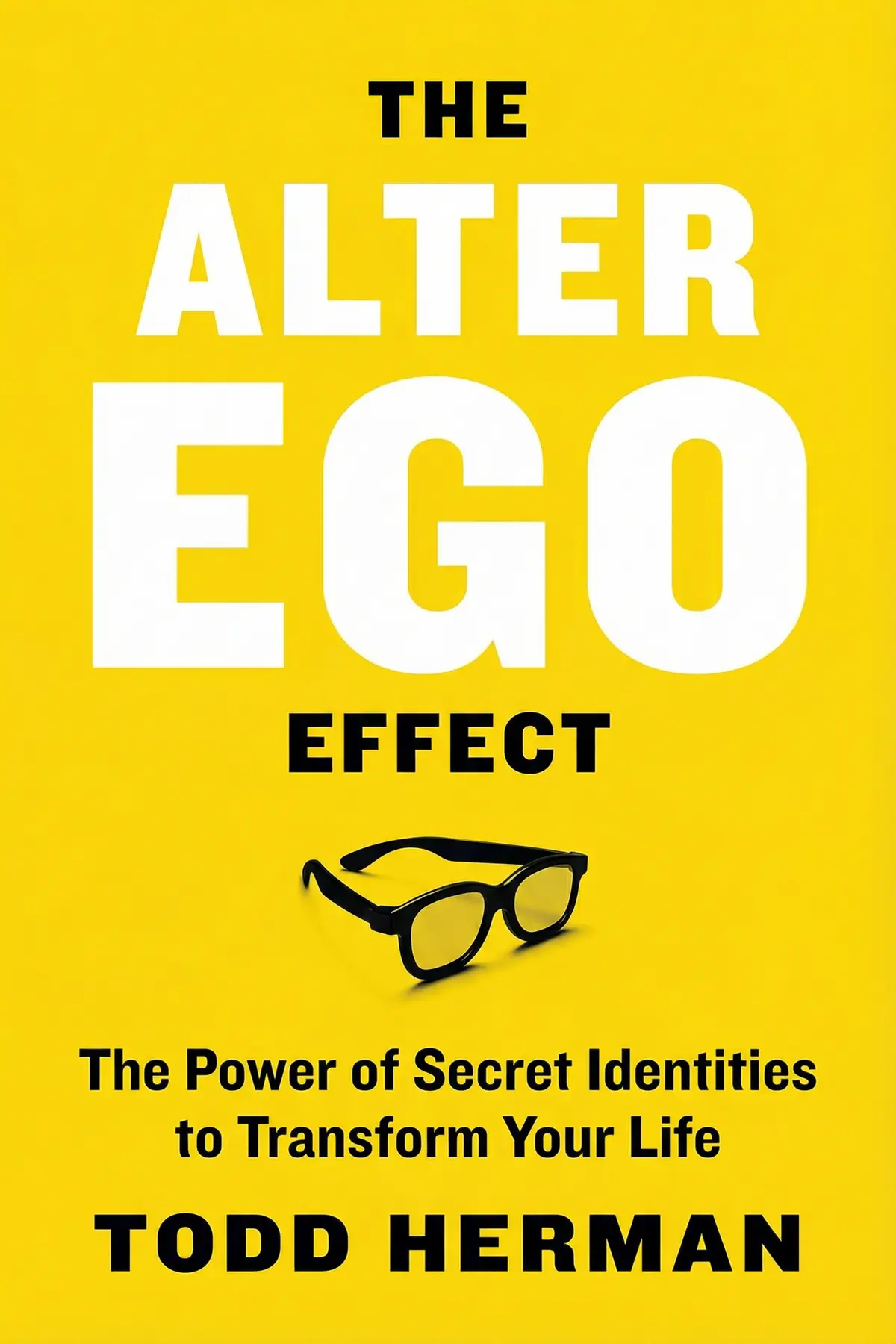
Table of Content
1. Introduction
53 sec
If your mind goes blank before a presentation or your voice shrinks in a client meeting, the problem may lie less in your ability than in which version of you shows up. In The Alter Ego Effect, performance coach Todd Herman argues that you can choose a different one. Athletes, singers and statesmen have stepped into a deliberately built second identity when the stakes rise, and even small children keep trying longer when they pretend to be Batman.
Herman’s case is that the strengths you need are already in you, and an alter ego is a practical way to reach them on demand. You name what you want to change, put a face on the doubt that stops you, then build a character with its own story, a physical switch and a ready answer for the moment you want to quit. Each step is small enough to try over a cup of coffee this week.
2. Borrow a bolder self for high-pressure moments
1 min 33 sec
A star athlete modeled himself on a horror film villain, and a gospel-raised singer invented a stage persona. A study of small children with a locked box suggests their trick is not as strange as it sounds.
3. Turn vague frustration into a precise list of changes
1 min 29 sec
A successful author stared at a blinking cursor while a voice told him he couldn’t write. His way out began with pinning down what was holding him back, and ended with a line from the novelist Victor Hugo.
4. Find a motive strong enough to carry you
1 min 34 sec
An entrepreneur kept calling herself a nonstarter, and her unfinished projects kept agreeing with her. Herman shows how the labels we repeat become instructions, and what has to replace them.
5. Shrink your inner critic until you can dismiss it
1 min 23 sec
A young tennis player kept losing points to a voice in her own head. She beat it by giving it a name and a body, and the body she chose made all the difference.
6. Build a character with a name, look and past
1 min 34 sec
A dressage rider whose nerves spread straight to her horse needed calm for two. The hero she picked came with a backstory that fit her sport almost perfectly, and that fit was no accident.
7. Switch identities in a second with a totem
1 min 29 sec
On the eve of becoming prime minister, Winston Churchill looked at his hats and asked himself a strange question. Martin Luther King had his own version of the same trick, and it sat on his nose.
8. Win the moment when self-doubt gets loud
1 min 28 sec
Movie heroes rally at the last second, but real people at their lowest point rarely do. Two tactics from the book prepare the comeback in advance, one of them a short speech you write while calm.
9. Practice in a coffee shop before the boardroom
1 min 21 sec
On a New York street in 1955, a young woman nobody noticed asked her photographer a question, changed her posture and drew a crowd within seconds. Her switch suggests where to rehearse yours.
10. Conclusion
1 min 17 sec
Herman’s method rests on a generous idea: the calm, bold person you need in a hard moment is already part of you, just not the part that usually shows up. Bo Jackson, Beyoncé, Churchill and Monroe did not invent new talents. They built a doorway to ones they had, with a name, a story and an object to pass through it.
Self-doubt, in Herman’s account, is normal. What changes the outcome is preparation. Before your next difficult meeting, name the voice that undermines you and make it small enough to dismiss, the way Valeria turned hers into a schoolyard bully. Choose a character whose story moves you, give it a totem you can touch in a second, and keep a few true sentences about your own record ready for when doubt attacks. Rehearse it somewhere safe, over coffee or a family game, until the switch feels ordinary.
Herman also suggests listing the mentors you admire and reading by or about them, since not everyone you learn from needs to become your alter ego.
The book closes on a single question, who you want to be when it counts, and the answer is something you can build before Monday.
About this book
What is this book about?
Sweaty palms before a presentation, a blank mind in front of the screen, a voice insisting you can't do this. Todd Herman, a performance coach to athletes and business owners, argues that the person who freezes doesn't have to be the person who performs. Top performers from Bo Jackson to Beyoncé have stepped into a second identity when the stakes rise, and a University of Minnesota study found that children dressed as Batman kept trying longer at an impossible task. Herman turns that idea into a method. First you list exactly what you want to change and why it matters to you emotionally. Then you give your inner critic a name and a small, harmless shape. After that you build an alter ego with its own name, look, values and story, link it to a physical totem such as a hat or a pair of glasses, and prepare a spoken answer for the moments when doubt attacks. The book is full of examples, from tennis players and a dressage rider to Winston Churchill choosing a hat and Norma Jean turning into Marilyn Monroe on a New York street. It ends with simple, low-risk ways to practice the switch before you need it.
Book Information
Who it's for
Professionals who go blank
Professionals whose minds go blank before presentations, pitches or sales calls.
Athletes, performers and creators
Athletes, performers and creators who lose their edge to a harsh inner voice.
Stuck with a label
Anyone stuck repeating a label like shy or inconsistent who wants a practical way to act differently.
About the Author
Todd Herman
Todd Herman grew up on a large farm and ranch in Alberta, Canada, and became an author, speaker and performance coach for people in sport and business. He created the 90 Day Year, a performance system for business owners that has twice won Global Leadership and Skill Development Program of the Year. His training programs have reached more than two million people, teams in the NFL, NBA and NHL use his coaching systems, and his company has won an Inc. 500 fastest-growing company award. He lives in New York City.
Ratings & Reviews
Ratings at a glance

What people think
Listeners find this work deeply perceptive and absorbing, with one noting the captivating way it describes its core principles. Furthermore, the material is remarkably productive and delivers practical stages for execution, labeling it a vital guide for those seeking personal transformation. Listeners also value the authentic tales and the framework for constructing an alter ego identity, with one listener stressing its advantages for both professional careers and athletic pursuits.
Top reviews
Por
Todd Herman has a way of making high-performance psychology feel incredibly accessible to the average person. I found the stories, especially the one about the kid traveling to NYC to meet him, to be genuinely moving and illustrative of the book's core themes. Frankly, the idea of a 'field of play' has completely transformed how I separate my high-stress work life from my time at home with family. By using a specific activation ritual—in my case, putting on a certain pair of non-prescription glasses—I can step into a more confident version of myself instantly. While some might find the concept of 'make-believe' for adults a bit silly, the results in my professional output speak for themselves. This isn't just about 'faking it'; it's about strategically choosing which parts of your personality to amplify in specific moments of impact. If you are serious about reinventing your approach to performance, this is a must-read.
Show moreSomsak
This book changed the way I show up for my business every single morning without fail. Before reading Herman’s work, I felt like I was constantly battling my own insecurities and overthinking every single move I made. Now, I have a named alter ego with specific traits that I step into the moment I sit down at my desk. Truth is, the concept of 'moments of impact' helped me realize that I don't need to be 'on' all the time, just when it matters most. The writing is engaging and Todd’s background coaching elite performers shines through in the practical steps he provides. I loved the specific details on naming your persona and choosing an physical object to engage the shift. It might sound like play-acting, but the psychological distance it creates from your fears is a powerful tool for anyone in a high-pressure environment.
Show moreKatya
Look, we all have a version of ourselves that we wish we could tap into more consistently when the pressure is on. This book provides the literal blueprint for doing exactly that by leveraging our natural human capacity for make-believe. I was impressed by how Todd Herman explains the 5 bridges to progress and how they relate to our inner resistance. The idea of using a 'totem' or a physical object to anchor your alter ego has been incredibly helpful for my public speaking engagements. I used to get so nervous, but now I 'put on' my persona along with my watch, and it changes everything. This is a highly insightful and engaging read that offers actual steps for anyone wanting to reinvent their professional identity. Don’t be fooled by the simple premise; the application of these ideas is incredibly deep and effective.
Show moreWatcharin
Is it a bit repetitive at times? To be fair, yes, but the methodology provided here is far more robust than your standard self-help fluff. Herman breaks down how to construct an alter ego with defined characteristics and a visual presence that you can summon whenever you face a challenge. I particularly appreciated the section on the '5 bridges to progress' because it gave me a roadmap for where I was getting stuck. Some chapters felt a little long-winded with anecdotes that shared the same basic message, but the actionable advice buried within those pages is gold. I’ve started using a small trinket on my desk as a totem to trigger my 'Inner CEO' persona, and the psychological shift is palpable. It helps remove the weight of personal judgment when I have to make tough decisions. Great read, even if you have to skim a few of the more redundant stories.
Show moreKevin
Finally, a self-help book that gives you a concrete framework instead of just shouting vague 'positive vibes' at you from every page. After finishing this, I spent an entire afternoon mapping out my different 'fields of play' and deciding which version of myself belonged in each one. It’s a very practical approach to identity and performance that goes beyond simple affirmations or the law of attraction. I will admit that some of the sections on naming your alter ego felt a little corny, but once you actually try the exercises, you realize why they work. My only real gripe is that the author tends to repeat himself to drive points home, which makes the book feel longer than necessary. Still, the insights into how our minds handle make-believe are worth the price of admission. It’s a solid 4-star resource for anyone looking to level up their mental game.
Show moreLeila
As someone who struggles with performance anxiety in competitive sports, this approach was exactly what I needed to hear. The book teaches you how to create a psychological shield between your 'self' and your 'performance,' which has been a total game-changer for my confidence. I’ve named my alter ego and even started wearing a specific wristband during games as my activation ritual to signal the shift. Gotta say, it really does help to remove the fear of being judged by others when you feel like you're playing a character. While some of the writing is a bit repetitive, the actual steps for implementation are clear and easy to follow. Herman’s experience with pro athletes is evident, and he provides plenty of relatable examples that make the concepts click. It’s an effective tool for anyone who feels stuck in their own head during big moments.
Show moreJin
After hearing Todd on a podcast, I decided to dive into the full 'Field of Play' system he describes in this book. Personally, I think the most valuable part is the focus on defining the specific characteristics of your alter ego so they are easy to visualize. It isn't just about being 'better'; it's about being specific—do you need to be more aggressive, more analytical, or more empathetic? The book provides a structured way to build that persona from the ground up, whether based on a real person or a fictional character. I did find some of the anecdotes a bit over-the-top, but they serve their purpose in showing how diverse the applications can be. It's a great blend of coaching wisdom and actionable psychology that actually works if you’re willing to do the work. I’m already seeing a difference in how I handle difficult client meetings.
Show moreDao
Ever wonder why some people just seem to 'turn it on' the moment they walk into a room or step onto a stage? This book pulls back the curtain on that phenomenon and shows you that it’s a skill you can actually develop. Frankly, the advice on creating activation rituals—like the athlete who used sugar pills—is worth the read alone. It’s a very tactical guide to personal growth that focuses on what you *do* rather than just how you *feel*. I appreciate that the author acknowledges the 'silly' side of this while proving how effective it is for top-tier performers. Some chapters are a bit long and the writing style can be a bit repetitive, but the core framework is solid. If you feel like you're holding yourself back from your true potential, this book will give you the tools to step out of your own way.
Show moreBee
The central concept of using an alter ego to bypass your own ego is actually quite brilliant, though the delivery left me wanting more. Look, I appreciate the expertise Todd Herman brings to the table, but the book is bogged down by way too many stories that illustrate the exact same point. I found myself skimming through the middle sections just to get to the actual 'how-to' parts regarding activation rituals and totems. It feels a bit like a 'fake it 'til you make it' strategy dressed up in fancy psychological terms, which won't appeal to everyone. To be fair, the specific advice on using sugar pills or clothing to trigger a mindset shift is interesting and based on real performance science. I just wish the editing had been tighter so the core message didn't get lost in all the fluff. It’s an okay read if you have the patience for it.
Show moreKanokwan
I really wanted to like this book after seeing the hype, but the signal-to-noise ratio is just too low for my taste. About 80% of this felt like filler and repetitive anecdotes that didn't add much new information after the first few chapters. Not gonna lie, the phrase 'but I’ll explain this later' appeared so often it started to become a distraction from the actual content. The core idea—using a persona to overcome resistance—is actually quite solid and could have been a brilliant 50-page manifesto or a long-form blog post. Instead, we get endless examples of athletes and business people that all start to sound the same after a while. If you can get past the cringe-worthy Superman analogies and the 'fake it 'til you make it' energy, there is a tiny bit of useful advice on activation rituals. Otherwise, save your time and just read a summary online.
Show moreQuestions about this book
What is the main idea of The Alter Ego Effect?
Todd Herman argues that the strengths you need under pressure already exist in you, and a deliberately built alter ego lets you reach them on demand. Performers such as Bo Jackson and Beyoncé use second identities, and a University of Minnesota study found that children pretending to be Batman persisted longer at an impossible task. The method combines a named character, a story, a physical totem and a prepared answer to your inner critic.
How do you create an alter ego according to Todd Herman?
Start from a quality you want, someone you admire, or a person you feel close to. Give the character a name, then define its look, behavior and presence, followed by its beliefs, values and expectations. Add a simple story with emotional pull, the way a dressage rider chose Wonder Woman, whose people rode horses into battle. Finally, link it to a totem you can activate quickly.
What is a totem in The Alter Ego Effect?
A totem is a physical object or action that switches you into your alter ego. Winston Churchill reportedly chose among his hats depending on which self he needed, and Martin Luther King wore glasses he didn’t need to feel more distinguished. Herman says a totem must mean something to you, be always available and be quick to activate, and it should be saved for important moments.
How does the book suggest dealing with negative self-talk?
Herman asks you to treat the critical voice as an enemy and give it a name and shape. A tennis player named Valeria turned hers into Igor, a stand-in for childhood bullies, which made it easy to dismiss. Another player tells her critic, Suzie, to leave her court. For the harshest doubts, Herman recommends a prepared response proclamation based on your own record of achievement.
How can I start using an alter ego right away?
Herman recommends low-stakes practice. Walk into a coffee shop, order and drink your coffee as your alter ego, or play a game with friends or family in character. These small tests show how strong the alter ego is and make switching familiar, so it is easier to call on during a real presentation or negotiation.
Readers also enjoyed

A High-Performing Mind: Strengthen Your Mind and Live Your Best Life
Andrew D. Thompson


Abundance: The Inner Path to Wealth
Deepak Chopra


59 Seconds: Change Your Life in Under a Minute
Richard Wiseman




AUDIO SUMMARY AVAILABLE
Listen to The Alter Ego Effect in 15 minutes
Get the key ideas from The Alter Ego Effect by Todd Herman, plus 5,000+ more nonfiction titles.
- 5,000+ titles
- Listen as much as you want
- 7-day free trial
- Cancel anytime









