

14 min 55 sec
Available in: English
The Airbnb Story: How Three Ordinary Guys Disrupted an Industry, Made Billions . . . and Created Plenty of Controversy
Shows how two broke designers turned spare air mattresses into a global home-sharing platform, and how each stage of growth meant earning trust from guests, hosts, minority travelers and city governments.
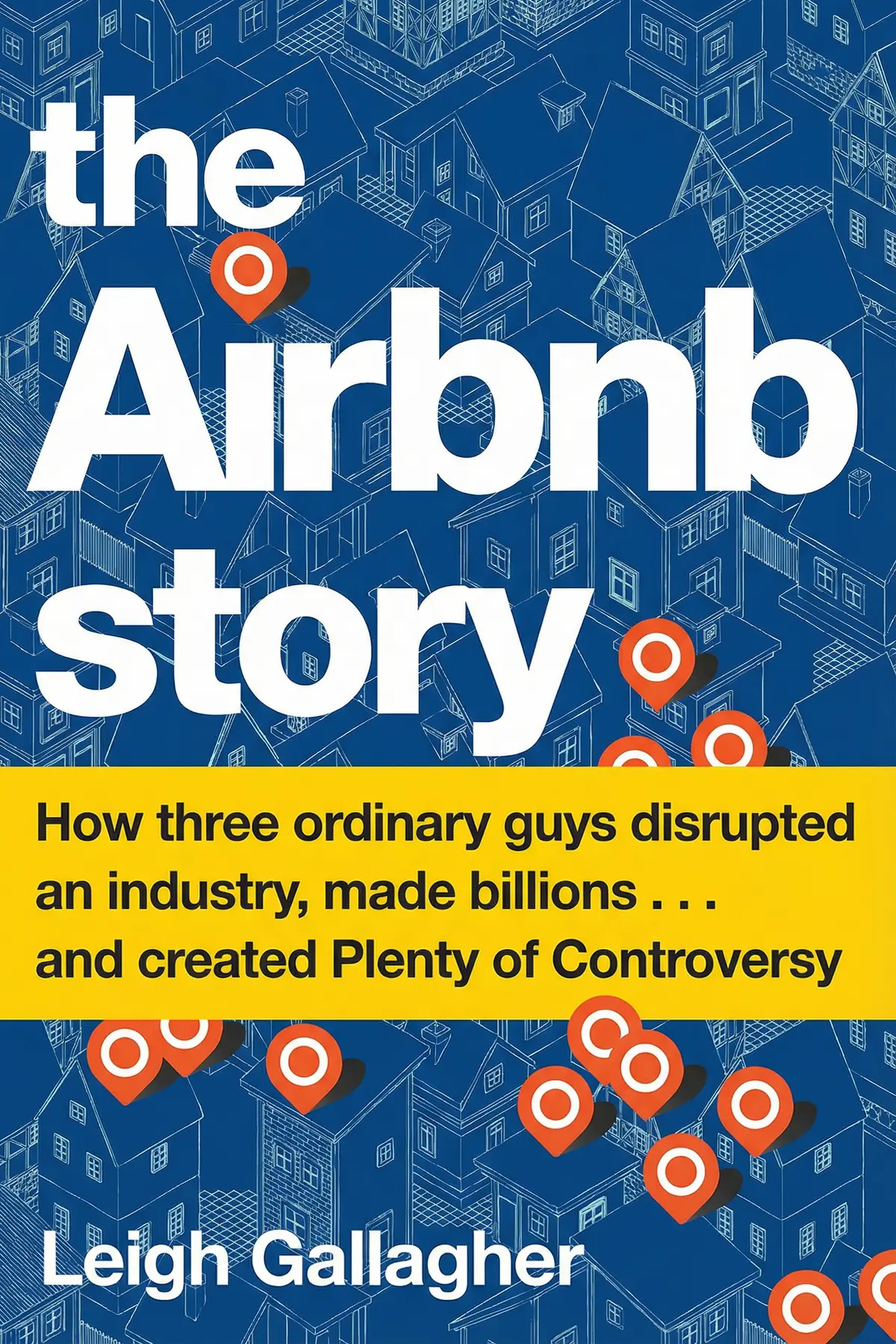
Table of Content
1. Introduction
1 min 08 sec
If you have an idea and no money, Airbnb’s early days show how fixing one unpaid bill can grow into a global company. In The Airbnb Story, Fortune journalist Leigh Gallagher follows two design graduates who could not cover their $1,150 rent and began renting air mattresses to strangers. Within a decade, investors estimated the company’s 2016 revenue at $1.6 billion.
Gallagher’s account is about more than a lucky idea. Most of us learned as children to avoid strangers’ cars, yet millions now sleep in strangers’ homes. Every stage of Airbnb’s growth meant removing one more reason for that fear. First the founders had to get hosts to open their doors. Then money had to change hands safely between people who would never meet, and minority guests and city governments had to believe the company was on their side. Follow those problems in order and you will see how a platform earns trust, where this one failed people, and what it changed afterward.
2. Start with the problem already in front of you
1 min 48 sec
Two young designers faced a simple choice: find more money or go home. Their answer cost almost nothing, took a few days to test and pointed toward something far bigger than one month’s rent.
3. Stay stubborn and let users reshape the product
1 min 53 sec
After their big moment, the founders’ website went silent. What saved them was a joke involving breakfast, a skeptical billionaire and a willingness to throw out half of their own company name.
4. Protect your culture with your very first hire
1 min 41 sec
Chesky spent half a year filling a single job while his company was growing fast. His reasoning about why that one person mattered so much applies to any team about to expand.
5. Make paying a stranger feel simple and safe
1 min 45 sec
Booking a room in another person’s home should take three clicks. Behind that promise sat a money problem so tricky that engineers elsewhere came to admire how Airbnb finally solved it.
6. Answer a crisis fast and own the failure
1 min 45 sec
A host came home to a wrecked apartment and still praised the company. Yet Airbnb treated its own response as a failure, and what it built next went far beyond one apology.
7. Photos and names can quietly let bias in
1 min 51 sec
The same profile pictures that help strangers trust each other turned out to work against some guests. A Harvard researcher and one businesswoman’s renamed profile forced the company to face it.
8. Bring hard evidence when regulators push back
1 min 49 sec
New York was Airbnb’s biggest American market and its fiercest opponent. When the state demanded half a million booking records, the numbers inside told a story both sides would have to reckon with.
9. Conclusion
1 min 15 sec
From outside, Airbnb can look like one lucky idea. Gallagher’s account reads more like a long chain of repairs. Two broke designers learned that strangers would sleep in their living room. After that, the company’s real work was making that leap feel safe for more people. Booking took three clicks, and payments waited until the guest was happy. Insurance went up and a 24-hour hotline opened. A policy against discrimination and a housing pledge for New York followed. Most of these fixes arrived after someone was hurt or pushed back.
There is still plenty of room to grow. A Cowen survey found that only half of people knew the company and just 10 percent had used it. Yet 80 percent of those who knew it wanted to try. Chesky decided to lead new products himself, such as Experiences, which offers trips like Willy, Elite Runner’s multiday visit to a high-altitude training camp in Kenya.
If you are building something, read each complaint as a map of where trust is missing. Then fix the system behind it, beyond the single case. And remember where it all began: sometimes the best business idea is the one that pays this month’s rent.
About this book
What is this book about?
Most of us were told as children never to get into a stranger's car. Today millions of people sleep in strangers' homes without a second thought. Fortune journalist Leigh Gallagher explains how one company made that shift feel normal, and what it cost along the way. The story starts in 2007 with Brian Chesky and Joe Gebbia, two design graduates who could not pay their San Francisco rent and began renting air mattresses to conference visitors. With engineer Nathan Blecharczyk they survived a dead website by selling novelty cereal, won a mentor at Y Combinator and backing from Sequoia, and dropped the mattress and the breakfast to become Airbnb. Gallagher does not stop at the success story. She follows the company through a trashed apartment and a slow apology, Harvard research showing racial discrimination by hosts, and a hard fight with New York over housing law. Each crisis forced a new system: insurance, verification, a safety team, an Open Door policy, a housing pledge. Readers get a clear picture of how a platform earns trust, why it fails, and what founders and managers can learn from both.
Book Information
Who it's for
Startup and side-project builders
Founders and side-project builders who want to see how a scrappy idea becomes a real company.
Managers handling company problems
Managers dealing with growth, culture, customer crises or regulators.
Curious about home sharing
Readers curious how sleeping in a stranger's home became normal, and what it cost.
About the Author
Leigh Gallagher
Leigh Gallagher is a journalist who has served as an assistant managing editor at Fortune and hosted Fortune Live. She has co-chaired the Fortune Most Powerful Women Summit and speaks often on business and the economy, appearing on programs such as Morning Joe, CBS This Morning, CNBC and Marketplace. The Airbnb Story, published in February 2017, followed her first book, The End of the Suburbs.
Ratings & Reviews
Ratings at a glance
What people think
Listeners find the narrative gripping and well-crafted, providing strong insight into the organization's beginnings. They appreciate the storytelling, with one listener noting how the author balances different perspectives. The book is praised for its look at corporate culture, the sharing economy, and the author’s background; one review mentions how the founders were candid about their private lives. Listeners value the book's practical nature, with one highlighting its usefulness for those starting new businesses.
Top reviews
Kaen
Finally got around to reading about how those cereal boxes actually saved a billion-dollar company, and it’s a wilder story than I imagined. Leigh Gallagher does a masterful job of tracing the trajectory from air mattresses in a San Francisco apartment to a global disruption of the entire hotel industry. The grit displayed by Chesky, Gebbia, and Blecharczyk during their early 'scrappy' phase is genuinely inspiring for anyone trying to build something from nothing. I particularly appreciated the focus on company culture and the 'Elephant, Dead Fish, Vomit' framework for radical transparency. It’s rare to see founders be this generous with the details of their private lives and internal struggles. The book is well-researched and flows with the energy of a fast-paced novel. If you're interested in the sharing economy or just want to see how a quirky startup survives near-bankruptcy, this is a must-read.
Show moreKiattisak
The sheer audacity of the founders' vision is what makes this book a must-read for anyone in the tech space. I was hooked from the first chapter about the Democratic National Convention cereal boxes. It’s a reminder that disruption isn’t just about a good app; it’s about persistence and faith when logic says you should quit. Gallagher gives us the full picture of how Nathan Blecharczyk created those growth hacking tools that eventually led to their Craiglist integration. The book is well-written and flows effortlessly, making complex business strategies easy to digest for the average reader. I especially liked the focus on the 'Belo' logo and what it represents for their community-driven mission. It’s an inspiring chronicle of how a wild idea can turn the world upside down. Definitely one of the better business biographies I’ve read this year.
Show moreKasemsan
Wow, I had no idea the path from air mattresses to a multi-billion dollar valuation was this fraught with near-bankruptcy moments and awkward pitches. This book is an incredible testament to the power of a broad vision and the willingness to iterate. The story of Joe, Brian, and Nathan is told with such warmth and detail that you can’t help but root for them. I loved the favorite quote mentioned in the text: 'We were more shameless than other people, and we were more curious.' That really sums up the whole Airbnb ethos. Gallagher doesn't treat this as a fairytale; she shows the grit and the 'dead fish' moments that come with scaling a massive platform. The insights into their company culture and the way they handle internal conflict were the highlights for me. Highly recommended for any entrepreneur.
Show moreSomrutai
As a frequent traveler who relies on the app, I found Gallagher's deep dive into the company culture surprisingly gripping. She doesn't just treat the business like a series of spreadsheets; she looks at the human element of trust that makes the platform work. I was fascinated by the 'Perfect Triangle' of the founders—Chesky’s obsessive leadership, Gebbia’s design-led empathy, and Blecharczyk’s analytical growth hacking. My only gripe is that the narrative occasionally feels a bit too polished, perhaps glossing over the more aggressive tactics used against the hotel lobby. To be fair, the author does cover the regulatory battles in New York, but it’s clear she has a lot of respect for the founders. It’s an insightful look into the rise of a giant that definitely redefined how we think about hospitality. A solid four stars for the sheer amount of detail provided.
Show moreHazel
Ever wonder how three guys managed to convince millions of people to let total strangers sleep in their spare bedrooms? This book answers that question through a meticulous study of innovation and endurance. Gallagher captures the chaos of the early days beautifully, highlighting the moments where the founders had to stay uncomfortable to survive. I loved the section on 'Learning to Lead' because it shows that even world-class CEOs start with no idea what they are doing. The growth curve of Brian Chesky is particularly instructive for any aspiring entrepreneur. The book is crisp and journalistic, though it does get a bit bogged down in statistics and data points toward the middle. Still, the storytelling is effective and provides a balanced enough look at the triumphs and the ethical tightropes the company has walked. Great for startup enthusiasts.
Show moreAisha
Leigh Gallagher manages to capture the structured chaos of a startup that truly disrupted the entire hospitality industry. Picked this up looking for business strategy and ended up with a fascinating character study on complementary leadership styles. The way the three founders balanced each other out—design, tech, and business—is a blueprint for any new venture. I found the sections on their time in Y Combinator particularly helpful. Not gonna lie, I expected a bit more focus on the controversies, but the author does a fair job of mentioning the regulatory hurdles even if she stays mostly positive. The writing style is engaging and well-paced, avoiding the dry tone of many business books. It’s an informative read that highlights both the challenges and the lucky breaks that made Airbnb what it is today. Very much worth the time.
Show moreNing
After hearing so much about Airbnb’s IPO, I wanted to understand how they actually got there. This book provides a very clear, well-researched map of that journey. Gallagher’s writing is engaging, and she successfully navigates the complex history of the sharing economy without making it feel like a textbook. The detail about the founders’ early days living on cereal is legendary for a reason, and it’s captured perfectly here. Look, it’s not perfect—some parts about the New York legal battles are a bit dry—but the overall narrative is strong. It’s a great study in how to scale a community and build trust in a digital world. The author presents both sides of the story regarding the hotel industry, even if her bias toward the founders is a little evident. Overall, a very useful and enlightening read for anyone in business.
Show moreMattanee
While the research is clearly exhaustive, the middle sections regarding municipal regulations and local laws in New York were a total slog for me. Truth is, I enjoyed the chapters about the actual hosts and their personal experiences way more than the legal minutia. As a non-US citizen, many of the quotes from local politicians and specific zoning debates meant absolutely nothing to me and made the story feel very local rather than global. It took me weeks to finish because I kept putting it down during the more tedious policy chapters. Gallagher is a great writer, but the pacing is uneven. To be fair, she does fish out some interesting details about the company's seed form that I hadn't heard before. It’s a decent overview of the sharing economy, but it might leave some readers wanting more critical depth.
Show moreLucas
Not what I expected when I bought it, but it was an okay read nonetheless. The book does a fine job detailing the journey from quirky startup to global giant, but it feels a bit too focused on the positive growth. I would have appreciated a more balanced coverage of the criticisms regarding gentrification and the housing crisis. Personally, I found the legal stuff a bit tedious, though I understand why it was included to show the hurdles they faced. Gallagher's background as a journalist shows in her crisp prose, but it lacks the deep critical analysis I was hoping for. It’s a good overview for someone who knows nothing about the company, but for those of us following tech news, there isn’t much new information here. A decent, middle-of-the-road business history.
Show moreWararat
This felt less like a journalistic endeavor and more like a 200-page brochure for an upcoming IPO. Honestly, the tone is so incredibly insincere at points that it’s hard to stay engaged. The narrative paints the founders as flawless geniuses and the hotel lobby as some sort of cartoonish evil entity. Where is the critical analysis? I wanted to see more about how Airbnb impacts local housing markets and the actual negative consequences of their disruption, but those issues are mostly pushed to the side. If you want a really engaging story about a tech company in the travel space that actually feels real, go read 'Truck Full of Money' about Paul English instead. This one just felt like advertising. The writing is professional enough, but the substance just isn't there for me. It’s a very one-sided account.
Show moreQuestions about this book
What is The Airbnb Story by Leigh Gallagher about?
It traces how Brian Chesky, Joe Gebbia and Nathan Blecharczyk grew a plan to rent air mattresses for $80 a night into a global accommodation platform. Gallagher covers the early stunts and funding, the company’s culture and payment design, and the controversies over safety, racial discrimination and short-term rental laws, especially in New York.
How did Airbnb get started?
In 2007, two design graduates in San Francisco could not pay their $1,150 rent. A design conference was filling the city’s hotels, so they rented out three air mattresses and called the idea AirBed & Breakfast. Three guests booked within days. Later, selling Obama O’s and Cap’n McCain cereal won them a mentor in Paul Graham of Y Combinator.
How did Airbnb respond to racial discrimination on its platform?
After Harvard researcher Michael Luca’s studies and Quirtina Crittenden’s story about being rejected until she changed her photo and name, Chesky apologized publicly. Airbnb introduced an Open Door policy offering a comparable place to stay to anyone who faced discrimination. It gave photos less weight and reviews more, and it planned unconscious bias training for hosts.
What can founders learn from The Airbnb Story?
Test an idea cheaply on a real event, go where your users are and let their requests reshape the product. Take your time over early hires, since Chesky spent six months on the first one. When something goes wrong, respond fast and own it, then build systems such as insurance, verification and a safety team so the problem does not happen again.
Readers also enjoyed


7 Powers: The Foundations of Business Strategy
Hamilton Helmer



Alibaba: The House That Jack Ma Built
Duncan Clark

Be A Free Range Human: Escape the 9 to 5, Create a Life You Love,
Marianne Cantwell

Be Obsessed or Be Average
Grant Cardone
Being Boss: Take Control of Your Work and Live Life on Your
Kathleen Shannon
AUDIO SUMMARY AVAILABLE
Listen to The Airbnb Story in 15 minutes
Get the key ideas from The Airbnb Story by Leigh Gallagher, plus 5,000+ more nonfiction titles.
- 5,000+ titles
- Listen as much as you want
- 7-day free trial
- Cancel anytime









