

11 min 58 sec
Available in: English
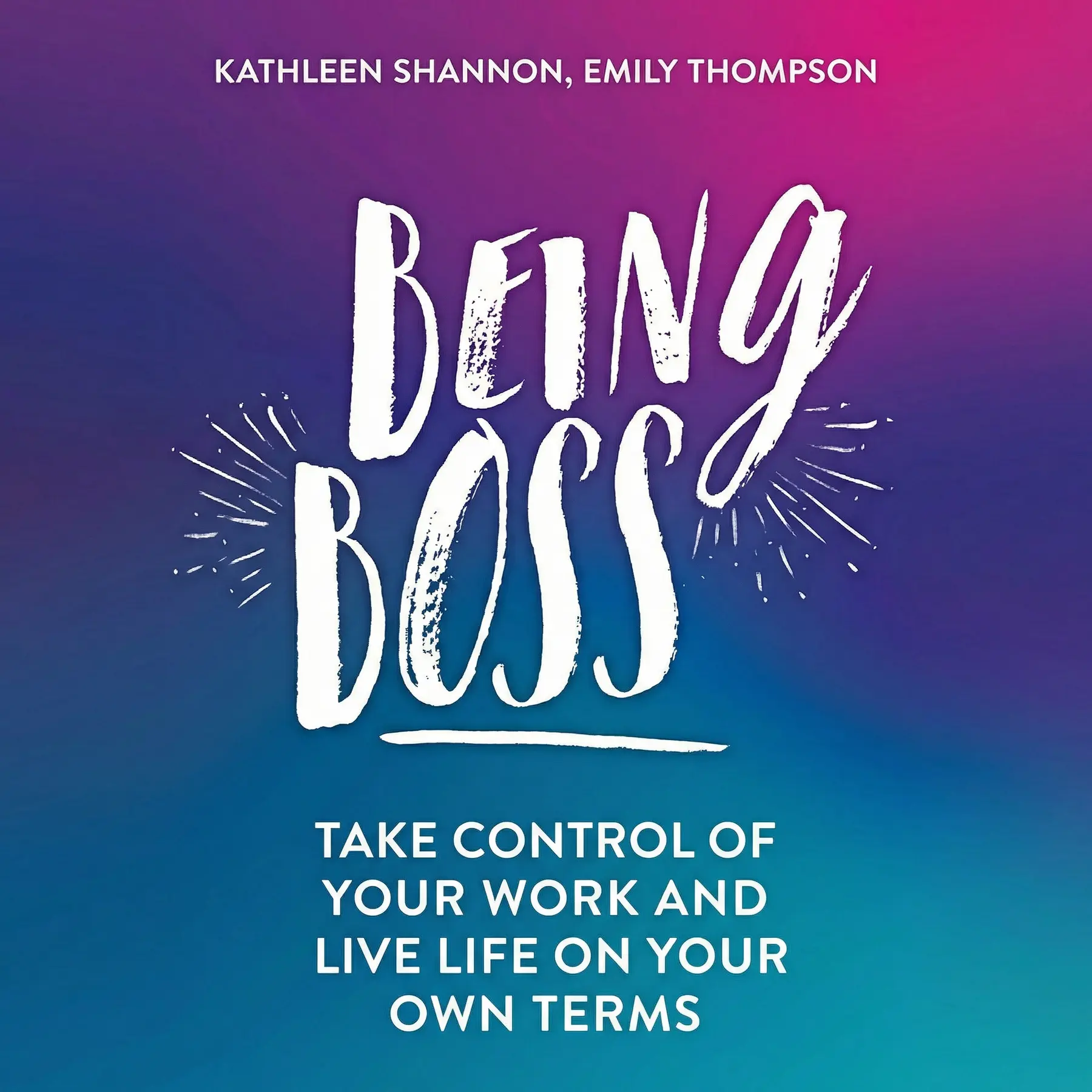
Being Boss: Take Control of Your Work and Live Life on Your Own Terms
A practical guide to becoming your own boss. It shows how to name your core values, guard your time with boundaries, build routines, write a simple plan, reach 200 potential clients and protect a life outside work.
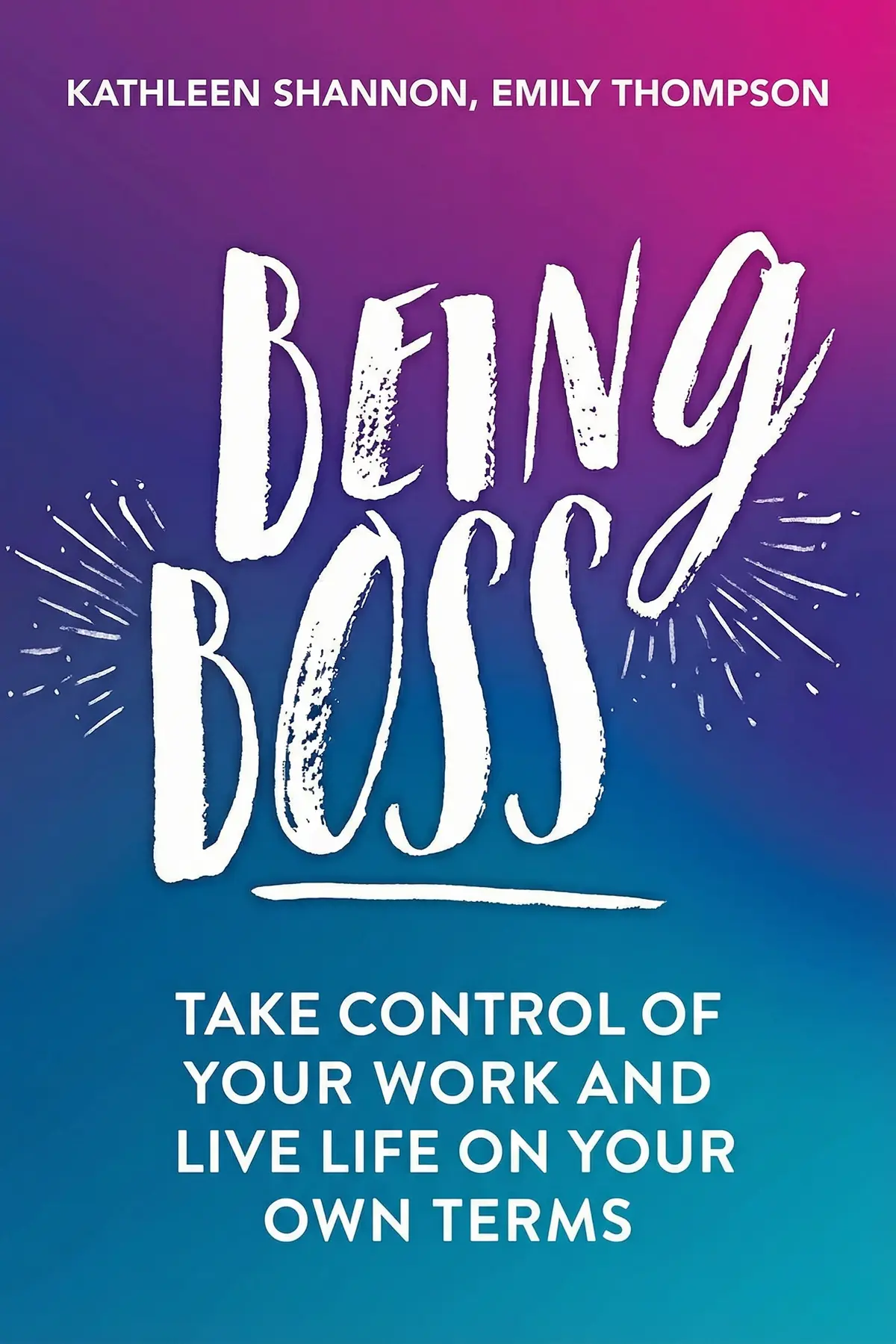
Table of Content
1. Introduction
1 min 03 sec
According to the analytics firm Gallup, only 30 percent of employees in the United States, roughly three in ten, feel engaged and enthusiastic about their work. No wonder so many people dream of running their own business. Yet a dream without structure tends to stay a dream. In Being Boss, podcast hosts and business owners Kathleen Shannon and Emily Thompson explain what it takes to make the leap, and how to keep a life worth living once you have.
Their argument is that being boss is a matter of intention. You design your business and your life on purpose, commit to the hard work and trust that the process will pay off. That design rests on a handful of foundations the authors heard again and again from entrepreneurs and creatives.
Follow them and you end up with five to ten core values, boundaries that other people respect, a daily routine, a simple business plan, a list of 200 people to reach and a bucket list that keeps work in its place.
2. Find the core values that steer every decision
1 min 46 sec
Two designers share the same dream and the same fear that they are aiming too high. Only one of them goes ahead, and the authors put the difference down to her mindset.
3. Fence off time for what you want to grow
1 min 41 sec
You water and feed your plants faithfully, yet they keep struggling. The reason is hiding in plain sight, and it explains why so many new business owners burn out before anything takes root.
4. Build a morning that carries the rest of your day
1 min 43 sec
Two owners run nearly identical businesses, and one is clearly winning. The gap opens before either of them has answered a single message, in the first hour after waking up.
5. Write a short business plan that keeps money coming
1 min 18 sec
A business plan sounds like a thick document for bankers. The version recommended here is kept simple, and it also asks you to describe the feeling you want to have while you build the business.
6. Get noticed by 200 people you want to work with
1 min 40 sec
Most new owners wait for clients to discover them. A single list, built before you send any pitch, changes that, and a steady habit of publishing does the rest.
7. Plan your life with the care you give clients
1 min 35 sec
Many people start a business for freedom and then never use it. Here the time off, the bucket list and the friendships get planned as deliberately as any client project.
8. Conclusion
1 min 12 sec
Being boss, as Shannon and Thompson describe it, is a matter of design, and their garden carries the whole idea. You choose what to grow, fence it in, tend it daily and keep watering long after planting, because nothing grows on hope alone. Values tell you which seeds are yours. Boundaries and routines keep the plot from being overrun. The plan, the list of names and the steady stream of content are the watering. The bucket list reminds you why you planted anything in the first place.
The authors also ask for something harder to schedule: commitment to enjoying the process and trust that it will pay off. That trust lets you keep going while results are still small, and it keeps worry from taking over.
If you want a place to begin, narrow your values to the few you would fight for, and test your next big yes against them. Pick one boundary, say it out loud to a client or a family member, and then keep it yourself. Find one ambitious friend and put your first meeting in the calendar this week.
A business of your own only means freedom if you also own the life around it.
About this book
What is this book about?
Plenty of people dream of leaving their job to work for themselves. Far fewer manage it, because the leap brings hard questions. How do you plan a business and give it structure, and where do family, friends and hobbies fit once you are responsible for everything? Kathleen Shannon and Emily Thompson, the hosts behind a podcast for creative entrepreneurs, call their answer being boss. It means building the work and the life you want with intention, committing to the effort and trusting that it will pay off. From their conversations with entrepreneurs and creatives, they pull out a set of recurring foundations. The first is a mindset built on values, confidence and positivity. Clear boundaries and healthy routines come next, followed by a simple business plan and a deliberate way of reaching clients. The last is a life outside work planned as carefully as the business. Readers get concrete exercises: narrowing a list down to five to ten core values, writing a short business plan, building a list of up to 200 people to contact and starting a bucket list of 20 items.
Book Information
Who it's for
Dreaming of self-employment
Employees who dream of working for themselves but don't know where to start.
Self-employed working evenings
Freelancers and creative business owners whose work has spilled into evenings and weekends.
New founders wanting structure
New founders who want a simple plan, steady routines and a concrete way to find their first clients.
About the Author
Kathleen Shannon
Kathleen Shannon and Emily Thompson started the Being Boss podcast for creative entrepreneurs in 2015, interviewing guests such as Brené Brown, Marie Forleo and Ramit Sethi. Thompson co-founded Being Boss, which also offers resources and a community for creative business owners, took over the podcast in 2020 and is CEO of the retailer Almanac Supply Co. Shannon is a co-owner of Braid Creative, a boutique branding agency. Both run their own businesses, the life this book describes.
Ratings & Reviews
Ratings at a glance
What people think
Listeners find this work both motivating and empowering, packed with useful suggestions and hands-on guidance for entrepreneurs ranging from novices to veterans. Additionally, the book features a stunning design and offers significant insights, including specific exercises that transform it into a highly actionable tool. Listeners also enjoy the narrative style and engaging tone, with one review highlighting how various guest contributors share their personal journeys.
Top reviews
Komsan
Picked this up because I’ve been a long-time listener of the podcast, and let me tell you, the physical book does not disappoint. The design is absolutely stunning—it’s one of those books you actually want to keep on your desk for daily inspiration. Kathleen and Emily have a way of making business feel less like a grind and more like a creative journey. I loved the blend of "suit and woo," balancing hard numbers and marketing strategies with intuition and ritual. The exercises throughout are super helpful for clarifying your vision. It isn't just theory; it’s a toolkit for anyone trying to build a life on their own terms. Even if you aren't an entrepreneur yet, the sections on mindset and self-care are worth the price alone. I found myself highlighting almost every other page.
Show moreApichat
Wow. I didn’t expect a business book to make me feel this seen as a creative professional. Instead of the typical hustle culture nonsense that tells you to work 24/7, this guide focuses on building a business that supports your life, not the other way around. I specifically resonated with the idea of a "Mandatory Lazy Day"—it sounds simple, but it’s a radical act for a workaholic like me. The storytelling approach, featuring guest contributors, adds a lot of depth and variety to the perspectives shared. It’s gorgeously designed and feels more like a mentorship session than a textbook. I’m already recommending this to every entrepreneur in my circle who needs to remember why they started their business in the first place. This is truly special.
Show moreVilaiporn
As a creative business owner who's been struggling with burnout, this book felt like a deep breath of fresh air. Kathleen and Emily don't just tell you to work harder; they tell you to work smarter by honoring your intuition and setting firm boundaries. I spent an entire weekend filling out the worksheets and it really helped me reconnect with my original "why." The sections on branding and marketing were surprisingly clear and devoid of typical corporate jargon, which I appreciated. Not gonna lie, I was skeptical about the more "spiritual" elements at first, but they integrate them in a way that feels practical rather than flighty. It’s an empowering resource that I’ll definitely keep on my shelf for whenever I feel lost in the weeds.
Show moreEllie
This book completely shifted how I view my productivity and self-care routines. For years, I thought I had to sacrifice my health to grow my brand, but "Being Boss" taught me that those "radical acts of self-love" are actually essential for long-term success. The concept of the business plan here is refreshingly simple and focuses on what actually matters rather than 50-page documents no one reads. I’ve already started implementing the strategy to share my expertise more broadly, and the results are already showing. It’s inspiring, well-organized, and filled with the kind of spot-on advice you usually have to pay a consultant thousands for. An absolute must-read for any ambitious woman out there. My notes and highlights are everywhere!
Show moreChloe
The chapter on boundaries was exactly what I needed at this stage in my freelance career. Truth is, I was drowning in emails and client demands before reading this. Shannon and Thompson provide such actionable advice on how to reclaim your time without feeling guilty. They talk a lot about "being boss" of your own life, which includes your habits and personal values, not just your profit margins. I found the worksheets particularly effective for mapping out a strategy that actually feels sustainable. Sometimes the tone gets a little "influencer-heavy," but the core message remains solid. If you struggle with saying no or finding a routine that sticks, this is for you. It’s a grounded look at entrepreneurship that skips the usual toxic hustle culture.
Show moreSukit
After hearing so many people rave about "Being Boss," I had high expectations, and it mostly met them. It’s a very practical resource for those who are just starting out or feel stuck in their current growth phase. The way the authors organize the content—moving from personal values to business strategy—makes total sense. Personally, I think the most valuable part is the emphasis on finding a "business bestie" to share the journey with. Entrepreneurship can be incredibly lonely, and having that support system is vital. My only gripe is that some of the branding advice felt a bit basic for someone who has been in the industry for a while. Still, it’s a great refresher with plenty of inspiration and beautiful photography to keep you engaged.
Show moreBae
Ever wonder why some people seem to navigate the stresses of entrepreneurship so much better than others? This book suggests it’s all about the foundation you build before you even start selling. I really liked the emphasis on personal values and how they dictate your business decisions. The authors do a great job of breaking down complex ideas into manageable habits. Frankly, some of the guest stories felt a bit short, and I would have loved to dive deeper into their specific challenges. However, the overall message of taking control of your life is very motivating. It’s a solid read for anyone needing a push to finally take their creative passion seriously and treat it like the real business it is.
Show moreHana
Finally got around to reading this, and the first thing that struck me was the aesthetic. It is a stunningly produced book! Beyond the looks, there is a wealth of actionable advice for those trying to bridge the gap between "starving artist" and successful CEO. I especially loved the focus on the community aspect—reaching out to others and not trying to do it all alone. The advice on recruiting clients and sharing your expertise was very straightforward. Gotta say, a few of the chapters felt a little fluffy, but the overall energy is so encouraging that it’s hard to stay critical for long. It definitely gives you the confidence to start making big moves while maintaining your sanity and personal health.
Show moreSeksan
To be fair, this is a beautiful book with some truly solid insights, but I felt like I’d heard a lot of it before in other business podcasts. If you’re a regular listener of their show, you might find some of the material repetitive and a little bit surface-level. That said, the way they present the "Suit meets Woo" philosophy is unique and helpful for those who want to balance logic with intuition. I did appreciate the sections on healthy routines and the focus on the "daily grind" being about more than just work. It’s a decent guide for beginners, but more seasoned owners might find it a bit light on advanced strategy. It’s still worth a read for the gorgeous layout and the occasional "aha" moment regarding self-care.
Show moreRuangrat
Look, I really wanted to love this given the rave reviews, but it just didn't click for me. Most of the advice felt very "intro to business" and lacked the technical depth I was looking for as an established author. If you’ve read any other modern entrepreneurship books, you’ve seen most of these tips on routines and "mindset" before. It felt more like a lifestyle blog in book form than a serious business manual. While the design is pretty, it doesn't make up for the lack of new information. I suppose if you are brand new to the world of creative business it might be useful, but for me, it was a bit of a letdown. I expected more concrete strategies and fewer vague rituals.
Show moreQuestions about this book
What is the main idea of Being Boss?
Kathleen Shannon and Emily Thompson argue that being your own boss means building both your business and your life with intention. You commit to the hard work and trust that it will pay off. Their foundations are a mindset grounded in values, confidence and positivity, clear boundaries, healthy routines, a simple business plan, consistent outreach and content, and time and effort invested in the life outside work.
How do you find your core values according to Being Boss?
The authors suggest writing down every value that resonates with you, such as honesty, stability or creativity, using online lists for ideas. Recall the times you felt happiest and most fulfilled and mark the values present in them. Group similar values, then ask whether you would fight to defend each one. Keep narrowing the list until five to ten core values remain.
How does Being Boss suggest finding clients?
Make a list of the people you would like to work with, as many as 200, with their email addresses, social media handles and websites. Then reach out, interact with them online and build the relationships over time. Alongside this, put out strong content on a steady schedule, such as newsletters, blog posts, social media updates or a podcast, so people can see precisely which services you provide and the level of quality you deliver.
Who should read Being Boss?
It suits people who want to leave a regular job and start their own business, and creative entrepreneurs who already have one but feel stretched thin. The advice is practical and personal: setting boundaries such as no weekend email, building a morning routine, writing a short business plan, planning time off with automatic replies and scheduled posts, and finding a best friend in business to share goals and wins with.
Readers also enjoyed

Alibaba: The House That Jack Ma Built
Duncan Clark



A High-Performing Mind: Strengthen Your Mind and Live Your Best Life
Andrew D. Thompson


Abundance: The Inner Path to Wealth
Deepak Chopra


59 Seconds: Change Your Life in Under a Minute
Richard Wiseman

AUDIO SUMMARY AVAILABLE
Listen to Being Boss in 15 minutes
Get the key ideas from Being Boss by Kathleen Shannon, plus 5,000+ more nonfiction titles.
- 5,000+ titles
- Listen as much as you want
- 7-day free trial
- Cancel anytime









