

16 min 36 sec
Available in: English
The AI Economy: Work, Wealth and Welfare in the Robot Age
By Roger Bootle
Shows why robots and AI are likely to reshape work instead of ending it, which jobs and industries will shift, and how sensible policy and better education can spread the gains so inequality does not widen.
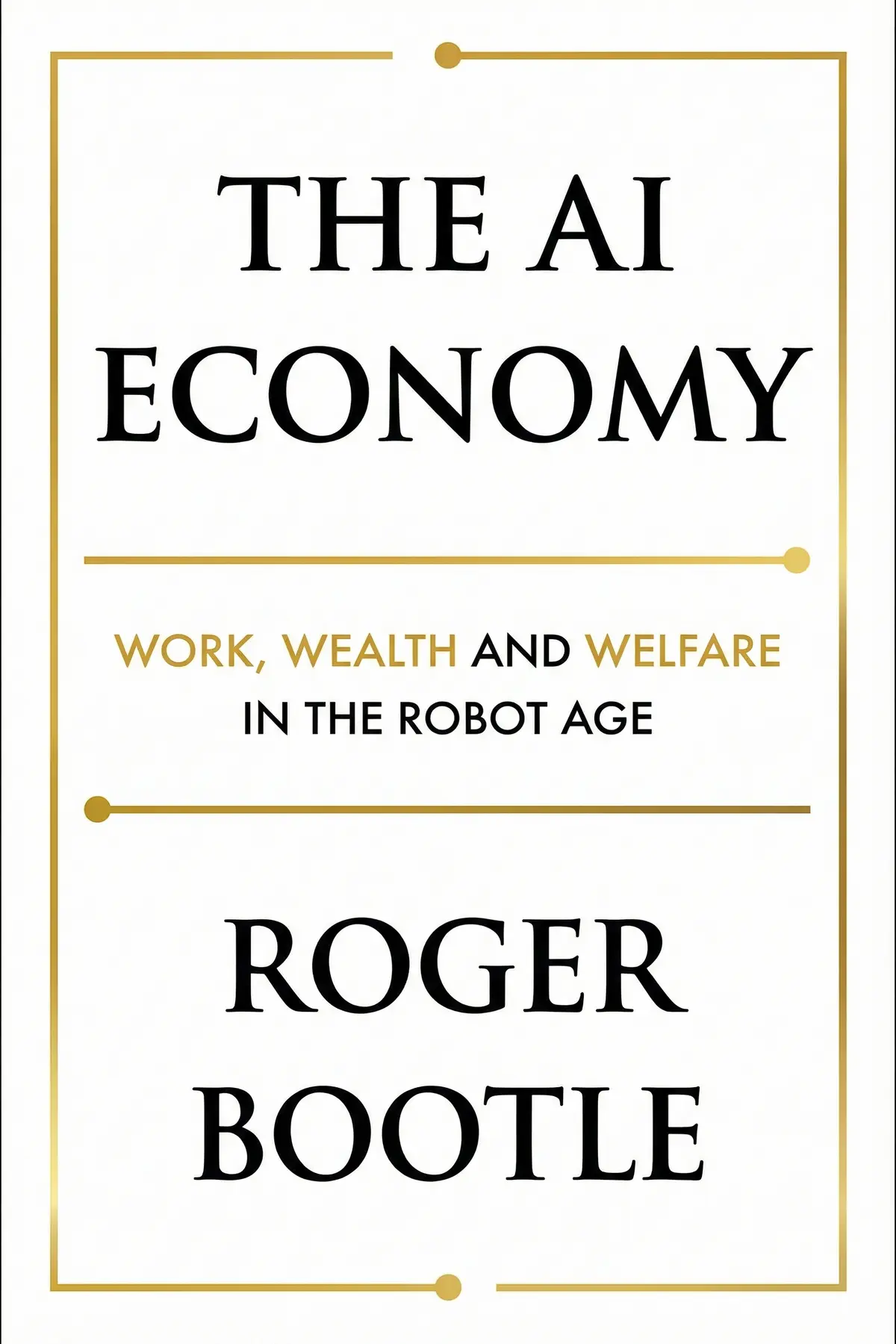
Table of Content
1. Introduction
1 min 02 sec
If headlines about AI leave you worried for your job, Roger Bootle offers a calmer and more useful map. In The AI Economy, the founder of the research firm Capital Economics argues that robots and AI are a fourth industrial revolution, much like steam, electricity and the computer, and that earlier revolutions made ordinary people far richer over time.
The fear is real. A 2015 Chapman University survey found that Americans feared robots replacing them more than they feared death. Bootle’s case is that work will change shape and keep going, that the larger gains could come as productivity and free time, and that the true risk is a widening gap between rich and poor, one that governments and schools can narrow.
Along the way, he shows which jobs are exposed, where new industries should grow, what sensible policy looks like, and why the skills worth building now are human ones.
2. Read the AI hype against three earlier revolutions
2 min 05 sec
Forecasts promise machines smarter than all of humanity within decades. A board game victory and a hunt for a single cat on YouTube suggest a more ordinary story, and an older pattern worth knowing.
3. Spot which jobs machines take and which they can't
2 min 22 sec
Hundreds of millions of jobs could vanish by 2030, yet total employment may hold steady. The explanation runs through American farms, self-driving cars that still need a driver and a robot with a surprising price tag.
4. Your workweek could finally get shorter
2 min 02 sec
Most people say they hate their jobs, yet they keep working some 30 to 40 hours a week. Benjamin Franklin imagined something very different, and a German union has already moved part of the way there.
5. See how cheap machines could widen the income gap
1 min 59 sec
China’s entry into the world economy pushed Western wages down and helped set up a financial crisis. Bootle sees a similar force in cheap machine labor, and whole continents risk being left behind by it.
6. Know which AI policies help and which backfire
2 min 01 sec
A robot tax, generous subsidies and a universal basic income all sound like answers to the AI shock. Bootle finds problems with each, and argues that a self-driving car crash shows where the real work lies.
7. Build the human skills that rise in value
1 min 55 sec
The popular advice is to make everyone learn coding and engineering. An employer study from 2006 points somewhere else, toward subjects many schools treat as optional and a kind of learning that never really ends.
8. Find the industries set to grow with AI
1 min 49 sec
One physicist estimates AI could lift world output per person by 150 percent within three decades. Bootle adds a twist about free time that changes what that figure would mean for daily life.
9. Conclusion
1 min 21 sec
Bootle’s book is, finally, an argument for patience. The machines are real and some jobs will go, but economies absorbed steam, electricity and the computer, and each left people far richer in time. What AI changes most is the set of choices in front of us: how much new wealth becomes free time, who ends up holding it, and whether schools prepare people for work machines cannot do. Mass unemployment fills the headlines. The danger Bootle takes more seriously is a slow widening of the gap between those who own the machines and those who compete with them, and he believes sensible rules, modest redistribution and better education can contain it.
That gives you something to act on this year. Look at your own work, separate the repetitive share from the part that needs judgment, empathy or skilled hands, and invest in the second. Treat learning as something that continues long after school. And when productivity rises where you work, ask whether you want the gain as money or as hours, the way 900,000 German metal workers chose a 28-hour week.
The robots are coming slowly, and that gives us what earlier generations rarely had: time to decide what the gains are for.
About this book
What is this book about?
Robots and AI arrive wrapped in predictions of mass unemployment, even the end of humanity. Economist Roger Bootle steps back from the noise and reads the technology through history and macroeconomics. His view is that AI is a fourth industrial revolution, following steam, electricity and the computer, and that earlier revolutions left ordinary people far richer in the end. Bootle looks at which jobs are most exposed and which still need human creativity, empathy and skilled hands. He explains why machines are neither free nor as capable as the hype suggests, and why higher productivity could finally let people work fewer hours. He also takes the downside seriously: cheap machine labor could push wages down and widen the gap between rich and poor, and between rich and poor nations. The book ends with a program. Governments should neither block nor subsidize AI but set clear rules on liability and data, prefer moderate redistribution to a costly universal basic income, and rebuild education around human skills and lifelong learning. Readers get a calm, evidence-based way to think about their own careers and the economy ahead.
Book Information
Who it's for
Professionals worried about AI
Professionals worried that AI will make their role redundant and wanting a sober view.
Career switchers and students
Career switchers and students choosing skills and industries for the next decade.
Weighing AI policy options
Managers, trainers and policy-minded readers weighing robot taxes, basic income and education reform.
About the Author
Roger Bootle
Roger Bootle founded the macroeconomic research consultancy Capital Economics in 1999, and in 2012 he and the firm won the Wolfson Economics Prize. He studied at Oxford University, later taught economics at St Anne's College, Oxford, and served as Group Chief Economist of HSBC. He writes a weekly column for The Daily Telegraph, and his other books include The Death of Inflation, The Trouble with Markets and The Trouble with Europe.
Ratings & Reviews
Ratings at a glance
What people think
Listeners hold differing views on the book's strong preference for classical economic theory instead of technical AI intricacies, with some listeners feeling the prose is sometimes repetitive or sidetracked by social critique. Nevertheless, many value the author’s realistic and hopeful stance, which steers clear of "sci-fi hysteria" to provide a sensible historical lens on the era of automation. They also appreciate the compelling links established between AI and past industrial revolutions. Furthermore, listeners highlight the well-supported exploration of policy topics like Universal Basic Income, with one listener remarking that the text offers a "clear-eyed economic map" of the coming years.
Top reviews
Suthee
Finally got around to reading the latest from Bootle, and he remains one of the few economists who actually gets the big picture right. Having followed his work since 'Death of Inflation,' I’ve learned that his 'fantasy' predictions usually end up being the absolute truth a few years down the line. In this book, he outdoes himself by tackling the robot age with the same prescient logic he applied to markets in 2004. He argues convincingly that while jobs will vanish, new ones will appear that we can’t even imagine yet. It’s a brilliant defense of human potential in the face of automation. For everyone’s sake, I hope his optimism is as accurate this time as his inflation warnings were in the nineties. Absolutely brilliant and highly recommended for any serious student of the global economy.
Show moreRyan
As someone who works in finance, I found this to be a vital corrective to the hysteria currently surrounding artificial intelligence. Roger Bootle has produced a thoughtful, well-documented, and genuinely interesting analysis of how the robot age will reshape our markets. He correctly identifies that the real challenges aren't just technical, but social and political—focusing on how we fill our time and maintain a sense of purpose. The parallels he draws between our current era and past industrial revolutions are deeply insightful and help ground the discussion in reality. It’s a balanced view that challenges dystopian fears while remaining realistic about the need for effective policy implementation. This is essential reading for anyone trying to navigate the complex intersection of technology and labor.
Show moreSukit
After hearing so much doom and gloom about robots stealing every job in sight, this was a much-needed breath of fresh air. Bootle provides a very pragmatic and balanced view of the economic impact of AI, steering clear of the typical sci-fi hysteria. He argues that human traits like empathy, creativity, and manual dexterity will remain our competitive edge for a long time. The way he frames AI as a tool for boosting productivity rather than a harbinger of the apocalypse is quite convincing. I particularly enjoyed the historical context he brings to the table, showing that we’ve survived massive technological shifts before. It isn't a perfect book—some sections get bogged down in dense economic theory—but it’s a vital map for understanding our current trajectory.
Show moreTee
Bootle isn't trying to sell you a silicon valley fantasy where we all live in utopia, nor is he predicting a Terminator-style collapse. Instead, he’s selling a realistic map of the terrain we are about to enter. The book is witty, grounded in history, and focuses on the fact that humans crave purpose, not just money. I liked the focus on how leisure time might become a crisis of identity if we don't prepare for it. My only real gripe is that the machine learning research he references feels a bit behind the curve. Still, if you want a clear-eyed look at how governments and businesses should actually prepare for a robot-heavy workforce, this is a very solid choice. He’s less of a prophet and more of a pragmatist, which is exactly what we need right now.
Show moreMilk
The discussion surrounding Universal Basic Income and the role of the state was the clear highlight of this work for me. Bootle manages to strip away the jargon and explain how the AI revolution will affect the average person’s wallet in a way that feels rational. He avoids the alarmism that dominates the headlines and instead focuses on how policy can make or break this transition. I found the section on the decline of relative poverty worldwide to be particularly insightful. While the text is occasionally repetitive, the core arguments about wealth redistribution and the limits of exponential growth are well-documented and thoughtful. It’s a must-read for anyone who wants to understand the policy challenges of the next decade without getting lost in technical 'tech-speak'.
Show moreLevi
To be fair, the editing could have been tighter, as the author frequently repeats himself across different chapters, but the core economic argument is incredibly solid. Bootle provides a clear-eyed economic map that avoids the usual Silicon Valley hype cycles. He reminds us that robots won't conquer everything because many tasks stay stubbornly human. I appreciated his skepticism toward the idea of runaway 'super-intelligence' and his focus on historical S-curves. It’s a thoughtful and well-documented look at why the future might not be as scary as the movies suggest. If you can get past the occasional dry stretch of interest rate talk, there is a lot of wisdom to be found here regarding how we will actually live and work.
Show moreClaire
Picked this up because I wanted a grounded take on the future of work, and while there is some good content here, you have to dig for it. The author is clearly an academic at heart, which means the prose can be a bit dry and structured like a lecture series. I appreciated the chapter on UBI, specifically the nuanced look at how it might actually discourage work if the funding mechanisms aren't handled perfectly by the state. However, the constant referencing of his own previous books and the 'foreshadowing' of future chapters became quite annoying after a while. Look, it’s a decent primer for policy wonks who enjoy historical parallels, but entrepreneurs and tech-focused readers will likely find it too slow and focused on the wrong metrics.
Show moreJavier
Frankly, Bootle’s optimism feels a bit detached from the reality of how corporate power and government interests actually function in the real world. He assumes that the benefits of the coming technological revolution will be distributed fairly because that’s what 'rational' actors would do. It’s a very optimistic forecast that ignores the darker models of power found in books like The Dictator’s Handbook. To be fair, he makes a strong case that we won't all be replaced by robots tomorrow, drawing interesting parallels to the first Industrial Revolution. But his reliance on historical labor market adaptations feels a bit naive given how much faster AI evolves compared to steam engines. It’s an interesting read, just take his rosy predictions with a massive grain of salt.
Show moreSurasit
Ever wonder why a book titled 'The AI Economy' spends eighty percent of its pages discussing traditional GDP, interest rates, and inflation targets? This felt more like a standard macroeconomics textbook where the author occasionally remembered to mention robots just to stay on theme. The 'reader friction' is incredibly high because Bootle is obsessed with signposting; he tells you what he is going to say, then says it, then summarizes what he just said. It makes for a very repetitive experience that feels like it was padded out to meet a word count. While some of the discussion on Universal Basic Income was interesting, the link to AI felt tenuous at best. For a book published recently, the examples already feel ancient in a world where technology moves this fast.
Show moreFatima
This book was a massive disappointment for anyone actually interested in the technical realities of machine learning or modern automation. While the title promises a deep dive into the digital frontier, Bootle spends far too much time airing personal grievances about unrelated social issues that have nothing to do with market shifts. It felt like the author was using the platform to lecture the reader on his own worldview rather than providing a cohesive economic analysis. I sat through the entire thing hoping for a breakthrough that never arrived, but the constant derailments made it nearly impossible to follow any legitimate claims. Frankly, the lack of focus is exhausting. If you want a book that actually tackles how AI is changing the world, look elsewhere, because this is just a collection of dated economic rants disguised as futurism.
Show moreQuestions about this book
What is the main idea of The AI Economy by Roger Bootle?
Bootle argues that robots and AI amount to a fourth industrial revolution, following steam, electricity and the computer. Like those earlier shifts, it should destroy some jobs while creating others, raise productivity and make people richer over time. He sees rising inequality as the main danger, and he believes clear laws, moderate redistribution and a reformed education system can keep the gains widely shared.
Which jobs does Roger Bootle think AI will replace?
Repetitive, low-skill work is most exposed, such as cashiers, grocery baggers and check-in assistants, along with routine legal work, accounting, analysis and simple translation. Citing McKinsey, he notes that only 14 percent of jobs in richer countries are highly automatable. Creative fields like art and journalism, and hands-on trades like plumbing, gardening and electrical work, remain areas where people keep the edge.
Does The AI Economy support a universal basic income?
Not as usually proposed. Bootle calls a universal basic income a good idea in principle but finds most concrete proposals far too expensive to sustain, and he worries it could weaken the incentive to work. He prefers moderate redistribution: expanding and simplifying welfare, enforcing anti-monopoly rules and raising taxes on the super-rich. He also opposes a robot tax and subsidies for AI.
How can I prepare for the AI economy according to Bootle?
Focus on skills machines struggle with: creativity, originality, empathy, teamwork and leadership. Bootle cites a 2006 study in which employers valued teamwork and leadership above technical skills. Learn to weigh and analyze data, and keep learning through online courses and retraining. As productivity rises, consider taking some of the gain as free time, as one German union did with a 28-hour week.
Readers also enjoyed

AI 2041: Ten Visions for Our Future
Kai-Fu Lee





1929: Inside the Greatest Crash in Wall Street History--and How It
Andrew Ross Sorkin

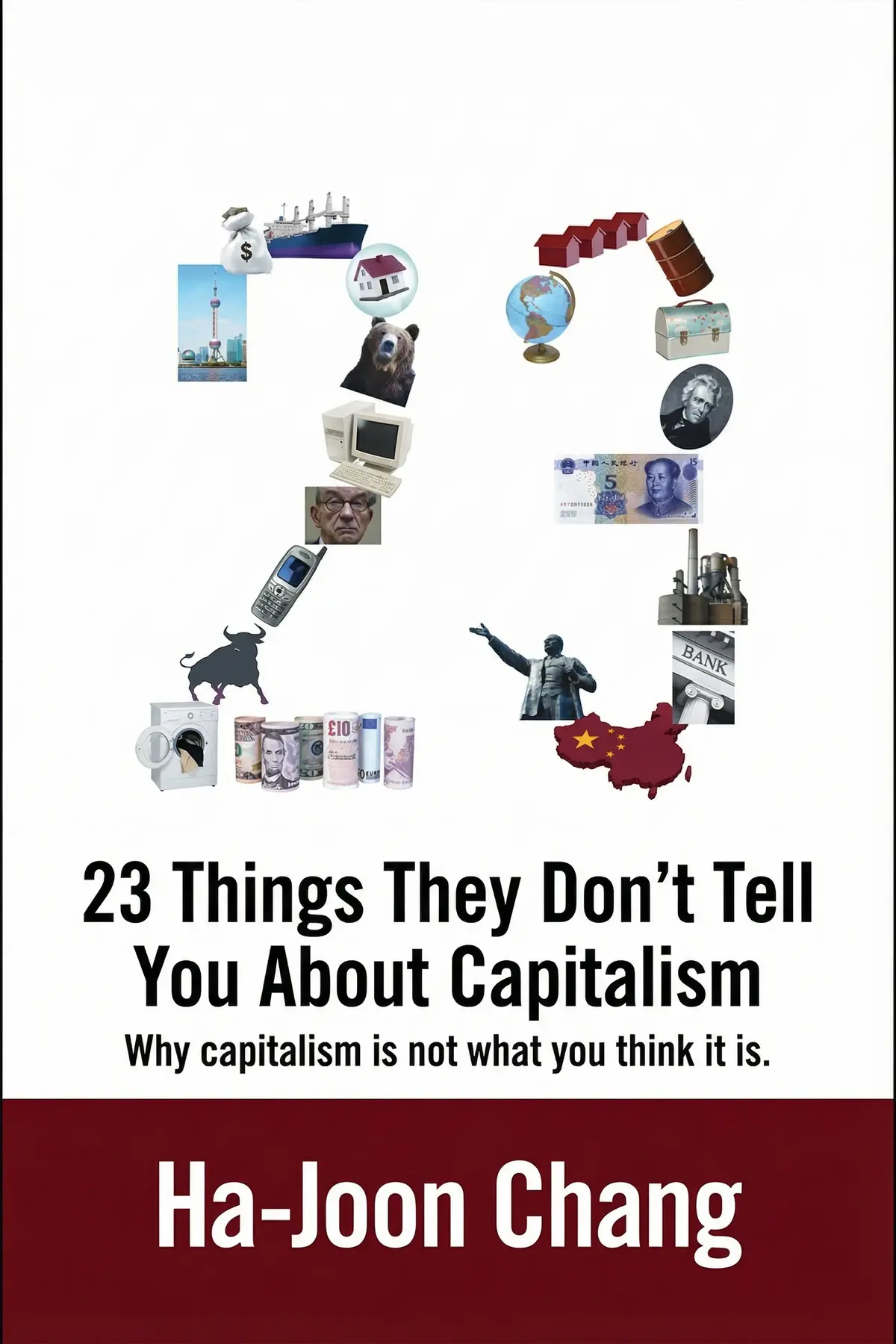
23 Things They Don’t Tell You About Capitalism
Ha-Joon Chang
AUDIO SUMMARY AVAILABLE
Listen to The AI Economy in 15 minutes
Get the key ideas from The AI Economy by Roger Bootle, plus 5,000+ more nonfiction titles.
- 5,000+ titles
- Listen as much as you want
- 7-day free trial
- Cancel anytime









