

13 min 43 sec
Available in: English
The Ageless Brain: How to Sharpen and Protect Your Mind for a Lifetime
Shows why memory lapses and brain fog call for action instead of a shrug. It explains how early testing, a plant-rich diet, exercise, good sleep and new mental challenges can help prevent, and possibly reverse, cognitive decline.
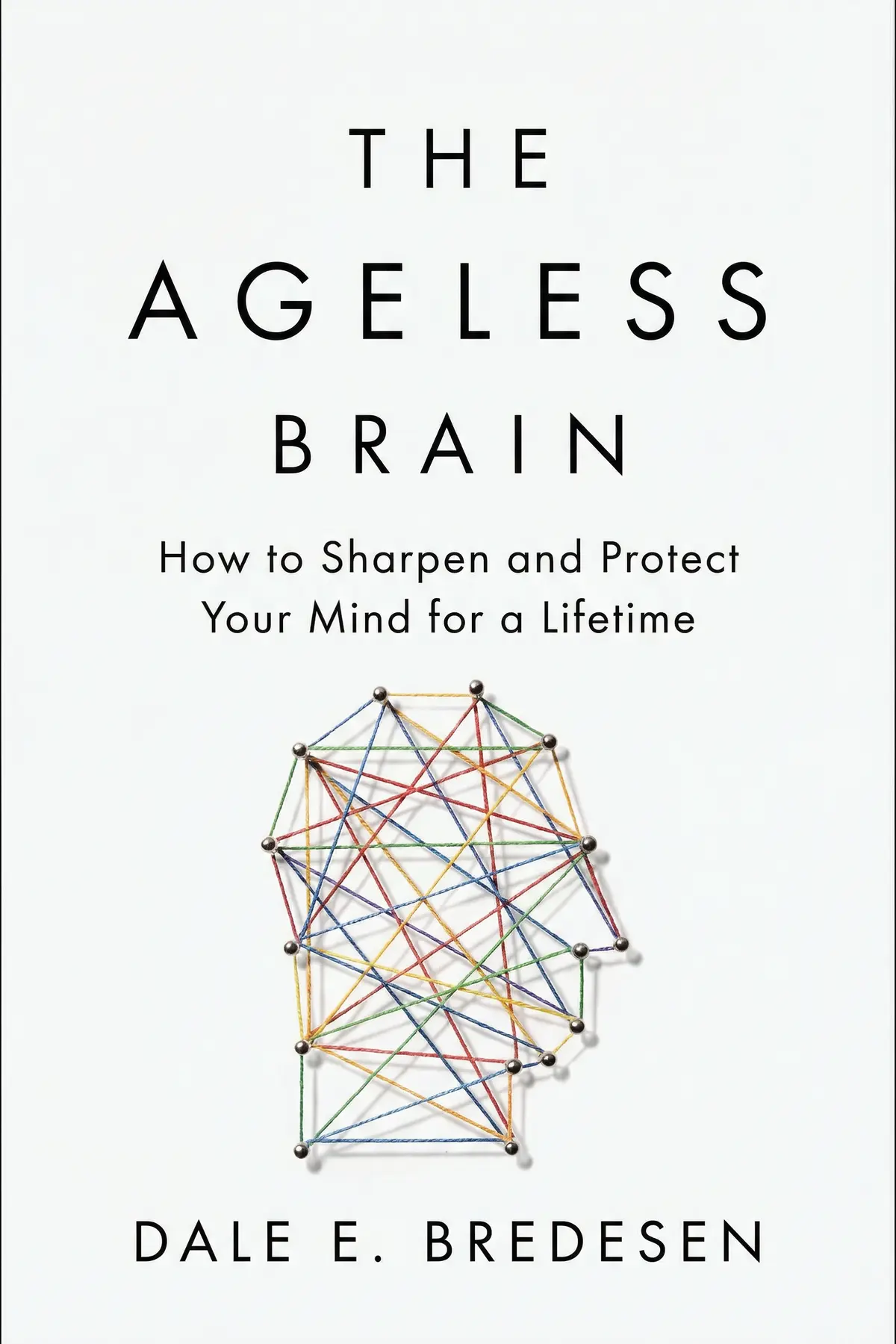
Table of Content
1. Introduction
1 min 02 sec
Most people treat a forgotten word or a misplaced set of keys as the harmless price of getting older. In The Ageless Brain, physician Dale Bredesen argues that this shrug is the real danger. He holds that cognitive decline is common without being normal, and that it is preventable and sometimes even reversible.
Bredesen, the founding president of the Buck Institute, builds his case on decades of clinical work and research. His argument is that the brain stays sharp when you treat its slow slide as something to measure and act on early, through what you test, eat, do, sleep and learn. The plan is meant for any age, from someone in their twenties to someone in their nineties.
It covers the blood markers and memory tests that can show trouble years ahead, what goes on a brain-friendly plate and how much movement and sleep the brain needs. It ends with a simple rhythm of daily, monthly and yearly mental challenges that keeps an aging mind flexible.
2. Catch the early warning signs most people dismiss
2 min 17 sec
A woman in her forties assumed her foggy days were just part of getting older. One short test showed otherwise, and what she did next is the reason her story offers hope.
3. Test your brain years before symptoms appear
2 min 22 sec
One protein in the blood can start climbing a decade before memory problems show. Bredesen names the age at which he would take a first reading, and the surprisingly modest price of knowing.
4. Eat a rainbow of plants and skip the candy
2 min 21 sec
Everyone knows vegetables beat sugar. Bredesen’s plate goes further, with firm views on fish, fruit juice, grains and even the clock, plus a shortcut borrowed from a candy advertisement.
5. Exercise in the morning, then protect your sleep
2 min 22 sec
About one person in four carries a gene variant linked to higher Alzheimer’s risk, and it can affect memory from as early as 18 or 20. Bredesen’s answer is movement, and an exact sleep window where too much counts against you.
6. Give your brain something new every day
2 min 10 sec
Switching from crosswords to sudoku sounds trivial. Bredesen builds a whole training rhythm on that kind of switch, and adds a surprising link between political certainty and memory.
7. Conclusion
1 min 09 sec
The Ageless Brain asks for a change in attitude before any change in habit. The forgotten word or the lost keys stop being a joke about age and become information. Nina’s score of 23 gave her a reason to act while she was still in her forties. Once decline is treated as something you can read and respond to, the rest of Bredesen’s plan follows. Blood markers and memory tests let you see it coming. A plant-rich plate helps slow it, movement and steady sleep defend against it, and new challenges and new people keep the brain able to adapt.
None of it needs to begin all at once. Book a baseline test, and if you are 35 or older, ask about GFAP. Swap one processed snack for a whole piece of fruit, and finish eating three hours before bed. Move your workout earlier in the day, and choose one unfamiliar task for tomorrow.
Bredesen insists that no age is too early or too late to start. The brain you rely on in old age is being shaped right now, one ordinary choice at a time.
About this book
What is this book about?
Most people laugh off a forgotten word or lost keys as part of getting older. Physician Dale Bredesen thinks that habit is risky. In his view, cognitive decline is common but not normal. Alzheimer's symptoms are appearing at younger ages than before, and dementia advances so slowly that people often notice it only after much has been lost. Drawing on decades of clinical work and research, Bredesen argues that decline can be prevented and in some cases reversed. He starts with measurement: blood biomarkers, newer brain-specific markers such as GFAP, which can rise up to ten years before symptoms, and simple cognitive tests like the MoCA. Then he sets out what to do about the results. He describes a plant-rich, mildly ketogenic diet, a weekly exercise target, a sleep window with limits at both ends, and a rhythm of small, medium and large mental challenges supported by an active social life. Readers get a practical, age-independent plan they can start this week, whether they are in their twenties and thinking ahead or older and already noticing changes.
Book Information
Who it's for
Midlife adults noticing lapses
Adults in midlife who have started noticing brain fog or forgotten words and want to act early.
Alzheimer's in the family
People with Alzheimer's in the family who want a concrete prevention plan.
Hoping to stay sharp
Younger professionals who want to protect their thinking for decades ahead.
About the Author
Dale E. Bredesen
Dale E. Bredesen is a physician who trained in neurology. He trained at Caltech and Duke University Medical Center, served as neurology chief resident at UCSF and did postdoctoral work in the laboratory of Nobel laureate Stanley Prusiner. He has taught at UCSF, UCLA and the University of California, San Diego, directed the Program on Aging at the Burnham Institute, and in 1998 became founding president and CEO of the Buck Institute. He also wrote The End of Alzheimer's and The First Survivors of Alzheimer's.
Ratings & Reviews
Ratings at a glance

What people think
Listeners find the writing clear and accessible, with one listener noting it offers a thorough explanation of the protocol. They consider it an essential resource for brain vitality, and several listeners state it literally rescued their cognitive function. Additionally, the book provides feasible remedies for neurodegenerative illnesses, and one listener mentions it can predict Alzheimer's up to 20 years before diagnosis. Listeners value the hands-on style, with one review emphasizing how it encourages them to implement real-world changes.
Top reviews
Prasarn
After hearing Dr. Bredesen on a several podcasts, I finally decided to dive into his latest work, and it truly feels like a roadmap for the future of brain health. The book provides an incredibly extensive overview of his protocol, moving beyond simple 'eat your veggies' advice to explain the molecular biology behind cognitive decline. I was particularly struck by the claim that we can identify potential Alzheimer's issues up to 20 years before a diagnosis. That kind of early warning system is revolutionary. While some of the testing requirements seem daunting and perhaps expensive for the average person, the hope it provides is worth the effort. It’s not just a book; for many in my family circle, it has genuinely been a guide that saved their cognitive lives. If you are serious about staying sharp until you're 100, this is essential reading.
Show moreKasemsan
The Ageless Brain is a game-changer for anyone with a genetic predisposition to Alzheimer’s. Personally, I found the section on neuroplasticity to be the most inspiring part of the entire narrative. It’s not just about what you eat; it’s about how you challenge your mind through novel experiences and social complexity. The idea that interacting with strangers provides more cognitive benefit than talking to friends was a lightbulb moment for me. I’ve started implementing the 12-hour fasting window and focusing on strength training as he suggests. Does it take a lot of work? Absolutely. But compared to the alternative of losing my memories, these lifestyle shifts are a small price to pay. This is a must-read for the health-conscious person who wants to take control of their biological destiny.
Show moreWoravit
Finally, a roadmap that doesn't just tell you to accept cognitive decline as a natural part of growing old. As someone in my 40s watching a parent struggle with memory loss, this book provided the exact kind of data-driven hope I needed. The author explains the 'why' behind the 'how,' which makes the difficult lifestyle changes much easier to stick to. I found the discussion of glial fibrillary acidic protein (GFAP) and other biomarkers fascinating. It’s a lot to process, and you’ll definitely want to take notes as you go. Bredesen challenges the status quo of the medical industry, which I find refreshing. It’s a comprehensive, realistic solution to a problem that most doctors just throw their hands up at. Truly a life-changing perspective on aging.
Show moreBo
Ever wonder if those 'senior moments' are actually the start of something more sinister? Dr. Bredesen tackles this head-on with a perspective that is both terrifying and deeply empowering. I appreciated how he breaks down the complexities of the APOE4 gene without making it feel like a death sentence. The focus on a 'KetoFLEX' diet and the importance of REM sleep was well-explained, even if the implementation requires an almost superhuman level of discipline. My only real gripe is that he glosses over the cost of some of these recommended tests and the continuous glucose monitors. Not everyone has the budget to sell their house and move away from environmental toxins as he sometimes suggests. Still, the practical steps for brain training and social engagement are gold.
Show moreMikael
Picked this up because my memory hasn't felt quite as sharp lately, and I wanted a scientific perspective. Bredesen delivers a very well-written and easy-to-understand manual for the modern brain. I really liked the 'BrainScan' testing list he suggests—fasting insulin, homocysteine, and p-tau 217—it gave me something concrete to take to my doctor. The book does a great job of explaining how our environment, from the water we drink to the air we breathe, impacts our neurons. It can be a bit overwhelming to realize how many 'toxins' we are exposed to daily. I did feel the chapter on the medical establishment was a bit long-winded and defensive. Regardless, the core message that we have agency over our aging process is one that more people need to hear.
Show moreLuckana
Gotta say, the chapter on environmental toxins really opened my eyes. We usually think of dementia as a 'bad luck' or 'old age' issue, but this book shows it’s often a cumulative result of lifestyle choices. The specific emphasis on HIIT and the importance of maintaining a healthy gut through fiber-rich plants was very practical. I’ve already started making small shifts in my morning routine based on his suggestions. My only criticism is that the book is quite long and could have been tightened up; some of the patient stories felt a bit repetitive. That said, the information on how to optimize your REM sleep was worth the price of the book alone. It’s a solid resource for anyone who wants to be proactive rather than reactive.
Show moreMason
As a health professional, I find Bredesen’s systems-thinking approach refreshing. He doesn't look at the brain in a vacuum; he looks at the whole person, from their glucose levels to their social circles. The 'Ageless Brain' offers a realistic, if intensive, framework for neurodegenerative disease prevention. I especially appreciated the nuanced advice on diet—moving away from a one-size-fits-all approach to a plant-forward, mildly ketogenic model. Some readers might find the sheer volume of recommendations intimidating, and it’s true that full implementation requires significant resources. However, even adopting 20% of these habits would likely result in better outcomes for the average patient. The writing is clear and the science is robust. It's a vital addition to the literature on longevity and cognitive resilience.
Show moreWatcharin
This book feels like it could have been an essay rather than a full-length publication. To be fair, I enjoyed the deep dives into insulin resistance and the role of mycotoxins, but much of the 'actionable' advice is stuff we’ve heard a thousand times before. Eliminate sugar, do HIIT, sleep more, and avoid alcohol—is this really a new paradigm? Bredesen is clearly brilliant, and I respect the 400+ citations he includes to back up his claims, but the prose is often bogged down by repetitive case studies that start to blend together after a while. I found the suggestion to start cognitive screening in your mid-30s interesting, though it feels a bit alarmist for the general population. It's a decent enough reminder to stay healthy, but don't expect a magic pill here.
Show moreBrooklyn
While I appreciate the extensive citations and the focus on metabolic health, I found the tone of this book a bit too optimistic. Look, I want to believe Alzheimer's is 'completely preventable' as much as the next person, but the science isn't quite as settled as Bredesen implies. He writes with a lot of confidence, which is great for inspiring people to change their habits, but it borders on glib when discussing how 'easy' these protocols are to follow. For a single parent or someone working two jobs, finding time for 8-10 hours of sleep and organic, mildly ketogenic meals is nearly impossible. There are some very good reminders here about the dangers of inflammation and the importance of dental hygiene for brain health. However, the book leaves you with more questions than answers regarding the actual logistics of detoxing.
Show moreLena
Frankly, I was expecting something a bit more revolutionary than 'eat well and exercise.' This book is packed with what I’d call 'health fluff'—lots of anecdotes and sporadic case studies that don't always feel applicable to the average person. Bredesen pushes his PreCODE and ReCODE protocols hard, but the truth is that dementia remains an incredibly complex beast that we haven't tamed yet. The writing is accessible, sure, but it lacks the substance I wanted regarding specific, new clinical trials. Most of the advice is common sense repackaged with high-tech sounding names. If you’ve read his previous books, you can probably skip this one as it retreads about 90% of the same ground. It felt more like a long advertisement for his company's bloodwork services than a standalone medical guide.
Show moreQuestions about this book
What is the main idea of The Ageless Brain?
Dale Bredesen argues that cognitive decline is common but not an inevitable part of aging. Forgetfulness and brain fog can be early signs of something serious, such as Alzheimer’s, and he believes decline can be prevented and in some cases reversed. His approach combines early testing with changes to diet, exercise, sleep, mental challenges and social life, and he says it applies at any age.
Which tests does Dale Bredesen recommend for brain health?
He suggests blood tests for glucose metabolism, ketone levels, Apo B, Hs-CRP and homocysteine. He additionally recommends markers specific to the brain, including GFAP, which a 2023 study found can climb as much as a decade ahead of Alzheimer’s symptoms, plus NfL and p-tau 217. He advises a GFAP baseline at age 35, repeated every five years. Cognitive tests such as the MoCA or the SLUMS exam complete the picture.
What diet does The Ageless Brain recommend?
Bredesen recommends a plant-rich, mildly ketogenic diet high in fiber, phytonutrients, monounsaturated and omega-3 fats and cruciferous vegetables. He favors low-mercury fish over tuna and swordfish, and he suggests avoiding grains, dairy, simple carbohydrates and ultraprocessed food. Fruit should be low-glycemic and eaten whole, such as berries or an orange instead of juice. He also advises finishing meals three hours before bed.
How much exercise and sleep does Bredesen recommend?
He begins with a goal of three weekly hours of aerobic exercise, along with regular strength training and occasional high-intensity intervals, ideally done earlier in the day. For sleep he suggests 7 to 8.5 hours a night, noting that more than 9 hours is also linked to higher dementia risk. In a good night, you get roughly an hour and a half of REM sleep along with a minimum of one hour of deep sleep.
How can I train my brain according to The Ageless Brain?
Bredesen suggests a small new challenge every day, a medium one every month and a big one every year. Examples are switching from crosswords to sudoku, cooking an unfamiliar cuisine and learning a new language. He also stresses social contact, including meeting strangers and talking with people who see the world differently, because both keep the brain flexible.
Readers also enjoyed





AUDIO SUMMARY AVAILABLE
Listen to The Ageless Brain in 15 minutes
Get the key ideas from The Ageless Brain by Dale E. Bredesen, plus 5,000+ more nonfiction titles.
- 5,000+ titles
- Listen as much as you want
- 7-day free trial
- Cancel anytime









