

A Thousand Brains: A New Theory of Intelligence
Jeff Hawkins
 English
Primatologist Frans de Waal shows that empathy is an old animal instinct rooted in the body. He also explains how fairness keeps cooperation alive, and why teams and societies that assume greed tend to produce it.
54 sec
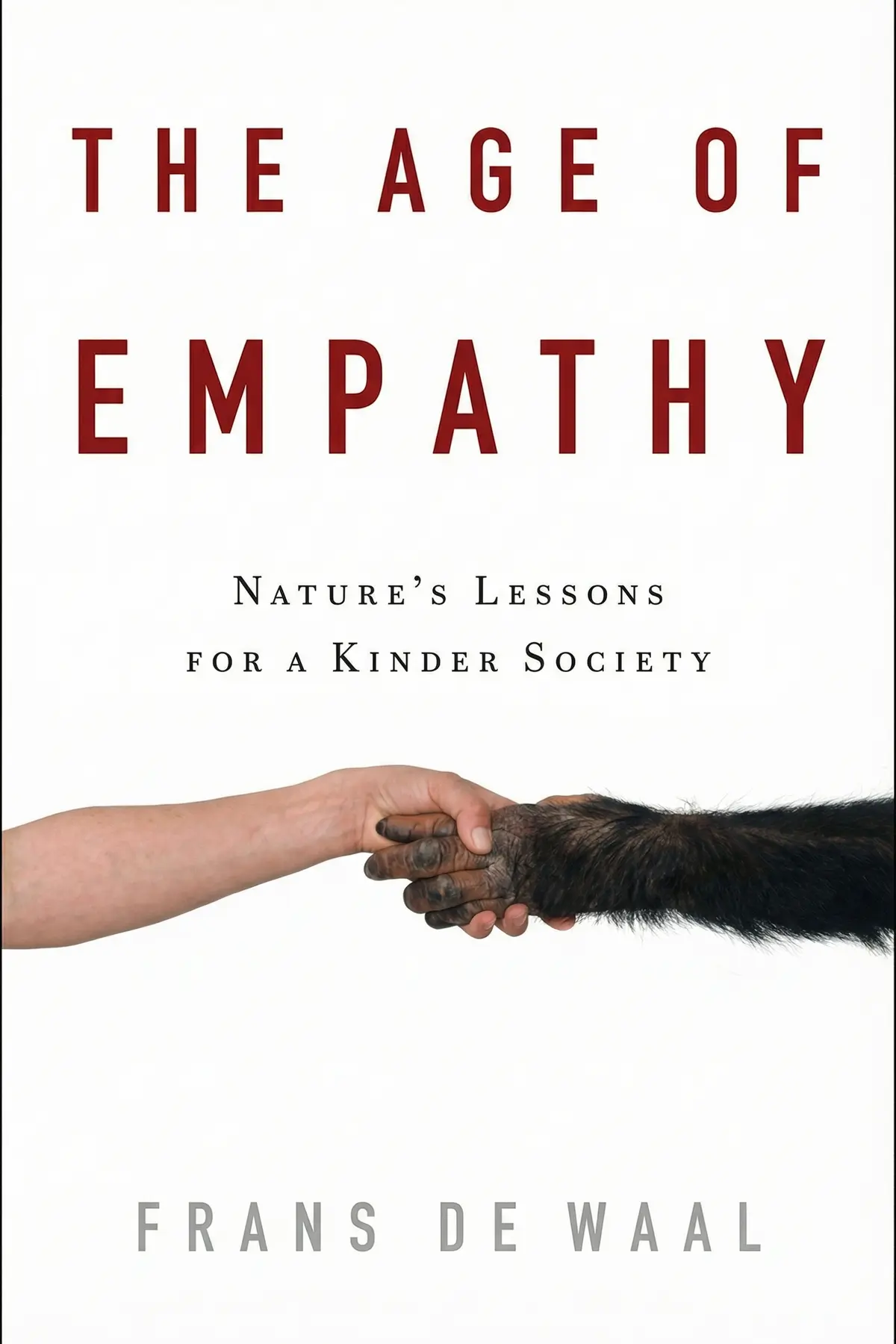
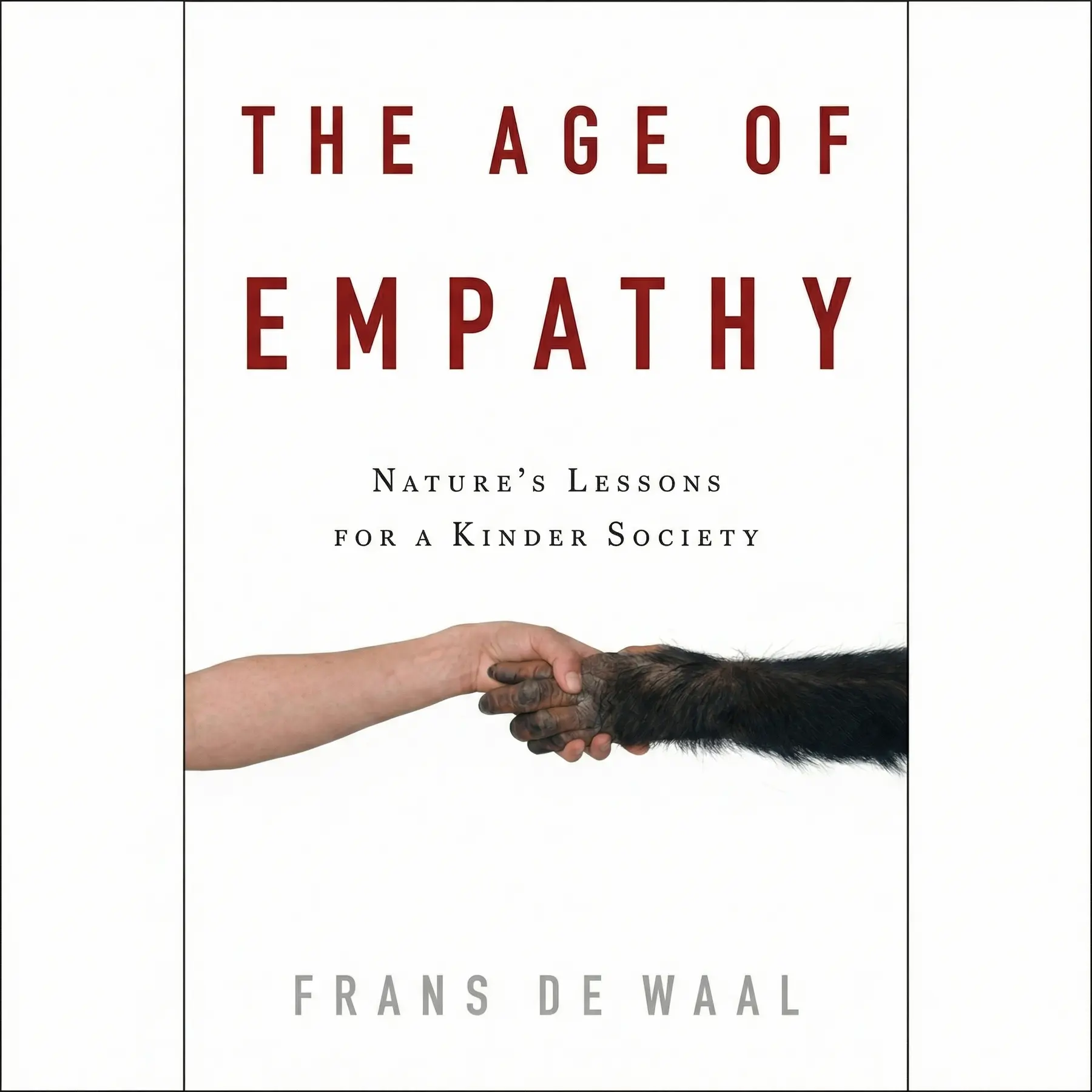
Many people have been told that humans are selfish at heart and that kindness is a thin cover story. In The Age of Empathy, primatologist Frans de Waal argues the reverse: feeling for others is an ancient, bodily capacity we share with apes, elephants and even rodents. He calls the cynical view Veneer Theory, the belief that morality is a coat of paint over a nasty core, and he spends the book scraping it off.
His evidence runs from chimpanzees catching each other’s yawns to capuchin monkeys who refuse an unfair deal. The case he builds is that empathy grows in layers, from the body upward, and that families, firms and nations work better when they are built to use it. Along the way you get a sharper reply to cynics, simple habits that build trust in conversation, and an honest map of where kindness stops working.
1 min 44 sec
A famous film line, a nineteenth-century slogan and an energy giant all rested on the same belief about people. De Waal argues the belief is bad biology, and that acting on it carries a heavy price.
1 min 44 sec
One British prime minister called human history an unbroken story of fighting. A fresh look at ancient walls and early hunters suggests something different, and points to a surprising force behind soldiers on the march.
1 min 49 sec
A yawning chimpanzee on a video screen, a flock taking off at once and a waiter who earns twice the tips all share one hidden mechanism. It works on you every day, mostly without your notice.
1 min 54 sec
Prisoners in isolation pick fights just to talk to a guard, and long-married couples start to share a face. At the other extreme, children raised without touch faded away. The pattern says something blunt about what humans require.
1 min 57 sec
A frightened rodent, a chimpanzee hugging the loser of a fight and an ape opening a door for a hungry friend sit on one ladder. Knowing which rung you are on changes how useful your kindness is.
1 min 46 sec
A monkey happily working for cucumber suddenly throws it back. What changed was not the food but what the neighbor received, and the same reaction shapes how people respond to pay, credit and deals.
1 min 48 sec
The skill that lets you comfort a friend also lets a torturer find the worst pain, and it fades fast with distance. De Waal’s single wish for humanity speaks directly to that weakness.
1 min 15 sec
De Waal leaves the cynic with less ground than expected. The selfish story about human nature turns out to be a choice of emphasis, and such choices tend to make themselves true, as Enron’s staff learned every year. The biology points elsewhere: a capacity that begins with a caught yawn, deepens into comfort after a fight, sharpens into help that fits, and insists on fairness so that cooperation can last. It sits right beside our appetite for status, and it is just as much ours.
That suggests a few things worth doing. In a tense conversation, slow down and mirror, the way the waiters who repeated orders did, before you argue your case. In any team you shape, check whether the rewards assume greed or fairness, since capuchins and people alike reject a rigged deal. And when a group starts to feel foreign, close the distance by looking for what you share, because empathy fades with distance and grows with nearness.
The couples who came to look alike after 25 years did not start that way. They grew toward each other one shared feeling at a time, and de Waal believes whole societies can do the same.
A popular story says humans are selfish at heart and that kindness is a cover. It shows up in films, politics and boardrooms. Frans de Waal, who spent decades studying chimpanzees, bonobos and capuchin monkeys, thinks that story gets biology wrong and does real damage when people act on it. De Waal traces empathy back to the body. It starts as contagion, like yawns and moods that spread through a group. It grows into comfort for someone in distress, and then into help that fits what the other person actually needs. Along the way he covers apes consoling the losers of fights, couples who come to look alike, orphans who wasted away without touch, and capuchins who refuse a deal when a partner gets paid more. The book also looks at empathy's limits. It fades with distance, it can be switched off, and torturers and manipulators can exploit it. De Waal's conclusion is that families, workplaces and nations should be designed around our social instincts instead of an assumption of greed. Readers come away with a sharper reply to cynics and practical ways to build trust and fairness.
Managers and founders who suspect that fear-based incentives are hurting their teams.
Readers tired of hearing that people are selfish by nature and who want the evidence on both sides.
Anyone curious about what apes, monkeys and dolphins reveal about kindness and fairness.
Frans de Waal (1948 to 2024) was a Dutch-American primatologist and ethologist who held a chair in primate behavior at Emory University and directed its Living Links Center. His research covered conflict resolution, cooperation, inequity aversion and food-sharing among primates. His books, starting with Chimpanzee Politics, were translated into more than twenty languages. He belonged to the US National Academy of Sciences, and Time named him one of the world's 100 most influential people in 2007.
Listeners find the work both stimulating and enjoyable, with one review mentioning how it acknowledges our connection to all living things. Furthermore, the writing style is quite engaging, and listeners value the depth of its information, with one review pointing out its beautiful illustration of evolutionary aspects. The book also earns praise for being easy to digest, with one listener stating it is a must-read for everyone.
Wow, De Waal has a rare gift for making complex evolutionary biology feel like a conversation with an old, wise friend. This book is an essential bridge that helps us recognize our profound interrelationship with all life on this planet, showing that our 'better angels' are hardwired into our DNA. I was particularly moved by the Russian doll model of empathy, which explains how simple emotional contagion in basic animals evolved into the complex altruism we see in humans. It’s a refreshing, glass-half-full approach to our nature that rejects the cynical 'Lord of the Flies' view of humanity. The writing is accessible, humorous, and filled with beautiful illustrations of animals caring for one another in ways we usually reserve for ourselves. Frankly, this should be required reading for anyone who thinks humans are the only species capable of kindness or justice. It is truly a thought-provoking masterpiece.
Show moreFinally got around to this classic, and it was the perfect antidote to the cynicism of our modern world. De Waal writes with a clarity and warmth that makes the science of animal behavior feel deeply personal and urgent. He successfully deconstructs the 'nature red in tooth and claw' narrative, showing that loyalty and compassion are just as 'animal' as aggression is. I found the section on how elephants console each other to be incredibly moving and well-researched. The book is a must-read because it challenges us to reconsider how we treat other species based on their emotional proximity to us. Not gonna lie, I teared up a little at the descriptions of cross-species empathy. This is a beautiful, insightful, and ultimately hopeful book that everyone should pick up at least once.
Show moreAs someone who spends a lot of time thinking about the biological basis of our behavior, I found De Waal's exploration of primate justice both enlightening and grounding. He has this wonderful way of using humor to point out how silly our anthropocentric biases really are, especially when we refuse to see intelligence in our cousins. The chapter on targeted helping—where animals understand exactly what another needs to succeed—was a total eye-opener for me. The book is wonderfully readable and avoids the dry, jargon-heavy prose that plagues so much of science writing these days. It’s an entertaining journey through the hearts and minds of other creatures that ultimately tells us more about ourselves than we might be comfortable admitting. If you've ever felt that animals are more 'human' than we give them credit for, this book provides the scientific backbone for that intuition.
Show moreFrans de Waal writes with such clarity and humor that you almost forget you are reading a serious work of ethology. I loved the way he illustrates the interrelationship between all living things, focusing on the common threads of sympathy and support that run through different species. It is an incredibly readable book that moves quickly through various experiments and field observations without ever feeling overwhelming. The truth is, we need more scientists who can communicate their findings with this level of passion and accessibility. While the book was written a while ago, the core message about the evolutionary necessity of empathy feels more relevant today than ever before. It’s a beautiful illustration of why we need to care for our planet and the sentient beings we share it with. Highly recommended for any curious mind.
Show moreAfter hearing about the parallels between primate behavior and the 2008 banking crisis, I had to see for myself how De Waal connects those dots. Personally, I found the chapters on economic relationships and the sense of fairness in capuchin monkeys to be the most insightful parts of the whole book. He manages to illustrate how work and reward function in the animal kingdom, proving that greed isn't the only biological driver we inherited. While the book is over a decade old now, the core message about cooperation as a survival strategy remains incredibly relevant in our current polarized climate. My only gripe is that it feels a bit repetitive in the middle sections, and his writing style can be a little too casual for the weight of the subject matter. Still, the way he highlights evolutionary aspects of morality is brilliant and keeps you turning the pages.
Show moreEver wonder if the kindness we show one another is just a thin veneer of civilization covering up a violent core? De Waal argues convincingly that empathy is actually an ancient biological imperative, and his evidence from the world of primatology is quite compelling. The story about the chimpanzee trying to help a bird fly by launching it from a tree stayed with me long after I closed the book. It’s an insightful look at how we are not as unique as we’d like to believe, placing us firmly within the animal kingdom rather than above it. To be honest, some of the scientific context feels a bit light, and I would have preferred more footnotes to current studies. However, the readability factor is high, making it a great choice for a casual reader interested in ethology and human nature.
Show moreThis book challenges the idea that human morality is a recent invention of religion or law, arguing instead for its deep evolutionary roots. The way De Waal explains the 'Russian Doll' layers of empathy—starting with simple emotional contagion—is a stroke of genius that makes perfect sense of our own instincts. I appreciated the specific examples of fairness, like the monkeys who refuse to cooperate when they see their peers getting better rewards for the same task. It’s a thought-provoking read that definitely encourages engagement with the natural world. My only minor complaint is that the author’s optimism occasionally borders on the naive, especially when he tries to apply primate social structures to complex human geopolitics. Aside from that, the insights into our shared heritage are invaluable and presented with a lot of wit.
Show moreTo be fair, I went into this expecting a rigorous academic framework, but what I got felt more like a series of fireside chats. The truth is that the book lacks a cohesive structure, making it difficult to pin down a central thesis beyond the repetitive idea that humans and primates share emotional roots. De Waal is clearly brilliant, yet he often meanders into personal anecdotes that feel like unedited ramblings rather than scientific evidence. I was specifically bothered by the dated political commentary regarding the 2008 election, which has not aged well and feels out of place in a biology text. While the stories about chimpanzees are inherently charming, the leaps he makes from animal behavior to global social policy are massive and largely unsupported. It’s an entertaining read if you want some light pop-science, but as a critical analysis of evolutionary empathy, it left me feeling quite underwhelmed.
Show moreLook, I've been following the literature on altruism for a while, and while this is a decent introduction, it feels a step behind more recent scholarship. De Waal does a great job of explaining reciprocal altruism and kin selection, but the book spends too much time on anecdotes and not enough on the 'why' behind the biology. In my experience, Michael Tomasello’s work offers a more rigorous and up-to-date framework for understanding these same themes of cooperation. De Waal's tone is pleasant and his stories about the apes at the Yerkes National Primate Research Center are engaging, but the structure is loose at best. It’s a fine book for a weekend read, but don’t expect a deep dive into the technical disagreements within the scientific community. It’s more of a memoir of a career spent watching monkeys than a definitive text on the age of empathy.
Show moreThe premise of exploring animal emotions is fascinating, yet the execution here feels surprisingly thin on actual data. Look, I appreciate a good anecdote as much as the next person, but you can’t build an entire scientific argument on 'I once saw a monkey give a hug.' De Waal spends a significant amount of time denigrating the anthropocentric worldview, yet he fallaciously uses human political milestones like the Obama era to validate biological theories. Some of his remarks on immigration and social structures come across as incredibly tone-deaf and dated, lacking the very empathy he claims to champion. There is very little discussion of where his personal beliefs end and where peer-reviewed consensus begins, which makes for a frustrating experience for a skeptical reader. It’s readable and light, but if you’re looking for a structured, evidence-based exploration of the field, you’ll likely find this a bit of a slog.
Show moreFrans de Waal argues that empathy is an ancient, bodily capacity shared with other animals, not a thin layer over a selfish core, a view he calls Veneer Theory. Empathy grows in stages, from catching others’ moods to consoling them and finally to targeted help. He concludes that societies should be designed to use these social instincts instead of assuming people run on greed.
De Waal argues that cooperation could only evolve alongside a sense of fairness that excludes cheats. Capuchin monkeys refuse cucumber when a partner gets grapes, and people show the same inequity aversion in the ultimatum game, valuing fairness above profit. In a token test, capuchins came to prefer rewarding a neighbor too, and the most dominant monkeys were the most generous.
Start with the body: mirroring people builds trust, as in experiments where waiters doubled tips by repeating orders back. Check whether your incentives assume fear and greed, since Enron’s Rank and Yank system shows how that belief can make itself true. Keep pay and credit fair, because de Waal’s summary of the research is that peace depends on justice.
Partly. He calls humans bipolar apes, combining the peacefulness of bonobos with the aggression of chimpanzees. He argues that small hunter-gatherer bands rarely fought one another and that large-scale war probably began with settlements and farming wealth. He links modern soldiering mainly to the herd instinct, the urge to move with the group, rather than to a love of killing.
It suits managers, founders and team leads who want an evidence-based alternative to fear-driven management, and readers who want to answer the claim that people are selfish by nature. Anyone interested in animal behavior will find consoling chimpanzees, striking capuchins and helpful dolphins, along with de Waal’s warnings about where empathy fails.
Jeff Hawkins



Steven C. Hayes


Deborah Gruenfeld



Lisa Kaltenegger

Anthony Pratkanis
AUDIO SUMMARY AVAILABLE
Get the key ideas from The Age of Empathy by Frans de Waal, plus 5,000+ more nonfiction titles.









