
14 min 16 sec
Available in: English
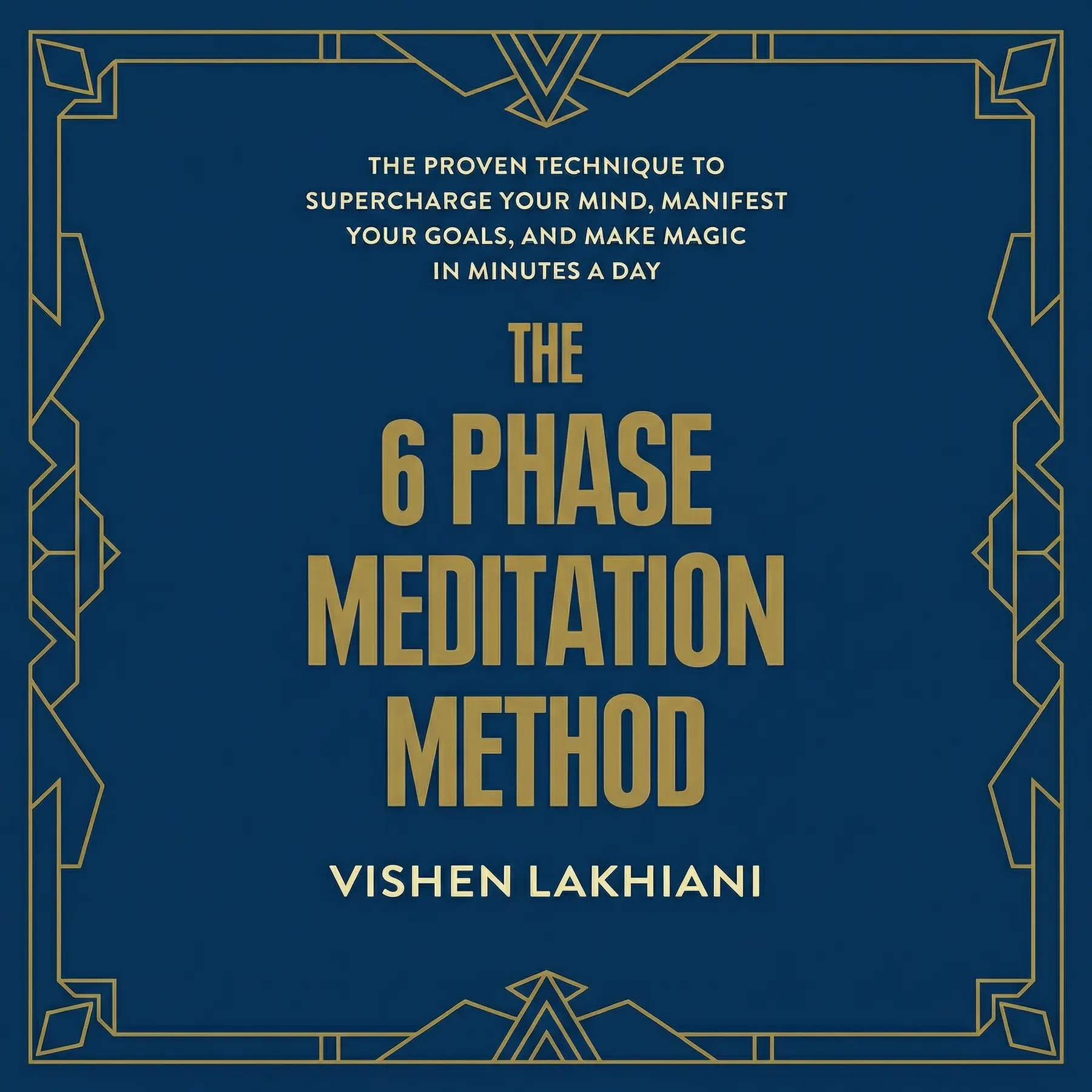
The 6 Phase Meditation Method: The Proven Technique to Supercharge Your Mind, Manifest Your Goals, and Make Magic in Minutes a Day
A six-step morning meditation that goes past relaxation. It trains compassion, gratitude and forgiveness, then uses visualization to set three-year goals, plan the day ahead and feel supported, whatever your beliefs.
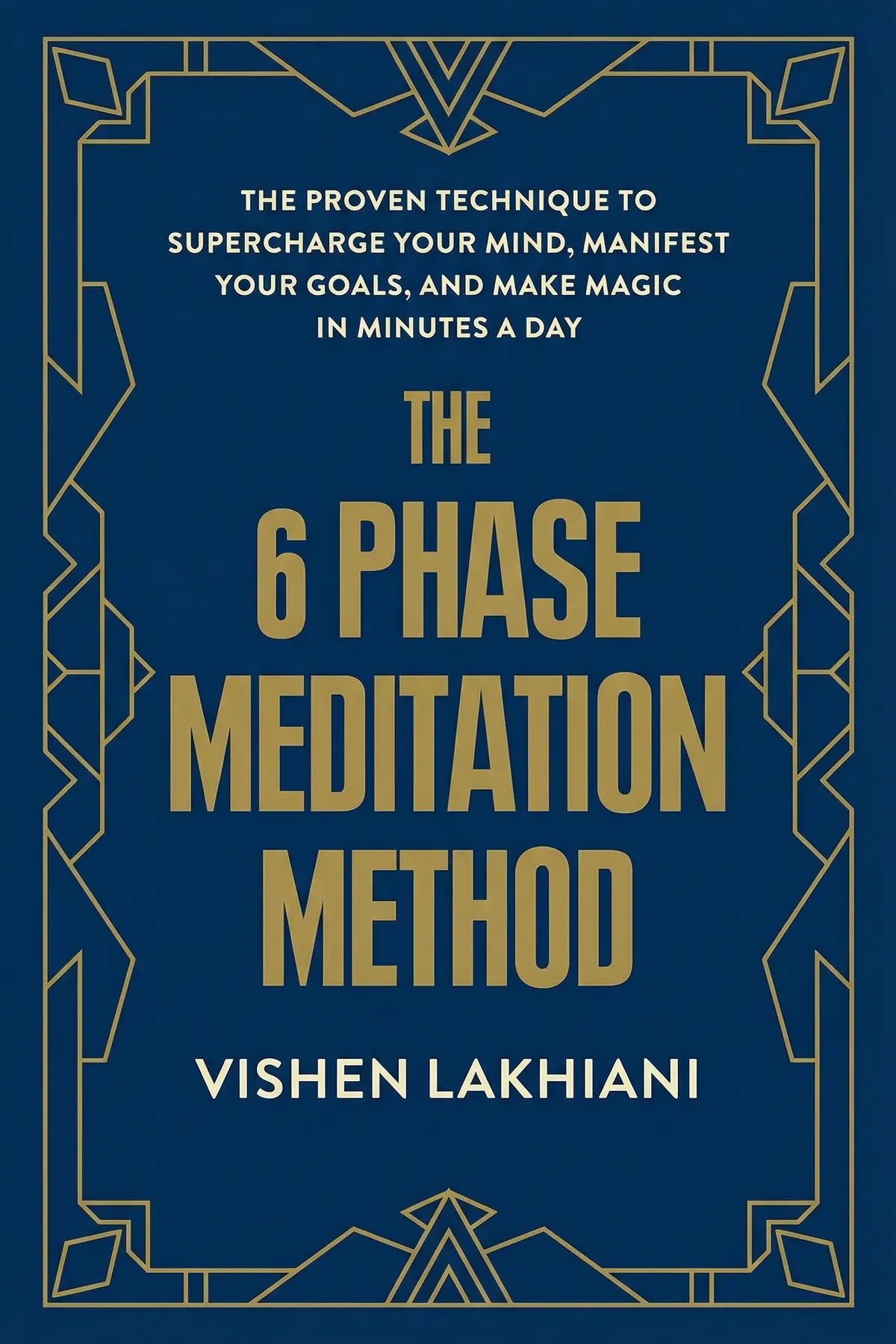
Table of Content
1. Introduction
1 min 04 sec
If meditation has only meant sitting still and trying to calm down, you have practiced just one part of what it can offer. In The 6 Phase Meditation Method, Vishen Lakhiani, founder of the education technology company Mindvalley, argues that most meditation programs teach relaxation and stop there. A better life, he says, also needs qualities like compassion, gratitude and forgiveness, and those can be trained. His method skips the incense, the oversized cushions and the candles, and it is open to anyone, whether Baptist, agnostic or atheist.
The case he makes is that one short morning practice can work on both halves of a good life. Its first three phases change how you relate to other people, to your circumstances and to old wounds. Its last three point your mind toward a three-year vision, a well-planned day and a feeling that you are not alone. Each phase comes with an exercise simple enough to try tomorrow morning, and a reason for doing it.
2. Widen your kindness from one person outward
2 min 08 sec
Two boxers spend a whole fight trying to knock each other down, then often embrace when it ends. That moment holds the starting point of a practice meant to make kindness easier to reach under pressure.
3. Stop postponing happiness until the next goal
2 min 05 sec
The new job arrives, the weight comes off, and a few weeks later you feel exactly as before. Hundreds of successful entrepreneurs were caught in the same loop until one simple change of focus broke it.
4. Let go of a grudge without excusing it
1 min 51 sec
Most people think forgiving someone means letting them off the hook. Lakhiani draws a sharper line, and his exercise asks you to do something uncomfortable before any letting go can happen.
5. Picture the next three years in detail
2 min 02 sec
Daydreaming about a dream home or a perfect beach holiday feels like wasted time. Lakhiani treats it as a planning tool, and he puts a specific limit on how far ahead you should dream.
6. Script your day before it begins
1 min 54 sec
The Friday before a long holiday tends to go well almost by itself. Lakhiani believes most days can feel like that, and his method for getting there starts before you leave the house.
7. Feel supported even if you are not religious
1 min 54 sec
After five phases of steering your own mind, the method ends by asking you to accept help. It works, Lakhiani says, whether you believe in God, the universe or nothing at all.
8. Conclusion
1 min 18 sec
What Lakhiani offers is a new job description for meditation. Calm is still part of it, but the practice becomes a short daily training in what a good life rests on: kindness that reaches beyond your own circle, contentment with what you have, freedom from old grudges, a clear picture of where you are heading, a day planned with intent, and the sense that someone or something has your back. The first half repairs how you meet the world. The second half aims you somewhere.
He recommends about 20 minutes a day, ideally early in the morning, so the whole day benefits and you have more chances to pass your optimism on to others. He also asks for patience: keep going even when progress seems to stall.
A sensible way in is to start tomorrow with the three-by-three gratitude drill, which takes only a few minutes, then add the half-hour plan for your day. Once those feel natural, write a one-page manifesto for the next three years and watch it each morning on the big screen in your head.
Lakhiani imagines a planet changed one meditator at a time. The smaller claim you can test within a week: whether twenty minutes at dawn change how the rest of the day feels.
About this book
What is this book about?
Most people who try meditation are taught to breathe, relax and notice when their mind wanders. Vishen Lakhiani thinks that covers only one part of what a daily practice can do. In his view, a better life also depends on qualities you can train, such as compassion, gratitude and forgiveness, and on knowing clearly where you want to go. His answer is a routine of six phases, practiced in order and ideally early in the morning, in about 20 minutes. The first three work on your relationship with the world: spreading kindness outward from one loved person, naming what you are grateful for in three areas of life, and forgiving someone without excusing what they did. The last three turn to direction: picturing the next three years and writing them down as a life manifesto, scripting the coming day in half-hour blocks, and closing with a visualized blessing that leaves you feeling supported. The method needs no incense, cushions or religious belief. Readers get a simple exercise for each phase, Lakhiani's reasons for doing it, and a routine they can start the next morning.
Book Information
Who it's for
Tried meditation for stress
People who tried meditation for stress and want a routine that also builds gratitude, forgiveness and goals.
Professionals wanting morning structure
Busy professionals who want a 20-minute morning practice with a clear structure.
Carrying an old grudge
Readers carrying an old grudge or a constant feeling of never having enough.
About the Author
Vishen Lakhiani
Vishen Lakhiani is a Malaysian-born entrepreneur, author and motivational speaker of Indian descent. He founded Mindvalley, an education technology company whose online academies teach mindfulness, personal growth, wellness and spirituality, and has led it as CEO. He also founded the A-Fest festival and the meditation app Omvana. He is a New York Times best-selling author whose other books include The Code of the Extraordinary Mind and The Buddha and the Badass.
Ratings & Reviews
Ratings at a glance
What people think
Listeners find this meditation approach to be potent and user-friendly, with one listener mentioning that it helps them feel a connection to the divine. The text offers significant wisdom, and listeners value its inspiring qualities, with one listener pointing out that the method is easy to integrate into a morning routine.
Top reviews
Chamnong
Ever wonder why meditation feels so inaccessible? Vishen Lakhiani strips away the incense and the hours of silence to provide a high-speed, 20-minute protocol that actually fits a modern schedule. The 'Blessing' phase, where you visualize a higher power enveloping you in light, was particularly moving for me. It’s not just about relaxation; it’s about priming your brain for peak performance. I found the connection between compassion and decreased anxiety to be well-supported by the science he cites. This is a powerful, actionable guide for anyone ready to upgrade their consciousness without needing to join a monastery.
Show moreOrathai
The chapter on forgiveness alone makes this worth the price of admission. Vishen breaks down the process of letting go of the 'three Rs'—resentment, rejection, and regret—in a way that feels scientifically grounded yet deeply emotional. I practiced the visualization exercise of bringing an offender into a safe space and found it incredibly healing. To be fair, you do need the accompanying app to get the most out of it, but the guided sessions are high-quality. Since starting this method, I feel significantly more patient and grounded throughout my workday. It really is a game-changer for emotional health.
Show moreNit
This book is essentially a blueprint for a total mindset shift in under twenty minutes. Forget everything you know about traditional sitting in silence; this is active, visualization-heavy work that actually makes you feel something immediately. I loved how the Blessing phase connects you to a higher power without feeling too 'woo-woo' or religious. It’s practical. It’s punchy. Most importantly, it's feasible for people who think they are too busy to meditate. The app integration, while frequent, actually helped me stay consistent because the guided audios are so well-produced. My daily intentions have never felt clearer.
Show moreFon
After hearing so much hype, I was skeptical, but the 'Blessing' phase really clicked for me. The idea of priming your brain to receive support from the universe—or even just your own higher self—is a great way to start the day. I appreciated how Vishen explains the reticular activating system (RAS) and how our intentions filter our reality. It makes the 'manifestation' aspect feel more like neuroscience and less like magic. The writing is conversational and intimate, making it feel like you’re having a coffee with a mentor. If you want to increase your daily joy, start here.
Show moreKanokwan
Finally got around to reading this after seeing the Mindvalley ads everywhere. I have to say, the method itself is fantastic and has totally revamped my morning routine. Vishen is clearly an expert at making complex spiritual concepts approachable for the 'everyman.' However, the writing can be a bit polarizing. He uses terms like 'unf*ckwithable' and 'frickin' which occasionally feel like he’s trying too hard to be edgy. If you can get past the slang, the 3x3 gratitude method and the future visualization exercises are gold. It’s a great toolkit for personal growth.
Show moreRafael
Picked this up because I wanted a more structured morning routine that didn't involve an hour of silence. The logic behind the six phases—Compassion, Gratitude, Forgiveness, Future Vision, Daily Intention, and Blessing—is very sound. I especially liked the 'forward gap' concept regarding gratitude. It really helped me stop delaying my happiness until I reach some distant goal. My only gripe is the frequent celebrity name-dropping. I don’t really care which pro athlete uses these techniques; I just want the techniques themselves. Still, the results speak for themselves, and I feel much more focused.
Show moreWanida
Wow, Vishen really knows how to package spiritual concepts for the modern, fast-paced professional. The method is incredibly easy to follow and doesn't require any strange poses or special equipment. I found his insights into how forgiveness improves physical health, like heart rate and blood pressure, to be fascinating. Look, some of the steps in the forgiveness phase are a bit speculative—like imagining the childhood trauma of people who hurt you—but the mental shift it creates is undeniably positive. It’s a modernized approach to an ancient practice that actually works for people with zero spare time.
Show moreOn
As someone who has been meditating for years, I found this to be a bit of a mixed bag. The core method is clever, combining compassion, gratitude, and forgiveness into a single flow. That being said, the book feels like one giant advertisement for the Mindvalley app. I found it quite annoying to be constantly told to put the book down and watch a video online to fully understand a phase. Why not just put all the information in the text? The section on the dark web and C4 explosives felt like unnecessary fear-mongering to make a point about consciousness. It’s okay, but feels more like a marketing move than a standalone book.
Show morePrinya
To be fair, the actual six-step method is quite solid, but the execution of the book feels like one long sales pitch. Every few pages, you're prompted to put the book down and go watch a video or download a specific meditation track. I wanted a book, not a marketing funnel! That said, once you get into the actual meat of the phases—like the gratitude section and the future visioning—it’s genuinely useful stuff. It’s a very modern, fast-paced approach that fits into a busy schedule. I just wish there was more depth in the text itself rather than constantly being pushed toward the external platform.
Show moreRyan
Frankly, the author’s 'voice' completely ruined what could have been a decent instructional guide. Vishen tries way too hard to be 'hip' with terms like 'unf*ckwithable,' which just feels cringey and inauthentic coming from a tech CEO. It’s also hard to take a book seriously when the back cover features an endorsement from Jay Shetty, whose own reputation for authenticity is a bit of a mess. I did appreciate the variety of scientific sources, but the 'hurt people hurt people' trope felt reductive and gave people a free pass for bad behavior. To me, the whole thing came across as a bit smarmy. If you can look past the arrogance, the 6-phase logic is fine, but it’s a struggle to get through the writing style.
Show moreQuestions about this book
What is the 6 Phase Meditation Method?
It is a guided routine by Vishen Lakhiani made of six phases practiced in order: compassion, gratitude, forgiveness, future vision, daily intention and blessing. The first three change how you relate to people, your circumstances and past hurts. The last three use visualization to set three-year goals, plan the coming day and feel supported. Lakhiani suggests about 20 minutes a day, ideally in the early morning.
Do you need to be religious to use the 6 Phase Meditation?
No. Lakhiani says the method works for anyone, whether Baptist, agnostic or atheist. Even the final blessing phase, where you picture a bright light from a higher power, can be done without faith: you can name that power God, the universe or your higher self, or treat the light simply as a symbol of positivity and goodwill.
What is the 3x3 gratitude method?
It is the second phase of the routine. For a few minutes, you name three things you are grateful for in each of three areas: your personal life, your work and yourself. Lakhiani presents it as a cure for the forward gap, the habit of always measuring the distance to your next goal, an idea he draws from the author Dan Sullivan’s work with entrepreneurs.
How does Vishen Lakhiani suggest you forgive someone?
He separates forgiveness from approval: you let go of bitterness without excusing the act. In the exercise, you picture a safe place, bring in the person who hurt you, read them the charge and let your emotions run out. Then you look for the lesson, imagine the offender’s feelings and history, and finally apply the same forgiveness to yourself.
How do I start the 6 Phase Meditation Method?
Lakhiani recommends practicing early in the morning, about 20 minutes a day, and sticking with it even when progress seems to stall. An easy start is the gratitude drill plus a short visualization of your day in half-hour blocks. Later, write a life manifesto covering the next three years and picture it each morning as a film on a large screen.
Readers also enjoyed

Aflame: Learning from Silence
Pico Iyer

59 Seconds: Change Your Life in Under a Minute
Richard Wiseman





A Guide to the Good Life: The Ancient Art of Stoic Joy
William B. Irvine


A High-Performing Mind: Strengthen Your Mind and Live Your Best Life
Andrew D. Thompson

AUDIO SUMMARY AVAILABLE
Listen to The 6 Phase Meditation Method in 15 minutes
Get the key ideas from The 6 Phase Meditation Method by Vishen Lakhiani, plus 5,000+ more nonfiction titles.
- 5,000+ titles
- Listen as much as you want
- 7-day free trial
- Cancel anytime









