

14 min 03 sec
Available in: English
Tell Yourself a Better Lie: Use the Power of Rapid Transformational Therapy to Edit Your Story and Rewrite Your Life.
By Marisa Peer
Shows how fears, addictions, low moods and compulsions often grow from stories formed in childhood. Rapid Transformational Therapy finds those stories and rewrites them, so the old patterns lose their hold.
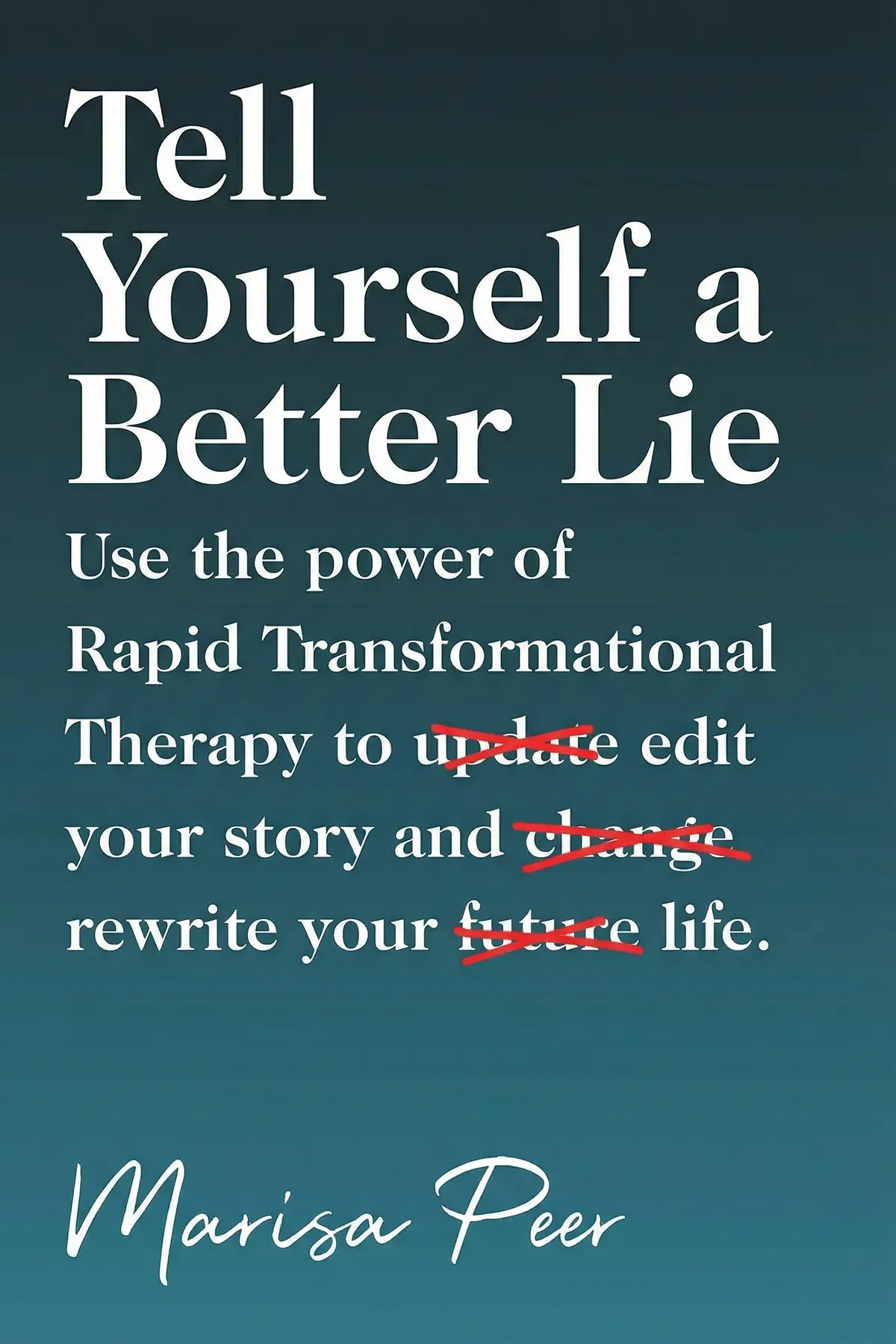
Table of Content
1. Introduction
1 min 12 sec
If a fear, a craving or a low mood keeps coming back however hard you fight it, Marisa Peer would say you are probably fighting the wrong enemy. In Tell Yourself a Better Lie, Peer, the therapist who created Rapid Transformational Therapy, argues that most painful patterns began as a child’s way of staying safe. A habit that damages your adult life may once have protected a frightened young child, and it keeps running because nothing ever told it the danger had passed.
Her method, called RTT for short, combines hypnosis with reframing to find those early stories and rewrite them. The book follows six clients, among them a woman ruled by cleaning rituals, a man who fainted at the sight of needles and a biochemist who thought her sadness was simply normal. Each case proves the same point from a new angle: a symptom points to an unmet childhood need, and when you meet that need yourself, the symptom loses its job. Along the way, you collect a handful of questions to put to your own oldest habits.
2. See your worst habit as a misguided bodyguard
1 min 52 sec
A woman brushed her teeth several times a day and could not cut a shower short. The question that finally loosened those rituals sounds strange at first: what were they trying to do for her?
3. Separate a parent's failure from your own worth
1 min 54 sec
A man who looked fine from the outside was drinking, numbing himself and quietly considering the worst. One reframe about his father changed what his whole childhood seemed to prove about him.
4. Uncover the old anger hiding behind steady sadness
1 min 56 sec
A successful scientist assumed her constant low mood was just her personality. A memory from the age of two suggested the sadness was doing a job, and that something sharper sat beneath it.
5. Stop performing perfection to earn love
2 min 04 sec
A devoted mother of faith believed, deep down, that she was never meant to be born. The rule she built to survive that belief was the very thing keeping her alone.
6. Small childhood moments can drive adult cravings
1 min 56 sec
Hidden candy and a refused cookie sound too small to matter. For one woman, they held the code to more than a decade of bingeing and purging.
7. Become your own loving parent and heal
1 min 55 sec
A confident father of four kept fainting whenever needles appeared. What he found under hypnosis had nothing to do with medicine, and the practice that freed him is one anyone can try.
8. Conclusion
1 min 14 sec
The six clients in Tell Yourself a Better Lie arrived with different labels: OCD, addiction, persistent sadness, depression, an eating disorder, a phobia. Peer treats them as one problem in six disguises. Each was a story written by a child who drew the wrong conclusion about their own worth, and each kept running long after the danger had gone. The old story was built on a misunderstanding, so rewriting it does not erase the past. It reads the past more accurately.
What follows from this is practical. When a habit or mood you dislike returns, interview it with Peer’s questions about role, function, purpose and intention, and listen for what it is guarding. Look under steady sadness for anger, and under perfectionism for the belief that love has to be earned. When a parent’s failure seems to prove something about you, read it as a sign of their wounds instead. Then picture the child you were and give them what they went without.
Carrie’s rituals, Ryan’s drinking and Daniel’s fainting were all asking for the same thing. Once each of them could provide it, the symptom had nothing left to protect.
About this book
What is this book about?
Many people fight the same habit, fear or low mood for years, using willpower, treatment or distraction, and it keeps coming back. Marisa Peer, the therapist who created Rapid Transformational Therapy, argues that these patterns are rarely the real problem. They are stories a child wrote to survive confusion, neglect or pain, and they keep running because no one ever updated them. Peer makes her case through six clients. A woman whose hygiene rituals stood in for safety. A man whose addictions numbed years of rejection. A biochemist whose steady sadness hid anger. A loving mother who believed she had to earn love. A high achiever trapped in bingeing and purging. A father who fainted at the sight of needles. In each case hypnosis brings early memories back, the symptom is questioned about what it was trying to do, and an old belief is swapped for a truer one. Readers come away with a few tools to try on themselves. One is a set of four questions to ask a habit about its role, function, purpose and intention. Another is a habit of looking under one emotion for another. The final one involves learning to act as a loving parent to yourself.
Book Information
Who it's for
Asking where struggles began
People who keep fighting the same fear, craving or low mood and want to understand where it started.
Sensing childhood still matters
Readers who sense their childhood still shapes their confidence, relationships or eating, and want a gentle way to look at it.
Curious how RTT works
Anyone curious about how hypnosis and reframing are used in Rapid Transformational Therapy.
About the Author
Marisa Peer
Marisa Peer is a therapist, motivational speaker and author with more than thirty years of experience. She created Rapid Transformational Therapy, which draws on hypnotherapy, psychotherapy and neurolinguistic programming, and in 2017 founded the RTT School, which has helped train over 13,000 therapists around the world. She also developed The 5-Day Challenge for children's confidence and the Dietless Life weight program, and received a Mental & Emotional Health Provider award from UK Health Radio in 2022. Her other books include I Am Enough and Ultimate Confidence.
Ratings & Reviews
Ratings at a glance
What people think
Listeners find the material very educational, with one listener noting the inclusion of scientific psychology research, and they value the functional tools and straightforward concepts. Furthermore, the book offers deep perspective on Rapid Transformational Therapy and assists in personal growth, as one listener points out that it addresses how to alter long-standing thoughts and habits. Additionally, listeners appreciate the touching narratives, with one listener mentioning the inclusion of personal stories about early childhood trauma, and they regard it as a simple-to-read, high-quality self-improvement system.
Top reviews
Surasit
This book completely shifted my perspective on how I talk to myself. Marisa Peer makes a compelling case for Rapid Transformational Therapy by showing how we can rewrite the scripts of our childhood traumas. While some critics argue that 'telling a better lie' is deceptive, I found it to be a powerful way to override the destructive narratives that held me back for decades. The case studies, particularly the ones dealing with parental rejection, were incredibly moving and felt very authentic to the human experience. It isn't just a dry psychology text; it’s a manual for emotional survival that provides actionable steps for anyone stuck in a cycle of self-doubt. Frankly, I think we all carry around old versions of ourselves that need an update, and this system offers a clear path to that evolution. It’s easy to follow, deeply empathetic, and filled with the kind of insights that make you stop and highlight every other page.
Show moreTuck
Finally got around to reading this, and I’m genuinely impressed by the practical nature of the tools provided. Most psychology books spend three hundred pages explaining the problem without ever giving you a solution, but this one is different. Peer focuses on the 'how' of changing old patterns and thoughts, which is exactly what I needed to hear right now. The stories of her former clients are both heartwarming and relatable, serving as a mirror for our own inner struggles with worthiness. I found the section on 'installing a cheerleader' to be particularly effective for my daily anxiety. Not gonna lie, I was skeptical about the hypnosis aspect at first, but the theory behind revisiting childhood scenes to update your adult narrative makes perfect sense. It’s a life-changing read for anyone ready to stop being their own worst enemy.
Show moreSiriporn
Wow, this was exactly what I needed to break through a long-term mental block. The simplicity of the writing is its greatest strength, making deep psychological work feel accessible and manageable. I was moved to tears by some of the personal accounts of childhood traumas, as they resonated so deeply with my own experiences. The book doesn't just ask you to think differently; it gives you the specific language to use when your brain starts spiraling into negativity. Marisa’s voice is powerful and reassuring, acting as the guide many of us never had growing up. Personally, the most valuable part was learning how to address the underlying feelings that drive my behavior rather than just trying to argue with the facts. It’s an excellent self-help system that I will be recommending to all my friends who are struggling with self-esteem.
Show moreSoontorn
The chapter on childhood scripts was a total eye-opener for me. It’s amazing how much of our current stress is just an echo of things we heard when we were five years old. Marisa Peer provides such a clear, easy-to-follow framework for identifying these old patterns and replacing them with something that actually serves us. I found the book to be incredibly heartwarming, especially the way she treats her clients with such respect and empathy. The practical tools included are easy to implement immediately, which I appreciate as someone with a busy schedule. Gotta say, the results speak for themselves if you actually do the work she suggests. This isn't just a book to read; it's a book to experience and use as a catalyst for real, lasting change in your life.
Show moreAria
After hearing Peer speak in an interview, I was curious if her writing would carry the same weight. The book is remarkably easy to read and simplifies complex psychological concepts into something anyone can use at home. I appreciated the specific focus on why we hold onto self-sabotaging behaviors even when we know they are hurting us. To be fair, the structure can get a bit repetitive as she moves through different client sessions, and the marketing for her specific 'RTT' method is a bit heavy-handed at times. However, the core message about addressing feelings rather than just facts is a game-changer for those of us who have tried traditional talk therapy without much success. It’s a solid resource for anyone looking to understand the 'why' behind their decisions and transform their internal dialogue.
Show morePloy
Ever wonder why you keep making the same mistakes even though you know better? This book dives deep into the subconscious mind to answer that exact question. Marisa Peer explains her Rapid Transformational Therapy method through a series of diverse case studies that highlight everything from career blocks to relationship issues. Truth is, the middle section drags a little because the format of each chapter is nearly identical, which might bore some readers. But if you can look past the repetition, the actual advice for reframing your internal monologue is gold. I liked the idea that our destructive habits actually serve a purpose, even if that purpose is outdated. By understanding the 'why,' it becomes much easier to let go of the 'what.' It’s an insightful guide for those who want to transform their lives without years of traditional therapy.
Show moreFinn
Picked this up on a whim and found it to be a very enlightening look at the power of the subconscious. Peer weaves together her years of experience to create a narrative that feels both scientific and deeply personal. While some might find her tone a bit self-centered, there is no denying that the results she describes are impressive. The focus on RTT provides a structured way to look at our pasts and decide which stories are worth keeping and which need to be rewritten. In my experience, the exercises at the end of the chapters are where the real value lies, providing concrete steps to apply the theory. My only real complaint is that it feels a bit like a lead magnet for her more expensive training programs. Regardless, the insights into how our childhood experiences shape our adult realities are worth the price of admission.
Show moreCamila
Direct and to the point, this book cuts through the noise of typical self-help jargon. It offers a refreshing perspective on how we can use our own minds to heal from past wounds. The focus on 'telling a better lie' is a clever way to describe the process of cognitive restructuring, even if it sounds a bit unconventional at first. I appreciated the great insight into how RTT works and how it differs from traditional talk therapy. Though the author can sometimes sound a bit like she's selling herself, the actual content is genuinely helpful for understanding self-sabotage. It's an excellent guide for anyone who feels stuck and is looking for a way to transform their life through better mental habits. Truly a valuable addition to my shelf that I'll likely return to when I need a mindset shift.
Show moreAndrei
As someone with a background in traditional counseling, I had a hard time with some of the claims made here. Peer is obviously a talented communicator, but the way she dismisses other evidence-based practices like CBT feels a bit arrogant. The concept of 'telling yourself a better lie' is interesting, but I worry it ignores the importance of processing the actual truth of one's history. Look, the case studies are engaging and give you a peek behind the curtain of her sessions, but they follow a very predictable pattern that starts to feel like a sales pitch for her courses. Some of the affirmations are helpful, yet they aren't necessarily groundbreaking if you’ve read much self-help before. It's a decent read if you want a basic introduction to her hypnotherapy-adjacent style, but take the scientific claims with a grain of salt.
Show morePalm
Not what I expected, as I thought this would be more of a traditional self-help book rather than a series of case studies. Each chapter follows a client's journey through hypnosis, which can feel a bit repetitive if you read it all in one sitting. To be fair, there are some decent affirmations sprinkled throughout that can be used for daily motivation. However, I found myself skipping through the parts that didn't directly apply to my own life or interests. The 'better lie' philosophy is a bit controversial and might not sit well with everyone, especially those who value objective truth above all else. It's an okay read if you're specifically interested in hypnotherapy, but it lacks the depth I was hoping for in a psychology book. I’d suggest just reading the last two chapters if you want the summary of the method without the fluff.
Show moreQuestions about this book
What is the main idea of Tell Yourself a Better Lie?
Marisa Peer argues that many painful patterns, from compulsions and addictions to sadness and phobias, began as a child’s way of coping with pain or neglect. They persist because the beliefs behind them were never updated. Her Rapid Transformational Therapy uses hypnosis and reframing to find those early stories, understand what each symptom was protecting, and replace the old belief with a truer one.
What is the RFPI technique in Rapid Transformational Therapy?
RFPI stands for Role, Function, Purpose and Intention. A client gives a symptom a voice and asks it what it is doing for them, with prompts such as what would happen if it stopped keeping them safe. Carrie learned her OCD existed to replace the security she lacked as a child, and Ryan saw his addictions had numbed rejection and kept him alive through crises.
What does it mean to become your own loving parent?
Peer says that even if your caregivers failed to meet your emotional needs, as an adult you can now give your inner child the love, care and reassurance it missed. Daniel, who fainted at needles, pictured going back to his infant self and offering unconditional support. Peer argues this replaces helplessness and rejection with safety and belonging, without needing anyone else to supply them.
Who should read Tell Yourself a Better Lie?
It suits readers stuck in a recurring fear, craving or low mood who suspect its roots lie in childhood. The six case studies cover OCD, addiction, hidden sadness, depression, eating disorders and a needle phobia, so many readers will recognize part of their own story. It also interests anyone curious about how hypnosis and reframing are used in therapy.
How can I apply the ideas in Tell Yourself a Better Lie?
Start by asking a habit you dislike what role, function, purpose and intention it serves. Check whether steady sadness hides anger, as it did for Gemma, or whether perfectionism hides a belief that love must be earned, as it did for Lucy. When a craving hits, name the feeling you want it to supply. Then picture your younger self and offer the reassurance you needed back then.
Readers also enjoyed





A Guide to the Good Life: The Ancient Art of Stoic Joy
William B. Irvine




A High-Performing Mind: Strengthen Your Mind and Live Your Best Life
Andrew D. Thompson
AUDIO SUMMARY AVAILABLE
Listen to Tell Yourself a Better Lie in 15 minutes
Get the key ideas from Tell Yourself a Better Lie by Marisa Peer, plus 5,000+ more nonfiction titles.
- 5,000+ titles
- Listen as much as you want
- 7-day free trial
- Cancel anytime









