

14 min 24 sec
Available in: English
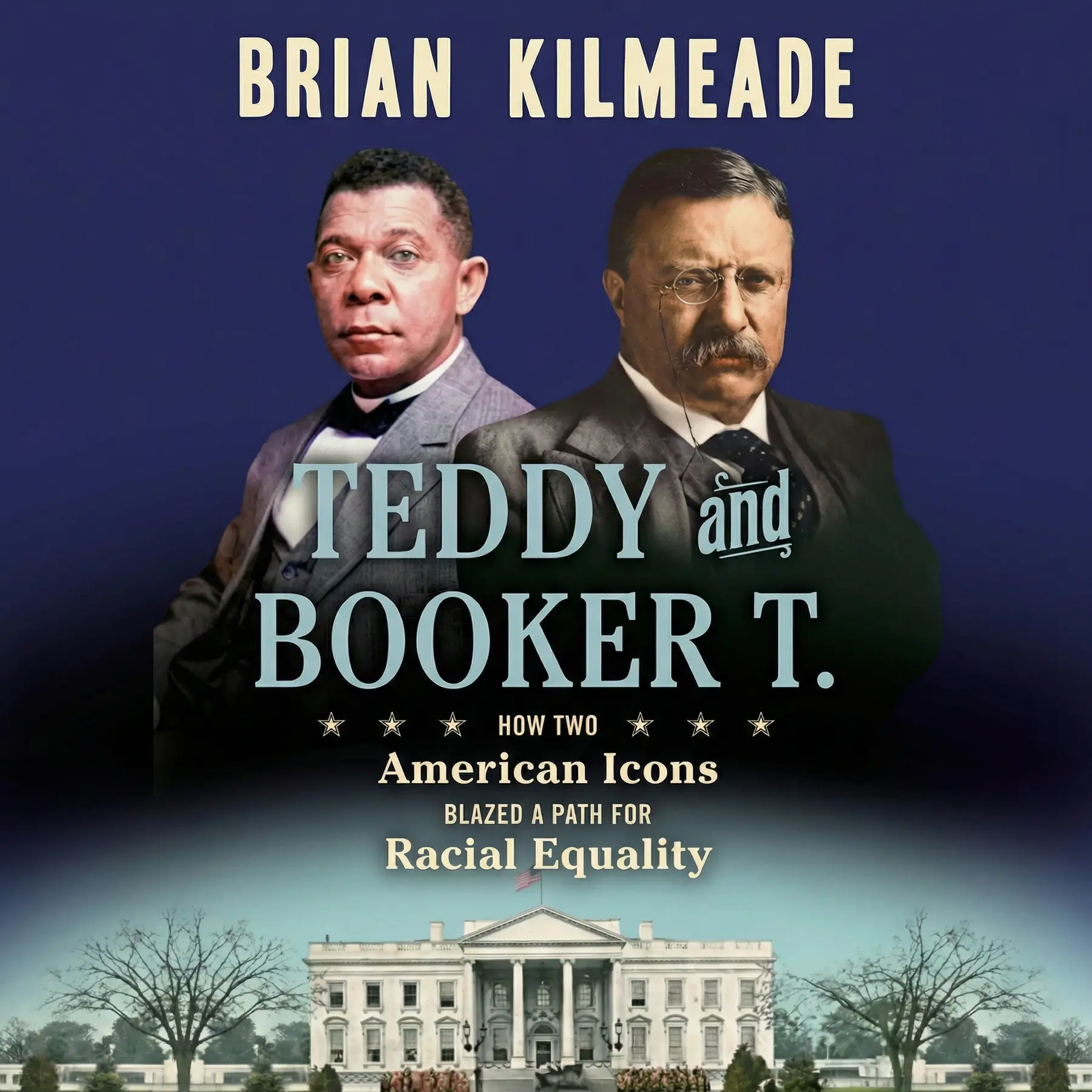
Teddy and Booker T.: How Two American Icons Blazed a Path for Racial Equality
Shows how a president born to wealth and an educator born into slavery built a discreet alliance during the Jim Crow years, and what their patient, behind-the-scenes strategy won and what it cost.

Table of Content
1. Introduction
1 min 06 sec
In 1901, a single dinner invitation set off a national storm, because no African American had ever been honored that way at the White House. In Teddy and Booker T., Fox News host Brian Kilmeade tells the story behind that meal: an alliance between President Theodore Roosevelt, born rich in New York, and educator Booker T. Washington, born into slavery in Virginia.
Kilmeade argues that both men were hardened early by struggle and grief, and that during the harshest years of the segregation laws known as Jim Crow they chose discreet cooperation over open confrontation. That patient route won modest but real gains in education, economic opportunity and Black representation in government, and it drew fire from critics on both sides.
For anyone torn between speaking out loudly and working slowly inside a system they dislike, their partnership shows what behind-the-scenes influence can achieve, what it costs, and how trust between unlikely partners can outlast a single headline.
2. Turn a hard start into lasting drive
1 min 59 sec
One boy worked in salt furnaces and walked hundreds of miles for a classroom. The other had money and schooling but a body his own father doubted. Their very different handicaps produced the same stubborn trait.
3. Building something lasting out of private grief
2 min 09 sec
A college that existed only as a plan, ten days to fill it, and then two deaths that could have ended everything. How each man answered loss shaped the public figures they became.
4. A calm tone wins allies and critics
1 min 59 sec
One speech put Washington’s face on front pages and earned praise from Southern leaders. Yet the same words angered many of the people he spoke for. Roosevelt, meanwhile, was making enemies of a different kind.
5. Holding a middle path when both sides push
2 min 11 sec
Roosevelt quit a safe government post to lead volunteers into battle and came home a hero. In the same months, Washington faced pressure from every direction while violence at home reached a terrible peak.
6. What one dinner revealed about hidden walls
1 min 55 sec
No agreements came out of the meal, and yet the country reacted as if something enormous had happened. What the two men said at the table, and what they did with the backlash, set the terms for years.
7. Patient alliances win slow, real gains
1 min 46 sec
For eight years the partnership ran mostly behind closed doors, through appointments, advice and votes. Activists called it too slow. Kilmeade weighs what that patience bought, and what each man did once the alliance ended.
8. Conclusion
1 min 19 sec
The story Kilmeade tells is about two very different paths meeting at one table. A boy who walked 500 miles to school and a sickly rich child who rebuilt his own body both learned early that obstacles were there to be broken through. Both buried people they loved and turned that pain into institutions. When they finally met, the outrage over a single dinner showed how high the walls still stood, and they chose to keep working out of sight.
Their method was patience: appointments made with careful advice, support traded for access, and a steady bet on schools and economic strength. It earned them attacks from activists who wanted more and from those who wanted nothing to change. The gains were modest, and Kilmeade treats them as real progress against the racism of their age.
The lesson worth carrying is about alliances. When you need something from people far from your own world, an honest private conversation can build more trust than a public demand, and that trust can do slow work for years. Decide where patience serves your goal and where it does not, and expect criticism either way. Washington left the White House that night with no policy in hand, only a partner. Eight years of work grew from that.
About this book
What is this book about?
In 1901, President Theodore Roosevelt invited Booker T. Washington to dinner at the White House. No African American had been honored that way before, and the country erupted. Brian Kilmeade uses that evening as the center of a larger story: how two men from opposite ends of American life came to trust each other and work together while segregation tightened its grip on the South. Kilmeade follows both lives in parallel. Washington walked 500 miles to school, worked as a janitor to pay for classes and built Tuskegee with his own students' hands. Roosevelt fought asthma, lost his wife and his mother on the same day, then rose through reform politics and the war in Cuba to the presidency. Both buried grief in work, and both drew fire for their methods. Readers get a clear account of what the partnership did behind closed doors: federal appointments made on Washington's advice, Black Republican support for Roosevelt, and a shared bet on education and economic strength. They also get an honest look at the trade-offs of patient, low-key influence, and at why trust between unlikely partners can achieve what public pressure alone cannot.
Book Information
Who it's for
Curious about historic partnerships
History readers curious about Theodore Roosevelt and Booker T. Washington as partners, not just as separate icons.
Changing institutions from within
People working for change inside resistant institutions who weigh quiet influence against public pressure.
Building trust across differences
Leaders building trust with allies very different from themselves.
About the Author
Brian Kilmeade
Brian Kilmeade joined Fox News in 1997 and co-hosts its morning show Fox & Friends. He also hosts the radio program The Brian Kilmeade Show and, since 2022, the weekend show One Nation with Brian Kilmeade. Earlier he worked as a reporter and anchor at Newsport TV and KHSC-TV and spent ten years doing stand-up comedy. His history books include George Washington's Secret Six and Thomas Jefferson and the Tripoli Pirates, both written with Don Yaeger, and four of his first five books became New York Times best sellers.
Ratings & Reviews
Ratings at a glance
What people think
Listeners find the work very engaging, with one listener finishing it in only a day and a half. The historical elements draw praise for being thoroughly researched, and listeners appreciate the fluid writing style and quick-paced plot. They also value the book’s look at two prominent Americans from different cultures, while one listener mentions its relevance to contemporary issues. Additionally, the depth of detail and the book's merit as a gift choice both receive favorable mentions.
Top reviews
Pichaya
This book provides a masterclass in how two men from opposite worlds can find common ground for the greater good. Kilmeade does a fantastic job juxtaposing the silver-spoon upbringing of Roosevelt against the harrowing, nameless early years of Booker T. Washington. I found the sections on Washington’s struggle for literacy particularly moving, as it highlights a drive for self-improvement that feels incredibly relevant to our current social climate. While some might find the historical overview a bit broad, the narrative energy kept me glued to the pages. It’s a fast-moving account that doesn't get bogged down in dry academic jargon. I finished it in two sittings because the pacing is just that good. If you want to understand how bridge-building actually works, this is a must-read for any history fan.
Show moreBella
Ever wonder how a former slave and a billionaire’s son became the most unlikely allies in American history? Kilmeade answers that question with a narrative that is as entertaining as it is informative. The inclusion of W.E.B. Du Bois was a smart move, as it provides the necessary friction to understand the different philosophies of Black advancement at the turn of the century. Look, history doesn't have to be boring, and this book proves it by focusing on the human elements of leadership. I was particularly struck by the controversy surrounding their White House dinner; it’s a stark reminder of the courage it took just to share a meal back then. It’s a timely reminder that progress requires patience and strategic partnerships. Highly recommended for students and history lovers alike.
Show morePim
Wow. I knew the basics about Teddy Roosevelt, but I was almost completely in the dark regarding the sheer magnitude of Booker T. Washington’s accomplishments. Reading about his journey from being an illiterate child of slavery to a presidential advisor was genuinely inspiring. Kilmeade’s writing style is very accessible, making this an ideal choice for a gift or a quick weekend read. He doesn't shy away from the harsh realities of the era, yet the tone remains hopeful. The book drives home the point that meaningful change often happens through quiet, persistent collaboration rather than just loud rhetoric. It’s a powerful look at two giants who were willing to risk their reputations for a common cause. I truly hope this inspires more people to read deeper into the era.
Show morePloy
Truth is, I didn't think I'd be able to finish a history book in two days, but I couldn't put this one down. Kilmeade has a knack for finding the human angle in these big historical moments. Seeing Booker T. Washington's rise from having absolutely nothing—not even a toothbrush—to becoming a pillar of American education was incredible. The way his life eventually intersected with Roosevelt’s creates such a unique perspective on the presidency. It’s an informative, well-written narrative that highlights the importance of wisdom and patience in leadership. Regardless of your political leanings, there is a lot to learn from the mutual respect these two men had for each other. Definitely a top-tier historical biography for the modern reader.
Show moreSukit
Picked this up on a whim and ended up devouring it in less than forty-eight hours. The way Kilmeade structures the parallel histories of these two icons makes for an incredibly engaging experience, even if they don't actually cross paths until much later in the text. I’ll be honest, the depth isn't always there—it’s definitely more of a popular history than a scholarly deep dive—but the research feels solid enough for the average reader. There’s a certain urgency to the writing that makes the Jim Crow era feel less like a distant memory and more like a vital lesson for today. I appreciated the focus on their shared vision for racial equality, though I wish there was more about their actual letters to one another. Still, it’s a great gift for anyone who likes a quick, informative biography.
Show moreHazel
As someone who has followed Kilmeade’s historical series for a while, I think this might be one of his most important entries yet. He manages to weave together the Reconstruction era and the rise of Jim Crow with a fast-moving plot that never feels stagnant. I liked the contrast between Washington’s trade-focused education goals and the "talented tenth" ideology of Du Bois, which added a lot of necessary nuance. My only real complaint is that I noticed a few instances where the narrative felt a bit repetitive in its descriptions. However, the emotional core of the friendship shines through clearly. It’s a solid 4-star read that offers a great overview of how these two men tried to help America live up to its promises.
Show moreTar
Finally got around to finishing this, and I have to say, the chapter on the White House dinner alone is worth the price of admission. It’s crazy to think how much backlash a simple meal could cause, and Kilmeade captures that tension perfectly. The book is very well-researched, though it does move at a breakneck speed that sometimes sacrifices detail for momentum. I would have loved more analysis on how their friendship influenced specific policies later in TR's term. That said, it’s a very engaging read that bridges the gap between different cultures and backgrounds. It’s a fast-paced history that feels very relevant to the conversations we are still having in 2024. Not perfect, but definitely worth the time spent.
Show moreSamart
After hearing so much hype about Kilmeade’s latest, I was left feeling slightly underwhelmed by the scattershot approach to the history here. To be fair, the subject matter is fascinating, but the author tries to cram way too many decades into such a slim volume. It felt like a race through their lives where we barely scratched the surface of Roosevelt’s complex presidency. My biggest gripe is that the two main figures don’t even interact until you are halfway through the book! It’s less a study of a friendship and more of a dual biography that occasionally overlaps. It serves as a decent introduction for those who know nothing about the era, but seasoned history buffs might find it too condensed. Three stars for the effort.
Show moreCee
Just finished it, and I'm a bit torn on the final product. On one hand, the story of Washington and Roosevelt is undeniably compelling and the book is very easy to get through. On the other hand, it felt a little too condensed for such massive historical figures. I agree with other reviewers who said the parallel histories went on a bit too long before the two men actually met. The writing is okay, but it lacks the lyrical quality or the deep citations of more established historians. It’s a decent primer for a casual reader, but if you’re looking for a deep, scholarly analysis of the Civil Rights movement's early days, you might find this a bit lacking.
Show moreRung
Not what I expected at all, and frankly, I’m disappointed by the lack of polish in this publication. I found the writing to be incredibly sloppy in several sections, with a handful of typos that kept pulling me out of the story. It felt like the book was rushed to the printers to meet a deadline rather than being carefully edited for depth or accuracy. While the lives of Roosevelt and Washington are inherently interesting, the prose here is uninspired and feels a bit like a high school summary. There wasn't enough exploration of how they truly interacted behind the scenes. If you want a real biography, go read Morris or Chernow instead. This one just felt like a shallow overview designed for a quick buck without offering any new historical insights.
Show moreQuestions about this book
What is Teddy and Booker T. about?
Brian Kilmeade tells how President Theodore Roosevelt and educator Booker T. Washington formed a discreet alliance in the early 1900s. It began with a 1901 White House dinner that caused a national uproar, because no African American had been honored that way before. Over eight years the two men worked behind the scenes to win modest gains for Black Americans in representation, education and economic opportunity, while facing criticism from both sides.
Why was the dinner between Roosevelt and Booker T. Washington so controversial?
No African American had ever been invited to dine with a president at the White House, and by the strict racial codes of the time the meal looked far too intimate. The invitation came after McKinley’s assassination forced Roosevelt to cancel a planned trip to Tuskegee. Roosevelt dismissed the outcry, saying it was natural for two leading Americans to meet, but the backlash showed both men how deep the barriers ran.
What did Roosevelt and Washington achieve together?
According to Kilmeade, Washington often visited the White House to brief Roosevelt and plan strategy. Roosevelt consulted him when appointing African Americans to federal jobs and took his advice on responding to race riots. In return, Washington gathered Black Republican backing for Roosevelt’s policies and for his bid to win re-election. The results were modest gains in representation, education and economic opportunity, which Kilmeade credits to the trust between the two men.
Why was Booker T. Washington criticized in his time?
Washington favored a conciliatory approach, calling for reconciliation through patient cooperation and economic progress, as in his Atlanta Exposition address. Militant Black voices wanted him to condemn lynching and inequality more forcefully and felt he conceded too much to white oppressors. White politicians, meanwhile, pressed him to stay narrowly focused on improving Black morals. He tried to hold a middle course between those pressures.
What lessons does Teddy and Booker T. offer today?
The book points to the value of determination in the face of hardship, the role of education and economic strength in building toward wider equality, and the power of trust between unlikely partners. It also shows the cost of patient, low-key influence: real but modest progress, and steady criticism from people who wanted faster change or none at all.
Readers also enjoyed
Age of Anger: A History of the Present
Pankaj Mishra

A Promised Land
Barack Obama


A River in Darkness: One Man’s Escape from North Korea
Masaji Ishikawa
1491: New Revelations of the Americas Before Columbus
Charles C. Mann

A Spy Among Friends: Philby and the Great Betrayal
Ben Macintyre

1929: Inside the Greatest Crash in Wall Street History--and How It
Andrew Ross Sorkin


A Biography of Loneliness: The History of an Emotion
Fay Bound Alberti
AUDIO SUMMARY AVAILABLE
Listen to Teddy and Booker T. in 15 minutes
Get the key ideas from Teddy and Booker T. by Brian Kilmeade, plus 5,000+ more nonfiction titles.
- 5,000+ titles
- Listen as much as you want
- 7-day free trial
- Cancel anytime









