

13 min 12 sec
Available in: English
Tapping: Self-Healing with the Transformative Power of Energy Psychology
Shows how to ease worry, stress and painful memories at home by tapping acupuncture points while you focus on the problem, with a step-by-step protocol, a way to score progress and fixes for stuck feelings.
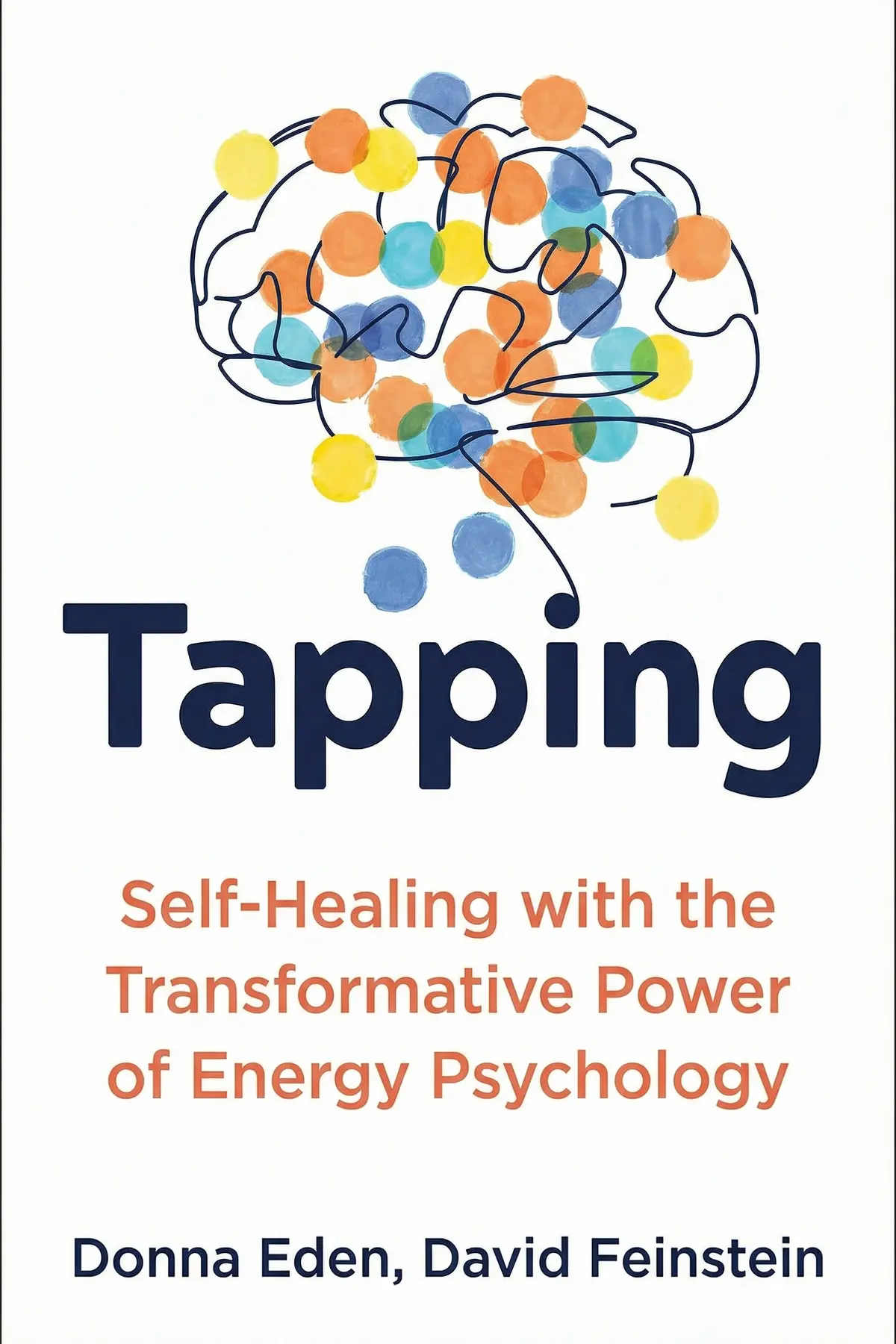
Table of Content
1. Introduction
1 min 00 sec
Fear, worry and old embarrassments can feel like permanent fixtures, yet Donna Eden and David Feinstein argue they rest on an inner framework you can revise. In Tapping, the energy medicine teacher and the psychologist pair focused attention on a problem with firm, light taps on acupuncture points, a combination they say sends calming signals to the brain’s fear centers.
The field behind it is called energy psychology. Its claim is that a distressing reaction is a learned model, and that tapping while you hold that reaction in mind lets you measure it, loosen it and replace it. The authors make one limit clear: this is self-help, and it does not stand in for therapy when problems are serious, addiction included.
What follows is the whole home routine. It starts with a short breathing test and builds to a twelve-step protocol with a score you can track. Then come the adjustments for a feeling that hangs on, and a version made for the worry that keeps you up at night.
2. Treat your reactions as a model you can rewrite
1 min 54 sec
A manager starts dreading routine meetings and cannot say why. The real cause turns out to be years old, and finding it changes how he sees one person on his own team.
3. Feel the effect within a few breaths
1 min 47 sec
Claims about energy points are easy to doubt. The authors answer with a test you can run right now, with nothing but your own lungs and a score you give yourself before and after.
4. Set up each session around one clear issue
1 min 50 sec
A vague wish to feel better gives you nothing to work with. A few minutes of setup, a number and one unusual sentence said aloud turn it into something you can actually measure.
5. Run two tapping rounds with a reset between
1 min 43 sec
Halfway through a session, the authors ask you to hum a nursery rhyme and roll your eyes around the room. It looks strange, and they explain exactly what it is meant to do.
6. Reach the feelings that will not fade
1 min 56 sec
A score that drops from eight to three feels like progress, yet that last three often hides the real problem. Sometimes the obstacle is a part of you that does not want to let go.
7. Turn constant worry into a useful amount
1 min 56 sec
Some worry keeps you sharp, and too much keeps you awake. The authors adapt their routine for the moment concern turns into a loop, and they flag the hidden reason some people hold on to it.
8. Conclusion
1 min 06 sec
Tapping comes down to a simple wager: a reaction you can rate, name and accept out loud is a reaction you can begin to change. Eden and Feinstein treat fears and worries as models built from old experience, and they hand you a way to work on those models with your fingertips, a short phrase and a number from zero to ten. That number keeps the practice honest. You find out for yourself whether a memory still stings after two rounds and a hummed nursery rhyme.
The breathing round is the gentlest place to begin, because it takes a couple of minutes and gives you a before and after. When something heavier surfaces, a meeting that tightens your chest or a money decision you keep avoiding, run the full protocol on the most concrete scene you can find. If the score stalls, add still and some, name the feeling, and ask whether part of you wants to keep it.
Keep the authors’ own limit in view: for serious mental illness or addiction, tapping is no substitute for therapy. Within that limit, the next worry that arrives is something you can measure, and a measured worry can move.
About this book
What is this book about?
Some reactions outlast their reasons: dread before ordinary meetings, shame about a decades-old mistake, worry that circles all night. Donna Eden and David Feinstein argue that these reactions run on guiding models, inner frameworks formed out of temperament, culture and experience, and that such models can be updated. Their tool is tapping, the core practice of energy psychology. It pairs focused attention on a problem with light, firm tapping on acupuncture points drawn from Chinese medicine. The authors describe the body as an electrical system and say this stimulation sends calming signals to the brain's fear centers. The book stays practical: a short breathing test, a twelve-step protocol with a zero to ten distress score, an odd but simple integration routine of eye movements and humming, and ways to adjust when a feeling refuses to drop. Readers get a self-help routine they can run alone, a version built for everyday worry and clear guidance on hidden objections that keep problems in place. The authors are also clear about the limit: tapping is no substitute for therapy for serious mental health problems or addiction.
Book Information
Who it's for
Professionals under pressure
Professionals whose stress spikes before meetings, exams or hard conversations and who want a routine they can run alone.
Replaying painful memories
People replaying an old embarrassment or loss who want a structured way to work on it.
Curious about energy medicine
Readers curious about energy medicine who want clear, step-by-step practice.
About the Author
Donna Eden
Donna Eden is regarded as a pioneer of energy medicine and has worked in both traditional and alternative health care. She says she could perceive how energy moves from childhood, and she built a method to teach it, including a certification program for practitioners. David Feinstein is a licensed psychologist in Oregon who has taught at The Johns Hopkins University School of Medicine, Antioch College and the California School of Professional Psychology. He has won nine national awards for his writing on consciousness and healing. The couple, together since 1977, also co-wrote Energy Medicine, translated into 12 languages.
Ratings & Reviews
Ratings at a glance
What people think
Listeners find the book's content exhaustive and incredibly beneficial, with one individual pointing out its encyclopedic breadth. Furthermore, they value its instructional merit, as one listener explains how it integrates EFT with cognitive behavioral therapy. The text also earns acclaim for its high-quality prose, and listeners celebrate its therapeutic impact, with one specifically highlighting its transformative energy psychology techniques.
Top reviews
Nadia
Finally got around to finishing this massive 432-page guide, and it feels like a total internal reset. While I’ve dabbled in energy work before, the way Eden and Feinstein explain "energy psychology" as an electromagnetic system makes so much more sense than other books I've tried. The section on childhood memories was especially poignant for me because I realized how much I was holding onto from my past. I spent an afternoon tapping through the 12-point protocol while focusing on my old abandonment issues. Not gonna lie, I cried quite a bit, but the lightness I felt afterward was undeniable. It’s like clearing out a cluttered attic you didn't know you had. If you are struggling with anxiety or just feel stuck in your own head, this is a must-read for self-evolution.
Show moreNannapat
Wow, this is deep. Most self-help books give you a few tips and send you on your way, but this one provides a full framework for emotional management. I started with the simple breathing exercise mentioned early on—tapping 12 points while reciting an acceptance statement—and the difference in my lung capacity was immediate. It’s fascinating how focusing on a specific problem while signaling the nervous system can actually quiet the fear centers of the brain. The writing quality is excellent, making complex energy medicine concepts accessible to anyone without a PhD. I’m currently using the protocol to work through some self-defeating habits I’ve had since college. It takes work and consistency, but the transformative potential here is huge if you actually follow the steps.
Show moreLuke
Ever wonder why you feel stuck in the same negative loops despite years of traditional talk therapy? This book might be the answer you’re looking for because it treats the body as a whole electromagnetic system. I’ve been using EFT for years, but Eden and Feinstein take it to a much deeper level by introducing the 12-step protocol and the integration procedure. The chapter on worry was a total game-changer for me, especially the part about deactivating the brain's fear centers to stop obsessive rumination. It’s not just about positive thinking; it’s about physical intervention in your own biology. I’m recommending this to everyone I know who struggles with chronic stress or invisible emotional hurdles.
Show morePornthip
Picked this up on a whim after a friend mentioned tapping for migraines, and I ended up learning so much more about my own solar plexus blockages. The authors explain how our nervous system holds onto trauma like an electrical charge, and how we can use our own fingers to discharge that energy. I love that they don't treat the problem as an "enemy" but rather something to be accepted and processed with self-compassion. The 12-step protocol is easy to follow once you get the hang of it, and I’ve already noticed a shift in my overall confidence. It’s a beautiful journey into the depths of your own psychology. If you want a book that is both scientifically grounded and spiritually profound, this is it.
Show moreRoydao
After hearing David Feinstein speak on a podcast, I knew I needed the physical copy of this book to use as a reference. It is essentially a complete guide to energy psychology, blending the ancient wisdom of meridians with cutting-edge research on the limbic system. The instructions are clear and the examples, like the story of Paul managing his workplace anxiety, make the concepts very relatable. I’ve started incorporating these tapping cycles into my morning routine and I’ve noticed I handle daily stress much more gracefully. This isn’t a quick-fix band-aid; it’s a toolkit for life. Truly a groundbreaking work that offers a beacon of hope for anyone struggling with the unrest of our modern world.
Show moreTantipat
As a health coach who incorporates various modalities, I found this to be a nearly encyclopedic resource for anyone looking to bridge the gap between mental health and physical sensation. It beautifully weaves together Emotional Freedom Technique (EFT) and cognitive behavioral principles, creating a comprehensive manual for trauma and stress management. The step-by-step guidelines for addressing things like habits and relationship friction are incredibly thorough. Truth is, the book is quite long and can feel a bit repetitive at times since the protocol is applied similarly to different conditions. However, the educational value regarding how the limbic system responds to acupressure points is top-notch. It isn’t just a quick-fix pamphlet; it is a deep dive into how we can reprogram our nervous system for better balance.
Show moreBua
The sheer volume of information in this book is both its greatest strength and its only real weakness. On one hand, you have a complete guide to tapping that covers everything from disaster relief to financial worry, which is incredible. On the other hand, the text could have been significantly crisper, as many chapters repeat the same basic instructions for different scenarios. Personally, I would have loved to see more illustrations or diagrams of the meridians to make the physical aspect easier to follow without flipping pages. That said, the authors’ field-tested refinements are clearly based on years of successful practice with patients. It’s a valuable addition to my library, even if I have to skim through some of the repetitive sections to get to the new insights.
Show morePairot
Donna Eden has done it again by providing a vibrant and accessible path to wellness that anyone can use at home. I was particularly impressed by the section on psychological reversals, those subconscious beliefs that keep us from actually wanting to get better. It explains so much about why we self-sabotage even when we think we’re trying our hardest to change. The book is very detailed, offering specific "reminder phrases" and acceptance statements for a wide variety of life challenges. My only minor complaint is that it’s quite a long read, and it requires a significant time commitment to really master the techniques. But if you’re serious about healing at the root source, the educational value here is worth every minute spent.
Show moreSun
To be fair, the techniques work for calming down during a panic attack, but I have mixed feelings about the overall presentation. The authors are clearly experts in their field, and the way they combine ancient Chinese medicine with modern therapy is interesting. But at 400+ pages, it feels like they were trying to turn a simple, effective tool into an entire world-view. Look, tapping on acupuncture points to stimulate electrical charges is a great way to ground yourself. However, some of the anecdotal success stories felt a bit too "miraculous" for my analytical brain to fully accept. It’s a solid manual for those who want a holistic approach, but I think a shorter, more concise version would be just as effective for the average reader.
Show moreMan
I wanted to believe in the transformative power of this practice, but the authors lost me with some of their more extreme claims. While I appreciate the concept that tapping can reduce stress or help with minor emotional blocks, it is dangerously irresponsible to suggest these tools could help cure serious illnesses like throat cancer. Furthermore, the inclusion of a story about a heart transplant recipient solving a murder through "dream information" was completely bizarre and unsupported by evidence. It’s a shame because the actual tapping instructions seem like they could be useful for everyday anxiety. Frankly, the lack of scientific rigor regarding these anecdotes makes it hard to trust the more grounded psychological advice. I would recommend this only for the exercises, provided you can ignore the pseudoscience sprinkled throughout the later chapters.
Show moreQuestions about this book
What central idea do Donna Eden and David Feinstein present in their book Tapping?
The authors argue that fears, stress and worries run on guiding models, inner frameworks formed from temperament, culture and experience. Energy psychology aims to update those models by pairing focused attention on a problem with tapping on acupuncture points from Chinese medicine. They say this sends calming signals to the brain’s fear centers, and they give a protocol with a zero to ten score so you can track the change yourself.
How do you do the basic tapping protocol?
Pick one issue, score your distress from zero to ten, give it a short reminder phrase and join it to a self-acceptance line. Rub the tender points near where the arms meet the chest while saying the first half, then hands over heart for the second half, three times. Tap twelve points while repeating the phrase, do the integration routine of eye movements, humming and counting, tap a second round and score again.
What should I do if tapping does not lower my distress?
The authors suggest three adjustments. Rewrite the acceptance line with the words still and some, and name the exact emotion, such as shame. Look at the separate pieces of the problem, including memories and core beliefs like not deserving money. And check for hidden objections by asking whether you truly want the problem solved and believe it can be, then put any no into the statement while you tap.
Can tapping help with worry and anxiety?
The authors report strong results with worry, anxiety, depression and PTSD. For worry, you score one specific concern, label it, say an acceptance line, then tap eight points from the top of the head to under the arm. They warn about psychological reversal, such as fearing you will be unprepared if you stop worrying. The goal is a manageable level of worry, since some concern keeps you careful.
Is tapping a replacement for therapy?
No. Eden and Feinstein present tapping as a self-help tool for everyday fears, stress and painful memories, and they state that it does not replace therapy, especially for serious mental health problems or addiction. They also note that scientific understanding of the technique is still developing, while many practitioners and users report benefits from regular practice.
Readers also enjoyed
ADHD an A-Z: Figuring It Out Step by Step
Leanne Maskell






Alcoholics Anonymous
Alcoholics Anonymous World Services

A Liberated Mind: How to Pivot Toward What Matters
Steven C. Hayes
AUDIO SUMMARY AVAILABLE
Listen to Tapping in 15 minutes
Get the key ideas from Tapping by Donna Eden, plus 5,000+ more nonfiction titles.
- 5,000+ titles
- Listen as much as you want
- 7-day free trial
- Cancel anytime









