

A Promised Land
Barack Obama
 English
Sportscaster Jim Gray recounts four decades beside Muhammad Ali, Tiger Woods, Tom Brady, Kobe Bryant and world leaders. His stories show how listening earns access to great people and how costly honesty keeps it worth having.
1 min 02 sec
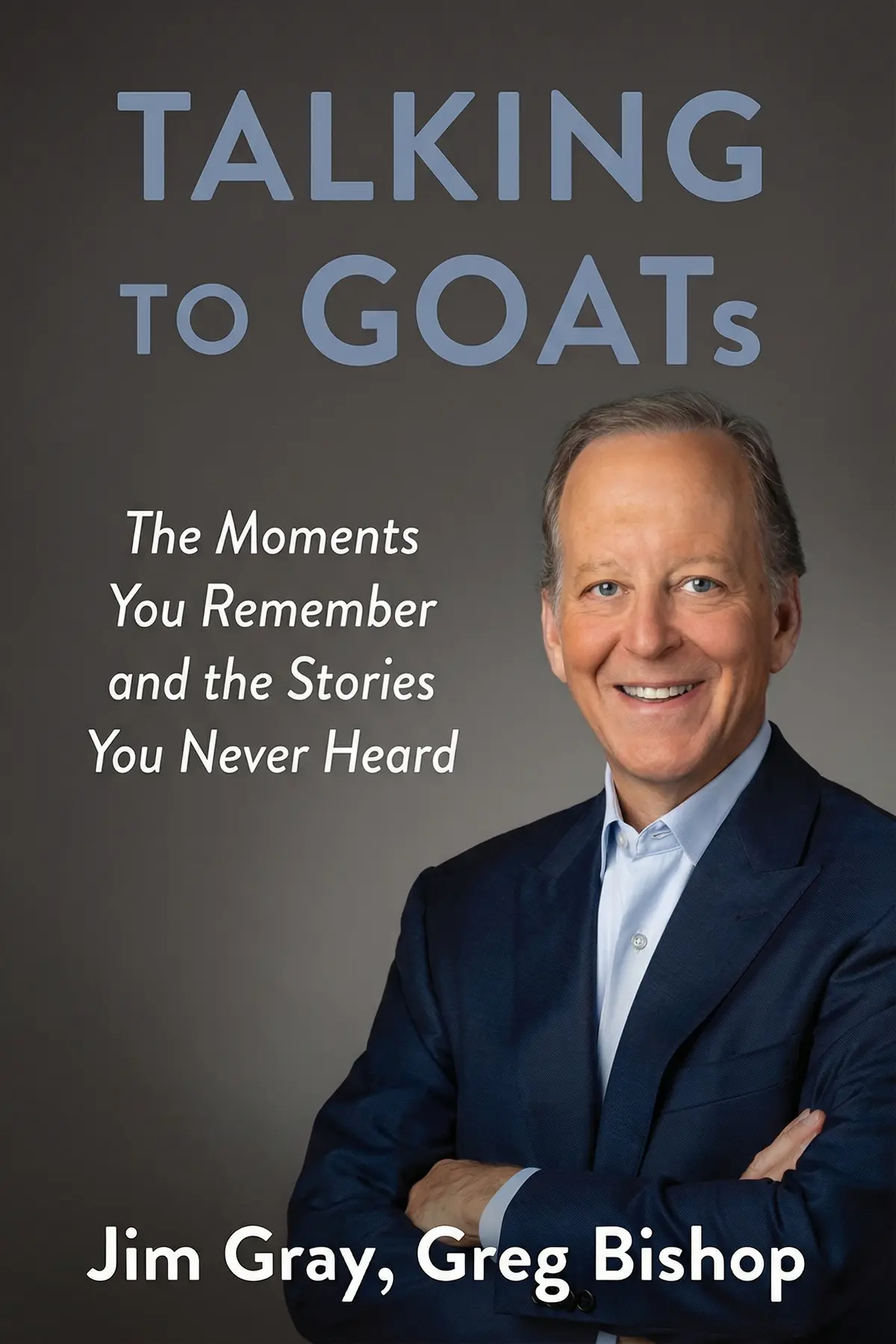
Most of us meet sports legends only through highlights. Jim Gray learned at eighteen, sent to interview Muhammad Ali without a single prepared question, that the way past the highlight is to listen and build each question from the last answer. In Talking to GOATs, the veteran broadcaster, writing with sports journalist Greg Bishop, looks back on four decades beside Ali, Tiger Woods, Tom Brady, Kobe Bryant and even Nelson Mandela.
His stories make one case. Access to great people is won by listening and preparation, and it is kept only by deciding what you will stand behind, even when that costs you. Along the way come a medal lost in an airport terminal, a fight with Nike over old footage, a private scrimmage Michael Jordan loved more than any game, and an interview that exposed a feud inside the Los Angeles Lakers. Each one shows how champions really work, and how to hold your ground near powerful people.
1 min 47 sec
An eighteen-year-old intern was sent to meet the most famous boxer alive with nothing written down and no notepad. He walked away with a 32-minute interview and a career, thanks to one simple habit.
1 min 29 sec
A disgraced Olympic champion rushed through an airport at night, and every news crew had the same tip. One reporter got the story with a single question and a silent gesture. What made the difference?
1 min 50 sec
A home video of a boy golfer ended up in a giant company’s first commercial for him, and nobody asked the man who filmed it. His response shows how to defend your work without losing your friends.
2 min 17 sec
A backup quarterback who loved cheeseburgers and a basketball practice that no camera recorded have something in common. Both reveal where the moments fans remember are actually decided, long before the crowd arrives.
1 min 46 sec
A baseball legend waited 45 minutes for a table in a half-empty restaurant, and later spoke openly on national television. The reporter who stood beside him both times paid a price he never saw coming.
1 min 41 sec
A prisoner offered a rare privilege kept asking for more, and the warden thought he was joking. A president on trial had every reason to skip a birthday dinner. What both did says a lot about leadership.
1 min 51 sec
A superstar called his reporter friend wanting to vent about a teammate, on camera. The reporter aired the anger but cut one line, then made a phone call that still cost him a friendship for years.
1 min 11 sec
Talking to GOATs plays like a highlight reel, yet its steadier story is about the person holding the microphone. Gray got close to the greatest athletes and leaders of his time by paying attention, and he stayed worth trusting by accepting that attention brings duties. He spoke up for the Aarons in a half-empty restaurant. He let Aaron speak on air and lost a World Series for it. He stood up to Nike over a child’s ambition caught on tape, and he phoned Shaq before a broadcast he knew would hurt.
His champions share a habit with him. Brady’s endless repetition, the Dream Team’s private scrimmage and Kobe’s wish to be remembered for working as if he had no gift all describe effort spent where nobody applauds.
That suggests what to try this week. In your next difficult conversation, drop the script and shape each question from the last answer. And when you hold something that could wound a colleague, keep what is true and needed, cut what only humiliates, and tell the person first.
An eighteen-year-old with no notepad kept Muhammad Ali talking for 32 minutes. All he did was listen.
Most fans know sporting legends through highlights and headlines. Jim Gray spent more than 40 years in the room with them, from an unplanned airport interview with Muhammad Ali at age 18 to nine American presidents, Nelson Mandela and the private feuds of the Los Angeles Lakers. Written with sports journalist Greg Bishop, Talking to GOATs tells the stories behind the moments people remember. There is the half nod from Ben Johnson that won Gray his first Emmy and the boyhood Tiger Woods clip Nike used without asking. There is the closed-door scrimmage Michael Jordan called the most fun of his life, and the Kobe Bryant interview that turned Shaquille O'Neal against Gray for years. Gray also describes watching Hank Aaron face racism in a New York restaurant, and losing a World Series assignment after letting Aaron speak openly. Readers get more than anecdotes. The book shows how good interviewing really works, what separates champions from the merely gifted, and what it costs to stay honest near powerful people.
Sports fans who want the stories behind Ali, Tiger, Brady, Kobe and the Dream Team.
Journalists, interviewers and managers who want to ask better questions and handle sensitive information.
Young professionals learning to work near powerful people without losing their integrity.
Jim Gray is an American sports reporter, interviewer and documentary producer who has worked for Showtime, Fox, ESPN, NBC Sports and CBS Sports. He has won 12 National Emmy Awards, was named Sports Reporter of the Year three times by the American Sportscasters Association, and entered the International Boxing Hall of Fame in 2018. Co-author Greg Bishop has covered sport for over two decades on six continents, was a senior writer at Sports Illustrated and has won two sports Emmys.
Listeners find this title remarkably entertaining and value its intriguing background narratives regarding various athletes. The work offers deep perspectives on both the sporting and political landscapes, with one listener mentioning that it significantly increased their knowledge of sports history. Additionally, the quality of the writing is superb, and listeners frequently view it as an excellent gift option. They also praise the way it documents legendary figures and major games, while one listener specifically values the more intimate portrayal of these famous individuals.
Finally got around to reading this one after it was gifted to me for my birthday, and it's a home run for sports historians. Jim Gray provides such unique access to the titans of the arena that you feel like a fly on the wall during some of the most iconic moments of the last forty years. I was particularly fascinated by the intersection of politics and athletics, especially his accounts of Nelson Mandela and various U.S. Presidents. These stories provide a historical perspective that most ESPN documentaries completely miss. While Gray definitely doesn’t shy away from his own importance in these narratives, the background information he shares about Tiger Woods and Muhammad Ali is absolutely captivating. This isn't just a sports memoir; it's a deep dive into the collision of power, fame, and play. Highly recommended for anyone who wants to see the personal side of the GOATs.
Show moreAs someone who grew up watching these iconic sporting events, I found the chapter about Jim’s father and their tradition at the Masters to be incredibly moving. It added a layer of emotional depth that I wasn't expecting from a guy known for being a tough interviewer. The foreword by Tom Brady sets the tone perfectly, emphasizing the genuine friendships Gray has built over decades. You get the sense that these athletes actually trust him, which is why he gets the stories no one else can. From the steroid era drama to the 'Dream Team' in Barcelona, the book covers an incredible amount of ground. Truth is, Gray has a knack for being in the right place at the right time. This is a must-have for any sports fan's collection.
Show moreWow, what a wild ride through the most monumental moments in modern sports history. Jim Gray has seemingly been at the epicenter of every major cultural flashpoint from the Tyson ear-biting incident to the spectacle of 'The Decision.' I was particularly enthralled by the chapter on Michael Jordan; it felt like a masterclass in the psychology of winning. Gray’s writing style is accessible and engaging, making you feel like you're sitting at a bar listening to a veteran reporter spill all his best secrets. The way he weaves in stories about Ronald Reagan and Bill Clinton alongside Michael Phelps and Kobe Bryant shows the breadth of his influence. It’s rare to find a book that offers such a comprehensive look at both the sports and political worlds. Truly excellent stuff.
Show moreMost sports books stay in their lane, but Gray’s experiences with figures like Nelson Mandela and George W. Bush add a layer of gravitas I wasn't expecting. Personally, I think the highlight was the chapter on the 2001 World Series and the healing power of sports after 9/11. Gray captures that era with such clarity and respect. The book is filled with fascinating background stories that you simply won't find on a Wikipedia page. I’ve been a sports fan for thirty years, and I still learned a lot about the inner workings of the NBA and MLB. The writing is crisp, the names are legendary, and the insights are genuine. It's the perfect gift for any sports enthusiast in your life.
Show moreEver wonder what it was actually like in the ring when Tyson bit Holyfield’s ear? Jim Gray was there, and his play-by-play of the chaos is one of the strongest parts of this book. I loved the short, punchy chapters that make this such an easy read for a flight or a weekend at the beach. Gray’s career has been nothing short of enchanted, and his ability to land interviews with everyone from Kobe to Lucille Ball is impressive. I did find his interaction with Tiger Woods a little cringey—it felt like he was lecturing a legend—but that’s just the Jim Gray brand of reporting we’ve all come to expect. Despite the occasional ego trip, the book offers excellent insight into how sports media has evolved. It’s a fascinating look at the people who shaped our childhood memories.
Show moreNot gonna lie, Jim Gray has a way of putting himself at the center of every major sports controversy, but that’s exactly what makes this book work. Whether you love him or hate him, you can't deny he was the one asking the hard questions when LeBron James announced 'The Decision.' This book provides great context for those televised moments that we all remember so vividly. I appreciated the more personal look at legends like Hank Aaron and Muhammad Ali, showing them as human beings rather than just statues. My only real gripe is that some chapters feel a bit rushed, as if he’s just checking names off a list. Still, the storytelling is top-notch and the 'behind the curtain' feel is very authentic. It's a solid 4-star read for sure.
Show morePicked this up because I needed a light read for a flight, and it served that purpose perfectly. I didn't know much about Jim Gray’s personal life before this, but his recollections of his father were surprisingly touching. The sports stories are exactly what you’d expect: fast-paced, high-stakes, and filled with massive egos. I particularly enjoyed the Lucille Ball anecdote because it was so unexpected. While some of the chapters on the 'steroid era' felt a bit like a downer, the overall energy of the book is very positive. It’s a fascinating look at the greatest athletes of all time through the lens of a man who was always in the room. Great insight.
Show moreThe title is a bit misleading because while it promises deep dives into the greatest of all time, the real protagonist here is Jim Gray himself. Frankly, I went into this expecting more about the athletes' internal lives and came away knowing way too much about Gray’s personal grievances. The chapter on the Pete Rose interview felt incredibly defensive, like he’s still trying to win an argument from twenty years ago. To be fair, there are some genuinely entertaining stories, especially the behind-the-scenes look at the 'Malice at the Palace' and his interactions with Mike Tyson. However, the writing style occasionally feels surface-level and the pacing is uneven. It’s a decent enough read if you’re a die-hard sports fan, but don’t expect a psychological profile of these athletes. It reads more like a highlight reel where the cameraman keeps turning the lens on himself.
Show moreThis book feels more like a collection of disjointed anecdotes than a cohesive memoir, but the star power alone keeps you turning the pages. Look, Gray has met everyone, but I often felt like I was getting the 'celebrity tabloid' version of these encounters rather than anything truly profound. He talks a lot about his friendships, yet the stories often remain on the surface. Why did Tiger blow him off? Gray blames Tiger’s celebrity status rather than his own approach. It’s those moments of self-unawareness that make the book frustrating. On the plus side, the coverage of the Mike Tyson era is genuinely gripping and well-written. It’s an entertaining distraction, but it lacks the depth of a truly great sports biography.
Show moreTo be fair, I expected a book about the athletes, not a 200-page defense of Jim Gray’s career choices. The tone is often incredibly bitter, especially when he discusses Pete Rose or his fallout with certain players. He spends so much time explaining why he was right and everyone else was wrong that the actual 'GOATs' get pushed into the background. I also noticed quite a few grammatical errors that should have been caught in editing. It’s disappointing because the premise is so good. If you want to hear a guy talk about how important he is for several hours, this is for you. If you want to learn something new about Michael Jordan, look elsewhere.
Show moreIt is the memoir of sportscaster Jim Gray, written with Greg Bishop, covering more than 40 years beside figures like Muhammad Ali, Tiger Woods, Tom Brady, Kobe Bryant, Nelson Mandela and nine American presidents. Beyond the famous moments, it shows how listening earned Gray access to these people and how standing by his choices, sometimes at real cost, kept that access worth having.
In 1978, as an 18-year-old intern at a Denver TV station, Gray was rushed to the airport to interview Muhammad Ali, who had arrived early. With no questions or notepad, he built each question from Ali’s last answer and kept him talking for 32 minutes. The station aired it that evening, Ali became a friend, and boxing promoters began hiring him.
Gray had filmed nine-year-old Tiger Woods saying he wanted to win all the majors and beat the professionals. Years later, Nike’s first Tiger commercial used that clip without permission, though Gray owned the copyright. After lawyers for Tiger’s management company IMG disputed his claim, Gray hired a Washington law firm, and Nike’s head of business affairs admitted the mistake and paid him.
In 2003 Kobe Bryant called Gray and, in an interview, criticized Shaquille O’Neal’s fitness, effort and habit of blaming others. Gray cut Kobe’s harshest insult and called O’Neal before the broadcast, but O’Neal still called him Traitor Gray, and they took years to reconcile. Lakers coach Phil Jackson also grew colder toward Gray afterward.
Gray’s career suggests a few habits. In conversations, let the other person’s last answer shape your next question. Prepare and position yourself before the important moment arrives, as NBC’s camera placement did with Ben Johnson. Know what you own and defend it calmly. And when you hold something hurtful, keep what is true, cut what only humiliates, and warn the person first.
Barack Obama


Masaji Ishikawa

Ben Macintyre


James Shapiro



Ben Macintyre

AUDIO SUMMARY AVAILABLE
Get the key ideas from Talking to GOATs by Jim Gray, plus 5,000+ more nonfiction titles.









