

14 min 51 sec
Available in: English
Stronger: The Untold Story of Muscle in Our Lives
Explains why muscle is our most neglected tool for health, mood and independence, how ancient ideas and cultural myths pushed lifting to the margins, and how strength training works like medicine at any age.
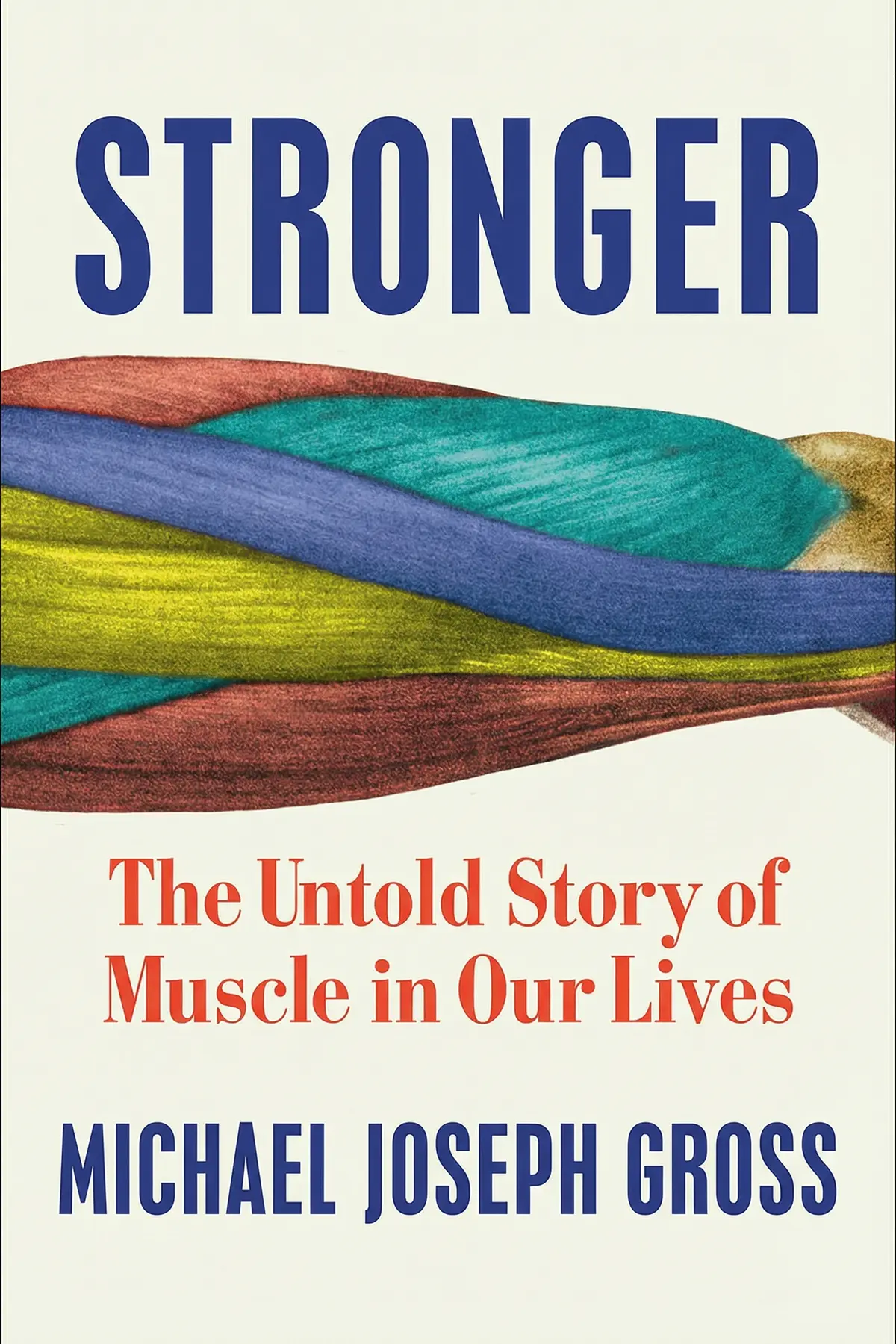
Table of Content
1. Introduction
1 min 07 sec
Most people treat strength training as optional, something for bodybuilders, while their own muscles slowly shrink from the age of 30. In Stronger, Vanity Fair contributing editor Michael Joseph Gross argues that muscle is the most neglected health tool we own, and his evidence is striking: a 92-year-old woman in a nursing home tripled her leg strength in eight weeks.
Gross wants to know why we ignore this tool, and he finds the cause mostly in history, not biology. A philosophical split between mind and body, a Roman doctor’s grudge, and changing ideas about what women and older people should do have kept lifting on the edge of medicine for centuries.
His throughline is simple. Muscle can be built at every age and by every body, and used with care it works like medicine. Follow his argument and you will see why your largest muscle may be asleep, why women gain strength as fast as men, and how a few targeted exercises can protect your independence decades from now.
2. Wake up the muscle your chair put to sleep
1 min 53 sec
Humans are built around a muscle that once made them fearsome hunters, yet many nervous systems have nearly lost track of it. The ancient Greeks had the reverse problem, and comparing the two explains a great deal.
3. Stop treating fitness and health as rivals
1 min 59 sec
A Roman doctor’s painful wrestling injury may still shape how you think about your gym and your doctor. Gross traces a 2,000-year-old idea that turned being healthy and being strong into opponents.
4. Women build strength as quickly as men do
2 min 05 sec
A woman on vacation saw something in a hotel gym that changed her life, and within 18 months she held a world record. The research that followed overturned old medical advice about who should lift.
5. Tell evidence apart from fashion in fitness rules
2 min 17 sec
A nineteenth-century workout for young ladies included moves most college women struggle with today. One sudden death and one renamed program show how quickly the accepted rules about strength can flip.
6. Rebuild lost strength at any age, even ninety
2 min 03 sec
A 92-year-old woman who could barely walk outpaced her own daughter in a hallway two months later. What happened in those weeks challenges the most widely accepted belief about growing old.
7. Use strength training like a precise prescription
2 min 03 sec
A builder with a wasting disease feared one thing above all: a low toilet with no grab bars. His fix, and a study on depression, show what lifting can do when it is dosed with care.
8. Conclusion
1 min 24 sec
Gross’s story has an odd shape. For two thousand years, the main thing standing between people and their own strength was an idea. A philosopher set the mind against the body, a doctor turned his wrestling injury into doctrine, and later generations let one sudden death or one alarming name decide what women, patients and older people were allowed to lift. The muscle itself never changed. It kept answering effort in the same way, in a 92-year-old’s legs, in a woman who set a deadlift world record within 18 months of starting, in a builder relearning how to stand.
That leaves a few things worth acting on. Treat the muscle you sit on all day as something to wake up. Hear claims that lifting is risky, unfeminine or pointless after a certain age as stories to test against the evidence, the way Jan Todd tested an 1828 manual against modern students. And when strength training is offered as treatment, for low mood, blood sugar or painful knees, ask for it with the precision of a prescription, then raise the dose slowly, the way Ramanee went from one kilogram to six.
The Greeks believed strength was on loan from the gods. Gross shows it is closer to an account you can keep paying into at any age.
About this book
What is this book about?
Most people think of lifting weights as a hobby for bodybuilders, an optional extra next to cardio and diet. Michael Joseph Gross argues that muscle is one of the strongest health tools we have and one of the most ignored. Training it can help prevent disease, lift mood and keep people independent well into old age. Gross asks why we neglect it, and his answers come from history. Plato set mind against body. Galen turned a wrestling injury into a medical campaign against athletics. Later generations let a single death or a frightening label decide who was allowed to lift. Women were told strength would make them masculine, and older people were told decline was fixed. The record-setting powerlifter Jan Todd and research on nursing home residents in their nineties tell a different story. The book makes a clear case that muscle responds to training at any age and in any body. Its examples, from a builder relearning how to stand to an arthritis patient walking through London without a stick, show how to treat strength training with the precision of a prescription.
Book Information
Who it's for
Sitting all day
Desk workers who sit all day and suspect their bodies are paying for it.
Women discouraged from lifting
Women who were steered away from heavy weights and want the evidence on what they can do.
Caregivers and older adults
Adults caring for aging parents, or getting older themselves, who want to protect strength and independence.
About the Author
Michael Joseph Gross
Michael Joseph Gross, born in 1970, studied at Williams College and then at Princeton Theological Seminary before working as a speechwriter for Massachusetts Governor William Weld. At Vanity Fair, where he is a contributing editor, he has reported on politics, technology and national security. His writing has also appeared in GQ, Blender, The Boston Globe and The New York Times, and he has been a guest on television and radio. His earlier book, Starstruck: When a Fan Gets Close to Fame, was published in 2006.
Ratings & Reviews
Ratings at a glance

What people think
Listeners find the book captivating and well-crafted, with one noting it as a required read for students of the iron game. The depth of documentation is impressive, and one listener calls attention to the intriguing ancient history about muscles. Listeners value the fitness guidance; one listener points out the amazing research about weight training benefits, while another listener mentions the focus on remaining fit at any age. Listeners find the work eye-opening, with one describing it as transformative for the mind.
Top reviews
Pete
As a long-time devotee of physical fitness, I found Stronger to be an essential addition to my bookshelf. Michael Joseph Gross provides a meticulously researched exploration of the iron game that goes far beyond simple gym advice. The way he weaves ancient history with modern physiology is nothing short of masterful. I was particularly struck by the sections on how our ancestors viewed physical strength as a moral virtue. To be fair, some chapters lean heavily into the academic side, which might slow down casual readers. However, the transformative insights into how muscle impacts our mental state made every page worth the effort. It’s rare to find a book that treats weight training with such intellectual rigor and respect. It is truly an enlightening read.
Show moreOn
Michael Joseph Gross has written a truly wonderful book that explores the history of muscle with both depth and passion. The chapter on the Ancient Greeks was a particular highlight for me, as it provided a fascinating look at the origins of physical culture. The research is amazing and the storytelling brings the benefits of weight training into sharp focus. Not everyone will appreciate the length, but I felt every chapter added something valuable to the narrative. It’s a transformative piece of work that makes you want to go out and lift something heavy immediately. If you are a student of the iron game, you need this on your shelf. It’s brilliant, dense, and deeply human.
Show moreJonathan
What an enlightening read for anyone who wants to understand the deeper connection between their mind and their muscles. This isn't just another workout manual; it's a transformative look at the physiology of strength and its historical roots. I loved the focus on the Ancient Greeks and how they integrated physical training into their daily lives. The storytelling is excellent and really brings the benefits of weight training into focus. Even though it's a bit heavy on detail, the message is clear: muscle is vital for a long, healthy life. I’m already looking into getting more kettlebells for my home gym! This book is truly a must-read for anyone interested in physical fitness for all ages.
Show moreChanikarn
Getting older makes you realize how vital muscle mass is for basic independence, and this book hammers that point home perfectly. Gross is a compelling storyteller who brings the lives of various iron game figures into sharp focus. I particularly enjoyed the segments on the physiology of aging and how we can counteract physical decline with simple tools. To be fair, the book is quite long and the writing can feel a bit heavy at times, but the information is too good to ignore. It has definitely changed my perspective on why I head to the gym every morning. It’s a must-read for anyone concerned about long-term health and mobility. I'll be keeping this one as a reference.
Show morePun
After hearing so much about how weight training combats a sedentary lifestyle, I picked this up for some motivation. The book does a fantastic job of demonstrating how something as simple as resistance training can lead to a more mobile life. It’s quite interesting to see the historical context Gross provides, moving from the Ancient Greeks to modern-day kettlebell enthusiasts. While the middle chapters can be a little unengaging, the overall wealth of information makes it a worthwhile read for the health-conscious. Not gonna lie, it’s a bit of a commitment to get through the whole thing, but the fitness advice is sound. It’s definitely more than just a meathead manual; it's a thoughtful study of our bodies.
Show moreMalee
Finally got around to finishing this deep dive into why we lift things up and put them down. As someone who enjoys anatomy and physiology, I found the technical descriptions of muscle contractions surprisingly engaging. Michael Joseph Gross has clearly done his homework, as the book is filled with well-documented research and interesting ancient history. It’s a wonderful resource for students of the iron game who want to know the why behind their training. My only gripe is that it can feel a bit bloated in the later chapters. Despite the occasional slog, the core message about maintaining mobility through resistance training is incredibly important for everyone. It is a very enlightening and well-written piece of fitness literature.
Show moreDao
I really wanted to love this more than I did, but the middle sections were a bit of a slog. The introduction was absolutely stellar and set a high bar that the rest of the book struggled to maintain. While I appreciate the deep dive into the abundant health benefits of lifting weights, the organization felt somewhat chaotic and hodgepodge. It’s great to see a modern author defending the importance of physical fitness for all ages, especially in our sedentary culture. However, the storytelling becomes repetitive after the third or fourth person discovers the wonder of muscle. It’s a solid piece of research, but it could have used a much tighter edit to keep the momentum going throughout its 360 pages.
Show moreLaor
The truth is, this book could have been half its current length and still managed to convey its core message effectively. While the 'muscle good' takeaway is vital for anyone facing the realities of aging, the narrative feels incredibly repetitive after a while. I felt like I was reading the same archetypal story about a person discovering the wonders of the kettlebell over and over again. Gross is a talented writer, and his ability to humanize the science of physiology is impressive, but the pacing is a slog. It’s a decent reference for those curious about the ancient history of muscle, yet it lacks the spark needed to be a true page-turner. I finished it, but it was work.
Show moreSkylar
Look, the information here is undeniably fascinating, but the delivery is often quite dry and academic. I appreciate the focus on how moving dumbbells can preserve mobility and independence as we age, which is a message more people need to hear. However, the writing style lacks the energy I expected from a book about physical strength and vitality. At 360 pages, it feels unnecessarily long and occasionally wanders off into tangents that don't serve the central theme. To be fair, it's a well-documented resource for anyone interested in the history of the iron game. I just wish the narrative was as powerful as the subject matter itself. It’s good, but prepare for a slow read.
Show moreZoey
This felt less like a cohesive narrative and more like an unorganized hodgepodge of historical anecdotes and anatomical trivia. I picked it up hoping for a motivating guide on resistance training, but I found myself drowning in a 360-page history lesson that never quite found its rhythm. Frankly, the writing style is far too dry for the subject matter, making it a genuine struggle to stay engaged past the first hundred pages. While the research is clearly well-documented, the book is massively bloated and repeats its central themes until they lose their impact. If you are looking for practical fitness tips, you might want to look elsewhere. It’s just too heavy for what it offers. I eventually gave up.
Show moreQuestions about this book
What is the main idea of Stronger by Michael Joseph Gross?
Gross argues that muscle is one of the most neglected tools for health and independence. Training it can help with depression, blood sugar, arthritis pain and blood pressure, and it works at any age and for any body. He explains our neglect through history: Plato’s split between mind and body, Galen’s attack on athletics, and shifting cultural stories about women and aging, rather than any limit in biology.
Can older adults really build muscle?
Yes, according to the research Gross describes. In one study, nursing home residents raised their strength by an average of 174 percent in eight weeks, and some regained the ability to stand from a chair or gave up their canes. Dorothy Tishler, aged 92, tripled her leg strength in eight weeks. In men aged 60 to 72, twelve weeks of training doubled quadriceps strength, with CT scans confirming real muscle growth.
Why did doctors once discourage weight training?
Gross traces the suspicion to ancient Greece, where doctors and trainers competed for authority, and to Galen, who after a serious wrestling injury claimed that building muscle made people stupid. Later, the sudden death of the lifting advocate George Windship closed medical gyms. Well into the 1970s, major medical bodies recommended aerobic exercise only. The American College of Sports Medicine endorsed resistance training for all adults in 1990.
How can strength training be used like medicine?
Gross says exercise acts like a drug when the type, intensity, frequency and duration are specified. A man with a muscle-wasting disease used triceps pushdowns to keep standing up from chairs on his own. A woman with severe knee arthritis progressed from 1-kilogram to 6-kilogram weights over five years and gave up her walking stick. Ask for that level of detail, and increase the load gradually.
Who should read Stronger?
It suits people who think of lifting as vanity or as something only for athletes. Office workers who sit most of the day, women told that heavy weights are not for them, and anyone worried about aging parents or their own later years will find concrete stories and studies. Readers interested in how medical opinion forms will also enjoy its history of shifting attitudes toward strength.
Featured in
Readers also enjoyed

Ali: A Life
Jonathan Eig




An American Sickness: How Health Became Big Business and How You Can Take
Elisabeth Rosenthal



AUDIO SUMMARY AVAILABLE
Listen to Stronger in 15 minutes
Get the key ideas from Stronger by Michael Joseph Gross, plus 5,000+ more nonfiction titles.
- 5,000+ titles
- Listen as much as you want
- 7-day free trial
- Cancel anytime









