

13 min 23 sec
Available in: English
Stretch: How to Future-Proof Yourself for Tomorrow’s Workplace
Shows how to stay alert and employable as work changes: take control of your career, learn on the job, use feedback, build contacts and varied experience, recover from setbacks and grow emotional intelligence.
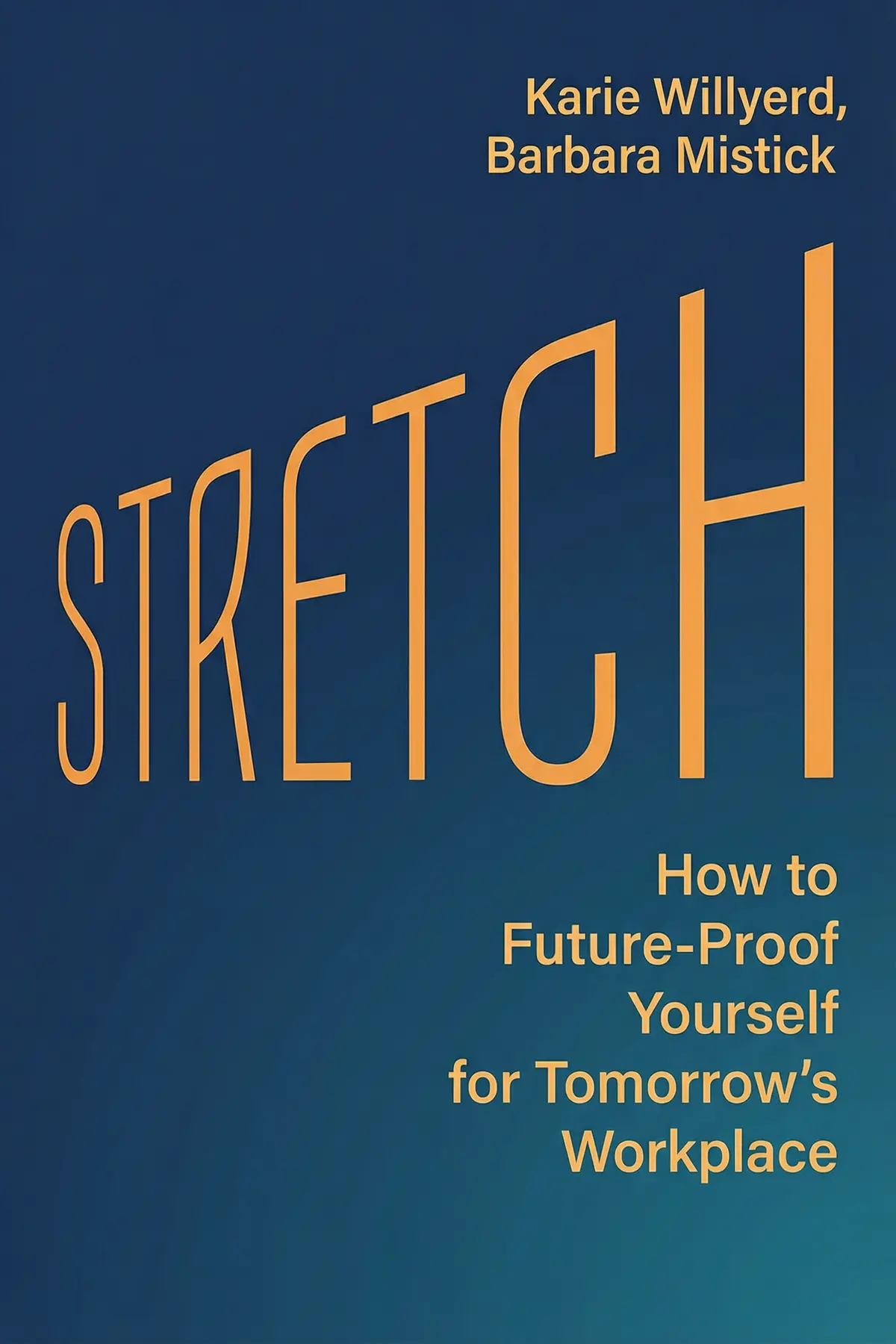
Table of Content
1. Introduction
51 sec
Many office workers reach a point where they stare at the screen with no idea what to do next, almost as if they were waiting to be let go. In Stretch, Karie Willyerd and Barbara Mistick argue that the cure looks like what your body does after a long day: a stretch, applied this time to your mind and your career. Their claim is that the people who stay valuable keep learning inside the job, keep their options wide and keep their goals in sight, whatever happens to the industry around them.
That idea runs through every story in the book, from an overwhelmed new teacher to a journalist who had to learn to walk again. Follow it and you get a working plan for staying open and motivated at work. It also shows you how to add career options before you need them and how to recover quickly when a job falls apart.
2. Take the wheel of your own career
1 min 47 sec
School comes with guides who correct your course, and work does not. A sample career that runs from a building site to a sales floor shows the three habits that have to replace them.
3. Grow on the job without extra classes
1 min 28 sec
A new teacher felt overwhelmed and had no time for extra training. What he did instead put him in line for the principal’s job, and it needed nothing but the people down the hall.
4. Turn your boss's feedback into better leadership
1 min 29 sec
An executive trainer could not reach the people in his sessions, however hard he tried. The real cause was a habit he could not see, until he let someone else point it out.
5. Build the network that brings work to you
1 min 40 sec
A hard-working founder kept adding hours while his client list stayed empty. The fix came from the one contact he had not neglected, and it had little to do with working harder.
6. Collect experiences that open unexpected doors
1 min 33 sec
An international relations graduate soured on her finance job during the 2008 crisis. Her next move took her to a wildlife conservancy in Kenya, and the skills that got her there came from the job she disliked.
7. Recover from a setback and come back stronger
1 min 44 sec
A journalist hit by a truck had to relearn how to walk, then rose to the top of a famous newspaper. Three rhyming habits explain how to keep goals alive when a career falls hard.
8. Emotional intelligence will outlast your job title
1 min 42 sec
Hours, offices and degrees are all shifting under today’s workers. The skill the authors bet on to outlast those changes has nothing to do with software, and a pop star made it her cause.
9. Conclusion
1 min 09 sec
Stretch makes one demand and repeats it in many forms: do not wait to be told how to grow. Since Jonah lacked the time for further training, he turned to his fellow teachers and interviewed them. Chris let his boss show him a habit he could not see. Zach listened to his father before his business ran dry. Alexandra turned a disillusioning job into a route to Kenya, and Abramson refused to let a truck accident set the limits of her life. Change at work will keep coming. The authors’ bet is that the person who keeps learning, keeps connecting and keeps a goal in view will be ready for whatever form it takes.
The book’s own closing advice is the simplest place to begin. If you feel useless at work, resist sinking into gloom. Find one thing that would make a coworker’s day a little easier, and if nothing comes to mind, watch your colleagues with real curiosity until something does. That small act builds empathy, widens your network and often shows you new ways to enjoy the work. Then tell someone what you are aiming for next.
The first stretch is usually toward another person.
About this book
What is this book about?
Plenty of capable people stall at work. They stop learning, blame the boss and wait for something to change. Karie Willyerd and Barbara Mistick argue that the fix is a habit of stretching: deliberately pushing your skills, contacts and goals a little further, long after school has stopped doing it for you. The authors build their case on three imperatives: remember you are in control, keep your options open and set goals. They illustrate them with working people. A new teacher redesigns his own classes, and an executive trainer works with his boss to discover that he criticizes trainees' ideas before they can fully explain them. A struggling founder is rescued by his father's advice on contacts, and an international relations graduate, disillusioned after a stint in financial services, lands at a wildlife conservancy in Kenya. Journalist Jill Abramson learns to walk again after a truck accident. Readers get a practical way to keep growing inside the job they have and to add options before they need them. They also get three rhyming habits for holding on to goals when a career stumbles, and a clear reason to invest in emotional intelligence as hours, offices and hierarchies keep shifting.
Book Information
Who it's for
Early-career and unsure
Early-career professionals who feel stuck or unsure where their job is heading.
Thinking of switching fields
People thinking about switching fields who want to turn past experience into new options.
Recovering from a setback
Workers recovering from a layoff or setback who need a way to rebuild momentum.
About the Author
Karie Willyerd
Karie Willyerd worked as Workplace Futurist at SuccessFactors, an SAP company focused on human capital, after cofounding and leading Jambok, which SuccessFactors acquired in 2011. She was Chief Learning Officer at Sun Microsystems and Chief Talent Officer at Solectron. She holds a doctorate in management from Case Western Reserve University and coauthored The 2020 Workplace. Barbara Mistick has served as President of Wilson College. She was a two-time entrepreneur and held executive roles at The Carnegie Library of Pittsburgh and Mr. Rogers Neighborhood. She has appeared on National Public Radio as an expert on higher education.
Ratings & Reviews
Ratings at a glance
What people think
Listeners find the book thoroughly researched and value its functional advice, with one review noting how concepts are reinforced by engaging real-world examples. Additionally, it offers dependable professional strategies, as one listener points out its significant methods for ongoing learning. Listeners also praise its accessibility, with one mentioning it is especially helpful for those just starting their careers.
Top reviews
Viroj
The chapter on building a highly diverse network was worth the price of the book alone. I’ve always focused on my immediate circle, but the authors explain why "weak ties" are actually the secret to finding new opportunities. This is a fantastic resource for anyone worried about career obsolescence in the age of automation and AI. The writing style is engaging and surprisingly easy to digest, which isn't always the case with professional development books. I particularly appreciated the focus on "geek acumen" as a core capability for the future. Not gonna lie, I was skeptical at first, but the case studies really proved the point. It’s a must-read for managers who want to help their teams grow and adapt.
Show moreWichai
Wow. I wasn’t expecting to get so much out of this, but it really changed how I view my professional growth. The concept of "bouncing forward" instead of just bouncing back is a powerful shift in perspective that I needed. The authors provide a comprehensive look at what it takes to thrive in the future, covering everything from cultural dexterity to technical acumen. I loved the emphasis on taking ownership of your own career path; it's a wake-up call that no one else is going to do it for you. The real-world examples are both inspiring and relatable, making the advice feel much more attainable. If you feel like your career has plateaued, this book will give you the tools to start climbing again.
Show moreLogan
As someone who is relatively new to the professional world, this book felt like a necessary roadmap for the coming years. The concept of the "T-shaped" employee—combining deep technical skill with broad emotional intelligence—really resonated with my current career goals. Willyerd and Mistick provide practical insights that aren't just theoretical fluff; they back everything up with interesting real-world examples. Look, some chapters are definitely stronger than others, and the pacing can be a bit slow in the middle sections. However, the focus on "learning on the fly" is incredibly relevant in today's fast-paced tech environment. I’ve already started using the three stances to evaluate my weekly tasks. It’s a helpful guide for staying relevant when everything around you is changing so rapidly.
Show moreJeeranan
Finally got around to finishing this, and I’m glad I stuck with it through the more academic parts. The distinction between completion, performance, and development stances is a game-changer for my productivity. It helped me realize I was spending too much time just "ticking boxes" rather than stretching my actual abilities. Frankly, the authors have a knack for taking complex workplace dynamics and making them feel manageable. There is a lot of ground covered here, from emotional intelligence to virtual collaboration, so it’s best read in small chunks. I would have liked a bit more depth on the technical side of things, but as a general career strategy guide, it’s top-tier. Definitely a book I'll keep on my shelf for reference.
Show moreLena
Ever wonder why some people seem to navigate career shifts so effortlessly while others struggle? This book attempts to answer that by providing a framework for "future-proofing" your skill set. It’s particularly valuable for young professionals who are trying to understand the dynamics of the modern, ever-changing workplace. The authors use vivid examples to illustrate how to seek out new experiences without looking foolish. I found the section on personal advocacy to be particularly enlightening, as it’s a skill many of us neglect. To be fair, some of the "capability" lists felt a little long, but they serve as a good checklist for self-improvement. Overall, it's a very readable and actionable guide that I would recommend to anyone starting their career.
Show morePui
In my experience, books on career management are often too vague, but "Stretch" manages to provide specific, actionable strategies. The authors break down workplace success into five distinct practices that feel both challenging and achievable for the average employee. I especially liked the discussion on "technical (geek) acumen" and how it intersects with leadership in modern roles. The truth is, the workplace is changing faster than most of us can keep up with, and this book provides a solid hedge against that uncertainty. It’s not just about working harder, but about working smarter by choosing the right "stance" for every task you take on. While a few sections felt like they were retreading old ground, the overall package is incredibly strong.
Show morePairot
Picked this up because I wanted to see what the buzz about "future-proofing" was all about. It’s a solid primer for anyone feeling a bit stagnant in their current role. The authors do a great job explaining the difference between strong and loose networks, which was probably the most useful takeaway for me. Truth is, a lot of the advice feels like common sense if you’ve been in the corporate world for more than a few years. It’s well-researched, but I often found myself thinking I’d read these ideas elsewhere in a more concise format. Still, the "pounce, trounce, announce" section is a catchy way to remember how to handle setbacks. It’s a decent read for a weekend, though maybe not the revolutionary manual I was hoping for.
Show moreNatalie
After hearing a podcast interview with the authors, I had high hopes for this one. It’s a very good primer on staying adaptable, but it doesn't necessarily break new ground in the field. The idea of being "greedy about experience" is a great mindset shift, especially if you feel stuck in a rut. I liked the focus on "T" employees, though the explanation felt a little brief compared to other sections. Gotta say, the book is exceptionally well-organized, which makes it easy to skim for the parts that apply to your specific situation. It’s a 3-star read for me because while the advice is solid, it lacks that "earth-shattering" punch I was looking for. Good, but not life-changing.
Show moreSiriporn
This book offers some valuable nuggets of wisdom, particularly regarding the importance of diverse networks and "learning on the fly." The authors have clearly done their homework, as the text is peppered with interesting research and data. However, I felt like the prose was a bit dry in spots, making it hard to stay engaged for long periods. Personally, I think the "pounce, trounce, announce" framework is the highlight of the entire work. It provides a simple, memorable way to approach challenges and stay motivated when things get tough. While it’s not the most exciting read in the world, the practical strategies for hedging against workplace changes are worth considering. It’s a solid, middle-of-the-road professional development book.
Show moreThongchai
Not what I expected given the high praise I saw on LinkedIn. While the intent behind the book is noble, the execution felt a bit watered down and repetitive. Most of the strategies for "bouncing forward" after a career setback are things you could probably figure out through simple introspection. To be fair, the research is clearly there, but it’s buried under a lot of corporate jargon that doesn’t always add value. I found the mini-assessments to be a bit tedious and skipped a few of them toward the end. If you are brand new to personal development, you might find this revolutionary. For those of us who have read the classics in this genre, it feels like a remix of better books.
Show moreQuestions about this book
What is the main idea of Stretch by Karie Willyerd and Barbara Mistick?
The authors argue that staying competitive tomorrow depends on learning today. Instead of waiting for a boss or a company to direct their growth, workers should keep stretching: owning their career choices, learning inside their current job, welcoming feedback, building contacts and varied experience, and keeping goals alive through setbacks. They also stress emotional intelligence as preparation for a workplace whose hours, locations and hierarchies keep shifting.
What are the three stretch imperatives?
The first piece of advice is that you should keep in mind that you hold the controls, instead of blaming a boss or doing nothing about an unhappy job. The second is to give yourself options, for example by building a network or earning another qualification such as an MBA. The third is to set realistic goals, which need not be about work but help you stay on track when things get difficult.
What do pounce, trounce and announce mean in Stretch?
They are three rhyming pieces of advice for holding on to goals in hard times. Pounce means keep learning and taking risks without fearing that you will look foolish. Trounce means keep practicing through repeated failure, since growth matters more than perfection. Announce means sharing your goals and struggles with peers, because a goal nobody else knows about is much easier to abandon.
How can I apply Stretch at work right away?
Start with the authors’ closing advice: when you feel unhelpful at work, find one thing that makes a coworker’s day easier, watching colleagues with curiosity if you are unsure what that is. You can also copy the teacher Jonah by naming one weakness and asking colleagues how they handle it, contact someone you have lost touch with, and tell a trusted peer about a goal you are pursuing.
Who should read Stretch?
It suits people early in their careers who feel stuck, career switchers wondering how earlier jobs can help them move, and anyone bouncing back from a layoff or setback. Its stories are about ordinary workers, such as a new teacher, an executive trainer and a struggling founder, so the advice translates directly to everyday jobs rather than only to senior leaders.
Readers also enjoyed

60 Seconds & You’re Hired!
Robin Ryan



Be A Free Range Human: Escape the 9 to 5, Create a Life You Love,
Marianne Cantwell
Be the Unicorn: 12 Data-Driven Habits That Separate the Best Leaders from the
William Vanderbloemen
AUDIO SUMMARY AVAILABLE
Listen to Stretch in 15 minutes
Get the key ideas from Stretch by Karie Willyerd, plus 5,000+ more nonfiction titles.
- 5,000+ titles
- Listen as much as you want
- 7-day free trial
- Cancel anytime









