

14 min 42 sec
Available in: English
Streaming, Sharing, Stealing: Big Data and the Future of Entertainment
Explains how digital technology and customer data took power from the music, film and publishing giants, and what spotting change early, serving niches and limiting piracy teach any business facing a new technology.
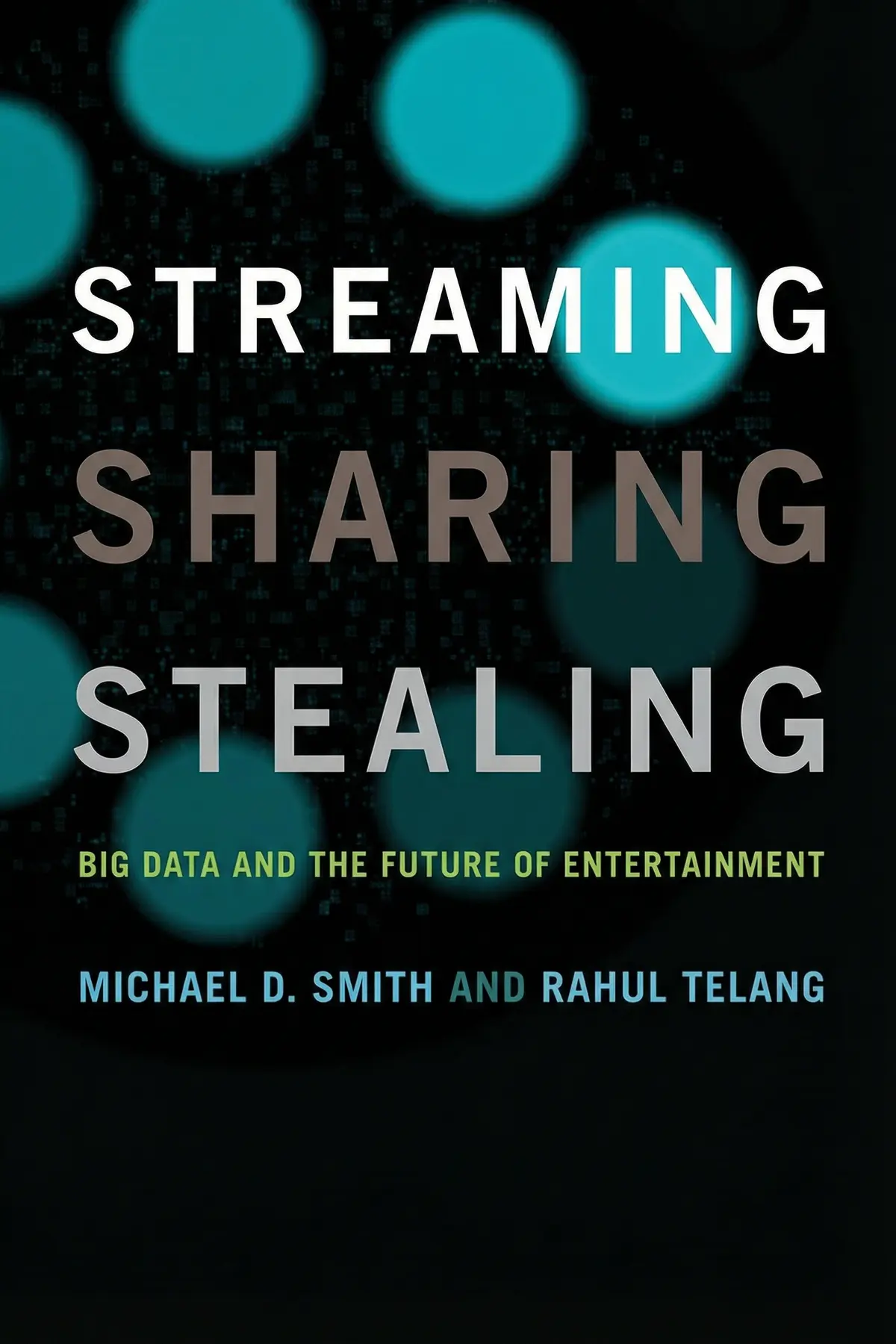
Table of Content
1. Introduction
1 min 10 sec
If you run a business, a team or a creative career, the riskiest moment can be the one when everything sells well. Kodak knew digital photography was coming, even built the technology itself, and still went bankrupt in 2012 because it would not risk hurting its film sales. In Streaming, Sharing, Stealing, Carnegie Mellon professors Michael D. Smith and Rahul Telang show the same mistake handing power from the giants of music, film and publishing to tech newcomers.
Their argument is that entertainment’s old rulers won by controlling scarce things: money, airtime and shelf space. The internet made those things plentiful, so power moved to whoever spots change early, serves the niches and lets customer data guide creative bets, while keeping piracy in check. Along the way come a $100 million order for a show nobody had seen, a used book once priced at 75 cents, and a French law that lifted music sales. The lessons apply to any leader facing a new technology.
2. Notice the threat your current success hides
1 min 45 sec
A record industry growing rich on CDs was offered the future of music and laughed it out of the room. The same reflex has sunk famous companies again and again, and it starts with good numbers.
3. See what really kept the old giants on top
1 min 43 sec
Six studios held most of the film market, and a handful of labels decided which songs reached the radio. Their grip looked permanent, yet every part of it depended on one fragile condition.
4. Move early while the big players are laughing
1 min 46 sec
Thomas Edison invented recorded sound and still lost the music business. A group of small labels with almost nothing to their name did the opposite, and the difference lay in how each read the market.
5. Find the loyal audience hiding in the niches
1 min 43 sec
A book sat unsold in a shop for years at 75 cents, then sold online for far more. A study of DVD rentals shows this was no accident, and what it reveals about customers when the shelf disappears.
6. Freedom and cheap tools change who gets to create
1 min 31 sec
One scene in House of Cards would never have passed a network meeting, and an award-winning documentary was shot on a camera most hobbyists could afford. Both point to a new deal for creators.
7. Let customer data guide the creative bets
1 min 53 sec
Netflix committed $100 million to a series without watching a single episode. It was not a gamble, and the same approach went on to break a winning streak that had lasted 14 years.
8. Make piracy a worse deal than paying
1 min 57 sec
Free downloads look like a victimless habit, but one film industry lost revenue, output and quality at once. A single law in France then showed how quickly the damage can be turned around.
9. Conclusion
1 min 14 sec
Smith and Telang tell a story about scarcity running out. For a century, the companies that owned the budgets, the airtime and the shelves decided what got made and what audiences heard, watched and read. The internet made all three far easier to come by, and power passed to those who read the shift in time: the indie labels that bet on rock and roll, the streaming service that funded a show from its viewer data, the online store that found a buyer for a book once priced at 75 cents. Kodak, Britannica and Edison’s cylinders stand on the other side of that line.
The habits behind the winners are open to anyone. When a new technology threatens something that sells well for you, judge it by what it could do for your customers, and set aside for a moment what it might cost you this year. Check your data before trusting a hunch, and look for the niche demand your current channels hide. If you live from creative work, make taking it without paying both visible and risky, as the French law did.
The CD did not vanish because people stopped loving music. It vanished because others made music easier to reach.
About this book
What is this book about?
For most of the twentieth century, a few record labels, film studios and publishers decided what audiences could hear, watch and read. They had the money, the radio airtime and the store shelves. Then digital technology arrived, and many of these giants treated it as a threat to today's sales instead of the shape of tomorrow's market. Carnegie Mellon professors Michael D. Smith and Rahul Telang draw on their own research and on cases from Edison's phonograph to House of Cards. They show how newcomers such as Apple, Netflix, Amazon, YouTube and Shazam took power by moving early, finding customers that physical stores ignored and letting user data shape what gets made and how it is marketed. They also look at the dark side of easy sharing, presenting evidence that piracy cuts sales and creative output, and that well-designed laws can reverse the damage. Readers get a clear account of why market leaders lose to new technology, and practical lessons for any business: judge a shift by what it does for customers, trust data over instinct and protect the value of creative work.
Book Information
Who it's for
Business leaders facing disruption
Founders and managers whose best-selling product could be made obsolete by a new technology.
Marketers and product teams
Marketers and product people who want to base creative decisions on customer data, not instinct.
Musicians, filmmakers and writers
Musicians, filmmakers and writers trying to understand streaming platforms and piracy.
About the Author
Michael D. Smith
Michael D. Smith is the J. Erik Jonsson Professor of information technology and marketing at Carnegie Mellon University's Heinz College, with a joint post at the Tepper School of Business. He studies how new technologies affect consumers and firms, especially in entertainment. Rahul Telang is a professor of Information Systems and Management at Heinz College who researches the economic and policy effects of digital technologies. He serves on the editorial boards of leading journals, has advised firms on pricing and policy, and teaches data analytics.
Ratings & Reviews
Ratings at a glance
What people think
Listeners find the work deeply insightful and knowledgeable, with one mentioning its impressive ability to break down complicated ideas. Furthermore, the prose is well-liked, as one listener calls the writing style concise. They also value the title's accessibility and entertainment factor, with one review noting it provides a captivating glimpse into the digital future of media. The book earns praise for its trustworthiness as well, with one listener labeling it as impeccably researched.
Top reviews
Pim
This book is a borderline miracle considering it comes from a university press and covers dense business data analysis. Most academic titles are an absolute snooze-fest the size of a brick, but Smith and Telang deliver an impeccably structured and accessible gem. They explain how the entertainment upstarts have taken massive bites out of old-school powerhouses using data as their primary weapon. I found the anecdotes about Blockbuster turning down Netflix for pennies on the dollar to be particularly jaw-dropping. It’s flat-out confusing how exciting the authors make statistical analysis sound for the average reader. If you want to understand the current slug-fest in the media world, this is a must-read. The writing is punchy, succinct, and surprisingly entertaining for such a serious subject.
Show moreCholada
Wow, I didn't expect a book about economics and distribution models to be such a page-turner! Smith and Telang do a remarkable job explaining complex concepts like long-tail theory and data analytics without using confusing jargon. I was especially fascinated by the section on how Amazon uses data to understand exactly what customers want before they even know it. The book offers a fascinating peek into the digital future where the old gatekeepers no longer hold all the keys. It’s impeccably researched and provides a clear blueprint for what is working in the modern media landscape. This should be required reading for anyone pursuing a career in digital marketing or content creation. Truly a great read.
Show morePannipa
Picked this up on a recommendation and it’s easily the clearest explanation of how the internet broke the old distribution models. The authors have a gift for taking high-level economic theories and making them feel urgent and relevant to the movies we watch and the books we read. Not gonna lie, I was worried it would be a dry textbook because of the MIT Press branding. Instead, I found a well-written narrative that explains why the giants of the 20th century are being toppled by data-savvy upstarts. The research is impeccable. Every chapter feels like it's revealing a secret about how the world of entertainment actually functions behind the scenes. Highly recommended for any tech or media enthusiast.
Show moreEmily
Ever wonder why big media companies struggle so much to keep up with agile tech giants like Netflix and Amazon? The authors provide the clearest explanation I’ve ever seen regarding the 'perfect storm' hitting the music, film, and publishing industries today. Frankly, the analysis of how delayed digital releases actually drive piracy was a total eye-opener for me. They use experimental data to prove that holding back content to protect DVD sales is a losing strategy in a digital-first economy. While some of the case studies feel a little dated since it was written around 2015, the core principles of data-driven decision-making remain incredibly relevant. It’s an insightful look at how power has shifted from those who control the content to those who control the customer data.
Show morePrapaiwan
Finally got around to reading this and I’m struck by how the authors dismantle the myth that piracy is the biggest threat to art. To be fair, they show that piracy is usually a service problem rather than a moral one. When you make content easy to access legally, the stealing drops significantly. The book is well-informed and backed by empirical data, which I appreciate as someone tired of anecdotal business advice. My only real criticism is the assumption that more art being created is always a societal net positive. We might already have reached a point of 'peak content' where more isn't necessarily better. Despite that philosophical disagreement, the economic analysis here is top-notch and very readable.
Show moreJack
As someone working in the creative arts, I found the breakdown of the entertainment industry's shift from 'push' to 'pull' dynamics incredibly illuminating. The authors aren't just guessing; they provide hard data on why the old models of distribution are crumbling under the weight of the internet. It's a brutal analysis at times. They show how the lack of customer data is the 'Achilles heel' for traditional studios and publishers who rely on gut instinct. I loved the part about how Hulu was initially shackled by networks, proving how difficult it is for legacy players to change their mindset. The book is succinct and gets straight to the point without unnecessary fluff. It’s an essential guide for navigating the digital revolution.
Show moreNarumon
The truth is, while I found the focus on aggressive data collection a bit unsettling, the authors make an airtight case for its necessity in today’s market. They describe the entertainment world as a 'slug-fest' where only the most data-literate survive. It’s a bit creepy how much information these companies have on us, but Smith and Telang show exactly how that data translates into better content recommendations. The writing is very accessible and the chapters are just the right length to keep you engaged. I particularly enjoyed the comparison between Kodak and the current film studios. It serves as a stark warning to any business that thinks they are too big to fail. It’s a sobering but necessary look at our digital reality.
Show moreWanida
Not what I expected from a couple of professors, as the tone is surprisingly punchy and the insights are immediately actionable. I’ve seen many books try to explain the 'death of print' or the 'rise of streaming,' but few do it with this much empirical rigour. They don't just tell you things are changing; they show you the numbers behind the shift. The book is well-informed and doesn't shy away from pointing out where the big players went wrong. My one gripe is that the focus is almost entirely on the business side, leaving little room for the cultural impact of these changes. Still, for a business book, it’s remarkably well-paced and informative. It definitely lived up to the hype for me.
Show moreSuthinee
After hearing so much praise, I found the core ideas fascinating but the presentation somewhat repetitive in the middle chapters. The authors are clearly brilliant academics who know their stuff inside and out. However, they spend a lot of time sharing their specific research methods which can feel a bit formal and dry for a casual reader. The book was written when Netflix making movies was still a radical idea, so some 'big ideas' now feel like common knowledge. It’s not a bad book by any means, but its age is starting to show in the examples provided. If you’re already working deep within the entertainment industry, you might find yourself nodding along rather than learning anything truly groundbreaking.
Show moreTen
Look, I really wanted to like this, but it felt like a 40-page monograph padded into a 190-page self-aggrandizing academic business title. The authors spend way too much time trumpeting their own research and how they worked with famous publishing houses. It’s quite tedious. Furthermore, the book completely ignores the obvious fact that people have a finite number of hours to engage with media. Time spent on YouTube necessarily detracts from commercial TV, yet they act like the market is infinite. In such a fast-moving industry, a book from 2016 already feels very outdated and out of touch with current platform dynamics. I expected much more rigor and fresh perspective from MIT Press, but this just didn't deliver for me.
Show moreQuestions about this book
What is the main idea of Streaming, Sharing, Stealing?
Michael D. Smith and Rahul Telang argue that the giants of music, film and publishing ruled by controlling scarce resources: money, radio airtime and store shelves. Digital technology made those plentiful, so power moved to companies like Apple, Netflix, Amazon and YouTube that adapted early, served niche demand and used customer data to guide creative choices. They add that piracy must be contained to keep creators making new work.
How did Netflix use data for House of Cards?
Without watching a pilot, Netflix committed $100 million to two seasons, since its study of viewer data indicated the show would fit its audience. It then made different trailers for different viewers: some built around Kevin Spacey for fans of his other work, others highlighting David Fincher’s directing style for people who knew his films. The authors present this as an example of data beating instinct.
Does piracy really hurt sales, according to the authors?
Yes. Reviewing 25 peer-reviewed journal articles on piracy and sales, they found 22 reporting significant harm. Their work on India’s film industry with Joel Waldfogel showed revenue, the number of films and their quality all declining as VCR piracy spread after 1985. A 2009 French law that sent infringement notices to pirates raised iTunes sales in France by 20 to 25 percent.
What can businesses outside entertainment learn from this book?
The cases of Kodak, Encyclopedia Britannica and the CD-era record labels show leaders rejecting new technology to protect current sales, and losing the market. The lessons travel: judge a shift by what it does for customers, watch for demand your current channels cannot serve, as the DVD rental study shows, and trust customer data over the instincts of senior people.
Who should read Streaming, Sharing, Stealing?
It suits founders and managers in any industry facing disruption, marketers interested in data-driven creative decisions, and artists or producers working with streaming platforms. Readers curious about how Netflix, Amazon, Shazam and YouTube changed entertainment, or about the evidence on piracy, will find concrete research and cases drawn from the authors’ own studies.
Readers also enjoyed

AI 2041: Ten Visions for Our Future
Kai-Fu Lee





1929: Inside the Greatest Crash in Wall Street History--and How It
Andrew Ross Sorkin

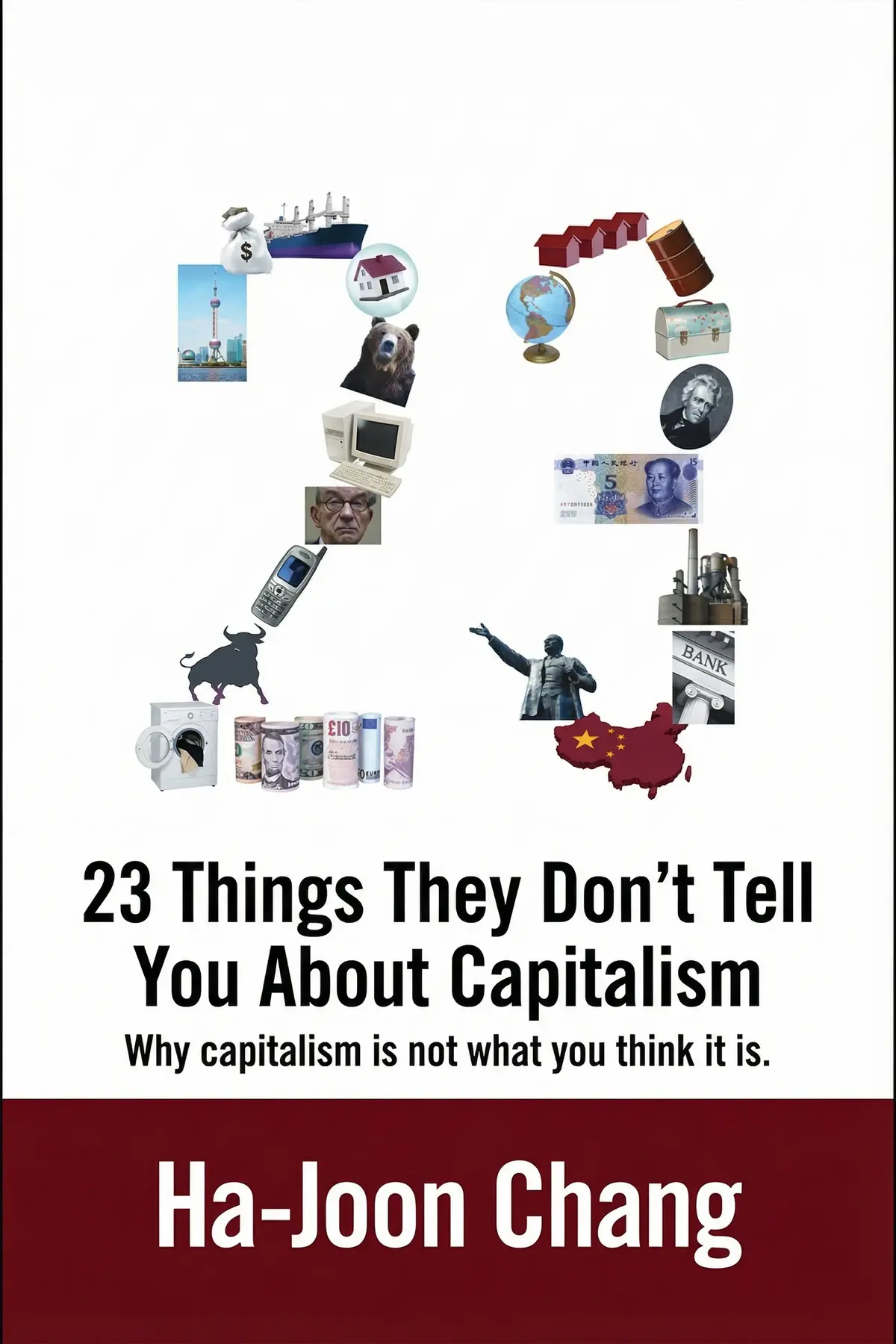
23 Things They Don’t Tell You About Capitalism
Ha-Joon Chang
AUDIO SUMMARY AVAILABLE
Listen to Streaming, Sharing, Stealing in 15 minutes
Get the key ideas from Streaming, Sharing, Stealing by Michael D. Smith, plus 5,000+ more nonfiction titles.
- 5,000+ titles
- Listen as much as you want
- 7-day free trial
- Cancel anytime









