

60 Seconds & You’re Hired!
Robin Ryan
 English
A practical plan for treating every job as a deliberate career step: choosing work by the activities you enjoy, selling your skills, building influence through performance and relationships, and knowing when and how to move on.
57 sec
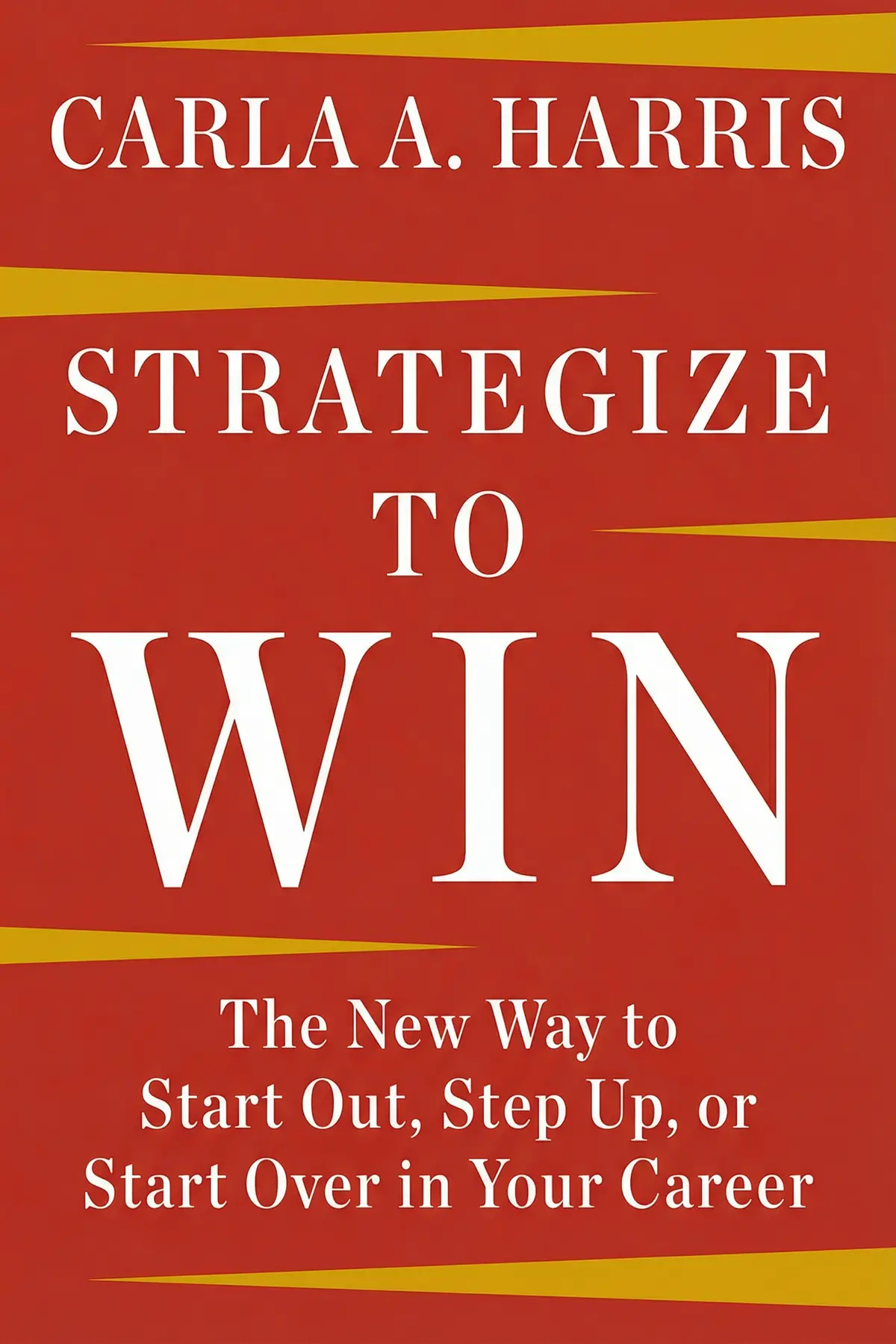
Staying at one employer and waiting to be noticed is a slow way to build a career, and Carla A. Harris thinks leaving can be the smartest move you make. In Strategize to Win, the longtime Wall Street executive suggests changing jobs roughly every five years, ideally into different but complementary roles at different companies. Her reasoning is that the modern workplace rewards people who keep adding skills and adapt quickly, while the thirty-year stay at one firm belongs to another era.
The thread through all of her advice is that nobody else owns your career. Each job is a step you choose, enter with a plan, use to build skills and influence, and leave with a story that links it to the next.
What follows is a working method for that whole cycle, from the first coffee with a stranger in your target field to the moment you explain a career break to a new employer.
1 min 44 sec
A former high school basketball player with a string of injuries and a love of technology had no idea what to study. One conversation turned those two facts into three possible careers.
1 min 43 sec
You may lack a qualification the job ad asks for and still be the strongest candidate. Harris explains where hidden proof of your skills usually sits, and why a paper envelope can beat an email.
1 min 40 sec
Most new hires quietly assume they will rise faster than everyone before them. Harris thinks that hope is expensive, and she explains why accepting low pay for too long can hurt you in your next job.
1 min 42 sec
Some people do excellent work for years and still watch others get the interesting projects. Harris traces the gap to a second kind of credit that many strong performers, especially women, forget to build.
1 min 37 sec
A company rarely announces that it wants you gone. Harris argues the message usually arrives in quieter ways, and that learning to catch it is the most decisive communication skill you can build.
1 min 24 sec
A poor fit, a departed sponsor or a long break can look like a stain on a résumé. Harris shows how each can become part of a career story that a new employer actually wants to hear.
1 min 03 sec
Harris’s real argument is about ownership. Nobody at the company is planning your next five years, so the planning falls to you: before the offer, during the job and at the exit. Each stage asks for something different. Getting in takes research and selling, rising takes learning and relationships, and knowing when the season has changed takes sharp listening.
Pay is part of that ownership. When your role grows, she insists your compensation grow with it, matching the new responsibility, experience and influence.
Two habits hold the method together. Keep returning to the content of your career, the activities you enjoy, because those can carry you through several careers across a working life. And watch your relationship balance alongside your results, since good work fades without people who will speak for you.
Harris also expects technology to keep creating jobs nobody can yet name. The people ready for them will be the ones who already treat every job as a step they chose, and who can explain exactly where it leads.
Many professionals still treat leaving a job as a failure and wait to be noticed where they are. Carla A. Harris, who spent more than 30 years on Wall Street, argues the opposite. She suggests changing jobs roughly every five years, ideally into different but complementary roles at different companies, because today's workplace rewards adaptable people with broad skills. Her method covers the whole cycle of a job. Before you apply, she asks you to map the activities you enjoy most and to research the roles that contain them. To get hired, you sell what you can do, your drive and your fit. Once inside, you study how promotions really work, set a deadline for fair pay, keep learning and build two kinds of influence she calls performance currency and relationship currency. Throughout, you listen for what the company is not saying. Readers get a clear way to plan a first job, a promotion or a fresh start, along with practical habits for interviews, workplace communication and explaining a career break so it strengthens their story.
Students and recent graduates choosing a first job and unsure which path fits their interests.
Mid-career professionals who feel stuck, underpaid or passed over for promotion.
People returning after a break or switching fields who need to explain their story to a new employer.
Carla A. Harris spent more than 30 years on Wall Street, where she served as vice chairman of Wealth Management and as a senior client advisor at Morgan Stanley. She studied at Harvard University and Harvard Business School. In 2013, President Barack Obama appointed her to chair the National Women's Business Council. She has sat on the boards of Walmart, Cummins and MetLife, and is also a gospel recording artist. Her other books include Expect to Win and Lead to Win.
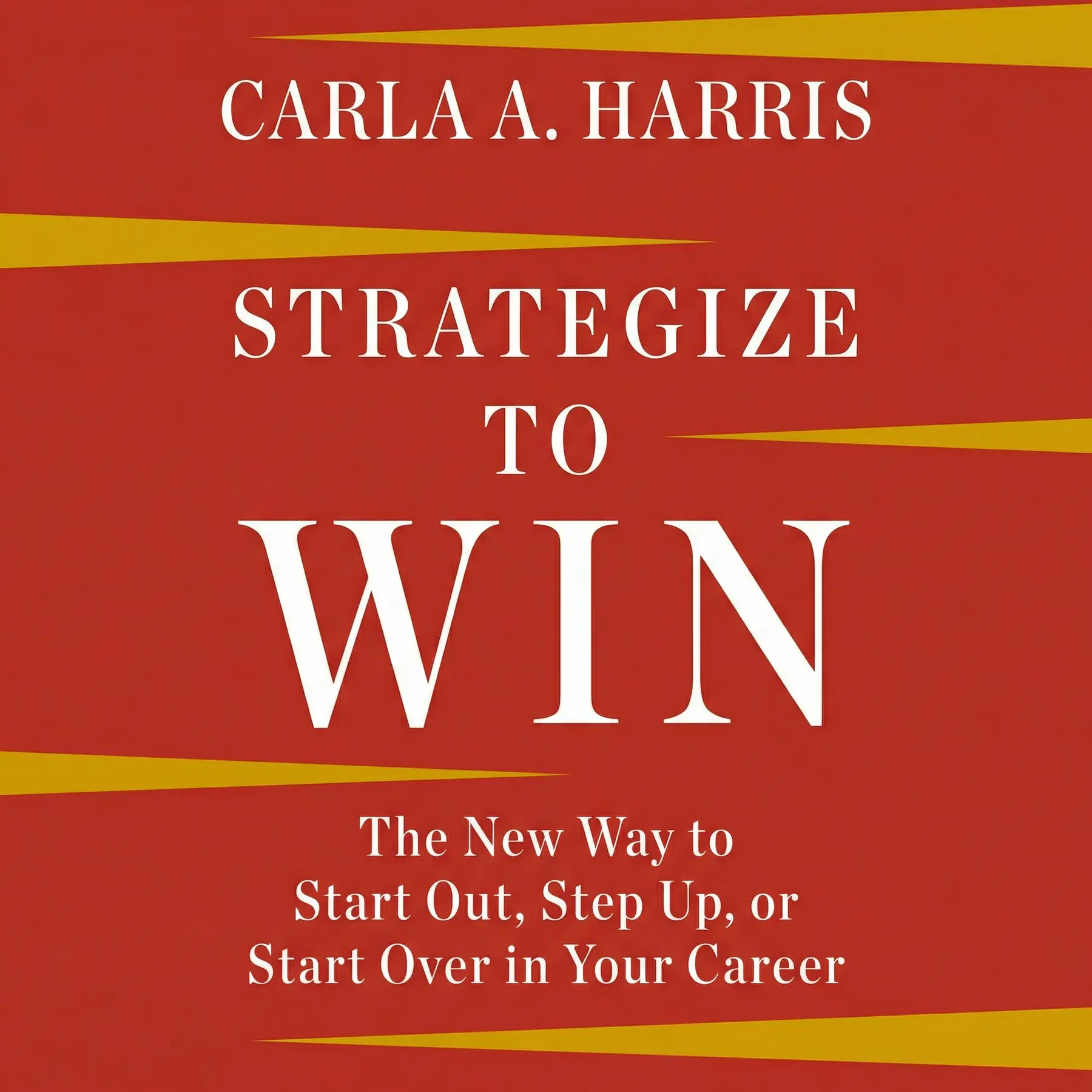
Listeners find that the book offers excellent strategic advice and pearls of wisdom, with one noting how it aids in making career decisions. Furthermore, the guide is accessible and useful, and listeners value the tempo of the material, with one individual highlighting its coverage of diverse professional situations.
Carla Harris has a way of delivering career advice that feels like a masterclass from a trusted mentor. After reading Expect to Win, I wasn't sure if this would offer anything new, but the way she breaks down 'relationship currency' is a total game-changer for my professional growth. The book is packed with what she calls 'pearls' that are both practical and easy to implement immediately. To be fair, some of the corporate scenarios feel a bit high-stakes for a small business owner, yet the underlying logic remains incredibly sound. I particularly resonated with the chapters on navigating change as a mid-career professional. Look, if you feel stuck or invisible at your current firm, you need to grab this guide. The pacing is fast, the tone is encouraging, and the strategies for building a profile are worth every penny.
Show moreAfter watching her TED talk on finding a sponsor, I knew I needed to dive into the full text of Strategize to Win. This book is a brilliant continuation of her previous work, offering specific nuggets of wisdom on how to secure early wins when joining a new organization. I loved the example she shared about failing to get a 'win' because she didn't align expectations with her boss beforehand. That scenario hit home for me because I've worked on massive projects that went unappreciated simply because the goalposts weren't clear. In my experience, the advice on communication between generations is worth the price of the book alone. Whether you are a student or a senior executive, there is something here for you. It is a rare business book that manages to be both highly analytical and deeply personal.
Show moreThe chapter on communication between different generations was a total revelation for my current management role. As someone approaching the midpoint of my career, I found Harris's principles on navigating change to be incredibly relevant to the modern day work environment. She explains the fallacy of 'hard work speaking for itself' with such clarity that I felt an immediate shift in my professional perspective. Frankly, I’ve over-relied on my technical competence for too long while ignoring the political capital needed to actually secure promotions. The book provides a clear, step-by-step guide on how to obtain a sponsor and why that differs so much from having a mentor. It’s an empowering read that encourages you to take full control of your career trajectory. I would highly recommend this to any woman who feels like her contributions are being overlooked in meetings.
Show moreWow, I wish someone had handed me this book the day I graduated from college so I could have avoided years of frustration. Carla Harris pulls back the curtain on how decisions are actually made behind closed doors in the corporate world. The way she describes the shift from performance currency to relationship currency as you become more senior is a massive insight. I’ve always been hesitant to 'extol my virtues' to my boss, but Harris makes a compelling case for why this is a requirement, not an ego trip. Every chapter is filled with actionable strategies rather than just vague motivational fluff. It’s well worth reading for professionals at all career stages, especially if you are feeling stuck or undervalued. This book doesn't just tell you to work harder; it tells you how to work smarter to actually win. Definitely one of the most useful business books I’ve read this year.
Show moreEver wonder why some people climb the ladder effortlessly while you are grinding away at your desk with no recognition? This book answers that question by distinguishing between performance currency and relationship currency in a way that is frankly eye-opening. I spent years believing my hard work would speak for itself, only to realize I was neglecting the vital connections needed for real advancement. Harris provides a step-by-step guide on how to maximize your impact by knowing your strengths and weaknesses. My only minor gripe is that the tone can be a bit 'old school' at times, focusing heavily on traditional corporate hierarchies. However, the section on 'Stepping Up' is loaded with helpful tidbits that apply to almost any industry. It is a very well-written book that provides a necessary roadmap for those ready to move up.
Show moreFinally got around to reading this after hearing colleagues rave about Harris's 'pearls' of wisdom and I wasn't disappointed. The book is essentially a tactical manual for anyone looking to pivot jobs or switch industries entirely. What I appreciated most was the specific advice on how to pitch yourself during interviews to highlight your 'performance currency.' Gotta say, the chapter on building relationships with senior leadership was a bit intimidating but ultimately necessary for anyone wanting to reach the C-suite. Some sections feel a bit repetitive if you are already familiar with her speeches, but the written format allows for better reflection. It’s a solid, practical read that covers various career scenarios with grace and authority. If you are starting a new job soon, this should be required reading for your first ninety days on the clock.
Show morePicked this up because I’m looking to pivot into a new industry and needed a concrete roadmap to follow. Strategize to Win offers exactly that, with practical advice on how to translate your existing skills into a new professional language. Harris is an excellent writer who makes complex power dynamics feel understandable and, more importantly, manageable. I particularly liked the focus on getting buy-in from leadership about what constitutes a success early on. The truth is, most of us wait until the annual review to find out if we've done a good job, which is way too late. My only criticism is that the book can be a bit repetitive regarding the definition of currency. Still, the nuggets of wisdom found in the later chapters on working around setbacks are invaluable. It is a strong, informative guide for any business professional.
Show moreNot what I expected for a modern business guide, as much of the advice feels tailored strictly to high-finance corporate structures. While the information is certainly informative, I found myself disagreeing with the 'old school' approach to career finding that Harris promotes. Not gonna lie, the writing style is very clear and the pacing is excellent, making it a quick read for a busy professional. But I struggled to connect with the content because it assumes a level of organizational stability that doesn't exist in the startup world. There are some good nuggets here regarding how to move up, but they aren't exactly revolutionary if you've read other career books. It’s a decent start for someone who wants a basic guide on strengths and weaknesses. I wish I had read this ten years ago when I was first entering the workforce.
Show moreGotta say, the fundamental principles described here are definitely useful, even for those of us who are small business owners. However, the book feels like it was written for a very specific type of person—someone who thrives in a traditional, hierarchical corporate setting. In my experience, the advice on relationship currency is great, but the execution steps felt a bit too rigid and formulaic. To be fair, the book is very easy to read and the pacing keeps you engaged from start to finish without getting bogged down in jargon. I found the 'Stepping Up' section loaded with tidbits, though some felt a bit dated for the current remote-work landscape. It’s a good book with a large amount of information, but it requires some filtering to find what applies to you. Not a must-read, but definitely a helpful one to have on the shelf.
Show moreThis book just didn't hit the mark for me, mostly because I picked it up during a rough professional patch after leaving a toxic job. I thought these strategies would help me find my next steps, but instead, the advice made me feel worse about past situations that were totally beyond my control. Truth is, a lot of the suggestions feel like they require you to be in a perfectly functioning corporate environment to work. If you are struggling with a difficult boss or poor treatment, Harris’s focus on 'political capital' might feel a bit tone-deaf to your reality. Personally, I found the content lacked originality and felt like the same career advice you hear in every entry-level seminar. It might be better suited for someone just starting out who hasn't been burned by the industry yet.
Show moreCarla A. Harris argues that you alone are responsible for your career, and that leaving a job can be a smart step. She suggests moving roughly every five years into complementary roles at different companies. Each job should be chosen for the activities you enjoy, entered with a plan for pay and promotion, used to build skills and influence, and left with a story that connects it to the next role.
Performance currency is the credit you earn by doing excellent work. It makes sponsors proud to speak for you and helps you recover from mistakes, but it fades over time. Personal ties across the organization make up your relationship currency, and they grow chiefly through regular contact both on the job and away from it. Harris says lasting influence needs both, and she notes that many women underinvest in the relationship side at work.
She says interviews turn on your ability to do the job, your drive to do it and your fit with the culture. Look for places you have already shown a required skill, even outside paid work, as a mortgage restructurer with an English degree and community experience might for corporate philanthropy. Get introduced by contacts where possible, consider mailing your résumé instead of emailing it, and research whether you would enjoy working there.
Harris expects a move after about three or four years if your plan is on track, and sooner if the fit is poor, no new role appears or your main sponsor leaves. She also advises listening for unspoken signals, such as being left off certain assignments or repeatedly missing promotions. When you move, aim for more responsibility, better pay and more influence, and agree with your new boss on what success looks like.
Robin Ryan




Marianne Cantwell
William Vanderbloemen
AUDIO SUMMARY AVAILABLE
Get the key ideas from Strategize to Win by Carla A. Harris, plus 5,000+ more nonfiction titles.









