The Art of Impossible: A Peak Performance Primer
Steven Kotler
 English
Kotler and Wheal show how soldiers, scientists and tech founders use states of selfless focus to heal trauma, act as one team and think creatively, and how to bring those states into your own life safely.
1 min 04 sec
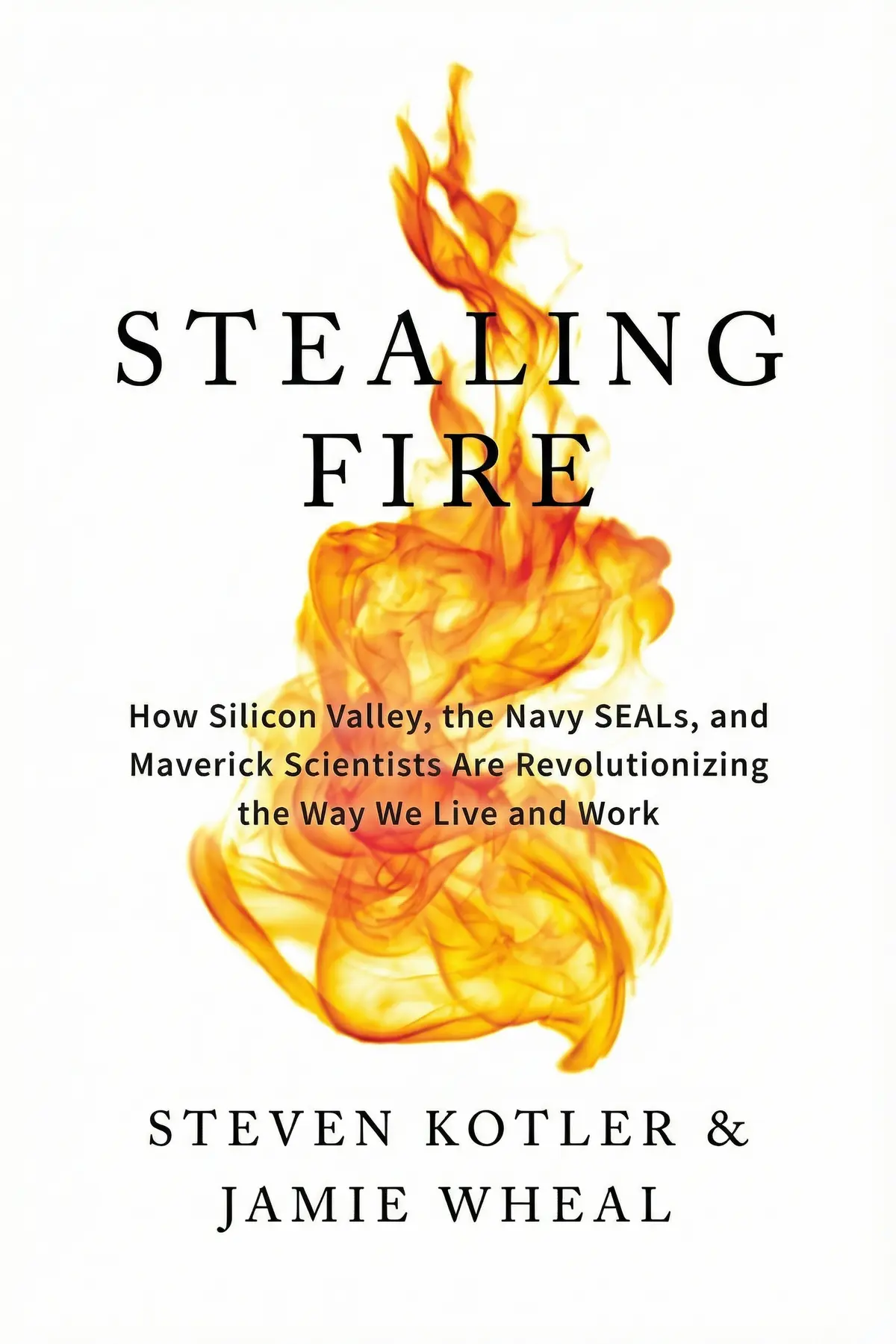
Most people remember a few moments when the voice in their head went silent: a run that felt effortless, a team that suddenly clicked, a song that swallowed an hour. In Stealing Fire, Steven Kotler and Jamie Wheal argue that these moments aren’t luck. They call them ecstasis, from a Greek word meaning roughly to stand beyond oneself, and by their count people spend about $4 trillion a year chasing them.
The authors argue that humans have always sought these states. Psychology, neurobiology, pharmacology and technology are the four drivers now changing these states from rare gifts into tools that heal trauma, bind teams together and spark ideas. The stories range from Navy SEALs and surfing veterans to stoned dolphins and a bar in Afghanistan that traded beer for information. By the end you will know where these states come from, what they do in the brain, and how to plan them into your year without losing your balance.
1 min 38 sec
A Greek general was sentenced to death for serving a forbidden drink at a party. His crime points to a hunger that never went away, and to a modern economy measured in trillions.
1 min 53 sec
A raid in Afghanistan succeeded because a team chose, in a split second and without a word, not to shoot. The Navy now wants to train that ability, and the body may reveal who has it.
2 min 05 sec
Veterans who had stopped speaking started talking again after a few hours in the water. Three unusual treatments for trauma are showing results, and anyone can start one of them tonight.
1 min 55 sec
Dolphins pass a toxic pufferfish around like a shared treat. That odd habit, along with brain scans in London, helps explain why stepping out of yourself can lead to fresh solutions.
1 min 51 sec
A lawyer who loved skydiving and a roboticist who disliked meditating both wanted the high without the cost. What they built brings the zone within reach of almost anyone.
2 min 06 sec
Hackers in the Nevada desert watched a hurricane make landfall through a satellite, and a bar in Afghanistan traded beer for intelligence. Both stories began at the same festival.
1 min 55 sec
Altered states are going mainstream, and so is the risk of chasing them too hard. A five-step plan helps you choose which ones to keep, how often to use them and when to stop.
1 min 15 sec
Stealing Fire is, in the end, an argument about access. For most of history, stepping beyond yourself was reserved for initiates at Eleusis. Taking their drink without permission could cost a man his city. Kotler and Wheal argue that the fire is spreading now, carried by therapists, engineers, soldiers and festival hackers. They also show it serving practical ends: veterans talking again after a few waves, sailors keeping their nerve under the sea, a few beers that paid for a map of a city.
For an ordinary week, the lesson is modest. The brain quiets the same regions during exercise and meditation as it does on psychedelics, so those are the first things to try. Write down what reliably takes you out of your head. Weigh each item by time, risk and reward, and attach the best ones to habits you already keep. Then, once a year, set all of it aside for 30 days to find out whether you are after insight or only the high.
Alcibiades paid for his stolen fire with exile. Kotler and Wheal argue that the rest of us can now carry it home safely.
Elite soldiers, surfers, meditators and Silicon Valley founders are all after the same thing: moments when the inner critic goes silent and performance, healing or insight suddenly comes easier. Steven Kotler and Jamie Wheal call these states ecstasis. By their estimate, people spend about $4 trillion a year trying to reach them, on everything from coffee and alcohol to video games and social media. The authors argue that this hunger is ancient, going back to a stolen ritual drink in Athens, and that four forces are now changing it: psychology, neurobiology, pharmacology and technology. They follow Navy SEALs training to think as one and veterans easing PTSD through surfing, MDMA and meditation. They also cover brain scans that show what psychedelics switch off, an indoor flight tunnel, and Burning Man hackers who turned a festival connection into hurricane relief. Readers learn how altered states work in the brain and body and what the early evidence shows. They also get a five-step plan called Hedonic Calendaring for using these experiences on purpose. It includes a month off every year so the search doesn't turn into a habit you can't control.
Knowledge workers and founders who want more deep focus and more creative breakthroughs at work.
Team leaders curious how elite units learn to act as one without speaking.
People living with stress or trauma who want to know what meditation, surfing and psychedelic research may offer.
Steven Kotler is a New York Times bestselling author and award-winning journalist. He co-founded the Flow Research Collective, which studies the science of peak human performance and trains people in what it finds. His books include The Rise of Superman and The Art of Impossible. Jamie Wheal founded the Flow Genome Project, an international organization that researches and trains human performance. He has spoken at Stanford University, Imperial College and the United Nations.

Listeners find this work both fascinating and stimulating, noting its substantial research and actionable guidance. The prose is expertly crafted, and listeners value how the material assists them in reaching peak performance while becoming more productive. They especially prize the observations on flow states, with one listener highlighting the addition of a workbook for achieving flow. Listeners characterize the book as life-changing, with one mentioning how it opened them to a new world of excellence.
Finally got around to reading this, and it’s a total game-changer for anyone obsessed with human potential. Kotler and Wheal take you on a journey through "ecstasis," exploring how we can shift our consciousness to perform better and feel more connected. I loved the section on how Navy SEALs use these techniques to create group flow; it makes the concept of a high-performance state feel so much more attainable. While some might find the mentions of Silicon Valley elites a bit much, the underlying research into neurobiology and psychology is top-tier. It honestly felt like a door opening to a whole new world of excellence that I didn't even know existed. The writing is snappy and engaging, keeping me hooked from the first page until the very end. If you’re looking for a practical guide to reaching that next level of productivity, this is it.
Show moreWow, what a ride through the modern landscape of human optimization. Stealing Fire isn't just a book; it's a manifesto for anyone tired of the standard "hustle culture" and looking for a more meaningful way to work and live. I was particularly struck by the anecdotes about Burning Man and how communal experiences can trigger massive shifts in perspective. Truth is, we all want to step outside our own heads sometimes, and this book provides a roadmap for doing that safely and effectively. The authors do a great job of blending hardcore science with storytelling, making complex ideas about brain waves and hormone release easy to digest. It’s life-changing in the sense that it makes you realize how much potential we leave on the table every day. Highly recommended for those who want to achieve peak performance without burning out.
Show moreI've been looking for a deeper dive into flow states since reading Csikszentmihalyi, and this book delivered exactly what I needed. It’s a bold, provocative exploration of what happens when we push the boundaries of human consciousness. The authors don't shy away from the controversial stuff, like the use of pharmacological aids, but they also provide a lot of context and words of caution. I found the information about how our physiology can influence our psychology—like using specific body postures to trigger hormone release—to be incredibly empowering. It’s the kind of book that opens you to a new world of excellence. I’ve already started applying some of the principles to my creative work, and the results have been noticeable. This is essential reading for anyone serious about self-mastery and becoming more productive.
Show moreThe chapter on neurobiology was worth the price of admission alone. I've read plenty of books on mindfulness, but this goes much deeper into the "how" and "why" of altered states using a four-pronged approach: psychology, pharmacology, technology, and neurobiology. To be fair, the authors do lean pretty heavily into the drug culture of Silicon Valley, which might turn some readers off. However, the breakdown of the STER acronym—Selflessness, Timelessness, Richness, Effortlessness—provides a very clear framework for understanding what we’re actually chasing. I found the discussion on how technology is being used to "hack" the brain both fascinating and slightly terrifying. It’s a well-crafted piece of non-fiction that challenges your baseline assumptions about reality. Just be prepared for a lot of namedropping of famous CEOs and high-level athletes throughout the narrative.
Show moreAs someone who works in a high-pressure environment, the insights into flow states were incredibly valuable. I appreciated the inclusion of a practical workbook component, which helped me translate these big, abstract ideas into daily habits I could actually use. Frankly, some of the fact-checking seems a little loose—like the weird comparison between 50 Shades of Grey and Harry Potter—but the core message remains strong. The book explores how we can leverage neurobiological triggers to become more productive and creative. It moves quickly from Navy SEAL training grounds to tech retreats, showing that these aren't just fringe theories anymore. While I don't see myself microdosing LSD at the office anytime soon, the breathing techniques and sensory deprivation info were solid. It’s a thought-provoking read that definitely pushed me to rethink my morning routine.
Show moreStealing Fire is a wild look into how we might finally bridge the gap between ancient wisdom and modern technology. Kotler and Wheal do an excellent job of rephrasing "spiritual" experiences in a way that makes sense to a secular, data-driven audience. My favorite part was the exploration of how different cultures have historically accessed these states, from Greek mystery cults to modern-day raves. Personally, I found the STER framework very helpful for identifying those moments in my own life where I’ve felt "in the zone." The writing is punchy and moves at a fast pace, which is fitting for a book about high performance. My only gripe is that it occasionally feels like an advertisement for the authors' other ventures. Regardless, the research into how we can boost creativity through altered states is definitely worth your time.
Show moreIn my experience, books like this usually overpromise and underdeliver, but there is some real meat on the bones here. It covers a vast amount of ground, from DARPA research to the origins of Silicon Valley's counter-culture roots. I liked how it didn't just focus on "getting high" but looked at the neurobiology of why these states are actually beneficial for problem-solving. Some of the claims feel a bit hyperbolic, especially when they start talking about uploading consciousness into machines, but it makes for a very engaging read. It’s well-crafted and forces you to consider what the future of humanity might look like if these techniques become mainstream. While it definitely has a "bro-science" vibe at times, the underlying message about finding meaning through flow is universal. It’s a solid 4-star read that will leave you thinking.
Show moreEver wonder why billionaires are obsessed with Burning Man? This book tries to explain the allure of "ecstasis" and why the 0.01% are spending millions to chase it. I'll admit, the concept of shutting down the inner critic to find a state of "oneness" is compelling stuff. But the book often feels like it's trying too hard to be edgy by focusing so much on psychedelics and extreme sports. Not gonna lie, I rolled my eyes a few times at the "everybody who is anybody is doing it" attitude. Still, the sections on how the brain processes time and space during high-stakes activities were genuinely fascinating. It’s a decent survey of the field, though it lacks the cohesive argument I was hoping for. It’s better as a collection of interesting anecdotes than a definitive guide to human enhancement.
Show morePicked this up after a podcast recommendation and I have very mixed feelings about it. On one hand, the stories about Navy SEALs and extreme athletes are gripping and well-told. On the other hand, the book feels like it’s constantly trying to sell me on a lifestyle that requires a private jet and a legal team. For the average reader, the advice to "do some drugs" or "go to Burning Man" is pretty impractical. Got to say, the fact-checking errors mentioned by other reviewers are definitely there and they do hurt the book's credibility. However, I can't deny that it’s an entertaining and thought-provoking look at the quest for peak performance. It’s worth a skim for the science bits, but take the "everyone is doing it" rhetoric with a heavy grain of salt. It’s a fascinating, if flawed, exploration of the human mind.
Show moreLook, I really wanted to love this, but the blatant elitism was hard to stomach. The authors spend so much time talking about how billionaires and special forces operators are "hacking" their brains that it starts to feel like a brochure for an expensive seminar. To be fair, the science of flow is interesting, but the way it’s presented here feels incredibly slanted toward a very specific, wealthy demographic. I kept feeling "played" by the constant namedropping of Google and Davos attendees. Also, some of the "facts" provided are just flat-out wrong or haven't been replicated in actual studies. It’s an entertaining enough read if you want some "superhero fiction" masquerading as science, but don't expect a lot of practical advice for the average Joe. The focus on expensive technology and illegal substances makes it feel totally out of reach for most people.
Show moreKotler and Wheal argue that people have always sought states in which the everyday self falls away, which they call ecstasis. Psychology, neurobiology, pharmacology and technology are the four forces now making these states easier to study and reach. The authors show them helping Navy SEALs act as one, veterans recover from PTSD and innovators find creative solutions. They also warn about the risk of becoming addicted to the experience.
Ecstasis comes from a Greek word meaning roughly to stand beyond oneself. The authors use it for non-ordinary states such as flow, when inner chatter fades. Brain scans by Robin Carhart-Harris at Imperial College London link this to transient hypofrontality, in which certain brain regions switch off. The same regions go quiet on LSD, during meditation and during exercise.
It is the authors’ five-step plan for using altered states on purpose. List what takes you out of your head and score each item with the Ecstasis Equation, weighing time against risk and reward. Decide how often each belongs in your life and attach it to an existing habit. Then take 30 days off from all of it every year so you do not become a bliss junkie.
No. Pharmacology is one of four forces the authors describe. The others are psychology, such as meditation and surf therapy for PTSD; neurobiology, such as heart and brain monitoring that predicts how sailors will hold up; and technology, such as the iFly indoor flight tunnel and Mikey Siegel’s brain stimulation devices. The book also notes that MDMA and surfing carry dangers, while meditation is open to everyone.

Deborah Gruenfeld




Anthony Pratkanis



William B. Irvine


AUDIO SUMMARY AVAILABLE
Get the key ideas from Stealing Fire by Steven Kotler, plus 5,000+ more nonfiction titles.