

15 min 16 sec
Available in: English
 ไทย
EnglishไทยSmall Fry: A Memoir
A daughter's account of growing up with a father who denied her. It shows the private Steve Jobs behind the public icon, and what it costs a child to keep chasing a parent's acknowledgment.
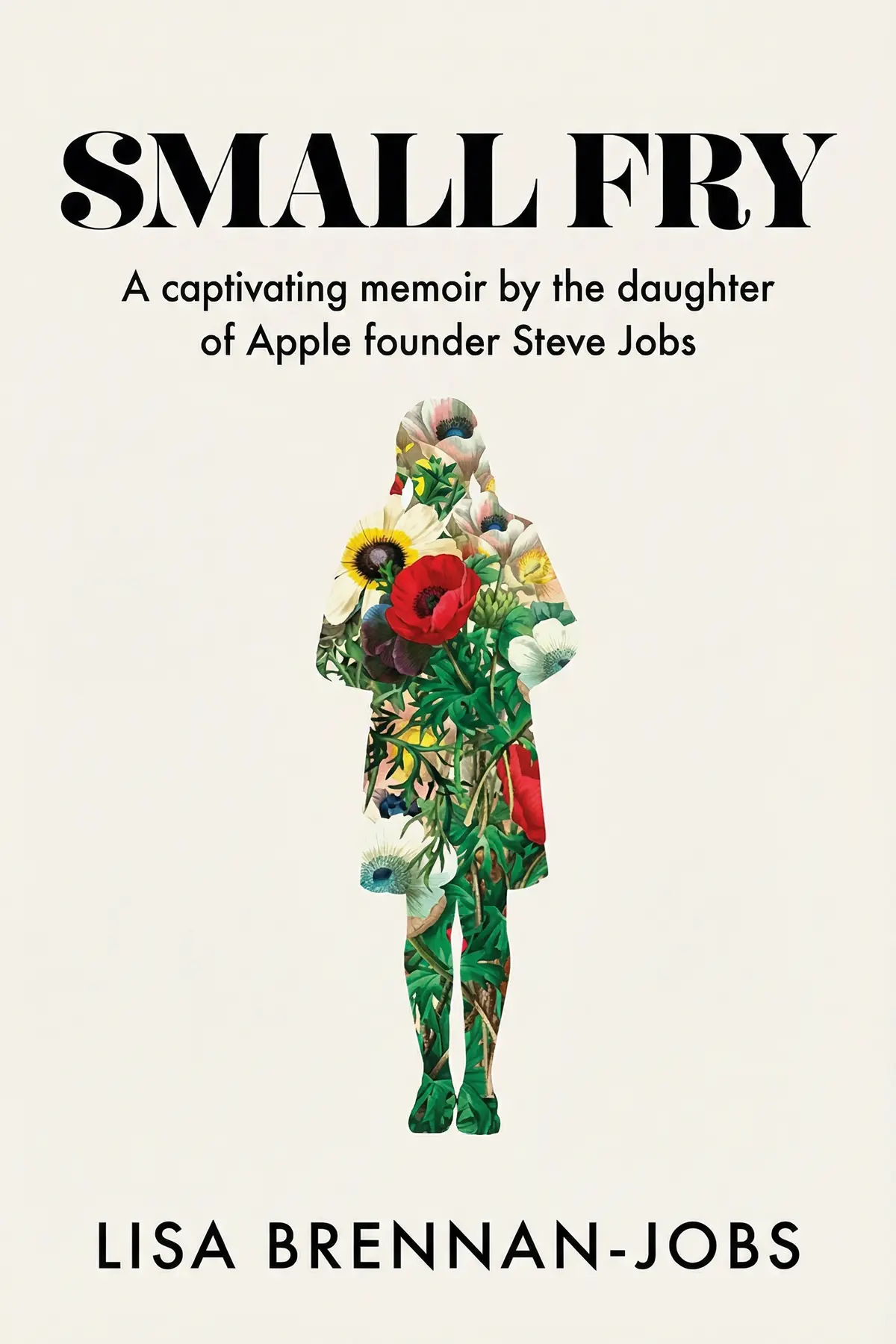
Table of Content
1. Introduction
59 sec
Plenty of people know Steve Jobs as the mind behind the iPhone. Far fewer know that he spent years insisting his first child was not his, even after a 1980 test put his paternity at 94.4 percent, the highest score the instruments of that time could give. In Small Fry, writer Lisa Brennan-Jobs tells what it was like to be that child.
Her memoir is not a story about a genius. It is the story of a girl who kept trying to earn a place in her father’s life, and of the people who sheltered her when he would not. Followed from a high school romance to a hospital bed, her account shows that fame and fortune say little about how a person loves, and that his acknowledgment, when it finally came, arrived late and in pieces. The icon turns into a flawed, frightened man, and the listener gains a sharper way to think about approval, family and the uneven shapes love can take.
2. Meet the restless teenager who became Steve Jobs
1 min 49 sec
A typed sheet of Bob Dylan lyrics, a cabin paid for with illegal phone gadgets and a failed contraceptive set the stage for everything that followed. The young man here is not yet anyone’s icon.
3. What it costs a child when a father refuses
1 min 55 sec
A DNA test, a county lawsuit and a sudden rush by his lawyers to settle. The timing of that settlement says a great deal about what mattered most to a father who would not claim his daughter.
4. Understand the fantasy a famous, absent father creates
2 min 00 sec
An eight-year-old whispers a secret that nobody on her playground understands. At home, love and fear share one small household, until a phone call from her school changes where she will live.
5. Trying harder will not buy you belonging
1 min 49 sec
A new name, a hyphen and endless washed dishes were meant to win a place in a new family. What a teenager gets in return exposes the hidden rules of conditional belonging.
6. Find your worth where a parent withholds it
1 min 49 sec
Sheets of paper taped to the hallway windows announce news her father does not understand. Behind the triumph sit a joke about a strip club and a therapy session that ends in a long silence.
7. Strangers can give what family will not
1 min 47 sec
One family outing to the circus turns into an ultimatum. A college student with nowhere obvious to go must decide whether to give in, and help arrives from a door she had not expected.
8. Discover the late admission that answered a lifelong question
1 min 59 sec
For years she asked whether a failed Apple computer carried her name, and for years the answer never changed. It took an evening on a trip abroad, and a famous guest, to shift it.
9. Conclusion
1 min 09 sec
Small Fry shows a side of Steve Jobs no product launch ever did. The man who reshaped how people use technology denied a daughter he had fathered, paid support on a schedule set by a lawsuit and a stock offering, and treated a teenager’s every effort as proof she did not belong. The same man carried her photo, called her high school years his happiest and wept over lost time at the end. Lisa Brennan-Jobs lets both stand.
For the listener, the memoir works as a lens on approval. Notice when you are working for a love that keeps moving away, the way Lisa did with the dishes and the class election, and put that energy into something that proves your worth to you. Value the people who pack your boxes and pay a bill they never owed, as Kevin did. And if you are the one holding back a simple acknowledgment from someone close, remember how long one word took to arrive.
A girl spent years asking whether a computer carried her name. The answer was yes, and she heard it only because a friend of her father’s thought to ask.
About this book
What is this book about?
The public knows Steve Jobs as the visionary behind Apple's computers and phones. His eldest daughter knew a different man. Lisa Brennan-Jobs came into the world in 1978 at an Oregon farm, and she grew up with a father who denied she was his, paid support only after the state took him to court, and showed up in her life when it was convenient for him. In Small Fry, she traces her parents' teenage romance and her hard childhood on welfare with a loving but volatile mother. At thirteen she moved into her father's house, where strict conditions, small cruelties and the constant charge that she was not part of the family met every effort she made. Harvard offered an escape, but loneliness followed her there, and turning down one family outing led her father to stop speaking to her. The memoir does not settle into blame. It shows the same man carrying her picture, calling her teenage years his happiest and, near his death, admitting he owed her time he could no longer give. Readers get an intimate, unsparing look at a famous father, and a clear story about wanting approval from someone who keeps withholding it.
Book Information
Who it's for
Curious about Jobs' fatherhood
Readers who know Steve Jobs as an icon and want to see the father behind the products.
Adults with distant parents
Adults still dealing with a distant or withholding parent and the urge to earn their approval.
Drawn to family memoirs
Memoir readers drawn to difficult childhoods, divided families and late, partial reconciliation.
About the Author
Lisa Brennan-Jobs
Lisa Brennan-Jobs is an American writer, born on May 17, 1978, the daughter of Apple co-founder Steve Jobs and Chrisann Brennan. She has worked as a journalist and magazine writer. An early Apple business computer, the Apple Lisa, carried her name, and she has been portrayed in several biographies and films. Small Fry, her first book, tells her family's story from the inside.
Ratings & Reviews
Ratings at a glance
What people think
Listeners describe this memoir as an engaging and masterfully crafted work, often finishing it in a single session. This narrative is distinctively the author's personal journey, and listeners characterize it as a touching life story that maintains a captivating pace. They value the profound emotional resonance, calling the account both gut-wrenching and tender, while commending the creator's skill; one listener specifically highlights the author's pitch-perfect voice.
Top reviews
Sofia
After hearing so much hype, I finally dived into this, and the nostalgia hit me like a ton of bricks. For anyone who spent time in the Bay Area during the 80s and 90s, this is a treasure trove of local references. Seeing The Good Earth and Dragers mentioned made the setting feel violently real and grounded. Beyond the geography, the book is a masterclass in capturing the voice of a child trying to make sense of adult neglect. Brennan-Jobs doesn’t paint herself as a saint, which I appreciated. She shows her own flaws and desperate attempts to fit into her father’s 'new' family. It’s a messy, complicated portrait of a family that happens to be famous, but the core emotions of longing and rejection are universal. I gobbled this up in two sittings and immediately recommended it to my sister.
Show moreBella
Wow, what a gut-punch of a reading experience. This isn't just a 'tell-all' meant to smear a celebrity; it’s a deeply empathetic look at how brilliance and cruelty can exist in the same person. I want to carry a copy of this around and smack every tech bro who worships at the altar of Steve Jobs. They need to see the human cost of his 'visionary' lifestyle. Lisa writes with an astounding level of maturity, never begging for pity but simply stating, 'This is how it was.' The scenes involving her mother, Chrisann, are just as compelling and heartbreaking as the ones with Steve. It shows the instability of a life caught between a struggling artist and a billionaire. This is stay-with-you-forever writing that captures the versatility of the human spirit in the face of constant emotional scarcity.
Show moreKet
The level of empathy Brennan-Jobs shows toward her parents—both of whom failed her in significant ways—is nothing short of miraculous. She avoids the 'misery memoir' tropes by grounding everything in beautiful, evocative detail. Whether she’s describing a broken dishwasher or a gift of a Mac computer, there’s a sense of searching for meaning in the mundane. I found the audiobook, narrated by Eileen Stevens, to be particularly enjoyable; it brought out the subtle humor in some of the more absurd dinner scenes. It’s a human interest story that goes beyond the headlines of 'Terrible Dad.' It’s about the struggle to belong and the strength it takes to forge an identity when you’re living in the shadow of a legend. Truly an outstanding family memoir.
Show moreWei
Personally, I found this to be a mesmerizing and discomfiting read that I couldn't shut up about for weeks. Steve Jobs comes across as a pathologically egocentric man, yes, but the book also shows his insecurity and his struggle to communicate. It’s a nuanced portrait rather than a caricature. The writing is so descriptive that I could almost taste the food at The Good Earth. My only real gripe is that the book is quite long and could have used a tighter edit in the middle sections. But overall, it’s a poignant autobiography that moves the reader through a roller coaster of pride, frustration, and eventual understanding. It doesn't matter if you like Apple products or not; this is a story about the universal desire for a parent's validation.
Show moreTantipat
This memoir is far more than just a list of grievances against a famous father. Lisa Brennan-Jobs writes with a precision that makes the sensory details of 1980s Palo Alto—the smell of the air, the specific lighting in a kitchen—feel vibrantly alive. I was struck by the restraint in her prose, especially when describing the moments where Steve Jobs was at his most withholding. It’s a heart-breaking coming-of-age story that navigates the complex terrain of wanting to be loved by a man who seemed fundamentally incapable of consistency. While the narrative drags slightly in the middle chapters during her time in England, the emotional payoff is profound. She captures that specific ache of being a 'footnote' in a titan's life with such grace. It is a poignant, beautifully uncomfortable read that stayed with me long after I closed the back cover.
Show moreFang
Picked this up on a whim after seeing a New York Times review, and I’m so glad I did. It is a stunning, lyrical coming-of-age story. What I loved most was how Brennan-Jobs handled the character of her mother. Chrisann is flawed, impulsive, and sometimes negligent, yet the love between them is palpable despite the thirteen times they moved houses. The book captures that specific childhood confusion of living in a back cottage while your father lives in a mansion. It’s not just about Steve Jobs; it’s about the landscape of California and the strangeness of that culture. To be fair, some readers might find her focus on material things—like the Porsche or the name-brand clothes—a bit much, but it felt like an honest reflection of a child’s way of measuring worth in a world dominated by wealth.
Show moreTim
Is it possible for a book to be both incredibly well-written and deeply frustrating? Small Fry is a strange bird. On one hand, the author's pitch-perfect voice and descriptive power are undeniable; she can make a simple scene at a dinner table feel like a high-stakes drama. On the other hand, the pacing is a bit of a slog. It’s a melange of random memories that don't always feel like they’re building toward a cohesive point. The truth is, I finished it feeling like I’d read the 'detritus of the rich and famous.' It’s a footnote in the history of Apple, providing context to Jobs's neuroses, but it lacks the narrative arc I expect from top-tier memoirs. It’s marginally interesting if you’re a tech enthusiast, but be prepared for a lot of relational failure and light gossip.
Show moreWachira
As someone who grew up in a similarly fractured household, I found this account to be incredibly authentic, though at times it was painful to stomach. The way Lisa describes her father's 'strange ways' of making her prove her love is chillingly accurate to how certain narcissistic personalities operate. He wasn't necessarily a monster in the physical sense, but the emotional distance and the way he’d enter and leave her life sporadically was its own kind of trauma. I did find the book a bit monotonous in the later sections, and some of the teenage drama felt a bit repetitive. However, the insights into the Silicon Valley culture of that era are fascinating. It’s a move-along-interestingly autobiography that provides a necessary counter-narrative to the polished corporate myth of Apple’s founding.
Show morePui
Look, I wanted to like this, but I couldn't get past the sense of entitlement that seeps through the pages. There’s no denying that Steve Jobs was an absolute jerk to her, but Brennan-Jobs often comes across as a 'poor-me-rich girl' who is simultaneously bragging about her status. She complains about doing dishes by hand or having to walk four blocks to her mother’s house like they are traumas on par with actual abuse. Frankly, it became nauseating after a while. The writing is technically proficient—she clearly has a talent for description—but the content feels like an adult throwing a tantrum over not getting enough of a multi-millionaire’s attention or money. It felt less like a quest for healing and more like a middle finger thrust at a grave. If you're looking for a balanced look at Silicon Valley history, this isn't it.
Show moreAdam
To be fair, Lisa is a gifted writer, but this felt like a seriously neurotic and distasteful look into a life that most people would kill for. I struggled to feel empathy when the 'hardships' involved staying in a Woodside mansion or complaining that a billionaire didn't buy her enough clothes. It’s a bit of a myopic biography. The author seems trapped in her own perspective, unable to see that she had a quite nice childhood compared to the rest of the world. She wasn't hungry or homeless, yet she writes as if she were a Dickensian orphan. While the prose is engaging, I felt manipulated into giving sympathy where it wasn't earned. It’s a 2-star read for me because of the writing style alone, but the self-pity is truly irritating.
Show moreQuestions about this book
What is Small Fry by Lisa Brennan-Jobs about?
It is a memoir by the eldest daughter of Steve Jobs. She describes her parents’ teenage romance, his years of denying he was her father, a childhood on welfare with a loving but volatile mother, and her teenage years in his house, where she worked hard for approval he rarely gave. It ends with his late admissions of love and regret before his death from pancreatic cancer.
Did Steve Jobs admit Lisa was his daughter?
Not for a long time. In 1980 a DNA test put the chance he was her father at 94.4 percent, and he settled a child support case brought by San Mateo County. Yet he still told people she was not his. Late in life he softened, telling her from a hospital bed that he had not spent enough time with her and that he owed her one.
Was the Apple Lisa computer named after Lisa Brennan-Jobs?
For years Steve Jobs denied it, at one point telling Lisa the name came from a former girlfriend. At twenty-seven, during a family yacht trip in the South of France, Bono of U2 put the question to him directly one evening after showing them around his home. Steve said yes, it was. It was the first time he had admitted it, and Lisa thanked Bono for asking.
Who should read Small Fry?
It suits readers curious about the private life of Steve Jobs, beyond his public image as Apple’s visionary. It also speaks to anyone who grew up with a distant or withholding parent and spent years trying to earn their approval, and to readers who value memoirs about hard childhoods, divided families and the people outside the family who step in to help.
What lessons does Small Fry offer?
The memoir shows that a parent can meet every legal duty and still withhold the acknowledgment a child needs most. Lisa’s efforts at school and at home never won her father over, while neighbors like Kevin, who housed her and paid her final year at Harvard, gave what family did not. Her story suggests building your own sense of worth instead of waiting for someone else’s approval.
Readers also enjoyed

Ali: A Life
Jonathan Eig

A Life Decoded: My Genome: My Life
J. Craig Venter


A Long Way Gone: Memoirs of a Boy Soldier
Ishmael Beah

All Creatures Great and Small
James Herriot


A Promised Land
Barack Obama


A River in Darkness: One Man’s Escape from North Korea
Masaji Ishikawa
AUDIO SUMMARY AVAILABLE
Listen to Small Fry in 15 minutes
Get the key ideas from Small Fry by Lisa Brennan-Jobs, plus 5,000+ more nonfiction titles.
- 5,000+ titles
- Listen as much as you want
- 7-day free trial
- Cancel anytime









