

13 min 42 sec
Available in: English
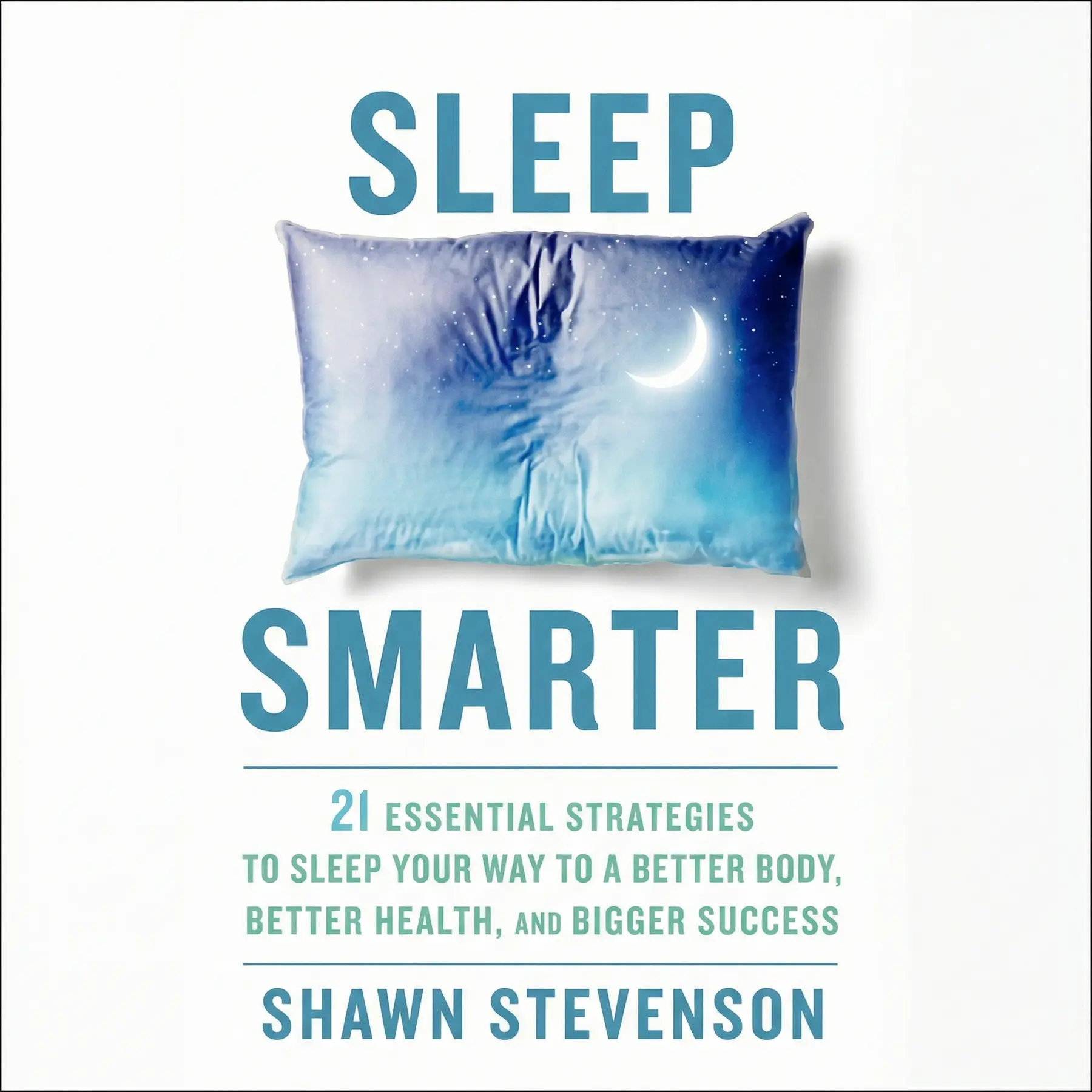
Sleep Smarter: 21 Essential Strategies to Sleep Your Way to A Better Body, Better Health, and Bigger Success
Shows why cutting sleep makes you slower and less healthy. Explains how light, bedtime, caffeine, alcohol, exercise, meditation and your bedroom shape deep sleep, with clear steps you can try tonight.
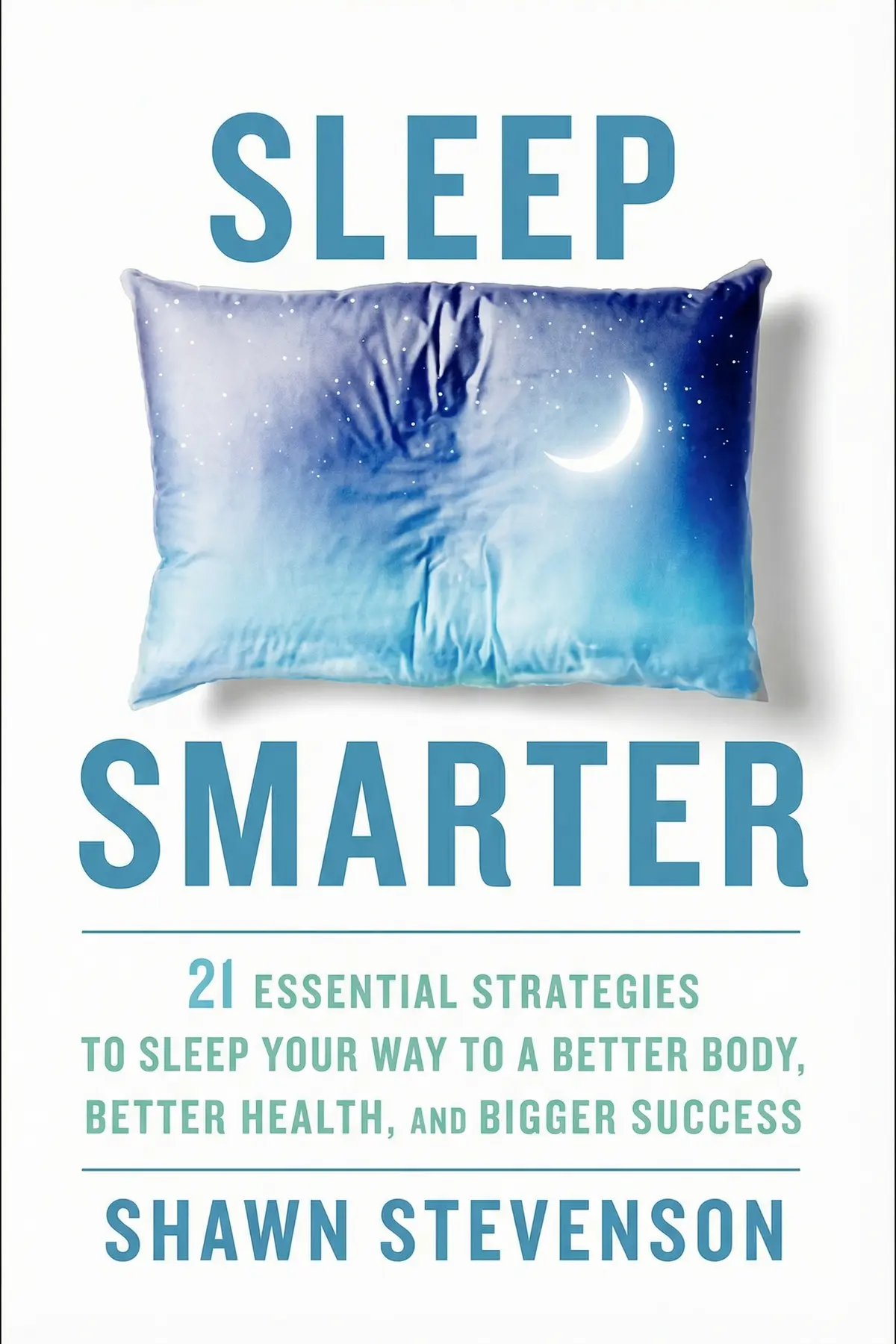
Table of Content
1. Introduction
54 sec
If your days feel foggy and your nights end with you staring at the ceiling, you may be fighting the chemistry that runs your rest. In Sleep Smarter, podcast host Shawn Stevenson argues that cutting sleep costs far more than it saves. He points to surgeons who had been awake for more than a day and made 20 percent more mistakes.
Stevenson’s case is that sleep is the body’s repair shift. How well it goes depends on a handful of levers you control: light, timing, what you drink, how you settle your body and mind, and the room you sleep in. Pull them the right way and deep sleep becomes something you plan for. You stop just hoping it arrives.
By the end you will know when to get sunlight and when to stop the coffee. You will also know which hours of the night do the most repair, and what belongs in a bedroom and what never should.
2. Sleep more to get more done
1 min 57 sec
Staying up late to finish the work feels responsible. A study of surgeons and a look at what happens to the brain’s fuel after a sleepless night suggest the trade works the opposite way.
3. Use light to set your body clock
1 min 54 sec
Whether you fall asleep easily tonight may depend on what you did at seven this morning. Stevenson explains how one hormone reads the light around you, including light you never notice reaching your skin.
4. Be asleep when your repair hormones peak
2 min 11 sec
Two people can sleep the same eight hours and wake up in very different shape. The difference lies in when those hours fall, and a study of college grades hints at how much it can matter.
5. Stop coffee and wine from stealing your night
1 min 52 sec
The afternoon coffee wears off and the evening glass of wine makes you drowsy, so both seem harmless. Stevenson follows each one into the night and finds it still at work long after you stop noticing it.
6. Calm your body and mind before bed
1 min 53 sec
A racing mind and a restless body can keep you awake in a perfectly dark room. Stevenson looks at a common mineral and a ten-minute habit, and warns against the pill many people reach for first.
7. A bedroom built only for rest
1 min 50 sec
A plant studied by NASA, a tough plant that works the night shift and one rule about your phone can change how a bedroom feels. Stevenson’s strictest advice for that room costs nothing at all.
8. Conclusion
1 min 11 sec
Stevenson’s book turns sleep from a nightly loss into a daily investment. Think of the tired surgeon slowing down and making more errors, or the night-shift worker who sleeps nine hours and still comes up short. Think of the student whose evening drinks wash away the day’s studying. Each one is fighting a chemistry they could have put to work. Melatonin, adenosine, cortisol and growth hormone all keep schedules. Light, coffee, wine and screens push those schedules around, which also means you can push them back.
You do not need every change at once. Spend a few minutes outside in the morning light. Stop the caffeine at four in the afternoon. Put the phone away an hour before a bedtime that stays within half an hour of the same time each night. If you want to become an earlier riser, Stevenson warns against jumping straight from an 8 o’clock alarm to 6. Move the alarm 15 minutes earlier each morning instead, so the change costs little willpower and never feels like a shock.
The hours from ten to two are already working for you. All you have to do is be asleep when they arrive.
About this book
What is this book about?
When work piles up, sleep is usually the first thing people give up. Shawn Stevenson argues that this trade backfires. Tired people work more slowly, make more mistakes and pay for it in their bodies. Sleep is when the body repairs and rebuilds itself. Stevenson explains the chemistry behind a good night in plain terms. Melatonin follows light, so morning sun and dark evenings matter. Adenosine builds sleep pressure, and caffeine blocks it for hours. Growth hormone peaks in a window late in the evening. Cortisol rises whenever work follows you into bed. Each of these gives you something to change, from a short walk outside before 8:30 in the morning to a firm 4 p.m. caffeine curfew. Readers get practical habits built on that biology: a steady bedtime, a smarter plan for evening drinks, magnesium cream, ten minutes of meditation, and a bedroom with English ivy and no inbox. The aim is deeper sleep that leaves you sharper, healthier and more productive the next day.
Book Information
Who it's for
Trading sleep for deadlines
Professionals who cut sleep to meet deadlines and feel slower for it.
Wanting simple sleep changes
Light sleepers, screen users and evening coffee drinkers who want simple changes that work.
Wanting sharper mornings
Students and early risers in the making who want sharper mornings and better recall.
About the Author
Shawn Stevenson
Shawn Stevenson studied business and biology at the University of Missouri–St. Louis and helped found Advanced Integrative Health Alliance, a company offering wellness services to individuals and organizations. He created The Model Health Show podcast and speaks on health at events including TEDx. Besides Sleep Smarter, he wrote Eat Smarter, a USA Today national bestseller.
Ratings & Reviews
Ratings at a glance
What people think
Listeners find this sleep guide to be highly educational and extensively researched, written in an engaging manner that keeps the content accessible. The book includes a 14-day plan for better sleep and concrete suggestions that listeners view as useful and simple to put into practice. Listeners indicate that the material has altered their health and life trajectory, with one listener mentioning how it provides validation for several techniques.
Top reviews
Jun
Finally got around to reading Shawn Stevenson’s guide, and I’m genuinely impressed by how accessible he makes complex biological rhythms. The book breaks down sleep into 21 practical chapters that don’t just tell you to go to bed earlier but explain the 'why' behind it. I specifically appreciated the 14-day sleep makeover plan because it gave me a structured way to overhaul my routine without feeling overwhelmed. Not gonna lie, some of the stuff about earthing and negative ions felt a bit fringe, but the core advice on morning sunlight and blue light is undeniable. My energy levels have stabilized significantly since I started implementing the 'caffeine curfew' he suggests. It’s a fun, quick read that manages to be both entertaining and deeply informative for anyone struggling with daily fatigue.
Show moreTun
The 14-day sleep makeover plan included here is a total game-changer for anyone feeling perpetually drained and foggy. Stevenson writes with a fantastic, lighthearted tone that makes learning about cortisol spikes and melatonin production actually enjoyable. Before reading this, I was staying up late scrolling on my phone and wondering why I felt like a zombie every morning. Now, I follow the blue-light regime religiously and have noticed a massive difference in how quickly I drift off. Personally, the most valuable part was learning about the connection between sleep deprivation and weight gain, which explained so much about my own fitness plateaus. This book provided the exact roadmap I needed to reclaim my health and my productivity. It is easily one of the most actionable health books on my shelf right now.
Show moreLeah
This book completely shifted my perspective on how my evening habits dictate my productivity and mood the following morning. Stevenson’s personal journey of healing his body through nutrition and sleep is incredibly inspiring and adds a layer of authenticity to his advice. I was someone who thought I could survive on six hours, but the data he presents on insulin resistance and memory loss scared me into better habits. The 14-day plan is simple to follow and doesn't require you to buy expensive equipment to see results. Frankly, just putting my phone away 90 minutes before bed has improved my mental clarity ten-fold. If you feel like you're constantly running on fumes, you owe it to yourself to read this. It’s a life-changing resource that I’ve already recommended to all my coworkers and friends.
Show moreTaw
Wow. Stevenson’s writing style is so engaging that I finished the entire thing in just two sittings without feeling overwhelmed by the technical data. I love how he uses the 21 chapters to tackle different angles of health, from exercise timing to the importance of hydration for sleep quality. I used to wake up feeling groggy every single day, but after following his advice on magnesium and morning sun, I feel refreshed for the first time in years. The book is well-researched, though he definitely has a specific 'holistic' viewpoint that might not appeal to everyone. For me, the results speak for themselves; my sleep tracking app shows a significant increase in my deep sleep percentages. This is a must-read for anyone who wants to optimize their body and mind through the power of rest.
Show moreTern
As someone who has struggled with insomnia for years, finding practical solutions that don't involve a prescription is a major win. Stevenson has a very engaging, almost infomercial-style energy that keeps the pages turning, though his pop-culture references can be a bit much at times. The chapter on gut health was particularly eye-opening for me since I never connected my diet so directly to my REM cycles. Truth is, while I’m skeptical about rubbing magnesium on my feet to sleep better, the tips on room temperature and blackout curtains worked immediately. It’s a well-researched book that validates many techniques I’ve heard of but never actually tried. I would have given it five stars, but some of the claims regarding EMFs felt like they needed more rigorous peer-reviewed backing before being presented as absolute fact.
Show morePan
Ever wonder why you're still tired after eight hours of shut-eye? Stevenson breaks down the 'quality over quantity' argument with a lot of energy and wit, making the science feel less like a textbook. I’ve been implementing the morning sunlight strategy for two weeks now, and my circadian rhythm feels more aligned than it has in years. The book is thick with actionable tips, ranging from magnesium usage to the best positions for spinal integrity while sleeping. While I think some of the stuff about electromagnetic fields is a bit exaggerated, the overall impact on my life has been positive. It’s a quick read that doesn’t take itself too seriously, which I appreciated. Just be prepared to filter through some of the fluff to get to the real gems of wisdom.
Show moreCha
Picked this up on a whim after seeing Stevenson’s talk at Google, and I found the book version to be even more comprehensive. He covers everything from how sex affects sleep to the exact temperature your room should be for optimal recovery. In my experience, the biggest takeaway was the 'caffeine curfew'—I never realized how much my 4 PM latte was wrecking my deep sleep stages. The writing is snappy and filled with pop-culture jokes, which makes the 21 chapters fly by. My only gripe is that it occasionally veers into territory that feels like a sales pitch for high-end supplements and gadgets. Regardless of the minor pseudo-science, the majority of the advice is grounded in improving your daily habits for better health. It really changed the way I view my bedroom environment.
Show moreWatcharin
Is this book informative? Yes, but it also feels like it’s trying to sell me a lifestyle rather than just providing objective facts. To be fair, the sections on caffeine timing and the importance of a cool sleeping environment are incredibly helpful and easy to implement. However, I struggled to get through the chapters that delved into 'earthing' and some of the more questionable nutritional claims. It’s a strange mix of common sense and borderline insanity that requires the reader to do a lot of their own fact-checking. I liked the 21-day structure, but the writing style felt a bit too 'bro-science' for my personal taste. It’s a decent starting point for beginners, but take the more eccentric claims with a grain of salt. Also, watch out for the plant recommendations if you have cats!
Show moreThanit
To be fair, if you’ve already spent time researching sleep hygiene online, you’ve probably heard about 70% of the advice in this book. Things like keeping the room dark, avoiding caffeine, and exercising are pretty standard tips that most people already know. Stevenson does a good job of aggregating them into one place, but the 'extra' stuff he adds is where he lost me. The claims about negative ions and earthing mats are a bit too far out there for my analytical brain to accept without more proof. That said, the 14-day sleep makeover is a nice touch for people who need a checklist to stay on track. It’s a light, fun read that works well as a refresher, but it’s definitely not a scientific journal. Good for casual readers, but maybe not for those seeking deep medical insights.
Show moreChon
Look, I really wanted to like this book, but the amount of absolute pseudo-science packed into these pages is hard to ignore. For every piece of sound advice—like avoiding screens before bed—there’s a chapter on 'earthing' or 'negative ions' that just feels like nonsense. Frankly, it felt like Stevenson was trying to sell me a lifestyle or specific products rather than providing a balanced look at sleep medicine. I found the tone to be incredibly annoying and overly promotional, reminiscent of a late-night health seminar. If you are actually suffering from a serious condition like sleep apnea, this book might actually be dangerous because it encourages you to try 'natural' fixes instead of seeing a doctor. Skip this one and find something written by an actual sleep scientist instead of a wellness influencer.
Show moreQuestions about this book
What is the main idea of Sleep Smarter by Shawn Stevenson?
Stevenson argues that sleep is the body’s repair shift, not time taken away from productivity. Sleep deprivation slows thinking and raises mistakes, while good sleep rebuilds muscle, bone and immune function. He shows how light, bedtime, caffeine, alcohol, exercise, meditation and the bedroom itself affect the hormones that control rest, and he turns each one into a habit you can change.
What is the best time to sleep according to Sleep Smarter?
Stevenson highlights the hours from 10 p.m. to 2 a.m., which he calls money time. Production of melatonin and human growth hormone peaks then, so sleep in that window is deeper and more restoring than sleep afterward. He also advises going to bed at the same time every night, give or take 30 minutes, and favoring early nights and early mornings.
When should I stop drinking coffee to sleep better?
Stevenson sets a caffeine curfew of 4 p.m. Caffeine blocks adenosine, the chemical that builds sleep pressure, and its half-life is eight hours. So 200 milligrams taken at 7 a.m. still leaves about 100 in your system at 3 p.m. and roughly 50 at 11 p.m. Stopping by mid-afternoon gives your body time to clear enough of it before bed.
Does Sleep Smarter recommend melatonin supplements?
Only as a last resort. Stevenson says melatonin pills can help people with insomnia, but taking them may weaken the body’s ability to produce the hormone on its own. He prefers natural ways to raise it: morning sunlight, no screens for the hour before bed and a fully dark bedroom. For relaxation he suggests magnesium cream on the skin and ten minutes of meditation.
How can I make my bedroom better for sleep?
Stevenson calls for a sleep sanctuary. Keep it completely dark, since light reaches us through the skin as well as the eyes. Add plants such as English ivy, which NASA found to be the best air-filtering houseplant, or mother-in-law’s tongue, which makes oxygen at night. Above all, keep work out of the room, because emails and calls raise cortisol and teach your brain to link the bedroom with stress.
Readers also enjoyed








AUDIO SUMMARY AVAILABLE
Listen to Sleep Smarter in 15 minutes
Get the key ideas from Sleep Smarter by Shawn Stevenson, plus 5,000+ more nonfiction titles.
- 5,000+ titles
- Listen as much as you want
- 7-day free trial
- Cancel anytime









