

13 min 59 sec
Available in: English
Shoveling $h!t: A Love Story about the Entrepreneur's Messy Path to Success
A married pair of founders explain the costs that come with starting a company. They show how to test an idea, pick partners, keep cash flowing, focus on what matters and change course without panic.
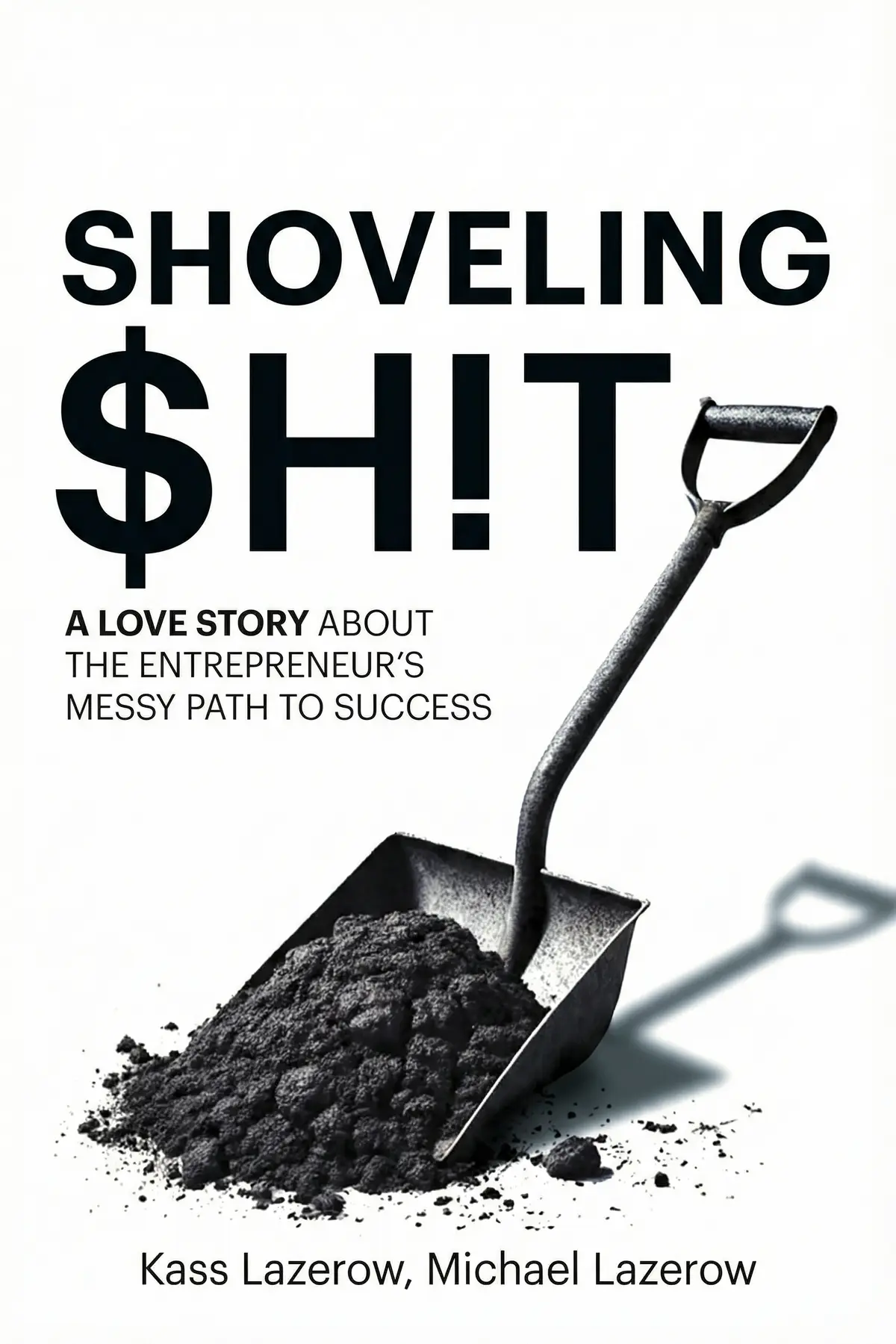
Table of Content
1. Introduction
1 min 02 sec
Starting a company looks like freedom from the outside: your own hours, your own rules, maybe a fortune. Kass and Mike Lazerow, a married couple who built Golf.com and Buddy Media together, say the daily reality is closer to shoveling manure, and that the founders who last are the ones who learn to enjoy it. In Shoveling $h!t, they swap the fantasy for an honest account of the mess: a pandemic that closes your shop, a market crash that dries up funding, a relative who sues after investing.
Their argument is that the mess never stops, so success depends on choosing it with open eyes and meeting each kind of trouble with a plan. That plan covers the price you will pay at home, the partner you pick, a one-page test for any idea, the cash that keeps a company alive, the few priorities worth your hours and the nerve to change direction. Their stories, from a hospital bed to a hotel ballroom, show what each step costs and what it buys.
2. Decide what you will sacrifice before you start
1 min 53 sec
Minutes after an emergency birth, with half her body numb, a founder was handed a laptop. Her husband was not being cruel. The moment reveals a trade every entrepreneur makes, whether they admit it or not.
3. Test any business idea with six questions
1 min 58 sec
Investors are often buried in forty-page business plans. Two seasoned founders throw that approach out and use a single page instead, plus one brutal adjustment to the numbers that most hopeful founders never make.
4. Choose a cofounder the way you'd choose a spouse
2 min 03 sec
Most billion-dollar startups have more than one founder, yet solo founders often survive longer. The real risk sits elsewhere, and it explains why so many young companies collapse from the inside.
5. Keep your company fed with steady fundraising
2 min 11 sec
Every founder hopes sales will rescue them before the bank account empties. The authors call that wishful thinking, and their alternative involves family money worth billions, careful warnings and relationships built long before you need them.
6. Give your best hours to the big rocks
1 min 49 sec
Nike’s first million dollars did not come from a grand strategy. It came from one man, one task and a car. A simple picture of a jug shows how to copy that focus in a crowded week.
7. Change direction when your first idea stalls
1 min 58 sec
Instagram started as a flop with a strange name. Its founder kept one small feature and threw out the rest. Even a near billion-dollar sale later, the authors found that success came with a bill of its own.
8. Conclusion
1 min 05 sec
The Lazerows tell their story as a love story because a company, in their telling, is a relationship you keep choosing on bad days. The dream of free hours and easy money hides a long stretch of thankless work, and the couple never pretend otherwise. They made almost no friendships outside work, faced major health problems and were rarely fully present for their children, yet when Buddy Media sold, it all seemed worth it. What they offer is a way to meet the mess on purpose.
That starts before day one, with an honest talk at home about what you are willing to give up. It continues with a single page answering six questions, with the revenue halved and the costs doubled. Then come a few written big rocks that get your best hours and, when the market turns, the plain question of what the worst case would really be.
None of it removes the shoveling. A laptop balanced on a hospital bed and a standing ovation in a ballroom came out of the same 18 years, and the founders who last are the ones who can love the shovel through both.
About this book
What is this book about?
Starting a business looks like freedom: your own hours, your own rules, maybe a fortune. Kass and Mike Lazerow, a married couple who built Golf.com and Buddy Media together, argue that the real daily life of a founder is mostly hard, thankless work that never ends, and that the people who thrive are the ones who learn to love it. Instead of a step-by-step startup manual, they offer honest lessons from their own years in business. They describe what they gave up at home and in their health, how to judge a cofounder and early hires, and a six-question test they call the Go Gauge for deciding whether an idea deserves money. They also cover how to raise funds without wrecking relationships, how to sort priorities so the important work comes first, and how to face the fear of a pivot. Readers get a clear picture of the trade they are making before they make it, plus practical tools they can use on their own company this week.
Book Information
Who it's for
Weighing a business idea
People with a business idea who want an honest picture of the personal cost before they quit their job.
Early-stage founders
Early-stage founders choosing a cofounder, making first hires or raising money from family or investors.
Rethinking a stalling company
Owners whose company is stalling and who are weighing whether to change direction.
About the Author
Kass Lazerow
Kass and Mike Lazerow are serial entrepreneurs and investors who have built companies together for decades. They cofounded Golf.com and the software company Buddy Media, which was later sold to Salesforce.com for $745 million. Mike, based in New York City, also started University Wire. Beyond their own ventures, the pair advise and invest in other businesses, and they speak, write and appear as guests on podcasts.
Ratings & Reviews
Ratings at a glance
What people think
Listeners find this an extraordinary listen for entrepreneurs, admiring its life lessons and useful tips. The narrative is gripping and easy to relate to, and listeners value the zero-fluff entrepreneurial manifesto and its raw honesty. They appreciate the work's genuineness, with one listener describing it as a real-world playbook, while another points out it provides concrete information on running a business. Listeners find the material inspiring, with one review emphasizing how it turns setbacks into comebacks.
Top reviews
Ding
If you’re looking for a sugary, "get rich quick" handbook, keep walking. Kass and Mike Lazerow offer a gritty, unvarnished look at the entrepreneurial trenches that most authors are too scared to write about. I found the metaphor of the shovel incredibly apt because, let’s face it, building a business is mostly just dealing with one mess after another. The story about Kass working on her laptop immediately after a C-section was a gut-punch, but it perfectly illustrates the relentless sacrifices required for success. It’s a zero-fluff manifesto that prioritizes grit over glamour. I appreciated the actionable advice on fundraising and choosing the right co-founders, which often feels like a marriage. This isn't just theory; it’s a real-world playbook for those of us who are already in the thick of it. If you're tired of the "hustle culture" lies and want the hard truth, this is your new bible. It made me feel seen and motivated to keep digging.
Show moreSiriporn
Finally, a business book that doesn't feel like it was written by an AI or a corporate consultant. Kass and Mike bring so much heart and humor to a subject that is usually dry and boring. I’ve been following their work for a while, but getting the behind-the-scenes look at Buddy Media and Golf.com was eye-opening. The "big rocks, pebbles, and sand" metaphor for prioritization is something I’ve already started implementing with my team. It forces you to look at what actually moves the needle versus what’s just busy work. I also joined the Founders Farm group mentioned in the book, and the community there is just as authentic as the writing. It’s a lifeline for when you’re in the trenches and need to know you aren’t the only one struggling. This is the raw, honest, and empowering guide I wish I’d had five years ago. Truly a gift to the startup community.
Show moreWilliam
Most people see the exit numbers and the headlines, but this book shows the "messy path" that leads there. I was particularly struck by the discussion on co-founder alignment. They liken it to a marriage, and as someone who has seen partnerships crumble over tiny disagreements, I think this is the most important chapter. Their "Go Gauge" tool helped me realize that my current side-hustle lacked a clear delivery method, saving me months of wasted effort. Personally, I found the writing style to be very accessible—it’s punchy and fast-paced, perfect for a busy founder who only has twenty minutes to read before bed. They don't sugarcoat the health problems or the missed family moments, which makes the eventual success feel much more earned. It’s an unapologetic manifesto for anyone who knows that "shoveling" is a permanent part of the job description. Highly recommended for the grit.
Show moreOwen
Pick up the shovel. That’s the core message, and it’s one that every aspiring entrepreneur needs to hear before they quit their day job. The Lazerows don't just talk about the wins; they talk about the pivots that almost didn't happen and the deals that nearly fell through. I loved the section on "offering opportunity" rather than "asking for money" when fundraising. It reminds me of the singular focus Phil Knight had with Nike—just sell shoes and keep the lights on. The writing is incredibly candid, especially regarding the toll their careers took on their personal lives. It’s not a "feel good" book in the traditional sense, but it is deeply motivating because it’s so grounded in reality. They turn setbacks into comebacks by showing you exactly how to navigate the muck. If you want a zero-fluff guide to what it actually takes to scale a company to a billion dollars, this is it.
Show moreSuda
Pivoting is probably the most daunting skill an entrepreneur can develop, and this book handles it brilliantly. Using Instagram’s transition from Burbn to illustrate the power of stripping away the non-essential was a great move. It really highlights how courage and adaptability are just as important as the original idea. I’ve been struggling with a feature-heavy app for months, and this book gave me the permission I needed to cut the fluff and focus on the "one big thing." The Lazerows write with a level of sincerity that is rare in business literature. Not gonna lie, some of the stories about their health struggles were hard to read, but they served as a necessary reminder that every choice has a consequence. This is a must-read for anyone who is serious about building something that lasts. Concrete information, zero fluff, and plenty of heart.
Show morePakpoom
Forget the glamorous Instagram versions of entrepreneurship you see online. This book is the "mud and blood" version. Kass and Mike are brutally honest about the constant stream of crises and the personal sacrifices involved in building a business from scratch. I appreciated the specific focus on the human element, particularly the idea that your first 20 employees define your culture forever. That’s a lesson I learned the hard way, and seeing it laid out so clearly here was validating. The book is practical, punchy, and doesn't waste a single word on corporate jargon. It’s the kind of book you keep on your desk and flip to a random page whenever you feel like quitting, just to remind yourself that the "shoveling" is the point. If you’re willing to embrace the mess, this book will show you the way. Essential reading for the gritty founder.
Show moreNang
The Go Gauge alone is worth the price of admission here. Instead of slogged-down 50-page business plans that no one reads, the Lazerows give you a streamlined six-question framework to see if your idea actually has legs. To be fair, some of the stories about the total lack of work-life balance were a little terrifying to read. The way they describe their health issues and the distance from their kids makes you stop and think about the true cost of a billion-dollar exit. However, their honesty is refreshing. They don't pretend it's easy or even "healthy" in the traditional sense. I specifically liked the advice on the first 20 hires and how they set the culture for the next decade. It’s a practical, punchy guide that helps you navigate the chaos without losing your mind entirely. A solid read for anyone currently scaling or dreaming of starting their own venture.
Show morePrayoon
As a small business owner, I often feel like I’m drowning in the "sand" of daily operations, so the prioritization strategies here were a total game-changer. The authors explain that you can only excel in one area at a time; if you’re building an empire, your social life will probably tank. It’s a hard pill to swallow, but probably a necessary one. I would have liked more detail on the financial modeling aspect, as that section felt a bit brief compared to the hiring and culture chapters. Look, the advice to "halve your revenue and double your expenses" is classic, yet so many of us ignore it until we’re out of cash. The Lazerows remind us that money is the lifeblood, and running out is the only true failure. It’s a solid, realistic playbook that balances high-level strategy with the "manure" of daily execution. Very much worth the read.
Show moreVilaiporn
Is it inspiring? Absolutely. But is it also a bit of a cautionary tale? Definitely. This book doesn't hold back on the "shoveling" aspect, but sometimes the level of sacrifice described felt a bit extreme for the average founder. For instance, the anecdote about the laptop in the hospital bed during an emergency recovery felt more like a warning than a badge of honor. I struggled with the idea that you have to completely neglect your health and friendships to succeed, even if that was their reality. That said, the technical advice on pivots—using the Instagram/Burbn example—was masterfully explained. Truth is, the book is more of a memoir than a traditional step-by-step guide, which might frustrate those looking for a structured "how-to." It’s a valuable perspective, but it paints a very specific, high-intensity picture of entrepreneurship that might not be for everyone. Good, but intense.
Show moreJoe
While I enjoyed the anecdotes, some of the advice felt a bit contradictory at times. On one hand, they talk about the importance of team culture and "lost lunches," but on the other, they describe a work environment that seems to demand total life-consumption. It’s a bit of a mixed message for a modern leader trying to build a sustainable company without burning out their staff. To be fair, their success speaks for itself, and the Buddy Media story is legendary for a reason. I found the "Go Gauge" to be the most practical part of the book, providing a great framework for evaluating new ideas quickly. However, the tone can be a bit "my way or the highway," which might rub some readers the wrong way. It’s a fascinating memoir of a very specific era of tech startups, but I’d take some of the "no-balance" advice with a grain of salt.
Show moreQuestions about this book
What is the main idea of Shoveling $h!t?
Kass and Mike Lazerow argue that running a company is mostly endless, unglamorous work, from fundraising and hiring to pivots, and that it never stops. Founders who thrive accept that reality, choose their sacrifices consciously and handle each challenge with a plan. The couple draw on their own years building Golf.com and Buddy Media, including the costs to their family and health.
What is the Go Gauge in Shoveling $h!t?
The Go Gauge is the one-page test the Lazerows use before investing in an early project. It asks six questions about the product, what makes it different, the customer and market size, sales and marketing, delivery, and the financial model. If any answer is weak, they do not invest. They also advise halving projected revenue and doubling projected expenses.
How do the Lazerows suggest choosing a cofounder?
They compare it to choosing a spouse. Before committing, check that you agree on vision, values, communication, mindset and workload. That means knowing which corners each person would cut, being able to argue honestly, sharing a belief that skills can grow, and splitting the effort fairly. They report that 65 percent of startups fail because of founder conflict.
How can I apply Shoveling $h!t to my own business?
Start by naming which of friendships, family and health you are prepared to shortchange, and discuss it with the people affected. Write one-page answers to the six Go Gauge questions. Pick two or three big priorities for the quarter, give each a measurable goal and write the plan down. Keep building relationships so fundraising is never a cold start.
Readers also enjoyed


7 Powers: The Foundations of Business Strategy
Hamilton Helmer



Alibaba: The House That Jack Ma Built
Duncan Clark

Be A Free Range Human: Escape the 9 to 5, Create a Life You Love,
Marianne Cantwell
Be Obsessed or Be Average
Grant Cardone
Being Boss: Take Control of Your Work and Live Life on Your
Kathleen Shannon
AUDIO SUMMARY AVAILABLE
Listen to Shoveling $h!t in 15 minutes
Get the key ideas from Shoveling $h!t by Kass Lazerow, plus 5,000+ more nonfiction titles.
- 5,000+ titles
- Listen as much as you want
- 7-day free trial
- Cancel anytime









