

A River in Darkness: One Man’s Escape from North Korea
Masaji Ishikawa
 English
 ไทย
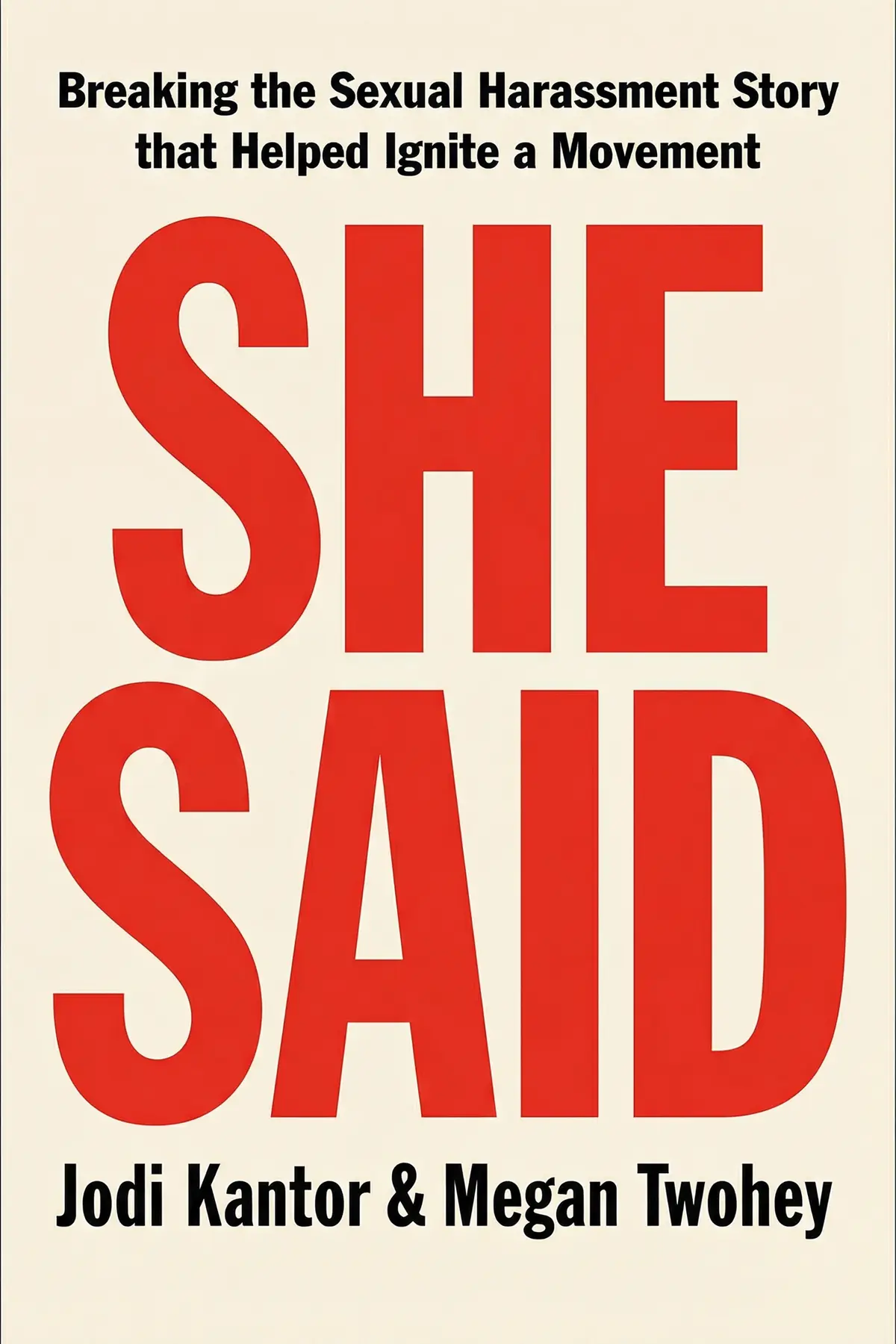
Follows two New York Times reporters as they exposed decades of sexual harassment by Harvey Weinstein, showing how settlements, lawyers and spies kept women silent and what it took to make the story stick.
54 sec
Workplace secrets that many people already know can stay buried for decades. In She Said, New York Times reporters Jodi Kantor and Megan Twohey show how: Harvey Weinstein, one of Hollywood’s most celebrated producers, paid women he harassed to stay silent, and a whole system helped him keep those deals.
Their book follows the months in 2017 when they turned rumors into a story nobody could dismiss. Its argument is plain. The silence around a powerful man was manufactured, by gatekeepers, settlements, lawyers and even hired spies, and breaking it took patient proof and women willing to speak together.
Trace the investigation and you learn how a cover-up holds, what finally cracks it, and how far the cracks spread afterward, from a film company boardroom to a Supreme Court hearing.
1 min 44 sec
A shocking account, told off the record by a famous actress, was believable from the first call. The reporters’ editor still said it was not ready, and her reasoning applies to any serious accusation you ever hear.
1 min 55 sec
Dozens of successful women had stories about the same producer, and they followed nearly identical steps. So why could none of them be printed, even after months of interviews and introductions from star to star?
1 min 59 sec
Complaints against Weinstein’s company should have left a paper trail. They did not, and the reason was a perfectly legal arrangement that turned money into silence, until one Irish production assistant turned out to be free of it.
1 min 57 sec
A friendly lawyer promised his client would not interfere. Behind the scenes, another lawyer was hiring former intelligence agents to follow the reporters, and a third was drafting plans to discredit the women.
2 min 02 sec
Months of interviews still left the story short. What finally moved it came from a disgusted accountant, a brother losing patience and a single page that had been sitting in a personnel file.
2 min 09 sec
In the final week, sources backed away, a famous libel lawyer joined the call and an 18-page threat landed after the deadline. One phone call changed what the article would open with.
2 min 06 sec
The story spread a movement across social media and reached a Supreme Court hearing. It also exposed the limits of public attention, and twelve women gathered later to talk about what speaking up had cost and changed.
1 min 18 sec
She Said is, finally, a book about how silence gets made. Plenty of people knew about Weinstein. The secret held because of ordinary tools: managers protecting clients, contracts trading money for quiet, lawyers drafting plans to discredit women, investigators hired to watch reporters. Kantor and Twohey answered with tools just as ordinary: months of calls, a researcher chasing public records, an accountant’s conscience and one dated memo.
The story leaves habits worth keeping. Treat a serious claim as something to confirm before anyone can wave it away. When a place seems free of complaints, ask what has been settled and sealed. Trust records made at the time over memories argued later. And notice that the women who spoke did it together: Judd brought in Hayek and Paltrow, and twelve women sat in one room helping Chiu decide.
Many found new purpose afterward. Judd accepted a teaching job at Harvard and also became a board member of Time’s Up, Lawson lodged complaints against her employer, and Crooks sought a seat in her state legislature. Madden, the first to go on the record, had it right: the speaking never stops.
For decades, Harvey Weinstein was one of the most powerful producers in Hollywood. Stories about how he treated women circulated as rumors that never reached print. In 2017, New York Times reporters Jodi Kantor and Megan Twohey set out to change that, and She Said is their account of how they did it. The book shows why the truth stayed hidden. Publicists shielded their clients, actresses feared for their careers, and private settlements paid women to hand over their evidence and never speak again. When the investigation began, Weinstein answered with a team of lawyers and a private intelligence firm that watched the reporters. Readers follow the slow work that broke through: dozens of interviews, a former assistant who had never signed an agreement, a company accountant who handed over a key memo, and a tense final week of legal threats before publication. The story then widens to the MeToo movement, its critics and the Supreme Court hearing where Christine Blasey Ford testified. It closes with a gathering of women reflecting on what speaking up changed in their lives.
Readers who want to understand how workplace harassment stays hidden and what finally breaks the silence.
Aspiring journalists and researchers curious how a contested story is confirmed, sourced and defended against legal threats.
Managers and HR leaders asking why a workplace with no complaints on file may still hide serious harm.
Jodi Kantor and Megan Twohey are reporters at The New York Times. Kantor joined the paper in 2003, covered two presidential campaigns, wrote The Obamas and studied at Columbia and Harvard Law School. Twohey, an investigative reporter, previously worked for Reuters, the Chicago Tribune and the Milwaukee Journal Sentinel and was a 2014 Pulitzer finalist. Their October 2017 report on Harvey Weinstein led to his firing, and more than 80 women went on to accuse him publicly. Kantor received a 2018 Pulitzer Prize for the reporting, and the pair also won a George Polk award.
Listeners find this book to be a gripping and fast-paced narrative that offers an exceptional look at investigative reporting, detailing the meticulous research involved. The prose is expertly written, and listeners characterize it as an intense behind-the-scenes thriller that speaks truth to power. The work is praised for its advocacy for women and its storytelling, with one listener highlighting how it showcases the commitment of trailblazing journalists. Although listeners value the material, some find the subject matter unsettling.
The meticulous nature of this reporting is absolutely staggering. While we all know the headlines that dominated 2017, Kantor and Twohey pull back the curtain on the grueling, often thankless work of verifying whispers. It reads less like a dry piece of non-fiction and more like a high-stakes legal thriller where the villains are protected by layers of NDAs and expensive lawyers. I was particularly struck by the internal politics of the New York Times and the sheer courage it took for women like Ashley Judd to go on the record first. To be fair, some sections regarding the legal minutiae of settlement agreements can feel a bit dense for the casual reader. However, seeing the "structure of power" get dismantled piece by piece is incredibly satisfying. It’s a masterclass in journalistic integrity and a sobering reminder of how much effort it takes to expose a single predator. This is a must-read for anyone who values the truth.
Show moreGenuinely one of the most important books of the decade. If you want to see how truth actually speaks to power, look no further than these pages. The authors don't just tell a story; they expose a rotting system that prioritized profit over people for thirty years. It’s a quick read but a heavy one, especially when you get into the specifics of how Weinstein manipulated young actresses. Truth is, I had to take breaks because the level of entitlement displayed by these powerful men is just nauseating. The ending felt a bit rushed compared to the deep dive of the first half, yet the overall impact remains unshakable. Every person who thinks harassment is "just a misunderstanding" needs to read this immediately. The bravery of the sources who finally spoke up is life-changing to witness through print.
Show moreHow do you even begin to dismantle thirty years of systemic abuse? Kantor and Twohey answer that question through a relentless pursuit of the truth that feels both inspiring and exhausting. This isn't just a book about one bad man in Hollywood; it's a study of how structures of power protect their own at any cost. Looking back, it’s wild to see how close this story came to never being told at all. The writing is sharp and clear, avoiding sensationalism while still capturing the raw trauma of the women involved. I appreciated the inclusion of the "everyday" employees who were harassed, as it shows this wasn't just a "famous person" problem. Gotta say, the section on the private investigators felt like something out of a spy novel. It’s a brilliant, haunting work that deserves every bit of the praise it has received since its release.
Show moreFinally got around to reading this, and I’m just struck by the sheer resilience of the survivors. The authors manage to take a horrifying subject and turn it into a story about strength and sisterhood. It’s a powerful testament to what can happen when people stop being afraid of "the monster" and start talking to each other. The epilogue actually had me a bit teary-eyed, seeing all those women gathered together after the storm. Truth is, we often forget the human cost of these headlines, and this book puts that cost front and center. While some might find the journalistic jargon a bit much, I think it adds to the authenticity of the account. It’s a well-written, timely piece of work that shouldn't be ignored. I am incredibly thankful to Kantor and Twohey for their dedication to this story. It truly changed the world, one interview at a time. Outstanding.
Show morePicked this up thinking I knew the whole story, but I was completely wrong. This book humanizes the survivors in a way that news clips simply cannot manage. It answers that frustrating, victim-blaming question of "why didn't she come forward sooner?" by illustrating the terrifying wall of silence Weinstein built for decades. Frankly, the details about the private investigators and the "black cube" were enough to make my skin crawl. It’s deeply disturbing to realize how many people—lawyers, assistants, executives—were complicit in maintaining his reign of terror. My only real gripe is the pacing in the middle, which slows down significantly when the focus shifts away from the primary investigation. Still, it is a necessary read for anyone trying to understand the roots of the #MeToo movement. It makes you want to cheer for the reporters and weep for the lost careers of so many talented women.
Show moreAfter hearing so much about the movie, I decided to go back to the source material. It is a gripping behind-the-scenes look at how a massive story is built from nothing but rumors and fear. What stood out most wasn't just Weinstein's behavior, but the network of enablers who facilitated it. Seeing names like Lisa Bloom pop up as people who worked to silence victims was truly eye-opening and disappointing. The authors do a great job of explaining the "bro code" and the corporate legalities that keep predators in power. To be fair, the shift to the Kavanaugh hearings in the final third felt a bit like a different book entirely. It was informative, but it lacked the propulsive energy of the Weinstein chapters. Overall, it’s a stellar example of why we need investigative journalism now more than ever. It's a professional memoir that functions like a true crime thriller.
Show moreAs someone who recently finished Catch and Kill, I was curious to see how this version compared. While Farrow’s book focuses on the cinematic drama of the chase, She Said provides a much broader look at the corporate rot. It’s less about the individual reporter's ego and more about the collective "esprit de corps" of the women standing up together. I found the details about the Weinstein Company’s board of directors particularly infuriating. It’s a heavy read, but the authors maintain a brisk pace that keeps you turning pages. In my experience, non-fiction can sometimes get bogged down in names, but the narrative here is handled with such care that I never felt lost. The only downside is that it leaves you feeling pretty cynical about the legal system's ability to protect victims. It’s a vital piece of the puzzle for anyone wanting the full scope of the movement. Not perfect, but very necessary.
Show moreWow, this was a difficult but necessary journey through the dark side of fame. The authors do an incredible job of illustrating how a "whisper network" finally turned into a roar. Hearing about the "massages" and the transactional nature of Hollywood made my stomach turn. Look, it’s not an easy read, and some of the descriptions of harassment are quite vivid. However, the bravery shown by the sources who risked everything is nothing short of heroic. I felt the book dragged a bit during the detailed descriptions of legal settlements, but I understand why those facts were included. It’s a comprehensive, well-crafted account of a turning point in our culture. If you think the #MeToo movement was just about social media hashtags, this book will prove you wrong. It was built on the backs of hardworking women who refused to be silent any longer. A truly compelling and informative read.
Show moreEver wonder what it actually takes to bring down a giant? This book provides a masterclass in investigative reporting, showing the years of silence that had to be broken through phone calls and secret meetings. It was fascinating to see how the authors navigated the fears of famous actresses like Gwyneth Paltrow and Angelina Jolie. The way they built trust with their sources is truly the heart of the story. Frankly, the section on the Kavanaugh hearings felt a bit like an afterthought, even though the content was relevant to the themes of the book. It just lacked the same narrative cohesion as the first two-thirds of the text. Despite that, the painstaking research on display here is phenomenal. It serves as a powerful reminder that the truth often requires an immense amount of work and courage to surface. It’s a riveting read that stays with you long after the final page.
Show moreNot gonna lie, I found this a bit of a slog despite the heavy subject matter. There is no denying the bravery of the journalists or the survivors, but the narrative structure felt wayward at times. The book tries to do too much by tacking on the Ford and Kavanaugh hearings at the end, which felt disjointed from the tight Weinstein investigation. Personally, I think it would have been a stronger, more cohesive piece if it had stayed centered on the Hollywood machinery. Some parts felt like the authors were patting themselves on the back for their investigative prowess a bit too much. It’s an essential historical document, sure, but as a reading experience, it can be quite dry and repetitive. If you aren't already deeply interested in the mechanics of journalism, you might find your attention wandering during the long stretches of phone-call descriptions. It’s an intellectual muscle-flexing that won't appeal to everyone.
Show moreIt tells how two New York Times reporters spent months in 2017 investigating Harvey Weinstein. They interviewed dozens of women, uncovered private settlements that kept victims silent, faced lawyers and a private intelligence firm, and published their story on October 5, 2017. The book then follows the MeToo movement that grew from it and the Supreme Court hearing where Christine Blasey Ford testified.
Because sexual harassment violates federal civil rights law but is not a crime, companies can settle complaints privately with cash. The settlements required women to hand over their evidence and never discuss the matter, especially with journalists. Zelda Perkins and Rowena Chiu signed such an agreement after complaining about Weinstein. Laura Madden had never signed one, which made her free to go on the record.
The reporters combined ten credible accounts of misconduct from 1990 to 2015, Laura Madden’s on-the-record interview and a memo dated November 3, 2015, written by former junior executive Lauren O’Connor. Accountant Irwin Reiter passed that memo to them from Weinstein’s personnel file. Ashley Judd’s decision to go on the record, made during the final days, gave the article its opening.
After the article, the MeToo phrase first coined by activist Tarana Burke spread widely, and men such as Louis C.K., Al Franken and Mario Batali faced scrutiny. Christine Blasey Ford later accused Brett Kavanaugh of assaulting her in 1982 and testified despite threats. Kavanaugh was confirmed, but the authors see her ability to speak at all as a sign of change.
The book shows that serious claims need corroboration to survive, that a quiet workplace may simply mean complaints were settled and sealed, and that documents written at the time carry great weight. It also shows that people who come forward draw strength from each other, as when Judd introduced the reporters to other actresses and twelve women later met to support one another.
Masaji Ishikawa

John Rawls



Miles Taylor



Fay Bound Alberti


Daniel Goleman
AUDIO SUMMARY AVAILABLE
Get the key ideas from She Said by Jodi Kantor, plus 5,000+ more nonfiction titles.









