
14 min 41 sec
Available in: English
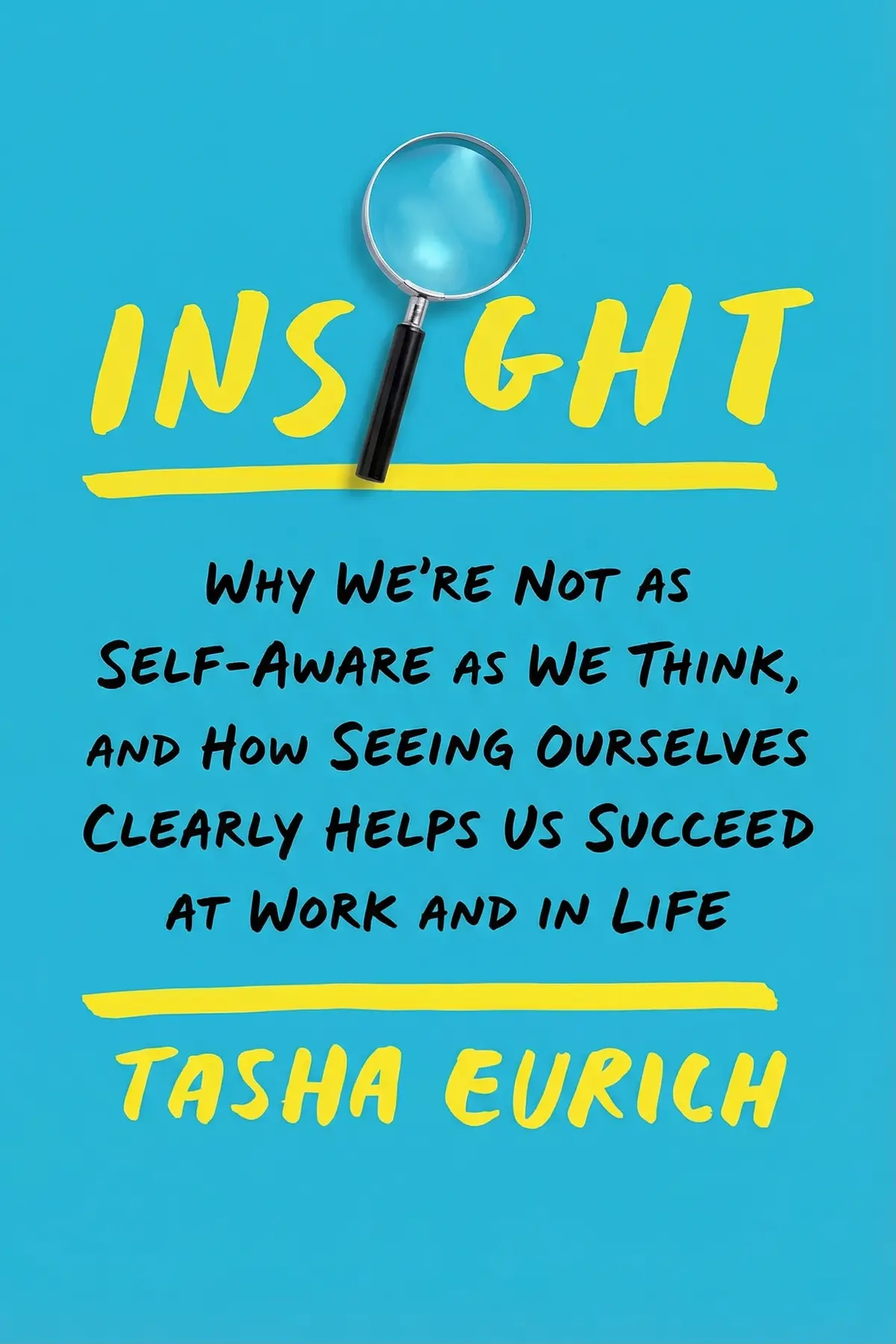
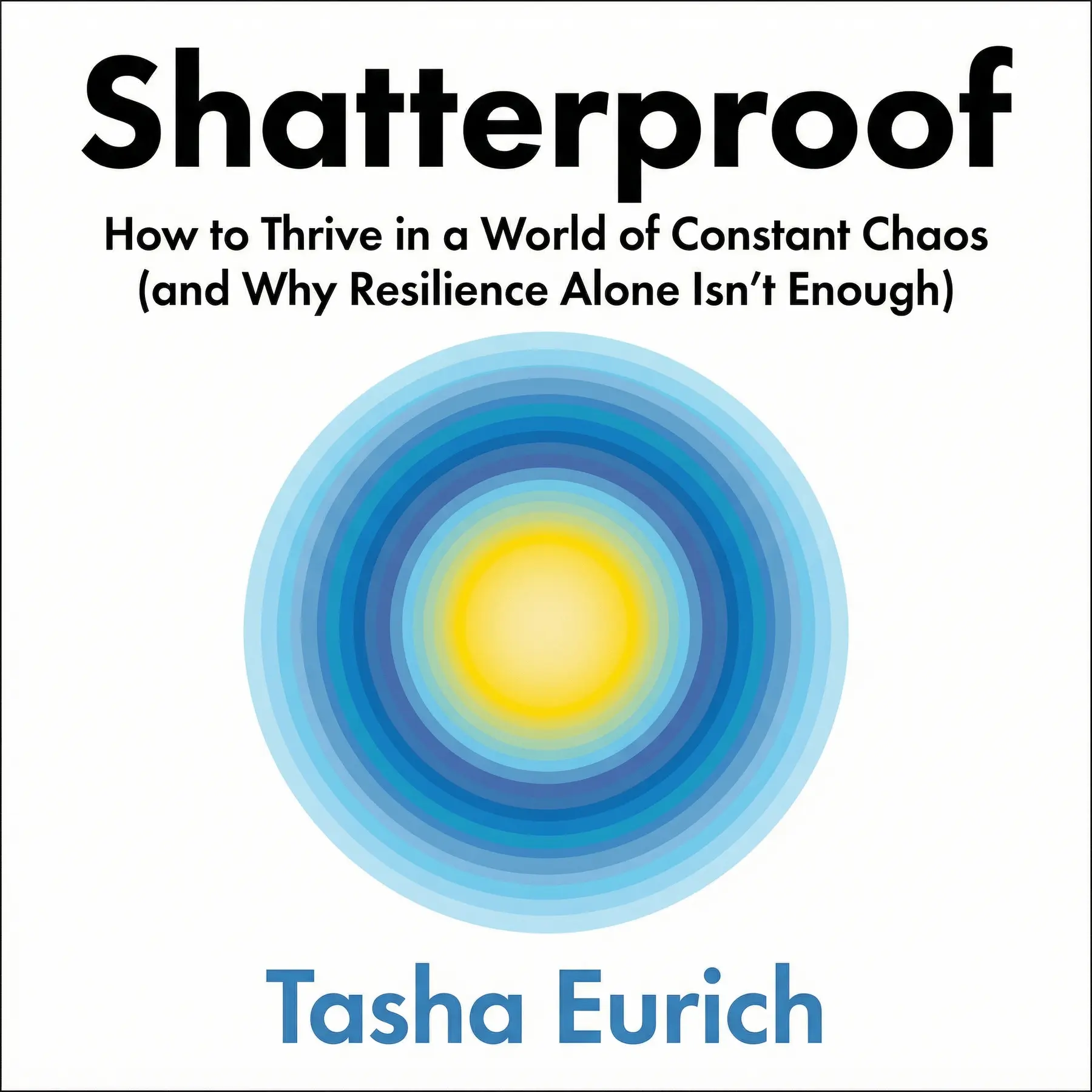
Shatterproof: How to Thrive in a World of Constant Chaos (and Why Resilience Alone Isn’t Enough)
By Tasha Eurich
Tasha Eurich explains why pushing through stress stops working when disruption never lets up. She offers a four-step method and three core needs that turn painful experiences into lasting growth.
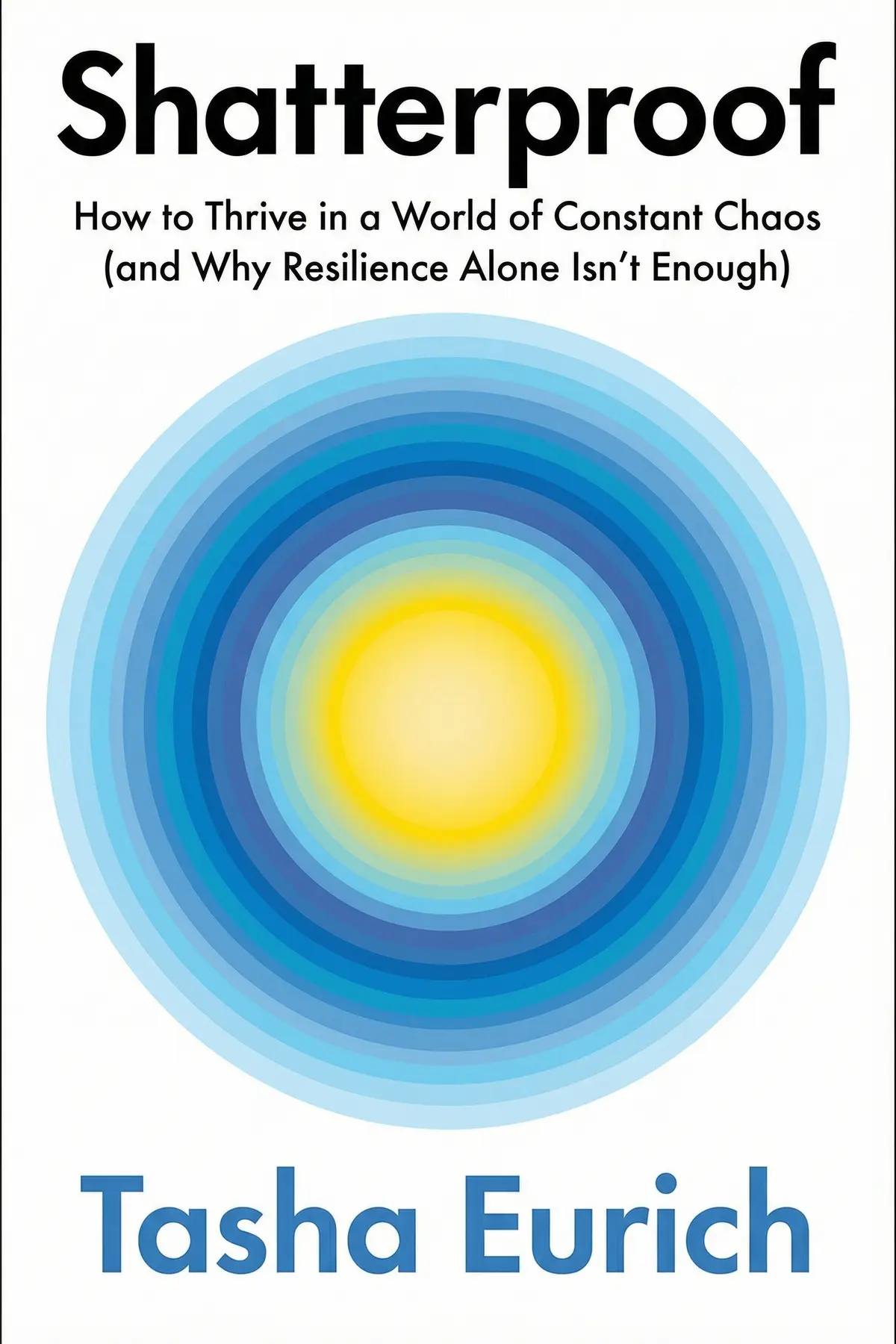
Table of Content
1. Introduction
58 sec
If you are the person everyone counts on to handle anything, there may come a day when handling it simply stops working. In Shatterproof, organizational psychologist Tasha Eurich argues that this breaking point is information, and that the usual advice to toughen up and bounce back is part of the problem. Her own moment came on a hotel room floor during an ordinary business trip, where panic and exhaustion left her unable to move. Every coping method she trusted had failed at once.
From that collapse and from her research, Eurich builds one case. In an age of nonstop disruption, enduring is no longer enough, and the people who do well are the ones who use hard experiences to change how they live. She offers a four-step method for doing that, and three human needs that keep it going. By the end, your exhaustion reads like a set of directions, and you will know which way they point.
2. Read burnout as a signal to change course
1 min 46 sec
A woman known for handling everything ended a routine work trip unable to get up from the floor. What she concluded about that moment overturns the advice most driven people give themselves when they feel like they are failing.
3. Understand how constant change wears down strong people
2 min 01 sec
Our ancestors faced hungry lions, yet modern office life may be harder on us in one specific way. Eurich identifies three flaws in human design that turn ordinary pressure into something the body cannot shake off.
4. Grow forward from a crisis instead of bouncing back
2 min 32 sec
Returning to normal after a hard stretch sounds like the obvious aim. Eurich asks what that normal actually was, and why the very place you want to get back to may be what broke you.
5. Map what hurts and what sets it off
2 min 00 sec
Most people deal with pain by ignoring it, staying busy or going numb. A two-minute daily check and one small change in wording offer a different route, and a surprising clue about what you actually need.
6. Trade draining habits for moves that give energy
2 min 11 sec
Perfectionism and people-pleasing feel like strengths to many high achievers. Eurich sees them as clumsy answers to real needs, and she offers a two-week experiment for finding an answer that costs far less.
7. Meet your needs for confidence, choice and connection
2 min 07 sec
Waiting for a crisis to reveal what is missing is expensive. Eurich offers small habits for each of three basic needs, including an evening ritual, a personal council and a rule about your inbox.
8. Conclusion
1 min 06 sec
The deepest move in Shatterproof is a change in what counts as strength. For Eurich, strength once meant absorbing every blow, and it ended with her on a hotel room floor. The version she builds afterward treats each breaking point as a chance to rebuild with better materials, guided by needs that were there all along: to feel capable, to steer your own life and to belong.
The method is light enough to begin this week. Spend two minutes scanning your body each day and write down what keeps draining you. Choose one automatic reaction, such as saying yes to everyone, ask what need it is trying to meet, and test a single better response every day for two weeks. Add one small boundary, like an inbox that stays closed until nine. And when someone asks how you are, give an honest answer.
None of this promises a life without cracks. Eurich’s claim is smaller and more useful: the cracks show you where to build, and building there leaves you stronger than you were before you broke.
About this book
What is this book about?
Many capable people pride themselves on taking every hit and getting back up. Organizational psychologist Tasha Eurich counted herself among them, until an ordinary business trip left her lying immobile on the floor of her hotel room. Shatterproof starts from that collapse and from her research. Its argument is that bouncing back, the classic definition of resilience, was built for short crises, and the world since about 2008 offers few pauses between them. Eurich explains why human brains and bodies struggle with permanent stress, from a memory that clings to bad events to a stress hormone that never switches off. She then offers a different goal: using hardship to grow forward. Her four-step method asks readers to probe their pain, trace their triggers, spot the automatic habits she calls shadows and pick deliberate pivots. The method rests on three needs she draws from self-determination theory: confidence, choice and connection. Readers get concrete practices for each, including a two-minute body scan, a values audit, small daily boundaries and a personal council of supporters.
Book Information
Who it's for
Achievers finding coping harder
High achievers who pride themselves on coping and feel their usual methods starting to fail.
Change-weary professionals
Professionals worn down by constant change at work, at home and in the news.
Wanting energy-giving habits
Perfectionists and people-pleasers who want practical steps toward habits that give energy back.
About the Author
Tasha Eurich
Dr. Tasha Eurich is an organizational psychologist with a doctorate in industrial-organizational psychology from Colorado State University. Through her consulting firm, The Eurich Group, she advises executives and has worked directly with more than 20,000 leaders, for clients such as Google, Salesforce and Nestlé. Her first book, Bankable Leadership, became a New York Times bestseller in 2013, and her book Insight examined how self-awareness shapes success. Her work has appeared in Harvard Business Review, The Wall Street Journal and peer-reviewed journals. She lives in Denver, Colorado, where she grew up.
Ratings & Reviews
Ratings at a glance
What people think
Listeners find the book to be an empowering and thought-provoking read, particularly valuing how its psychological needs framework helps develop self-awareness. It earns high marks for its practical methodology and science-based evidence, with one listener emphasizing its special knack for weaving together engaging research. Additionally, listeners appreciate the book's pacing, with one noting it allows for significant self-examination, and consider it a must-read for professionals.
Top reviews
Elias
As someone who has worked in high-stress corporate environments for a decade, I’ve seen my share of 'resilience training' fail miserably. Eurich finally explains why: these programs often leave employees feeling more ashamed and stressed because they lack the structural support to actually thrive. Shatterproof flips the script by focusing on proactive choices and dampening negative self-talk. The structure of the book is fantastic, moving from the science of why resilience fails us to concrete tools for building a more stable life. I especially appreciated the deep dive into how our psychological needs must be met to truly grow from adversity. It’s rare to find a book that blends such compelling research with practical, actionable steps that you can use on Monday morning. This is a must-read for professionals who feel like they’re constantly running on a treadmill of burnout. Truly an insightful and empowering experience.
Show moreBo
The chapter on the limits of resilience alone made this worth the purchase price for me. Finally, an author admits that sometimes 'pushing through' is the worst thing you can do! Eurich’s approach to building a fulfilling life by prioritizing specific psychological needs is brilliant. I loved the balance of compelling research and personal stories, even if the personal stories were a bit intense at times. The book provides such a clear framework for making pivots in your life when things aren't working. It isn't just about being tough; it's about being smart and proactive. I’ve already started using some of the self-awareness exercises to check in on my stress levels. It feels like I finally have a toolkit that doesn't just tell me to 'be positive' while my life is on fire. Absolutely science-backed and incredibly practical.
Show moreNiphon
After hearing Tasha on a podcast, I was eager to see if her 'shatterproof' framework lived up to the hype, and I wasn't disappointed. This is one of the most thought-provoking books on personal growth I’ve read in years. It moves past the 'just be gritty' advice and looks at the actual psychological infrastructure we need to survive a chaotic world. The sections on making proactive choices and building a support system that actually works are pure gold. I loved that the advice is backed by real science, not just 'vibe-based' wellness tips. It helped me realize that I was focusing all my energy on surviving when I should have been focused on changing the things that were breaking me. If you’re feeling burned out or like you’re just 'pushing through,' stop everything and read this. It’s an empowering, refreshing, and deeply practical guide.
Show moreChamnong
This book is a vital wake-up call for anyone trapped in the endless 'bounce back' cycle that modern self-help culture promotes. Tasha Eurich argues that simply recovering from trauma isn't enough; we need a proactive strategy to avoid being shattered in the first place. I found the 'shatterproof' framework much more empowering than standard resilience training, which often feels like it's just asking you to endure more pain. The science-backed insights into our psychological needs provided a clear roadmap for self-examination that I hadn't found elsewhere. To be fair, some of the anecdotes about high-level medical research and nationwide doctor-shopping felt a bit out of reach for the average reader. Not everyone has those resources! However, the core message about taking control of your environment instead of just strengthening your 'resilience muscle' is transformative. It’s a solid, thought-provoking read that actually offers new tools for navigating chaos.
Show moreHang
Not what I expected, but maybe that's the point of the book. I went in looking for tips on how to be tougher, and I came out realizing I needed to change my situation instead of just my mindset. Eurich’s argument that resilience is like a rechargeable battery—and that we lose a bit of max capacity every time we're forced to bounce back—is haunting but very true. It explains why so many of us feel permanently exhausted even when we 'recover.' The writing style is very accessible, though it does get a bit repetitive in the middle sections. I found myself skimming some of the later anecdotes just to get to the actionable frameworks. Despite the fluff, the core psychological insights are top-tier. It's a refreshing alternative to the toxic-positivity crowd. Definitely worth your time if you're feeling stuck in a cycle of burnout.
Show moreTong
Eurich’s concept of the 'rechargeable battery' versus the traditional 'muscle' metaphor for resilience really clicked for me. It’s such a more accurate way to describe how stress actually feels in the real world. The book is well-paced and offers a great opportunity for deep self-examination. I especially liked the focus on the 'Control' aspect—learning how to optimize the outcomes of our decisions so we aren't just victims of circumstance. I did find the mentions of other 'psychobabble' authors a bit annoying, as it felt like the book was trying too hard to fit into a specific niche. But the actual data and the frameworks for connection were very solid. It’s a thoughtful, science-backed approach that offers a new path forward for anyone feeling overwhelmed by constant chaos. I’d recommend it to anyone in a leadership position.
Show moreAnong
Picked this up during a particularly brutal month at work, hoping for a magic pill to handle the stress. While there are definitely some good nuggets here, I couldn't help but feel like I’d heard a lot of this before. Eurich is a great writer, and her voice in the audiobook is very engaging, but the 'new' terminology felt a bit like rebranding existing concepts. For instance, much of the advice on competence and character mirrors the well-known 7 C’s of resilience that have been around for years. I also struggled with the pacing; the book felt like a long-form article that was stretched to meet a publisher's page count. The appendices are massive! That said, her battery metaphor—where we actually lose capacity every time we have to 'recharge'—was a total lightbulb moment for me. It’s worth a read if you’re new to the genre, but seasoned self-help readers might find it a bit repetitive.
Show morePenelope
Wait, is it just me, or does the cell phone metaphor in the beginning not actually make sense? The author uses a shattering phone to explain her concept, but it felt a bit forced. Look, Shatterproof isn't a bad book by any means, but it does suffer from a bit of 'TED Talk Syndrome.' You get a few really brilliant, science-backed ideas buried under a mountain of anecdotes and favorable nods to other popular psych authors like Brené Brown. I did appreciate the sections on managing negative self-talk and the importance of a support system. Those felt grounded and useful. But I was hoping for something more revolutionary given the bold title. If you can sift through the padding, there is value here, especially in the chapters regarding the limits of traditional resilience. It’s an okay read, just don’t expect a total reinvention of the wheel.
Show moreBoss
Finally got around to finishing the audiobook version and I have mixed feelings. Tasha Eurich is a fantastic narrator; she’s engaging and clearly knows her stuff. However, I think I would have gotten more out of a physical copy because there are so many exercises and assessments. Listening to them while driving just isn't the same. As for the content, it’s a bit of a mixed bag. Some of the strategies for cultivating self-awareness are excellent and science-backed, which I appreciate. On the other hand, the book feels quite padded with stories that don't always feel applicable to a normal person's life. The whole 'shatterproof' vs 'resilient' distinction felt a bit like splitting hairs at points. It’s a decent book with some helpful tidbits, but I’m not sure it lives up to the massive hype surrounding it.
Show moreRiley
Look, the truth is that most self-help books could be a long-form article, and Shatterproof isn't immune to that 'TED Talk' padding. I was really excited for a new take on resilience, but I found the first-person anecdotes to be more discouraging than encouraging. Reading about someone who can afford to shop for the best doctors in the country doesn't really help me manage my 80-hour work week. The book claims to be a revolutionary new way to thrive, but it feels like a lot of rebranded ideas from the 2010s. The appendices take up nearly half the book! I give it two stars because the battery metaphor is actually quite good, but the rest felt like fluff and repetitive stories meant to justify a 300-page hardcover. Frankly, you're better off just reading a summary of the main points online.
Show moreQuestions about this book
What is the main idea of Shatterproof by Tasha Eurich?
Eurich argues that resilience, meaning the ability to bounce back, is not enough in a world of constant disruption. Returning to your old state often means returning to the patterns that made you vulnerable. Being shatterproof means using painful experiences to grow forward instead. She supports this with a four-step method and three psychological needs, confidence, choice and connection, that keep people strong when stress does not let up.
What is the resilience ceiling?
The resilience ceiling is Eurich’s name for the point where the usual ways of enduring and recovering stop working. She hit hers on a business trip, collapsing on a hotel room floor from panic and exhaustion. She argues that reaching it is a signal that a different approach is needed. Blaming yourself for weak willpower is what she calls grit gaslighting.
What are the four steps in Shatterproof?
First, probe your pain by noticing feelings without judgment, for example with a two-minute daily body scan. Second, trace your triggers by listing the situations that keep draining you. Third, spot your shadows, the automatic defenses such as perfectionism or people-pleasing. Fourth, pick your pivots, deliberate changes that meet the same underlying need in a healthier way, practiced daily for two weeks.
How can I apply Shatterproof in daily life?
Start with small practices. Each evening, recall one moment when you felt competent. Set one micro-boundary, such as no email before nine in the morning. Build a council of three to five people who support you in different ways, like a truth-teller and a cheerleader. And when someone asks how you are, answer honestly instead of saying fine out of habit.
Who should read Shatterproof?
It suits goal-driven people Eurich calls stressed-out strivers, who are juggling pressure across work, relationships and health and find that pushing through no longer helps. It is especially useful for perfectionists and people-pleasers, because the book explains which needs those habits are trying to meet and how to meet them in a way that restores energy.
Readers also enjoyed


59 Seconds: Change Your Life in Under a Minute
Richard Wiseman



ADHD an A-Z: Figuring It Out Step by Step
Leanne Maskell





AUDIO SUMMARY AVAILABLE
Listen to Shatterproof in 15 minutes
Get the key ideas from Shatterproof by Tasha Eurich, plus 5,000+ more nonfiction titles.
- 5,000+ titles
- Listen as much as you want
- 7-day free trial
- Cancel anytime









