

Acting with Power: Why We Are More Powerful Than We Believe
Deborah Gruenfeld
 English
Shows why statistics and algorithms misread people, and how reading culture, context and lived experience helps you understand customers, generate ideas and solve problems that data alone cannot.
1 min 05 sec
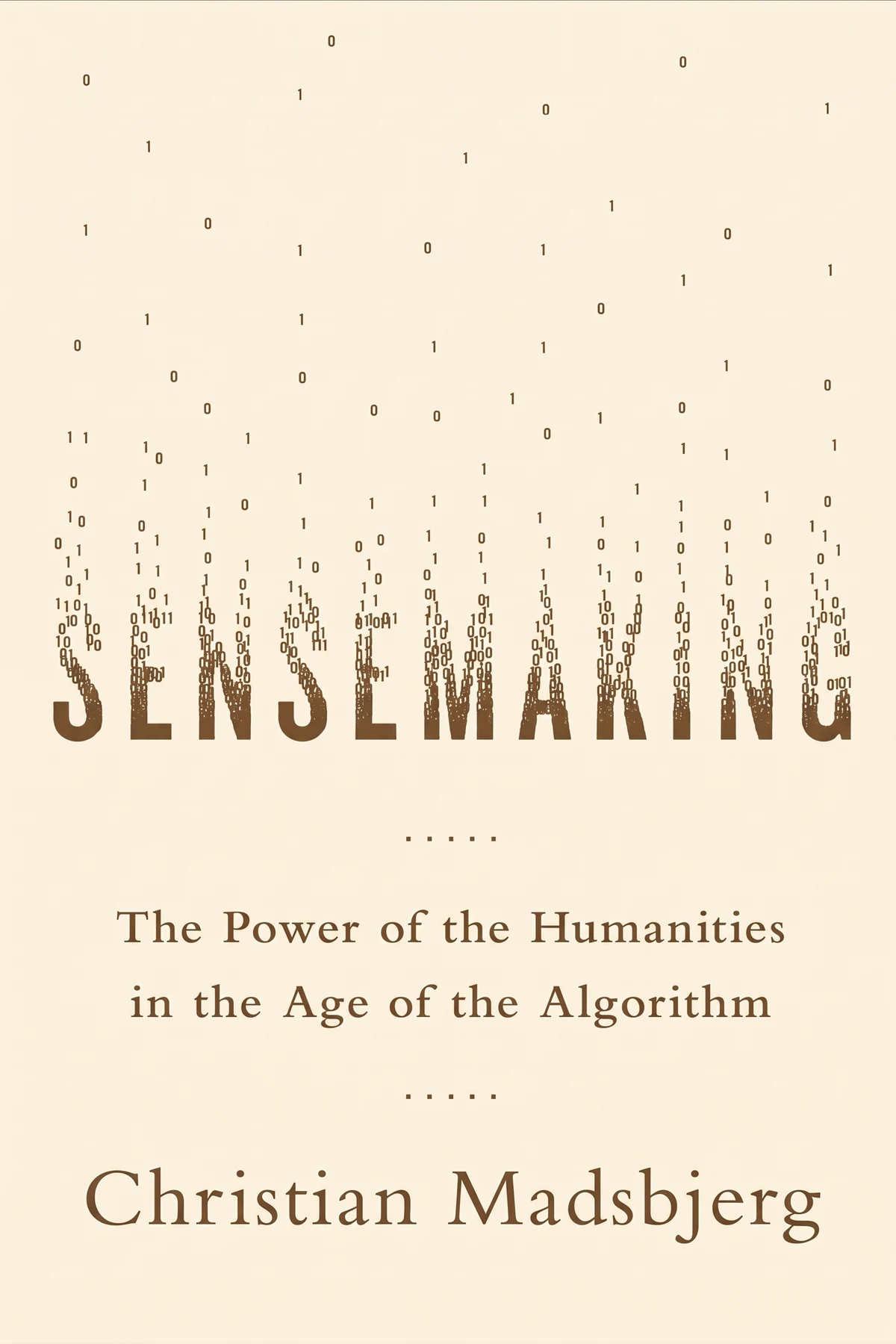
If your arguments keep losing to someone who says the data shows otherwise, more data is not the best reply. In Sensemaking, strategy consultant Christian Madsbjerg argues that numbers can tell you what people do but rarely why, and the why lives in culture. When Google tried to predict flu outbreaks from search trends, it missed a real pandemic and warned of epidemics that never came, partly because people searching for chicken soup looked like patients.
Madsbjerg founded a consultancy staffed by anthropologists, sociologists and philosophers. He calls his alternative sensemaking: building wisdom by studying culture, an approach rooted in the humanities. His claim is that understanding the context people live in gives an edge no algorithm can supply, in business and well beyond it. The cases run from a struggling luxury car brand to a currency bet worth $650 million and a kidnapping in Baghdad. Each one leaves a method for looking past the spreadsheet to the meaning underneath.
2 min 02 sec
A search giant built a tool to spot epidemics before doctors could. It missed a pandemic and raised alarms over soup. The reason says a lot about the limits of the tools many companies now trust most.
1 min 40 sec
Knowing how much milk a household drinks tells you almost nothing about the household. Madsbjerg offers five habits of mind that fill the gap, and most reports you read ignore at least one of them.
1 min 43 sec
A famous car brand knew its buyers’ ages and hometowns, and its sales were still sinking. The answer came from interviewing the people nobody had thought to ask: the buyers’ families, neighbors and friends.
1 min 53 sec
One investor made $650 million in a single day by betting against a central bank. His edge was not a faster model. It was a way of reading the world that most analysts are trained to ignore.
1 min 41 sec
A grocery chain knew exactly what each shopper spent and still could not stop its decline. Changing one question, about something that happens far from the store, turned the business around.
1 min 46 sec
A famous design firm says one process can produce a great toothbrush, tractor or chair, no expertise required. Madsbjerg asked creative people how ideas really arrive, and their answers point somewhere very different.
1 min 49 sec
When an American journalist was kidnapped in Baghdad, the negotiators’ most useful clue was a detail in a video that most viewers would have missed. Spotting it changed what the captors wanted.
1 min 01 sec
Madsbjerg’s book defends an old kind of intelligence for a new age. The algorithm can count the milk, the searches and the spending per visit. It cannot tell a flu patient from someone who fancies chicken soup, or a car buyer from a person expressing who they are at home. That gap is where the humanities earn their place, with their attention to stories, art, philosophy and history, and where people who can read culture find their advantage.
The method is portable. When you need to understand a customer, a colleague or an opponent, widen the circle and talk to the people around them, as Ford did with the families and friends of 60 Lincoln owners. Ask a question one step beyond your own product, the way the grocery chain asked about cooking. And before trusting any report, check whether it explains why people act or only counts what they did.
Naval cadets still learn the stars, even with satellites overhead. The data will always be there. The sense it makes is up to you.
Meetings, strategy decks and public debates now often end with someone saying the data proves otherwise. Christian Madsbjerg thinks this faith in algorithms and automated number crunching is pushing out a kind of thinking we still need, and that schools, companies and society are worse off for it. His alternative is sensemaking: gaining wisdom by studying culture, a practice rooted in the humanities. He sets out five principles. People are shaped by their cultural context. Thick data that explains meaning beats thin counts. Behavior should be studied where it happens. Intuition and immersion produce insight. And the world itself, not only a data feed, should guide you. The cases are concrete. Google's flu tracker missed a pandemic. Ford revived its Lincoln brand by talking to the families and friends of its buyers. George Soros made $650 million in a day, a grocery chain recovered by asking about cooking, and FBI negotiators helped free a kidnapped journalist by reading Arabic culture. Readers come away with a set of questions to ask before trusting any spreadsheet.
Managers and marketers whose dashboards are full but who still cannot explain why customers behave as they do.
Founders and designers who want better ideas than a brainstorming template produces.
Humanities graduates who need a clear case for the value of their way of thinking.
Christian Madsbjerg studied philosophy and political science in Copenhagen and London. In 2007 he founded ReD Associates, a strategy consultancy that employs anthropologists, sociologists, art historians and philosophers, so he has spent years using the humanities to solve business problems. He has written books on social theory and discourse analysis, and he also wrote The Moment of Clarity, published by Harvard Business Review Press.

Listeners describe the book as an enjoyable read. Opinions on its significance are varied, though one listener emphasizes the relevance of the topics covered. Comments on the discussion of intelligence are also divided, with one listener valuing the book's comprehensive perspective on the subject.
Wow, this is exactly the wake-up call our data-obsessed culture needs right now. Madsbjerg does a phenomenal job of explaining why 'thick data'—the deep, cultural context of our lives—cannot be replaced by even the most sophisticated algorithms. This isn't just a book for business people; it's a book for anyone who feels that the world has become too clinical and math-driven. I loved the way he wove together philosophy, history, and real-world case studies to show that human intuition is still our most powerful tool. Some might find his critique of Silicon Valley harsh, but I found it refreshing. It's a bold, timely, and deeply intelligent piece of writing that I’ll be thinking about for a long time.
Show moreThe truth is that we are losing our ability to think critically because we trust spreadsheets more than our own eyes. Madsbjerg argues that we need to return to the 'human factor,' and he does so with incredible passion. This book helped me realize that being a good leader isn't just about being right on the numbers; it's about being right on the culture. The way he discusses the 'pendulum shifts' of our age is fascinating. It’s rare to find a business book that references Heidegger and Procter & Gamble in the same breath, but it works. This is an imperative read for anyone who wants to stay relevant in a world that is increasingly automated and, frankly, a bit soulless.
Show moreIn my experience, the best insights come from the edges of a problem, not the center of a data set. Christian Madsbjerg has written a masterpiece that validates this 'old-fashioned' way of thinking. Sensemaking isn't just about collecting information; it's about interpreting it through the lens of human experience. I found the stories, from the vineyard to the hospital, to be incredibly evocative. They illustrate his points far better than a graph ever could. While the author is certainly opinionated, his passion for the humanities is contagious. This book gave me a new vocabulary for things I’ve felt but couldn't quite name. It's a brilliant, challenging, and ultimately hopeful look at what makes us uniquely human.
Show morePicked this up on a recommendation from a colleague who said I needed more 'context' in my coding. As a software engineer, I found the 'Silicon Valley is a State of Mind' chapter to be particularly biting but strangely necessary. We do tend to get caught up in the 'frictionless' dream without considering the messy reality of human culture. Madsbjerg’s critique of how we prioritize efficiency over meaning really hit home for me. While I didn't agree with his total dismissal of algorithmic progress, his focus on 'sensemaking' as a competitive advantage is a perspective I hadn't considered. It’s not a perfect book, and some of the examples are a bit flowery, but it’s an important perspective for anyone in tech.
Show moreFinally got around to reading this, and I have to say, the concept of sensemaking is an essential framework for any modern leader. In a world where we are drowning in numbers, Madsbjerg reminds us that the 'North Star' isn't a GPS coordinate—it's a deep understanding of human experience. I found the section on how successful CEOs often have liberal arts backgrounds to be very validating. There are definitely moments where the writing gets a bit too academic and 'high-brow,' but the overall message is powerful. It challenges the 'assembly of facts' mindset that dominates corporate life. If you can ignore the slightly salesy vibe of the early chapters, there’s a lot of value here for strategic thinkers.
Show moreTo be fair, I went into this expecting a dry business text but was pleasantly surprised by the philosophical depth. The book explores how we can use the humanities to gain a competitive edge, which is a refreshing take compared to the usual 'learn to code' mantra. I especially liked the five principles of sensemaking, particularly the idea of the 'Savannah' versus the 'Zoo.' It’s a solid reminder that human behavior doesn't happen in a vacuum or a lab. The author’s writing style is a bit dense in the middle, and he certainly likes to hear himself talk, but the intelligence of the work is undeniable. It’s a holistic view of intelligence that we desperately need right now.
Show moreEver wonder why big data fails to predict the 'why' behind human behavior? This book attempts to answer that by championing the humanities, which is a noble goal in our current tech-obsessed climate. However, the execution is quite uneven. One minute he’s making a great point about the 'Savannah' vs the 'Zoo,' and the next he’s launching a bizarre attack on Design Thinking that feels more like a professional grudge than a critique. Look, the message that there is more to algorithms than math is compelling, and I agree with the core sentiment. But the book is far too long for the amount of unique information it provides. It’s a decent read if you have the patience, but it could have been a blog post.
Show moreMadsbjerg makes a compelling, if slightly repetitive, argument that our obsession with STEM is blinding us to cultural nuances. As a social scientist, I appreciate the call to return to critical thinking and 'thick' description. That said, the tone can be quite pretentious at times. He sets up a lot of strawman arguments against 'big data' that most serious analysts already know how to avoid. To be fair, he does offer some interesting insights into how leaders can use phenomenology to better understand their customers. It’s a good read for people who are purely data-driven and need a nudge toward the human side of things. Just be prepared for some heavy-handed self-promotion along the way.
Show moreAfter hearing so much hype about the 'human factor' in business, I found this to be more of a pitch for the author's consulting firm than an actual methodology. Madsbjerg argues for 'thick data' over 'thin data,' but his examples are often confusing and seemingly contradictory. For instance, the story about Nicole Pollientier and her brain injury felt like an emotional play that lacked a clear connection to the business thesis he was trying to build. I appreciate the idea that culture matters, but the way he presents it is cluttered with jargon. The book repeats the same core message over and over: context is king. I got that in the first ten pages. The rest felt like a confusing attempt to reignite his love for poetry through business consulting.
Show moreThis book is a massive letdown for anyone expecting a rigorous defense of the humanities. Instead of a deep dive into the human mind, Madsbjerg delivers what feels like a 200-page brochure for his consulting firm. He drops big names like Heidegger and Wittgenstein to sound sophisticated, but the actual substance is incredibly thin. Frankly, the author’s arrogance regarding quantitative fields is exhausting, especially since he doesn't seem to understand what statisticians actually do. He relies on anecdotes that don't prove his points, like his weirdly confident take on wine experts that has been debunked by real data. If you want to understand the limits of algorithms, read Kahneman instead. Don’t waste your money on this self-promoting fluff.
Show moreMadsbjerg argues that algorithms and statistics can show what people do but not why they do it. The why lives in culture, so he proposes sensemaking: gaining wisdom by studying cultural context, an approach rooted in the humanities. He backs it with cases such as Google Flu Trends missing the 2009 H1N1 pandemic and Ford reviving its Lincoln brand through deep research into buyers’ social lives.
Thick data tells you what matters to people within a culture, with the context that gives facts their meaning. Madsbjerg contrasts it with thin data, such as a figure on how much milk US households drink. Thick data would explain what milk means in those homes. He says investor George Soros drew on this kind of data, from experiences, newspaper articles and conversations, when he bet in 1992 that the Bank of England would devalue the pound, a bet that earned him $650 million in a single day.
Madsbjerg lists five. People are shaped by their cultural context as well as their personality. Look for thick data that reveals meaning. Study behavior inside the social settings where it happens. Accept immersion, intuition and hunches as sources of insight alongside logic. And take your bearings from the world itself, like a navigator reading the stars, rather than from data alone.
Start by widening your view of the customer. Ford interviewed the spouses, siblings, neighbors and friends of 60 Lincoln owners and learned that luxury mattered more than technical specifications. Leave the office and watch people in their own settings. Reframe your questions one step beyond your product, as a grocery chain did when it asked customers how they experienced cooking.
It suits managers, marketers, founders and designers who rely on data but feel it misses something about the people they serve. It also helps negotiators, through the case of FBI agent Chris Voss and the release of journalist Jill Carroll, and humanities graduates who want a clear argument for why reading culture and context is a practical business skill.
Deborah Gruenfeld

Mike Michalowicz



Hamilton Helmer


Margaret Heffernan



AUDIO SUMMARY AVAILABLE
Get the key ideas from Sensemaking by Christian Madsbjerg, plus 5,000+ more nonfiction titles.









