

14 min 54 sec
Available in: English
Sell Like A Spy: The Art of Persuasion from the World of Espionage
Shows how the trust-building methods of intelligence officers, from radical empathy and subtle questioning to reading a room and calming conflict, can help salespeople win over wary clients and keep them for years.
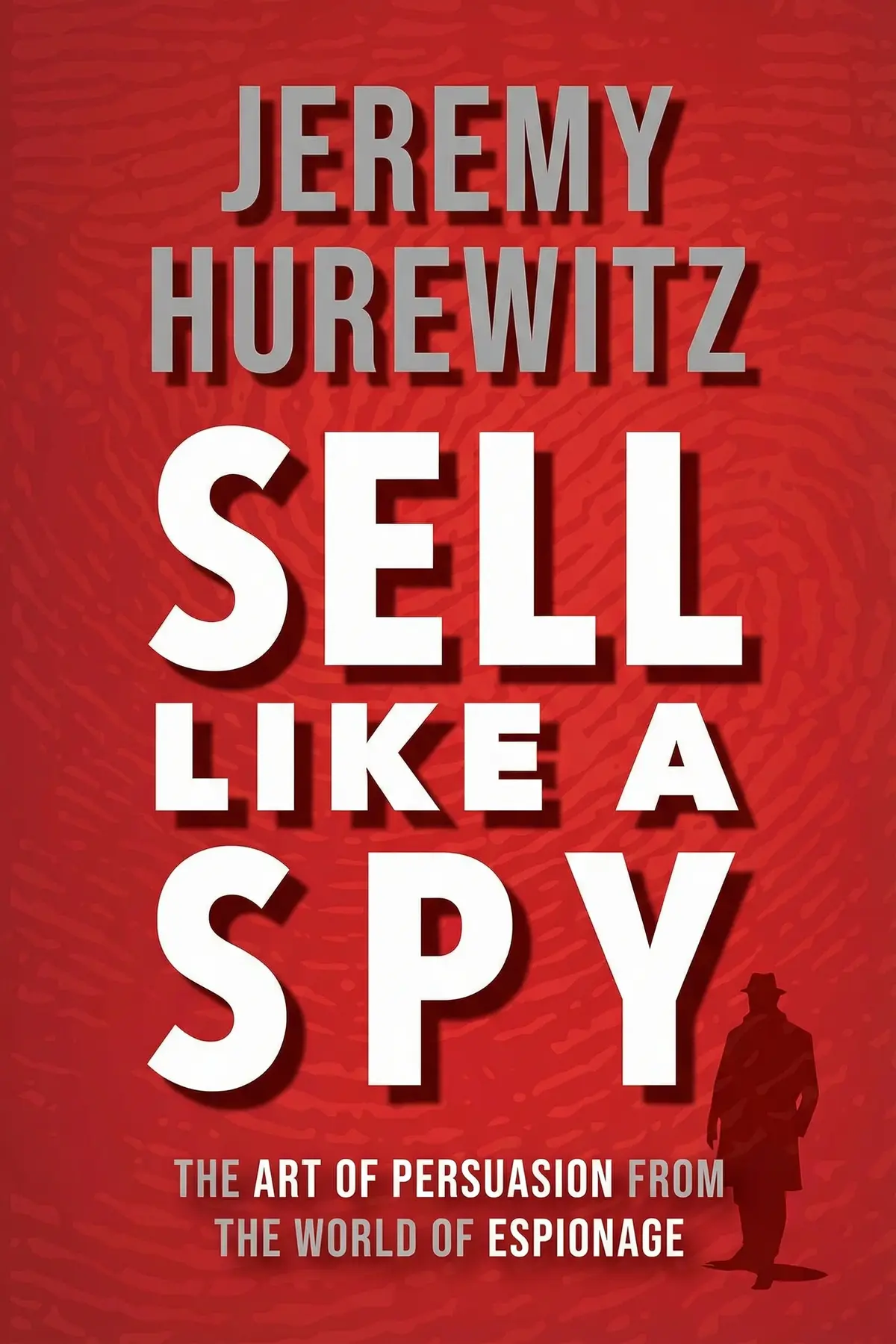
Table of Content
1. Introduction
1 min 10 sec
If winning clients feels like pushing people toward a yes they resist, the professionals who persuade for a living under real danger do something else entirely. In Sell Like A Spy, Jeremy Hurewitz, who has spent years in corporate security working beside former intelligence officers, argues that spies succeed through empathy and patient relationship-building, not gadgets or charm. Real case officers are often deliberately ordinary-looking, many are introverts, and they rarely pressure anyone, because a recruit who is forced resents the officer and looks for a way out.
Salespeople, Hurewitz says, live by the same rule. His case is that the trust-building craft of espionage gives any seller a way to turn wary prospects into lasting allies. What follows is a working kit: finding common ground with someone you dislike, learning what a client will not say outright, reading who really decides in a meeting, cooling down an angry counterpart, and turning your own hobbies into the reason people remember you.
2. Win clients the way spies recruit agents
1 min 41 sec
Intelligence officers persuade strangers to take enormous personal risks, yet threats are almost never their method. What they rely on instead says a lot about why pushy sales tactics so often backfire.
3. Find common ground with your toughest client
1 min 50 sec
A CIA officer had to build trust with a senior official from a brutal regime, a man he personally disliked. The unlikely bridge he found between them points to a habit any seller can practice.
4. Get the answer without asking the question
1 min 49 sec
Ask a client directly whether they plan to renew, and you may get a polite nonanswer. A dinner party trick involving Thai food shows a gentler route to the information you need.
5. Read a meeting before you make the pitch
1 min 55 sec
The person with the biggest title is not always the one who will sign. Spies train themselves to pick up signals most visitors walk straight past, from body language to the furniture.
6. Turn an angry client into a problem solver
1 min 45 sec
FBI hostage negotiators talk people down from the worst moments of their lives. Their approach to a furious counterpart runs against most people’s instincts, and it works on difficult clients and colleagues too.
7. Spot evasive answers and invite an honest one
1 min 46 sec
When money goes missing from an office drawer, the way a colleague answers one simple question can say more than the words themselves. Knowing what to listen for, and what to say next, changes hard conversations.
8. Choose your persona, your people and your passion
1 min 49 sec
Two characters from a television drama about an advertising agency offer a surprisingly useful test before any meeting. Add a spy’s way of entering a crowded room, and networking starts to look very different.
9. Conclusion
1 min 09 sec
The spy in Hurewitz’s book is closer to a patient counselor than to an action hero. What makes the comparison useful for sales is that both jobs depend on the same thing: someone choosing to work with you because they trust you. Pressure does not produce that choice. It comes from noticing what drives a person, finding the human thread even in someone you dislike, and listening well enough to remember what they told you.
The aim, in his telling, is long relationships built on empathy, mutual respect and a real grasp of what the other person needs emotionally. The quick close matters less than the client who stays.
You can begin with your next hard conversation. Look for one genuine point in common and share something of your own. Before the following meeting, decide whether the room needs your Draper or your Sterling. And when someone is angry, let them finish before you say a word in your defense.
The best spies are the people nobody notices walking in and everybody trusts by the time they leave.
About this book
What is this book about?
Many people picture persuasion as pressure: the confident pitch, the hard close, the charming talker who never takes no for an answer. Jeremy Hurewitz, who has worked for years alongside former intelligence officers in corporate security, argues that real spies work very differently, and that salespeople should copy them. Case officers recruit agents who take enormous risks, and they almost never do it through threats. They study what drives a person, find common ground even with people they dislike, draw out information without interrogating, watch every detail of a room and defuse anger before it turns into conflict. Hurewitz translates each of these habits into the world of client meetings, contract renewals, tense negotiations and crowded networking events. Readers get a practical kit drawn from espionage and FBI practice: prompting a correction to learn what a client will not say outright, spotting who really decides in a meeting, calming an angry counterpart, recognizing evasive answers, choosing the right persona for the moment and turning personal hobbies into lasting business bonds.
Book Information
Who it's for
Selling without pushy tactics
Salespeople and account managers who want to win wary clients without pushy tactics.
Quiet at work
Quiet professionals who assume persuasion needs a big personality and want proof it does not.
Facing tense client calls
Founders and consultants facing tense client calls, renewals and crowded networking events.
About the Author
Jeremy Hurewitz
Jeremy Hurewitz spent about a decade as a freelance journalist based in Prague and Shanghai, where he also built and ran Project Syndicate, an international newspaper association. Back in his native New York, he moved into corporate security, working with intelligence officers and other former government officials on background investigations, political risk advice and executive protection. He writes on foreign policy, advises the Joseph Rainey Center on national security policy, and serves as a strategist for the corporate intelligence firm Interfor International, where he leads Interfor Academy.
Ratings & Reviews
Ratings at a glance
What people think
Listeners consider this work highly impactful, with one listener noting how it merges actual intelligence-gathering methods with successful commercial practices. Additionally, the momentum of the book is well-regarded, as listeners describe it as absorbing, specifically when detailing hostage negotiations. Listeners also value the author’s perspective, with one listener highlighting the stimulating historical background and thoroughly documented anecdotes.
Top reviews
Yongyut
What a fascinating ride through the intersection of spycraft and commerce. I was particularly moved by how Hurewitz weaves his personal history—like his father's love of baseball—into a masterclass on building rapport with difficult clients. The book isn't just about 'tricks'; it's about genuine human connection and the art of the long game. The inclusion of hostage negotiation tactics adds a gritty, real-world edge that you won't find in a standard MBA textbook. To be fair, the historical anecdotes alone make it worth the price of admission. It feels like you’re getting a peek behind the curtain of both the CIA and the Fortune 500. Highly recommended for the stories alone.
Show moreDuang
As someone who has spent a decade in corporate security, I found the parallels Hurewitz draws between intelligence and sales to be absolutely striking. He moves beyond the usual 'win-win' cliches to explore the psychology of social influence and covert rapport-building. The focus on patient relationship growth and the strategic use of 'warm introductions' is exactly how high-level deals are actually made in the real world. It’s refreshing to see a book emphasize listening and field-work over aggressive pitching. The sections on how to manage a team and motivate them for a 'mission' were also surprisingly insightful. This is a must-read for anyone who views sales as a complex, strategic endeavor.
Show moreNina
After hearing about Hurewitz’s background in journalism and intelligence, I had high hopes for this book, and it did not disappoint. The way he integrates espionage tactics with business strategy feels authentic rather than gimmicky. I particularly enjoyed the focus on 'disguises' and how to leverage different aspects of your personality to create opportunities in a crowded marketplace. The historical content is thought-provoking, providing a deep context that most sales books ignore entirely. It’s a dense but fast-paced read that rewards careful attention. I’ve already started applying the 'spy-development' techniques to my networking, and the results have been immediate. This is a top-tier business book that stands out from the crowd.
Show moreKiattisak
Jeremy Hurewitz offers a refreshing pivot from typical sales manuals by grounding his advice in the high-stakes world of intelligence gathering. The five-part structure provides a clear roadmap, particularly the sections on social influence and navigating complex corporate environments. I found the 'Key Takeaways' at the end of each chapter incredibly helpful for cementing the tactics. While some of the spy metaphors feel a bit stretched, the core message about strategic empathy is vital. It’s a compelling read for anyone looking to sharpen their persuasion skills without the usual boardroom jargon. The writing is crisp, keeping the pacing brisk even when diving into denser psychological concepts. It's an effective blend of real-world espionage and business logic.
Show moreSam
Picked this up on a whim after seeing the title and I’m glad I did. The way Hurewitz breaks down the art of conversation into strategic, deliberate information gathering is brilliant. It’s not about being a 'salesperson' in the traditional sense, but rather a collector of human intelligence. I loved the section on 'spy-development methods' and how to bring out different sides of your personality to match the moment. Truth is, we all wear disguises in business, and this book gives you permission to use them effectively. The pacing is excellent, moving quickly through historical examples and modern-day applications. It makes the world of sales feel much more adventurous than usual.
Show moreMikael
Ever wonder how a cold call compares to a covert operation in a foreign embassy? Hurewitz bridges that gap by showing how information gathering is the bedrock of any successful transaction. The chapter on espionage and environment was particularly eye-opening, stressing the need to align with a client's specific culture. However, I felt the book occasionally prioritized storytelling over actionable sales steps. The anecdotes are well-sourced and entertaining, but at times, the 'how-to' gets lost in the narrative flair. It’s a solid effort that provides a unique perspective even if it doesn't totally reinvent the wheel of modern commerce. Good, but not quite essential.
Show moreCamila
The chapter on hostage negotiations was undoubtedly the highlight here, offering a raw look at persuasion under pressure. Hurewitz has a gift for storytelling, and his background in corporate security shines through in every chapter. That said, I found some of the sections on body language and tone of voice to be a little basic. It’s stuff most of us have heard before, even if the 'spy' framing makes it sound cooler. I appreciated the 'Key Takeaways' summaries, as they helped distill the main points into something I could actually use. A good book for beginners, but maybe not a revolutionary one for experienced closers looking for new tricks.
Show moreLars
To be fair, the book is quite entertaining but maybe lacks the deep sales methodology I was looking for. The anecdotes about espionage are genuinely gripping, and the pacing keeps you turning the pages. I just didn't find the 'spy' tactics to be significantly different from standard consultative selling techniques. It’s more of a branding exercise than a new philosophy. Still, if you enjoy well-sourced historical content and want a fun way to brush up on your networking skills, it’s worth a look. It is a light, enjoyable read that would make a great gift for a new grad entering the workforce. Just don't expect a technical manual.
Show moreBam
Not what I expected given the hype surrounding the title. Look, the stories are fun and the author clearly has an interesting background, but the actual sales advice felt a bit superficial to me. If you’ve read any standard business development books in the last decade, you won't find many groundbreaking strategies here. It felt more like a collection of 'spy stories' loosely tied to sales concepts rather than a rigorous methodology. I stopped about halfway through because I wasn't learning anything new. It’s a decent choice for an airport read, but seasoned pros might find it lacking in substance and actionable data.
Show moreChatchai
Frankly, I struggled to finish the second half of this one. While the premise is fantastic, the execution felt a bit thin on actual sales mechanics. Most of the 'spy' stuff is just a fancy way of saying you should do your research and listen to people carefully. I was hoping for more technical insights into negotiation or psychological triggers. Instead, I got a lot of stories that, while well-written, didn't really translate into my day-to-day work in a meaningful way. If you want a book of interesting stories about spyware, buy it. If you want to actually improve your closing rate, you might want to look elsewhere.
Show moreQuestions about this book
What is the main idea of Sell Like A Spy?
Jeremy Hurewitz argues that real spies succeed through empathy, listening and relationship-building rather than gadgets or coercion. Case officers recruit agents by understanding what motivates them, because a forced recruit resents the officer and looks for a way out. Salespeople, he says, face the same dynamic, so the craft of espionage, from elicitation to close observation and calm negotiation, can help them turn wary prospects into loyal clients.
What is elicitation and how can salespeople use it?
Elicitation is drawing out information without making a conversation feel like an interrogation. One method plays on people’s urge to correct mistakes: state something you suspect is wrong and let the correction reveal the truth. To learn whether a client will renew, Hurewitz suggests mentioning a rumor about a weak quarter and possible cuts, then offering to help. Many clients will explain where things actually stand.
How do you calm an angry client, according to the book?
Hurewitz borrows from FBI hostage negotiators. Let the person vent without interrupting, which often reduces the anger by itself. Then name the emotion you hear and validate it. Finally, ask what a successful outcome would look like for them. That question turns an opponent into a collaborator and gives them a chance to notice if their demands are unreasonable.
What is the RPM technique in Sell Like A Spy?
RPM is an FBI approach to getting someone to admit a problem: rationalize, project and minimize. In the book’s petty cash example, you acknowledge a colleague’s hard time after a divorce, suggest he probably just wanted to blow off steam on a Friday night, and say that if he admits it you can work it out together. It helps people admit fault without becoming defensive.
Who should read Sell Like A Spy?
It suits salespeople, account managers, consultants and founders who want to persuade without pressure. It is especially encouraging for introverts, since Hurewitz notes that many of the best case officers are quiet and reflective. Anyone who handles tough clients, tense negotiations or networking events will find concrete techniques, from reading an office’s decor to choosing which side of their personality a meeting needs.
Readers also enjoyed






AUDIO SUMMARY AVAILABLE
Listen to Sell Like A Spy in 15 minutes
Get the key ideas from Sell Like A Spy by Jeremy Hurewitz, plus 5,000+ more nonfiction titles.
- 5,000+ titles
- Listen as much as you want
- 7-day free trial
- Cancel anytime









