
14 min 31 sec
Available in: English
 ไทย
EnglishไทยSecondhand Time: The Last of the Soviets
Through interviews gathered between 1991 and 2012, Alexievich shows how ordinary Soviet citizens lived the fall of Communism: as lost faith, exposed violence, sudden wars and a state whose old force never fully went away.
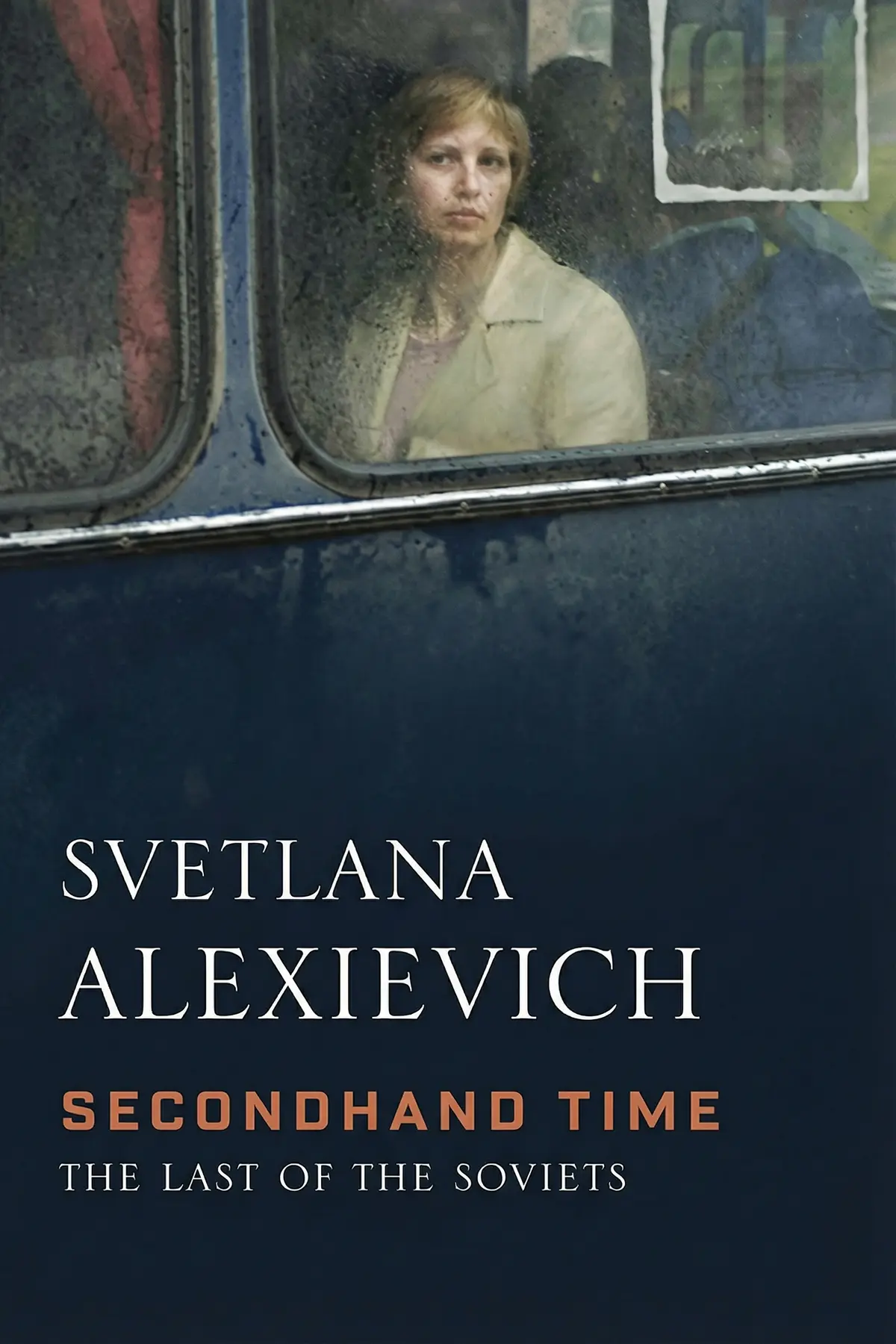
Table of Content
1. Introduction
1 min 03 sec
Outsiders tend to recall the Soviet Union’s collapse as a moment of freedom, yet many who lived through it recall the loss of everything that had given their lives meaning. In Secondhand Time, Nobel laureate Svetlana Alexievich lets those people speak for themselves, through interviews she gathered between 1991 and 2012. A furniture worker found that savings which once bought the finest car in the country would no longer cover a pair of boots. A man tortured in the camps went home and spent holidays drinking vodka with the colleague who had informed on him.
These are voices the history books tend to leave out, and together they make one case. The fall of Communism was a rupture: it stripped away a faith that worked like religion, dragged hidden violence into daylight, and left the old force of the state standing across much of Russia. After hearing them, the news from Russia sounds different, because behind every headline stands someone still grieving, or still afraid.
2. Understand how one failed coup ended an empire
1 min 43 sec
Crowds with barricades faced down tanks in Moscow, and within days a regime that had ruled for generations was finished. The speed of it hides a slower story, and a split in the country nobody resolved.
3. Hear what the loyal and the hopeful each lost
1 min 51 sec
Two friends lived through the same upheaval and drew opposite lessons from it. One sees a country sold to the rich; the other refuses to be ashamed of what she once believed.
4. Learn how the Soviet collapse broke some people
1 min 45 sec
A factory worker in his garden and a celebrated soldier in his office both reached the same terrible decision as the old system collapsed. What they shared says a great deal about what the old system gave people.
5. Grasp how faith outlasted prison and torture
1 min 47 sec
A starved prisoner came home and hung Stalin’s portrait in his living room. A girl beaten in an orphanage joined the young Communists the day she left. Their loyalty is the hardest thing in the book to explain.
6. Learn why everyone in the system became a victim
1 min 39 sec
A mother is ashamed of her son’s job selling plumbing fixtures and has no idea what his earlier government post involved. Her family’s story shows what fear does to the people who use it and the people who suffer it.
7. See how freedom turned neighbors into enemies
1 min 52 sec
Before 1992, nobody in one region of the Soviet Union cared whether the family next door was Armenian or Georgian. Within weeks of the Soviet end, that question decided who lived. Two women describe how fast it happened.
8. Spot the old order inside the new Russia
1 min 43 sec
Lenin still stands in some village squares, and the barracks still run on cruelty. A soldier’s memories and the daily bribes paid on Moscow streets reveal which parts of the Soviet world simply carried on.
9. Conclusion
1 min 08 sec
Secondhand Time adds up to a portrait of people who lost their country without ever leaving it. The believers felt deserted and the reformers felt cheated. Violence that had stayed behind camp walls spilled out into civil wars and the hands of brutal gangsters. And in small villages far from Moscow, life seems to go on as if nothing happened, with Lenin still standing in the square.
The book’s gift is to make that history personal. The next time Russia is in the news, remember that a nation is made of people like Elena, angry at a world ruled by money, and Anna, who will not apologize for having hoped. When a society, a company or a family goes through sudden change, listen for what the people inside it have lost as well as what they have gained, because a lost sense of meaning can wound as deeply as poverty.
Vanya and the man who betrayed him, sharing vodka year after year, may be the truest image of the Soviet legacy. Nobody came out of it clean, and nobody came out of it entirely.
About this book
What is this book about?
To many outsiders, the end of the Soviet Union looks like a clear victory for freedom. To many who lived through it, it felt like the ground giving way. Svetlana Alexievich set out to understand that feeling. She did not write a political history. She collected the personal stories of ordinary people, from interviews conducted between 1991 and 2012. The voices she gathers rarely agree. A secretary mourns the compassion of the old system and despises the new cult of money. Her friend still honors the hopes of perestroika. A factory worker and a decorated soldier take their own lives. Camp survivors stay loyal to Stalin, an executioner sells plumbing fixtures, and refugees flee neighbors who turned killers overnight. Readers come away with a human picture of a historic break. They see why so many Russians felt abandoned or betrayed, how a system built on informants and fear made victims of everyone in it, and why the military and police culture of the Soviet era still shapes Russian life.
Book Information
Who it's for
Keeping up with Russia
Readers who follow Russia in the news and want to understand the people behind the politics.
History students
Students of history who want the fall of the Soviet Union told by those who lived it.
Lived through sudden upheaval
Anyone who has lived through sudden upheaval and wants to understand why change can feel like loss.
About the Author
Svetlana Alexievich
Svetlana Alexievich was born in Ivano-Frankivsk in 1948 and raised in Belarus by two teachers. She trained as a journalist at the University of Minsk and worked as a teacher, journalist and editor. After criticizing the Soviet and later Belarusian governments, she lived for periods in Italy, France, Germany and Sweden. She created her own form of nonfiction, weaving many voices into a portrait of one historical moment, in books such as The Unwomanly Face of War and Voices from Chernobyl. In 2015 she became the first writer from Belarus to win the Nobel Prize in Literature.
Ratings & Reviews
Ratings at a glance
What people think
Listeners describe this work as both gripping and expertly authored, featuring a top-tier collection of first-hand accounts that offer remarkable perspective on life in the Soviet era. The author's technique merges personal interviews with analytical remarks, leaving listeners enthralled by the individual dialogues. Opinions vary on the speed of the narrative, with some considering it poignant while others deem it repetitive, though listeners generally view the material as both staggering and tragic.
Top reviews
Book
This isn't just a history book; it’s an autopsy of a collapsed civilization. Alexievich masterfully captures the voices of 'Homo sovieticus,' those left behind when the USSR vanished overnight. You hear from veterans, dreamers, and Stalinists who still mourn a world that largely abused them. The contrast between the old ideals of spiritual labor and the new 'salami and VCR' capitalism is jarring. It’s a heavy read, filled with suicides and broken lives, but absolutely essential for understanding modern Russia. The way she steps back and lets the people speak makes the tragedy feel incredibly intimate. Sometimes the repetition of misery is hard to stomach, but that's the point. It’s a monument to the suffering that defines the region’s identity.
Show moreEvelyn
Wow, I wasn't prepared for how much this would affect me. This book is a gut-punch of raw human emotion that reveals the internal scars of millions. We often hear about the political shift of 1991, but we rarely hear about the people who felt like their lives were 'second-hand' overnight. These testimonials are shocking, revealing a level of trauma that most Westerners would find impossible to fathom. Truth is, I had to take breaks because the stories of loss and the 'language of suffering' became so heavy. It’s not just about politics; it’s about the very soul of a people who were taught to value the collective over themselves. Alexievich has created something truly monumental here. If you want to understand why nostalgia for the old regime persists, you have to read this.
Show moreChai
After hearing so much about the Nobel win, I finally dived into this polyphonic masterpiece. It serves as a perfect companion to more traditional histories of Russia by focusing on 'history from below.' Alexievich avoids personal judgment, allowing the executioners and victims to share the same space on the page. The result is a jarring, dissonant look at the transition from Gorbachev’s promises to Putin’s stability. Look, it’s not an easy read, and the stories of suicide and poverty are frequent. Yet, there is a strange beauty in how these people discuss their lives in kitchens, clinging to books and old memories. It demystifies the Russian soul by showing it is forged in an endless cycle of utopian dreams and violent realities. Truly a brilliant piece of investigative journalism.
Show moreRome
In my experience, very few authors can capture the 'mysterious Russian soul' without falling into clichés, but Alexievich does it. By documenting the 'human flotsam' of the Soviet experiment, she reveals a deep-seated identity built on sacrifice. These people don't just talk; they confess, pouring out their anger toward a world that replaced their ideals with 'Prince's salami' and gangster capitalism. The contrast between the generations is particularly harrowing to witness. You have parents who lived for the state and children who only care about the next paycheck. It’s a brilliant exploration of how the 'Homo sovieticus' mindset persists even in a world of smartphones and global markets. The book is long, and the tone is relentlessly grim, but it offers a level of empathy you won't find anywhere else.
Show moreFang
As someone who grew up hearing hushed kitchen conversations about the party, this felt like reading a family secret. Alexievich captures that specific brand of Soviet nostalgia that seems so confusing to outsiders. It’s not that people miss the bread lines; they miss the feeling of belonging to a 'great nation' with high ideals. The book is a staggering achievement in empathy, giving a platform to those who felt silenced by the rush toward the future. Each interview is a miniature tragedy, a story of a life that no longer fits into the current category of 'haves' and 'have-nots.' Honestly, it’s the most important book on Russia I’ve read in years. It’s a monument to the courage of ordinary people who had to reinvent themselves in the ruins of a fallen empire.
Show moreSudarat
Not what I expected from a non-fiction book at all. Instead of a linear timeline, you get a flood of human experience that feels both chaotic and deeply structured. It’s a 'history of the soul,' as the author puts it, and that’s the most accurate description possible. You see the heartbreak of the 1990s, where freedom felt like a betrayal to those who had sacrificed everything for the Motherland. The accounts of the August Coup and the subsequent disillusionment are particularly gripping. I did find the repetition of certain themes a bit much by the end, but the emotional weight remains consistent throughout. It’s a haunting, essential read for anyone trying to understand the psychological landscape of Eastern Europe today. Alexievich has documented a world that is rapidly disappearing, yet its ghosts remain everywhere.
Show morePhichai
Ever wonder what happened to the 'old breed' of people after the Soviet Union imploded? This book offers a visceral, polyphonic answer that moves far beyond the dates and decrees found in typical history texts. I was fascinated by the oral history format, where Alexievich pieces together interviews into a haunting collage of post-Soviet life. Frankly, the sheer variety of perspectives—from the elite to the factory worker—paints a picture of a nation in a permanent state of mourning. One moment you're reading about the deep love for Pushkin, and the next, you're witnessing the brutal reality of the Chechen wars. It’s heartbreaking to see how freedom was often traded for a 'predatory capitalism' that many weren't prepared to navigate. While the pacing slows down in the middle, the individual stories are too compelling to ignore.
Show moreFrida
Picked this up on a whim and ended up staying up late reading about people crying over salami and old books. It’s a strange feeling to realize how much 'stuff' defines our sense of freedom. The interviews highlight a generation that felt more at home in the darkness of the Gulag era than in the bright lights of modern malls. Not gonna lie, some of the stories are genuinely terrifying, especially those involving the ethnic conflicts that sparked after the collapse. You see how quickly neighbors turned on each other when the old system fell apart. The writing style is immersive, making you feel like you're sitting at the table with these people, sharing their tea and their grief. It’s a powerful reminder that history isn't just made by leaders, but by the people who survive them.
Show morePaiboon
The transition from the romanticism of the revolution to the 'wild capitalism' of the 90s is captured perfectly through these snippets. Personally, I found the sections on the 'kitchen culture' of the Soviets to be the most enlightening part of the book. It’s where the real revolution happened—in whispers and shared volumes of banned poetry. But the aftermath is what stings. You see the humiliation of engineers selling trinkets on the street just to buy bread. This isn't a dry academic study; it's a collection of screams and whispers from a lost world. Some might find the lack of authorial commentary frustrating, but the voices are strong enough to carry the narrative on their own. It’s a shocking, beautiful, and deeply necessary account of a century of trauma.
Show moreChamlong
To be fair, the sheer volume of voices here can get overwhelming after the first few hundred pages. While the oral history approach is unique and provides incredible insight, it can feel a bit tedious and repetitive at times. Each person shares a similar trajectory of hope followed by crushing disappointment in the new capitalist reality. However, the specific details—like the woman reading Solzhenitsyn while her baby is sick—are incredibly moving and keep you grounded. It’s a fascinating look at how a superpower disintegrates, not just on a map, but in the minds of its citizens. I wish there was a bit more connective tissue from the author to guide the reader through the decades. Still, the raw honesty of the interviews makes it a worthwhile, if exhausting, read for history buffs.
Show moreQuestions about this book
What is Secondhand Time by Svetlana Alexievich about?
It is a portrait of the end of the Soviet Union told through ordinary people’s voices, drawn from interviews conducted between 1991 and 2012. Alexievich records how former citizens felt as Communism collapsed and capitalism arrived: believers who felt abandoned, reformers who felt betrayed, camp survivors who stayed loyal, refugees from new ethnic wars, and people for whom the military and police culture of the old system never went away.
Why did some people mourn the fall of the Soviet Union?
In the book’s accounts, Soviet ideology worked almost like a religion, giving people purpose and making hardship feel worthwhile. When it vanished, many lost that meaning along with their savings. A furniture worker found his life savings, once enough for a Volga car, would not buy boots. Others, like the secretary Elena Yurievna, missed the old compassion and fellowship and disliked a new world ruled by money.
Why did gulag survivors stay loyal to Communism?
The book shows that many survivors returned even more devoted. Elena’s father, punished as a traitor and sent to build a railway at Vorkuta, still kept Stalin’s portrait at home. Vasily Petrovich, tortured after his 1940 arrest, remained proud that Stalin turned a backward country into a superpower and defeated the Nazis. For them, the faith gave meaning even to the suffering it caused.
What does Secondhand Time say about Russia today?
It suggests that much of the old order survived. Capitalism barely reached some villages, where Lenin statues still stand, and the military remains a constant force. A former recruit describes brutal training, Russian soldiers in Chechnya both destroy and rebuild, Chechens in Moscow bribe police to stay safe, and people are still arrested without due process and questioned with methods from Stalin’s era.
Who should read Secondhand Time?
It suits readers who want a human view of Russian history instead of a political timeline, students of the Soviet era, and anyone curious why so many Russians felt betrayed by the 1990s. It also speaks to people who have lived through sudden change and want to understand why the loss of a shared purpose can hurt as much as material hardship.
Readers also enjoyed

A Long Way Gone: Memoirs of a Boy Soldier
Ishmael Beah



A Promised Land
Barack Obama


A River in Darkness: One Man’s Escape from North Korea
Masaji Ishikawa

A Splendid Exchange: How Trade Shaped the World
William J. Bernstein

A Theory of Justice
John Rawls

A Spy Among Friends: Philby and the Great Betrayal
Ben Macintyre
AUDIO SUMMARY AVAILABLE
Listen to Secondhand Time in 15 minutes
Get the key ideas from Secondhand Time by Svetlana Alexievich, plus 5,000+ more nonfiction titles.
- 5,000+ titles
- Listen as much as you want
- 7-day free trial
- Cancel anytime









