

15 min 48 sec
Available in: English
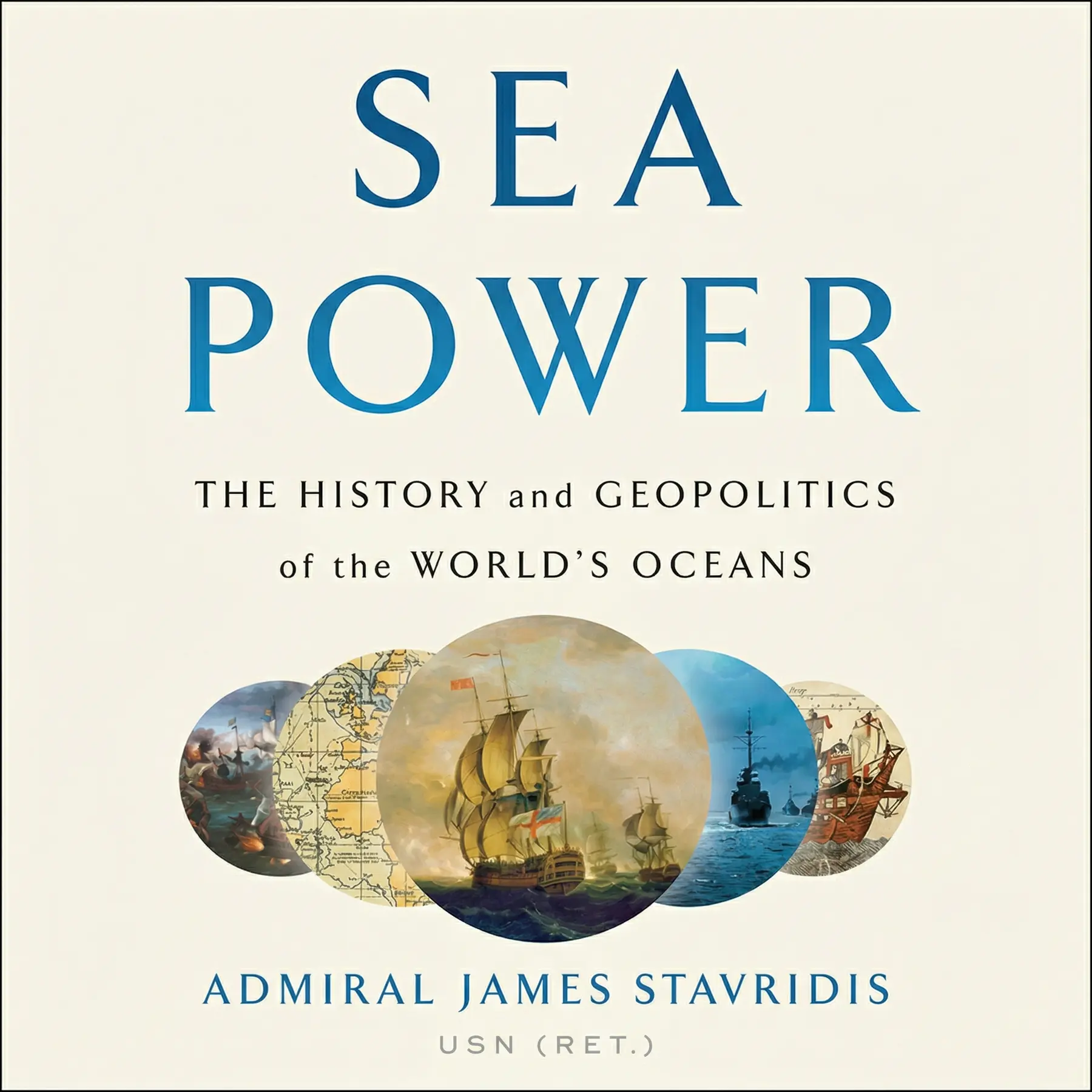
Sea Power: The History and Geopolitics of the World’s Oceans
A retired admiral's tour of the world's oceans. It shows how control of the seas shaped history and why arms races, Arctic melting, piracy and overfishing now call for action.
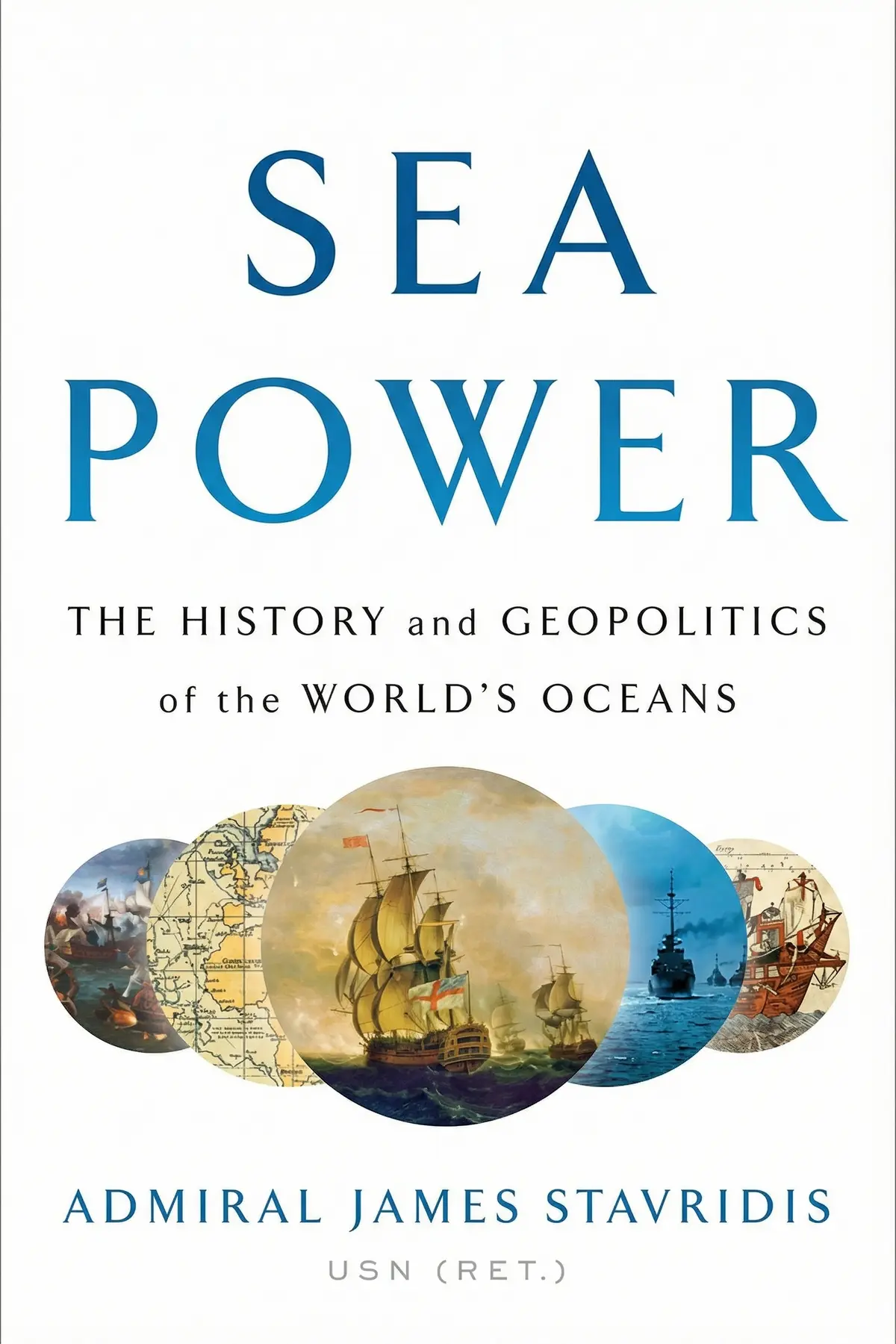
Table of Content
1. Introduction
59 sec
Headlines about a seized tanker, a disputed island or a new Arctic shipping lane are hard to judge without a frame. In Sea Power, retired four-star admiral James Stavridis supplies one, starting with a fact of scale: the Pacific alone is bigger than all of Earth’s land combined. Across history, he argues, whoever mastered such waters shaped the fate of nations.
Stavridis served 37 years in the US Navy and led NATO’s forces in Europe, and he tells his story ocean by ocean. Sea power, in his account, has always rested on geography, money, ships and friends, and nations that let any of them slip paid for it. Today’s dangers, from Pacific arms races to emptied fishing grounds, follow the same rules. By the end, scattered news from straits, islands and melting ice fits onto one map, along with his plan for what should happen next.
2. Tell explorers from colonizers on the old maps
1 min 48 sec
A storm-blown Viking and a fleet of Portuguese ships both reached new shores, yet they left very different legacies. The difference lies in why they sailed, and it still shapes how to judge any new trade route.
3. The checklist that kept Britain on top at sea
1 min 46 sec
For centuries one island beat Spain, the Dutch and France at sea, then lost a famous battle to rebels who had no fleet at all. The reason for both says a lot about where national strength comes from.
4. Read a sea map like a strategist
1 min 44 sec
A sea that looks small on the map gave birth to naval strategy, and a canal in Egypt let one nation call an entire ocean its lake. Both stories hinge on the same feature of geography.
5. Learn what Pacific history says about defense spending
1 min 53 sec
Pearl Harbor feels like a one-time shock, but Japan had used the same move before. Spending figures from around the Pacific suggest that some governments are forgetting the old lesson while others are acting on it.
6. Calm the hotspots where half the trade sails
1 min 34 sec
Half the world’s shipping crosses an ocean ringed by nuclear rivals and religious divides, while Russia and ISIS test the Mediterranean. The admiral’s prescription is not the one many people expect from a military man.
7. Fix piracy where it starts: on land
1 min 46 sec
A pirate once became governor of Jamaica, and pirates still ambush ships in the Gulf of Guinea today. Armed guards help, yet the admiral argues the real fix sits somewhere no warship can reach.
8. See how the melting Arctic opens a new contest
1 min 36 sec
The North Pole is warming far faster than the rest of the planet, and new sea lanes are appearing. One country has ten times the ships needed to use them, and it is not the United States.
9. Spot the ocean damage that never makes headlines
1 min 32 sec
Oil spills make headlines and spark outrage, yet the admiral points to a different and far larger threat to the sea. It happens every single day, and almost no one sees it.
10. Conclusion
1 min 10 sec
In Stavridis’s telling, the oceans explain much of history. They show why a small island built the world’s finest navy and why a frozen purchase once called a folly now gives the United States a voice in the Arctic. In every sea, power went to nations that joined good geography to steady money, trained crews and loyal friends. It drained from those who let a gap open, as the Ottomans found at Lepanto.
His warning is that the gaps are opening again: in defense budgets while Pacific rivals arm, in icebreakers while Russia builds, and in the water itself, stripped of fish and fed with poison.
So read the news the way an admiral would. When a headline names a strait or an island, look for what it opens and who wants it. When trouble at sea keeps returning, from piracy to smuggling, look for its roots on shore. And when one disaster fills the screens, remember the steady harm that never does.
Seward’s critics saw only ice. The sea has always rewarded the nations that looked further out.
About this book
What is this book about?
Throughout history, control of the oceans has helped decide who holds power on land. In Sea Power, retired admiral James Stavridis tells that story one body of water at a time: the Pacific, the Atlantic, the Indian Ocean, the Mediterranean, the Caribbean and the warming Arctic. Along the way come Viking storms, Portuguese discoverers, Captain Cook's charts, Britain's long naval supremacy, the Battle of Lepanto and the island-by-island war against Japan. Stavridis uses that history to explain what makes a nation strong at sea: geography, sensible trade and foreign policy, money for ships and crews, and reliable allies. He then turns to the present and gives a career officer's view of where the next trouble lies. His list runs from Pacific arms spending and Russia's moves in Crimea to piracy in the Gulf of Guinea, the icebreaker gap in the Arctic and fish stocks cut in half since the 1970s. Readers get a clear map of today's ocean flashpoints and the specific steps he believes the United States and its partners should take.
Book Information
Who it's for
Following world news
Readers of world news who want to understand why straits, islands and sea lanes keep causing crises.
Fans of maritime history
History fans drawn to explorers, empires and great naval battles.
Professionals weighing ocean risks
Professionals in trade, shipping or policy who want a strategist's view of ocean risks, from piracy to the Arctic.
About the Author
James Stavridis
James Stavridis is a retired four-star admiral who served 37 years in the US Navy after graduating from the US Naval Academy in 1976. He led US Southern Command and later US European Command, serving at the same time as NATO's Supreme Allied Commander Europe. From 2013 to 2018 he was dean of the Fletcher School at Tufts University, where he had earned his PhD. His other books include the memoir The Accidental Admiral and the novel 2034, written with Elliot Ackerman.
Ratings & Reviews
Ratings at a glance
What people think
Listeners describe this work as an educational and polished read that offers a concise summary of global history alongside an explanation of naval influence. They value its accessible nature and captivating storytelling, with one listener characterizing the experience as an intellectual voyage into global maritime affairs. The text is praised for its strategic depth and geopolitical perspectives, although views regarding the geopolitical commentary vary.
Top reviews
Nang
James Stavridis brings an incredible depth of real-world experience to a topic that usually feels abstract. Having served as the Supreme Allied Commander of NATO, his perspective on global flashpoints—especially the South China Sea—is invaluable. This isn't just a history lesson; it's a warning about the future. He explains how overfishing, climate change, and rogue states are creating a new era of maritime instability. I loved the "sea stories" interspersed throughout the text. They humanize the command decisions and make the grand strategy feel much more grounded. It’s a masterclass in how oceans shape human destiny.
Show moreRin
Finally got around to reading this, and I’m genuinely impressed by how Stavridis weaves together maritime history and future threats. Most books on geopolitics focus entirely on land borders, so looking at the world from the perspective of the water was eye-opening. The discussion about the shift from the Atlantic to the Pacific as the center of global power was particularly insightful. He also gives some great book recommendations at the end of each chapter, which I really appreciated. It’s an intellectual voyage that leaves you with a much better understanding of why control of the seas remains the ultimate strategic prize.
Show moreSawit
As someone who prefers personal narratives over dry textbooks, I found Stavridis’ approach quite refreshing. He weaves together his own experiences as an Admiral with the broader history of the seven seas. It’s not just about ships; it’s about how the physical geography of the Atlantic or the Indian Ocean dictates the fate of nations. Truth is, the book is a bit light on the "strategy" side if you're an expert, but for a casual reader, it's a fantastic primer. I particularly enjoyed the sections on the Mediterranean and how its legacy of conflict still informs modern politics. A solid, engaging read.
Show moreSudarat
Ever wonder why the South China Sea is constantly in the news? This book breaks it down in a way that’s easy to digest without being patronizing. Stavridis takes us on a literal voyage across the globe, chapter by chapter. While he is definitely biased toward American interests, he’s transparent about it, which I appreciate. The mix of memoir and policy advice makes it feel like you’re sitting down for a coffee with an old sailor who happens to know everything about global trade routes. It’s a highly informative overview for anyone interested in the literal flow of world power.
Show morePakpoom
The chapter on the Arctic alone makes this worth the price of admission. Stavridis does a great job explaining how melting ice is opening up new strategic corridors that could lead to future conflict. He isn't just focused on war, though; he spends a good amount of time discussing the ecological health of the oceans. Not gonna lie, I expected a bit more fire and brimstone from an Admiral, but his tone is remarkably measured and even-handed. Some might find his policy suggestions a bit idealistic, but his passion for the sea is infectious. It’s a well-rounded look at our blue planet.
Show morePia
This book provides a much-needed perspective for anyone trying to understand global politics through a different lens. Instead of focusing on capital cities, Stavridis focuses on the choke points and trade routes that keep the world running. The writing is clear and accessible, making complex naval concepts easy to grasp. I did find the US-centric focus a bit overwhelming at times—it’s clear who his primary audience is—but the insights into how the Navy views global stability are fascinating. It’s a readable, informative guide that manages to be both a history lesson and a call to action.
Show moreAndrew
The core ideas here are solid, but the writing style felt a bit unpolished in places. I kept noticing the phrase "to say the least" popping up way too often, which became a distracting tick after a while. Geographically, it’s a decent tour of the world’s waterways, though I was disappointed by the lack of attention given to the Baltic. It feels like the author is trying to stay so balanced that he ends up sounding a bit spineless on the more controversial policy issues. It’s a helpful summary of US naval thinking, but it lacks the intellectual meat I was expecting from a former Supreme Allied Commander.
Show moreLook
I picked this up hoping for a deep dive into naval strategy, but it’s more of a surface-level skim across the world's oceans. The history segments are a bit cliched and don’t offer much that a history buff wouldn’t already know. I gotta say, the personal anecdotes were the highlight, even if they sometimes felt a bit "phoned in" compared to the heavier geopolitical sections. It’s a good book for a long flight where you want something educational but not overly taxing. Not exactly the definitive text on sea power, but it serves its purpose as a general introduction for those who aren't looking for academic rigor.
Show moreTan
Frankly, the book feels like a collection of essays that were stitched together without much consideration for flow. While the individual chapters on the Pacific and Indian oceans are interesting, the overall narrative feels a bit disjointed. I also found the "dream board" approach to policy a bit unrealistic; he suggests a lot of solutions that would require infinite resources and perfect global cooperation. It’s a bit too optimistic for my taste. However, for those looking for a lighter history text that covers the basics of naval influence, this fits the bill. Just don't expect a rigorous academic study of geostrategy.
Show moreAroon
Let’s be real, this is essentially a US Navy recruitment pamphlet masquerading as a serious history book. I was assigned this for a seminar and, like that one student at Bocconi, I’m now dreading the long essay I have to write about it. The history is incredibly shallow—almost like he’s reading off a Wikipedia summary of each ocean before jumping into why the American fleet needs more funding. To be fair, Stavridis seems like a nice enough guy, but his writing is repetitive and lacks any real punch. If you want a deep dive into naval strategy, look elsewhere. This is strictly for beginners.
Show moreQuestions about this book
What is Sea Power by James Stavridis about?
It is a history of the world’s oceans told by a retired four-star admiral, moving from the Pacific and Atlantic to the Indian Ocean, the Mediterranean, the Caribbean and the Arctic. Stavridis shows how control of each sea shaped empires, from Britain’s long supremacy to the Ottoman defeat at Lepanto. He then uses that history to weigh present dangers such as Pacific arms spending, Russian moves in the Black Sea, piracy and overfishing.
What makes a nation a sea power according to Stavridis?
Geography comes first: plenty of coastline and easy access to open water. Then a country needs policies that let the sea bring prosperity, such as helpful trade rules and foreign relations, plus money for strong ships and well-trained crews. Every great naval power also had allies and friendly ports. Stavridis holds up Britain as the best example, and it is one reason he argues the United States should keep NATO.
Why does Stavridis think the Arctic matters?
For every degree the Earth warms, the North Pole warms by five, and melting ice is opening new sea routes near oil, gas, metals and fishing grounds. Russia is moving to dominate the region and has more than 30 icebreakers, while the United States has three. Thanks to the 1867 purchase of Alaska, the United States has a stake, and Stavridis wants more icebreakers, new ports and a search-and-rescue base.
What does Sea Power say about pollution and overfishing?
Stavridis argues that the steady daily dumping of toxins is a bigger problem than famous spills like the Exxon Valdez or Deepwater Horizon. Experts suggest companies pour around 500 million gallons of poison into the oceans each year. He also cites figures showing 90 percent of fish stocks exploited and overfished, with stocks at half their 1970s level, and he calls for international cooperation and a stronger treaty on maritime law.
Who should read Sea Power?
It suits readers who follow world news and want to understand why straits, islands and shipping lanes keep appearing in it. History readers who enjoy explorers and naval battles will find plenty too, as will anyone curious about how climate change, piracy and great-power rivalry meet at sea. The book is written from an American point of view, with concrete proposals for US policy in each ocean.
Readers also enjoyed

A Long Way Gone: Memoirs of a Boy Soldier
Ishmael Beah



A Promised Land
Barack Obama


A River in Darkness: One Man’s Escape from North Korea
Masaji Ishikawa

A Splendid Exchange: How Trade Shaped the World
William J. Bernstein

A Theory of Justice
John Rawls

A Spy Among Friends: Philby and the Great Betrayal
Ben Macintyre
AUDIO SUMMARY AVAILABLE
Listen to Sea Power in 15 minutes
Get the key ideas from Sea Power by James Stavridis, plus 5,000+ more nonfiction titles.
- 5,000+ titles
- Listen as much as you want
- 7-day free trial
- Cancel anytime









