
14 min 23 sec
Available in: English
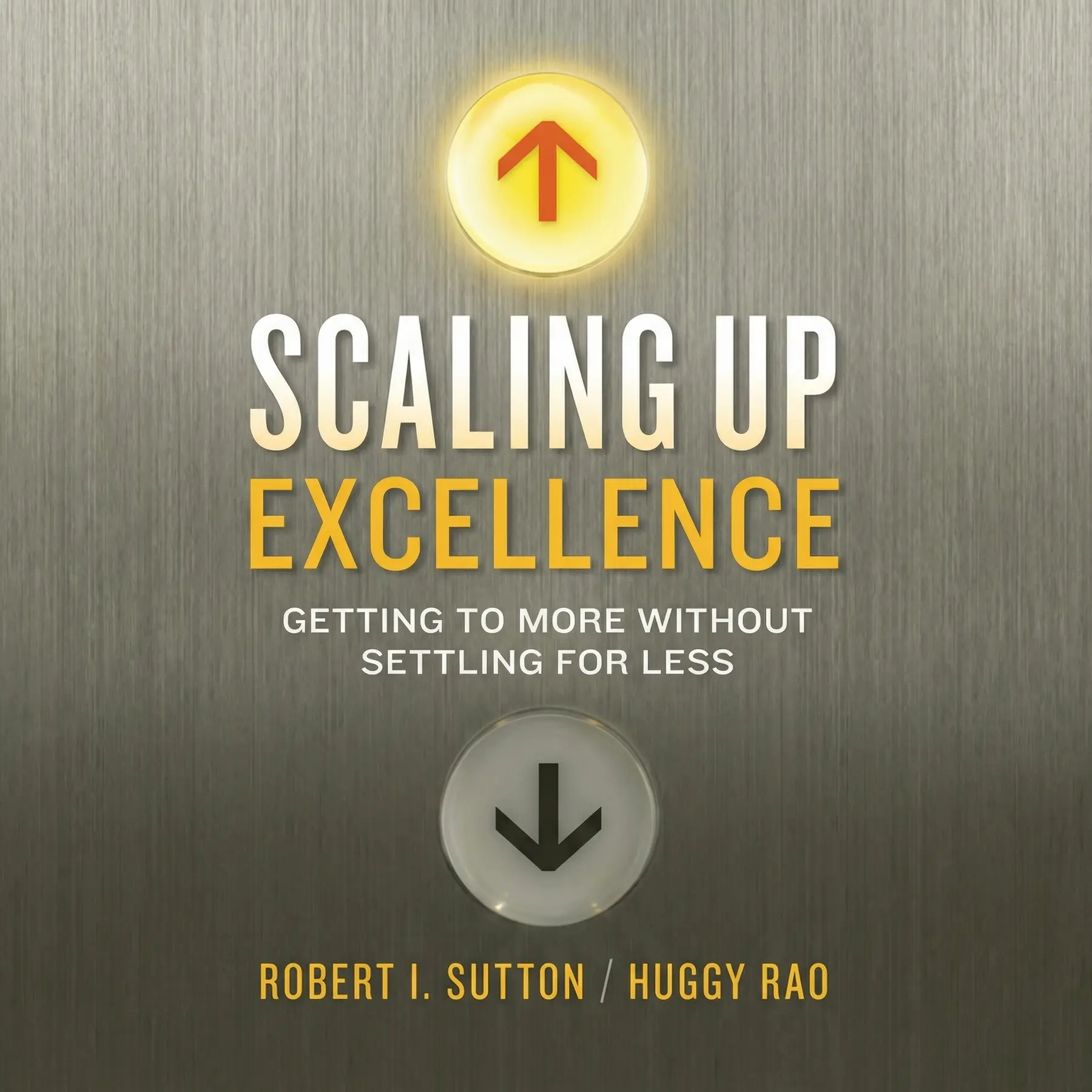
Scaling Up Excellence: Getting to More Without Settling for Less
Shows leaders how to take the excellent work already happening in one corner of an organization and spread it to more people and places, improving it along the way instead of diluting it.
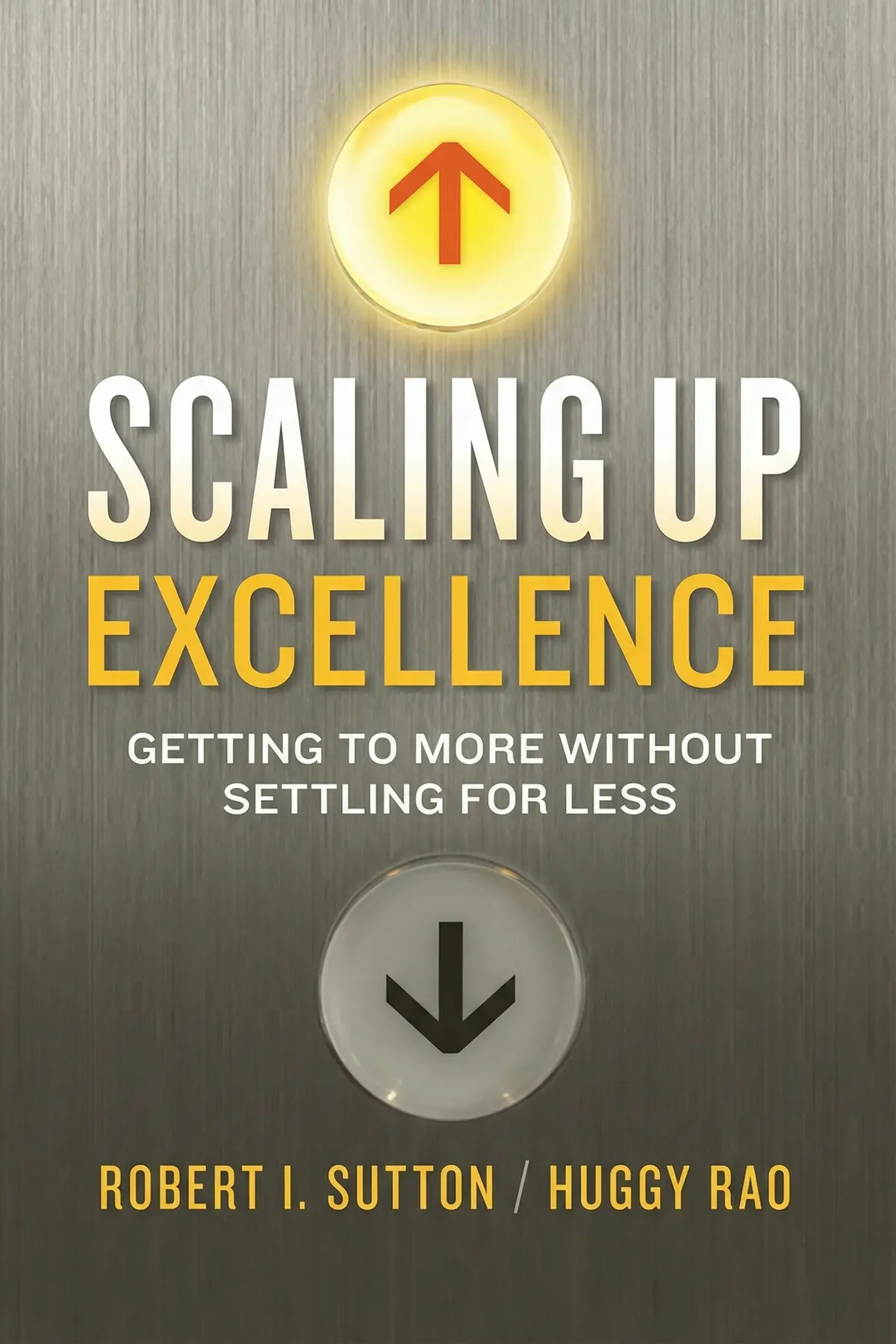
Table of Content
1. Introduction
1 min 03 sec
Most leaders already have excellence somewhere: one store customers love, one team that never misses a deadline, one clinic with fewer errors. The hard part is getting that quality to show up in more places without it thinning out. In Scaling Up Excellence, Stanford professors Robert Sutton and Huggy Rao call this the problem of more, and they argue it is also a problem of better.
Their case is that excellence spreads through steady work with people, team by team, and almost never through one grand launch. Leaders who persist, decide what must match and what may vary, strip away needless rules, and remove bad behavior first will see good practice travel.
The cases run from a Tokyo food delivery firm staffed mostly by high-school dropouts to a racing pit crew put through a strict practice regimen by a former college football player. Along the way you get tools to try with your own people, from a meeting that imagines failure in advance to a day of swapped roles.
2. Grow what works without watering it down
1 min 29 sec
Every organization already has a corner where things go right. Copying that corner seems like the obvious move, yet the authors argue that copying alone is a trap, and a school network shows what has to happen instead.
3. Move a thousand people one foot forward
1 min 43 sec
A memo and a launch meeting feel like progress, yet months later little has changed. A military comparison and a racing pit crew explain why spreading good work demands a slower, more personal kind of effort.
4. Decide what must be identical everywhere
1 min 38 sec
Should every site run exactly the same way, or adapt to its own customers? A burger chain, a furniture giant and a hospital network each answer differently, and the best answer is rarely at either extreme.
5. Start with beliefs or behavior, then add fun
1 min 30 sec
One camp says you must change minds before habits; the other says habits come first and minds follow. A campus helmet campaign tests both, and the authors’ verdict is more relaxed than either side would like.
6. Clear out rules before they slow everyone
1 min 26 sec
Growth brings more people, layers and procedures, and each one looks sensible on its own. Then a minor refund needs nine signatures. The authors show how to spot the drag early and what one software company did about it.
7. Hire for skill and ownership together
1 min 33 sec
Talented people who do not care are as risky as loyal people who cannot deliver. A Tokyo delivery company found both qualities in a group most employers overlook, and an airline shows how to connect them.
8. Remove the bad before spreading the good
1 min 30 sec
One difficult colleague can undo the work of an entire team, and the damage spreads faster than any good habit. The authors explain why, and describe a surprising experiment that put all the troublemakers in one room.
9. See your project's failure before it happens
1 min 27 sec
Plans look brilliant on the day they are written. A simple meeting format asks half the room to explain a disaster that has not happened yet, and one founder’s story shows the most personal question it can answer.
10. Conclusion
1 min 04 sec
Sutton and Rao’s book adds up to a modest but demanding idea. Excellence already exists inside most organizations; it just does not travel by itself. It moves when people carry it, team by team, while someone keeps the rules few, the people connected and the troublemakers in check. The ground war image fits because there is no shortcut from above, as Facebook shows by still training every new hire for six weeks.
That points to some things worth doing this week. Name the practices that must never vary, and let people adapt everything else. Find one approval or report nobody would miss and drop it. If a single person is pulling a team down, deal with that before announcing anything new. And before your next launch, ask half the room to explain how it succeeded and the other half how it failed.
Growth will make an organization bigger whatever you do. Whether it also makes it better depends on how many people take that first step forward together.
About this book
What is this book about?
Almost every organization has a pocket of excellence: one store customers love, one team that delivers, one ward with fewer errors. The hard part is making that quality show up everywhere else. Stanford professors Robert Sutton and Huggy Rao call this the problem of more, and they argue it is always a problem of better too, because what grows has to keep improving. Their answer treats scaling as slow, people-centered work. They compare it to a ground war, where every team must be won on the spot. Leaders have to decide which practices must be identical everywhere and which can adapt locally, pick a starting point in either beliefs or behavior, strip away rules before they choke the organization, hire for both skill and ownership, connect many kinds of people, and remove destructive behavior before spreading anything good. Readers get a set of practical tools drawn from cases such as Facebook, IKEA, Kaiser Permanente, Adobe, JetBlue and a Tokyo delivery company, plus methods like the project premortem and role swapping that any team lead can run next week.
Book Information
Who it's for
Running a fast-growing company
Founders and operators whose company is growing faster than its standards can keep up.
Managers and team leads
Managers and team leads trying to spread one team's best practices across sites or departments.
Change and training leads
Change and training leads planning a rollout that needs real buy-in, not just a launch memo.
About the Author
Robert I. Sutton
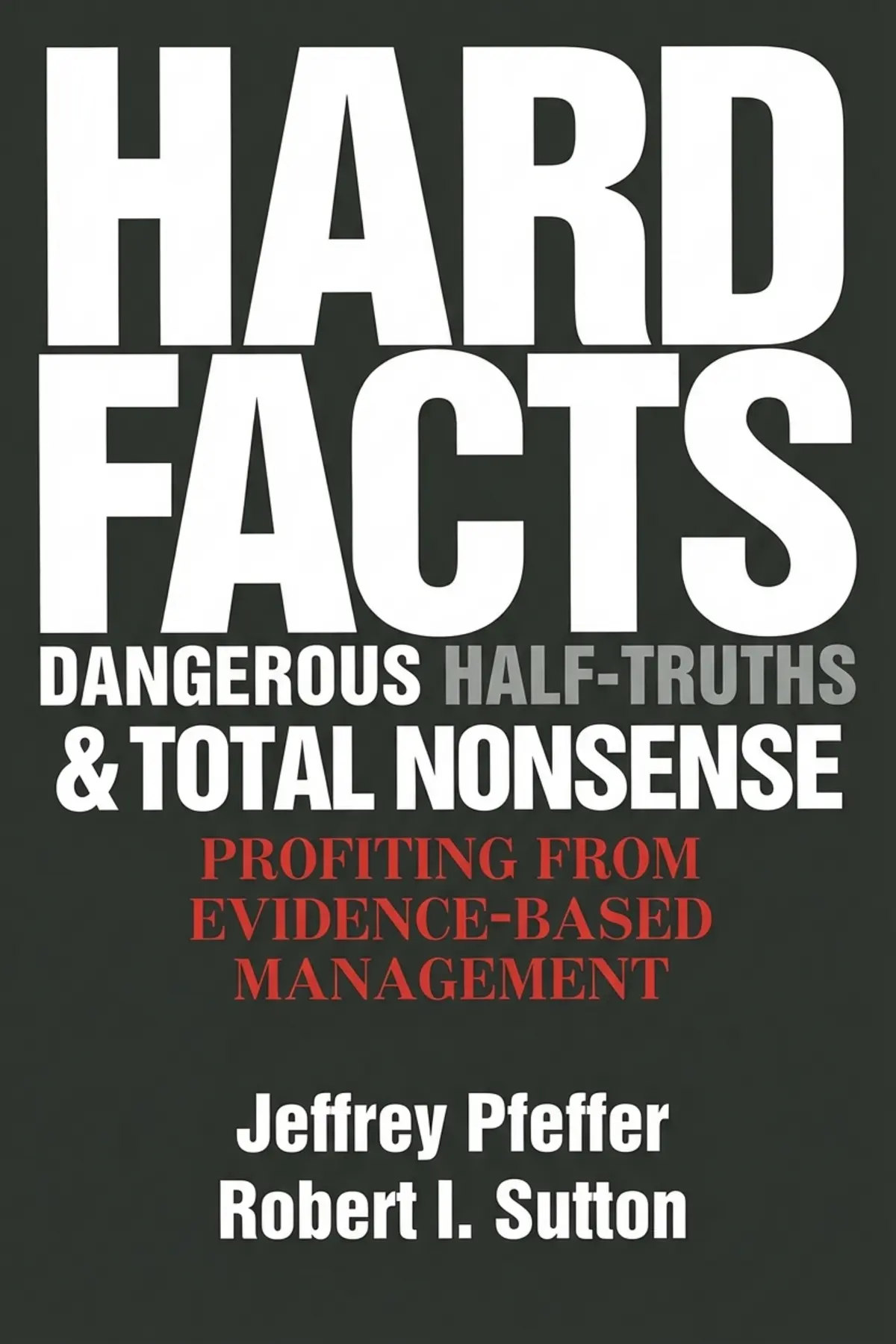
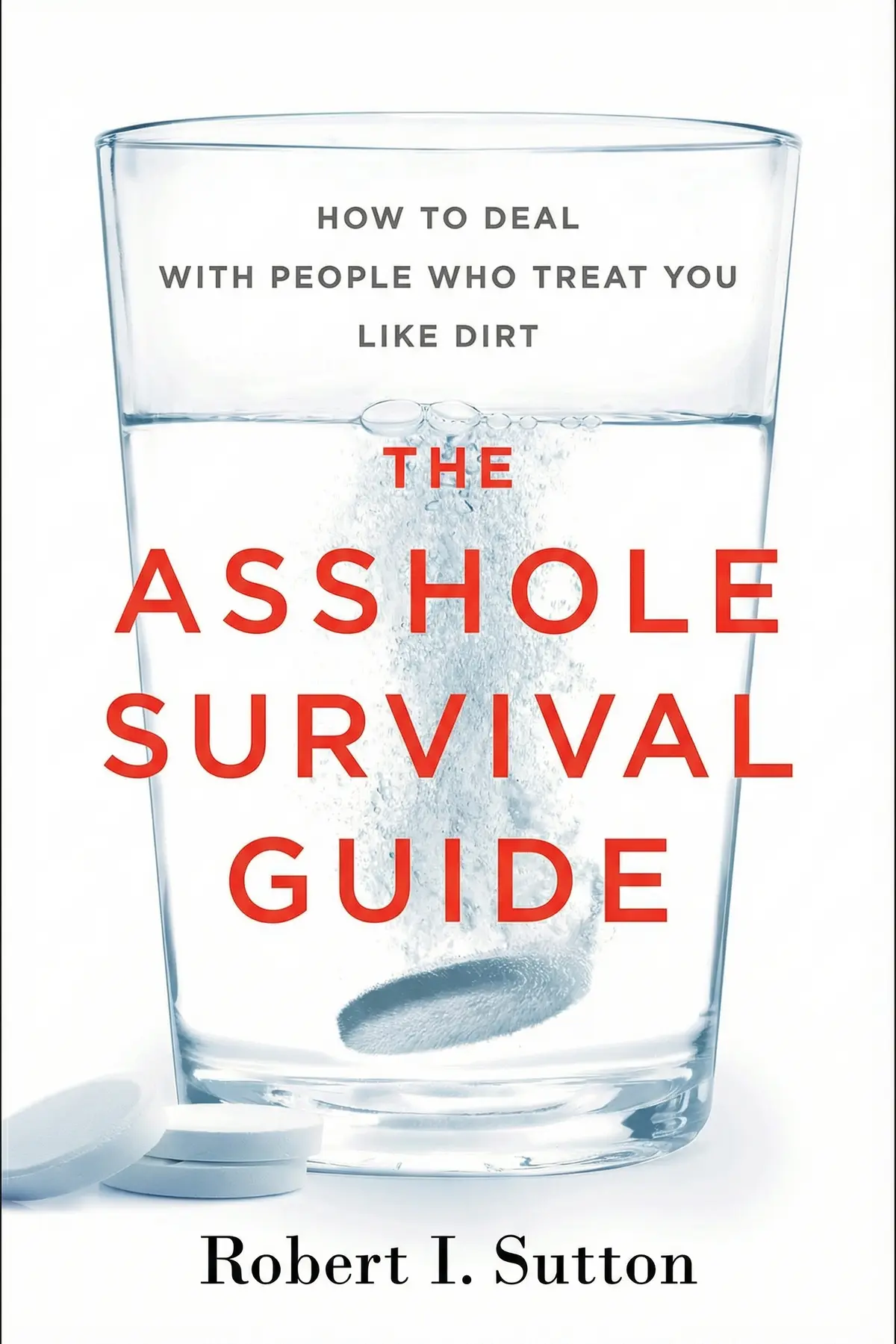
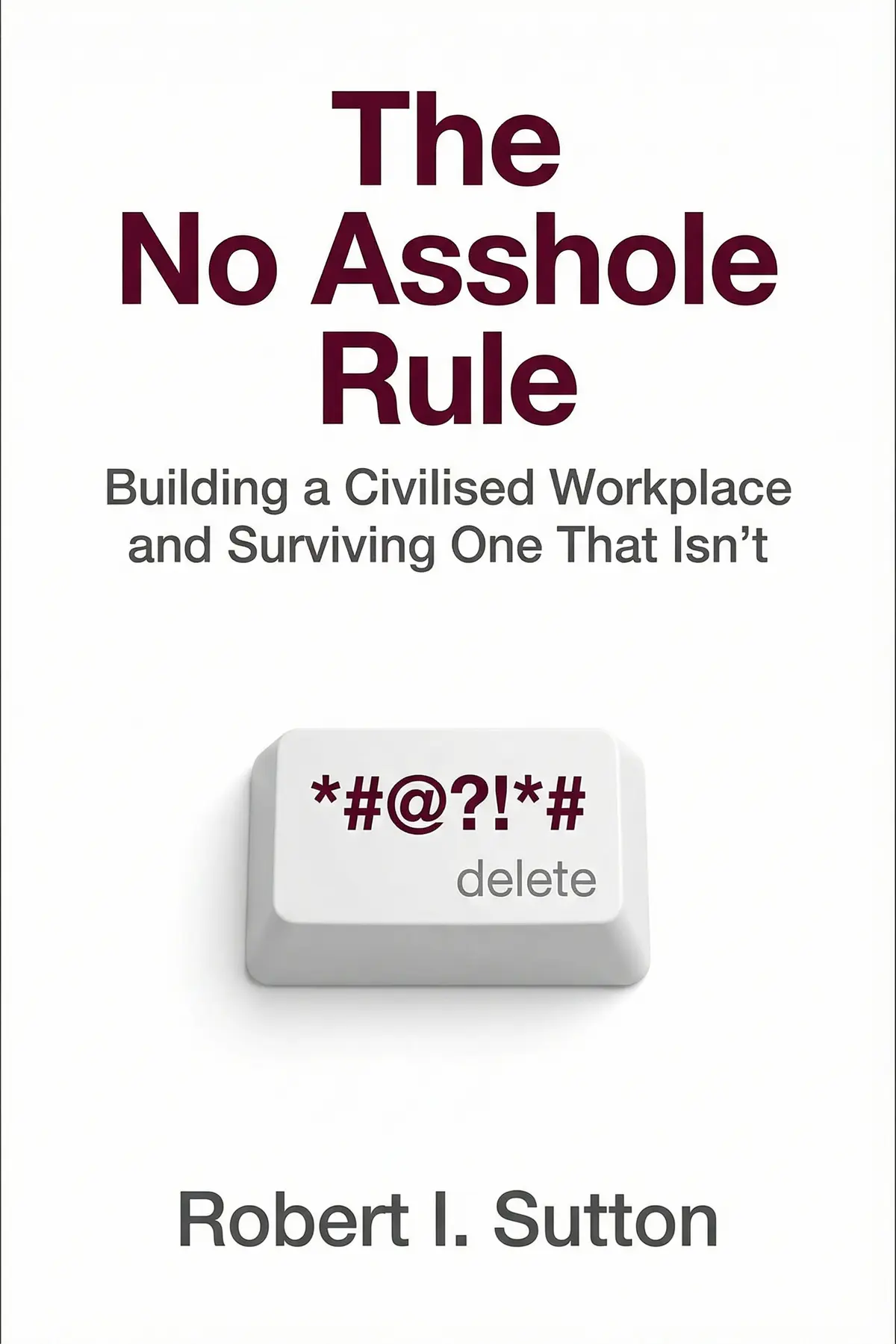
Robert I. Sutton has taught management science and engineering at Stanford University since 1983, holds a doctorate in organizational psychology and co-founded Stanford's d.school; his books include The No Asshole Rule. Hayagreeva "Huggy" Rao has taught organizational behavior at Stanford's Graduate School of Business, researches collective action, has written over 50 papers and monographs and wrote Market Rebels. Rao has directed Stanford executive programs, one of them with Sutton, and the two also wrote The Friction Project.
Ratings & Reviews
Ratings at a glance
What people think
Listeners find the book offers superb illustrations and extensive practical lessons, featuring thoroughly investigated material that covers a wide range of pertinent subjects. Furthermore, the text is accessible and stimulates deep thinking, providing discerning perspectives on intricate problems alongside captivating narratives. Listeners also value the high standard of writing and structure, with one listener highlighting the book’s influence on smaller companies.
Top reviews
Orm
Finally got around to reading this after seeing it on Adam Grant’s recommendation list, and it absolutely lived up to the hype. The distinction between 'plumbing' and 'poetry' is a game-changer for anyone trying to grow a business without losing its soul. I loved the story about the Taj Hotel employees; it really illustrated what it means to have a mindset where 'I own the place and the place owns me.' The book is packed with well-researched content that feels both practical and deeply inspiring. It’s rare to find a business book that balances high-level strategy with the gritty details of implementation so effectively. Truly energized by these insights!
Show moreSomboon
Wow. This is easily one of the most thought-provoking business books I’ve picked up in years. The 'scaling premortem' exercise alone is worth the price of admission; our team tried it last week and it surfaced risks we hadn’t even considered. I love the mantra 'argue like you’re right and listen like you’re wrong.' It perfectly captures the culture of excellence the authors are trying to promote. Every chapter offers a wealth of real-world learnings that are applicable to both giant corporations and tiny startups. If you want to build a sustainable organization, you need to read this.
Show moreLiam
Picked this up expecting a dry management manual, but I was pleasantly surprised by how engaging and human it is. The authors really get that scaling isn't just about numbers; it's about shifting mindsets across an entire organization. Truth is, I’ve already started applying the 'addition and subtraction' rule to our weekly meetings to cut out the unnecessary overhead. The case studies are diverse and provide a lot of perspective-changing moments. It’s easily one of the best books I’ve read this year for understanding the complex issues of growth. Highly recommended for anyone in a leadership position.
Show moreNan
As someone who manages a small but rapidly growing team, I found the section on adding and subtracting structure incredibly relevant. Sutton and Rao argue that you shouldn't just scale for the sake of footprint, and that really resonated with me. To be fair, some of the analogies—like the Buddhism vs. Catholicism comparison—felt a bit forced and oversimplified. However, the core lessons on accountability and moving from System 1 to System 2 thinking are gold. The book is easy to read despite being dense with information. It’s a solid resource for anyone navigating the 'big dumb company' disease.
Show moreGin
Ever wonder why some great ideas never take off while others spread like wildfire? This book dives deep into the 'people stuff' that usually scales the worst. I particularly enjoyed the section on how bad behavior spreads faster than good behavior and why it’s vital to 'fear the clusterfug.' The writing is engaging and the stories are memorable, though I agree with other reviewers that it can be a bit wordy in places. In my experience, the advice on slowing down to scale faster is something every executive needs to hear. It’s a very well-researched and insightful read.
Show morePete
The chapter on accountability was the highlight for me. It’s not just about giving people tasks; it’s about fostering a sense of ownership where everyone feels responsible for the collective outcome. Sutton and Rao do a great job of linking short-term realities to long-term dreams. I did find some of the phrasing—like 'I own the place and the place owns me'—a little weird, but the underlying concept is powerful. The book provides a great lens for viewing organizational growth. It’s a bit long, but the wealth of examples makes the concepts stick much better than a dry textbook would.
Show morePenelope
Scaling excellence isn't just about footprint; it's about mindset. That’s the core takeaway here, and Sutton and Rao drive it home with some truly enlightening stories. I was fascinated by the Zynga example regarding promotions—the idea that you have to bring someone up with you to move up yourself is brilliant. Gotta say, the book is a little repetitive, but that might be intentional to make the 'mantras' stick. It addresses many relevant topics that other business books ignore. While it could have been 50 pages shorter, the quality of the research and the writing make it a must-read.
Show moreLandon
Look, the advice here is undeniably solid, but the delivery is a bit of a mess. I appreciated the case studies on Adobe and Salesforce, particularly the bit about letting employees choose their teams, but the overall organization felt disjointed. It's essentially a list of loosely connected ideas that are too long to fully digest in one sitting. Not gonna lie, I found myself skimming several sections that felt repetitive. Is it a good book? Yes. Is it a revolutionary one? Probably not if you've been in management for a while. It’s a decent collection of common sense backed by some interesting research.
Show moreRoydao
To say this drags would be an understatement. I struggled through the first few chapters because the authors spent way too much time praising their own research methods rather than getting to the point. Frankly, I was looking for actionable steps, but instead, I got a pile of anecdotes that felt more like name-dropping than actual guidance. While the concept of avoiding a 'clusterfug' is catchy, the writing style is just too wordy for a busy professional. It’s a laborious read that repeats the same three points over and over. I really wanted to like this, but it felt like a chore.
Show morePakinee
I found the organization of this book incredibly frustrating. Instead of a clear framework, Sutton and Rao provide an endless stream of anecdotes that feel more like name-dropping than integrated lessons. For example, the focus on 'plumbing' over 'poetry' is a great concept, but it gets buried under repetitive lists that are hard to remember. Personally, I was disappointed by the lack of concrete, step-by-step instructions. It’s all very high-level and theoretical. If you enjoy reading about 'interesting people' the authors know, you might like it, but I found very little practical value here.
Show moreQuestions about this book
What is the main idea of Scaling Up Excellence?
Robert Sutton and Huggy Rao argue that getting excellent performance to more people and places, which they name the problem of more, is a problem of better as well. It works through slow, persistent effort with people, like a ground war, combined with clear choices about what must be standardized, constant removal of needless complexity, accountable and connected staff, and firm action against destructive behavior.
What do Catholicism and Buddhism mean in Scaling Up Excellence?
They are the authors’ names for two ends of a range. Catholicism means spreading one fixed model, as In-N-Out Burger does with identical stores and training. Buddhism means a shared mindset with locally varied practices, as when IKEA offers delivery and assembly in China. Sutton and Rao say most organizations need a mix, like Kaiser Permanente’s health records rollout with a few fixed rules and local settings.
What is a project premortem?
A premortem asks a team to imagine a project is already finished. One group assumes it was a great success and the other a disaster, and each explains why as if it had already happened. The authors cite management research finding this improves people’s ability to identify causes, barriers and drivers of future results by 30 percent, and it checks excess optimism.
How does Scaling Up Excellence suggest dealing with difficult employees?
The authors cite research showing one disruptive person can cut group performance by 30 or 40 percent, so they urge leaders to tackle bad behavior before spreading good practice. Firing is one option, but Stanford’s d.school grouped disruptive personalities together under a coach, where they balanced each other. For conflicts, the authors suggest swapping the opponents’ roles for a while.
Who should read Scaling Up Excellence?
It suits founders, executives and team leads who have something working well in one place and want it to spread without losing quality. Its examples cover start-ups, schools, hospitals, airlines, retailers and delivery firms, and its tools, such as trimming approvals, swapping roles and running premortems, are small enough for a single team to try.
Readers also enjoyed



A Year with Peter Drucker: 52 Weeks of Coaching for Leadership Effectiveness
Joseph A. Maciariello



Acting with Power: Why We Are More Powerful Than We Believe
Deborah Gruenfeld

All In: How Great Leaders Build Unstoppable Teams
Mike Michalowicz



7 Powers: The Foundations of Business Strategy
Hamilton Helmer
AUDIO SUMMARY AVAILABLE
Listen to Scaling Up Excellence in 15 minutes
Get the key ideas from Scaling Up Excellence by Robert I. Sutton, plus 5,000+ more nonfiction titles.
- 5,000+ titles
- Listen as much as you want
- 7-day free trial
- Cancel anytime









