
14 min 18 sec
Available in: English
Sales Pitch: How to Craft a Story to Stand Out and Win
Shows B2B sellers how to turn a first sales call into a guided lesson about the market, built on clear positioning, so hesitant buyers understand their options and actually make a decision.
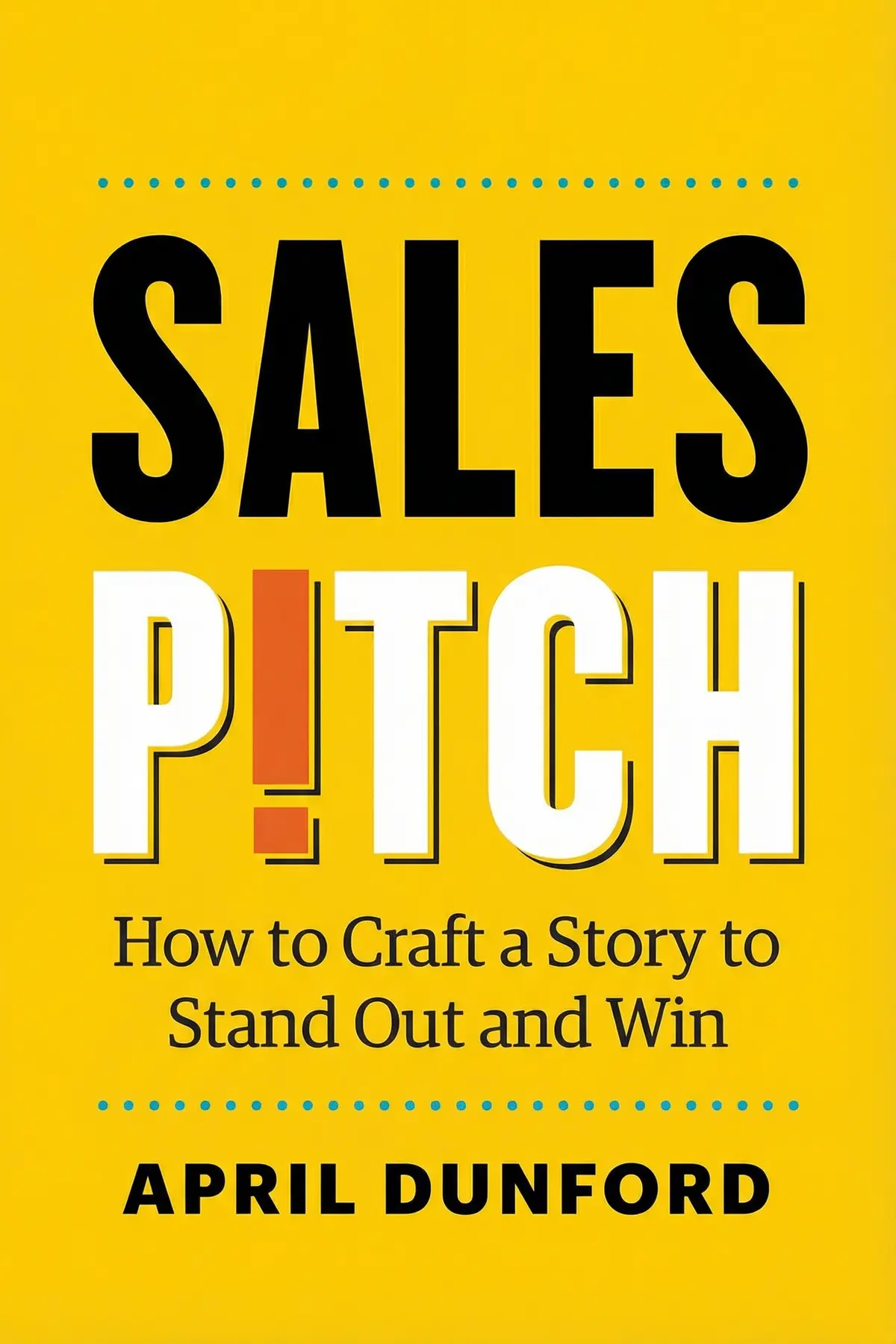
Table of Content
1. Introduction
1 min 00 sec
Any pitch faces a serious threat from a buyer who chooses nothing whatsoever, because between 40 and 60 percent of buying processes finish with no decision at all. In Sales Pitch, positioning consultant April Dunford argues that the remedy is to stop leading with your product and start teaching buyers how to choose.
Her case begins with a plain observation about large business purchases. The person buying is afraid of getting it wrong, and what they want most from a seller is help reaching a sound decision. Dunford’s claim is that a pitch wins when it rests on strong positioning and is told as a guided lesson about the market, with your product showing up as the natural answer.
She turns that into an eight-step storyboard any salesperson on a team can use, from the opening market insight to the final ask. Learn it, and a first sales call stops being a feature tour and becomes a conversation that moves a hesitant buyer toward a choice.
2. Sell like a guide when the stakes are high
1 min 43 sec
A lunch sandwich and a company software contract are both purchases, yet they put buyers in completely different states of mind. Understanding that difference changes what a seller should spend the first call doing.
3. Beat the silent rival called no decision
1 min 48 sec
The competitor that wins the most deals never appears on a pricing comparison. Dunford puts a number on it, and the way she suggests fighting it starts before any pitch is given.
4. Drop the pitch formats that fail in crowded markets
1 min 41 sec
Feature tours, problem and solution decks, bold visions and hero stories all have fans. Each one also has a blind spot that can leave a buyer interested but still unable to choose.
5. Build the pitch on five pieces of positioning
1 min 52 sec
Before a single slide is drawn, a seller has to answer some uncomfortable questions about who they really compete with and who truly needs them. Weak answers here quietly weaken everything that follows.
6. Earn trust before your product appears
1 min 44 sec
The strongest part of a pitch, in this approach, mentions no product at all. It sounds backward, but it gives the buyer something most sellers never offer them.
7. Prove your value, then ask for a clear next step
1 min 38 sec
Even a buyer who loves the story can walk away with nothing decided. The second half of the storyboard is designed to remove the last reasons for delay before the call ends.
8. Turn one strong pitch into a team standard
1 min 34 sec
A great pitch that only one star seller can deliver is fragile. Dunford describes how to test it, spread it and let it reach buyers long before anyone picks up the phone.
9. Conclusion
1 min 18 sec
Dunford’s book recasts the sales pitch as a lesson the buyer is glad to receive. Someone facing a considered purchase is anxious, surrounded by options and tempted to do nothing. A seller who explains the market fairly, names the alternatives and describes what an ideal solution looks like earns the right to introduce a product. By that point, the product feels like the logical end of the conversation instead of an interruption.
That is why positioning sits under everything. If you cannot say what you do differently, for whom, and against which alternatives, no storyboard will rescue the pitch.
Before your next first call, write your positioning on a single page and ask so what of every feature until only business benefits remain. Then rebuild the pitch so the product does not appear until the buyer has heard an insight, the honest alternatives and a picture of the perfect world, and make sure it ends with a specific next step. Treat each deal that stalls as a sign of where the buyer still needed teaching.
The best pitch, in Dunford’s telling, leaves the buyer understanding their market better than before, and a buyer who understands is a buyer who decides.
About this book
What is this book about?
Many business deals never end in a lost sale. They end in no sale at all. April Dunford reports that 40 to 60 percent of purchase processes finish without any decision, because buyers facing big, risky choices freeze and fall back on what they already have. Product tours and grand visions do little to move them. Dunford, a positioning specialist whose marketing career spans more than two decades, argues that a seller's real job is to teach. Buyers of complex products want a guide who explains the market, compares the alternatives honestly and helps them choose with confidence. That teaching only works when it rests on sharp positioning: knowing your competitive alternatives, unique capabilities, differentiated value, best-fit customers and market category. The book turns that idea into an eight-step storyboard that a whole team can use. It opens with a market insight, moves through the alternatives and a picture of the perfect solution, and only then introduces the product, its value, the proof, the likely objections and a clear ask. Readers get a repeatable structure for first calls, plus advice on testing the pitch and carrying it into marketing.
Book Information
Who it's for
Sellers with stalled deals
B2B salespeople whose deals keep stalling in no decision.
Founders and marketing heads
Founders and marketing leads at technology companies who need one pitch the whole team can deliver.
Sales managers onboarding reps
Sales managers who want new hires to run strong first calls quickly.
About the Author
April Dunford
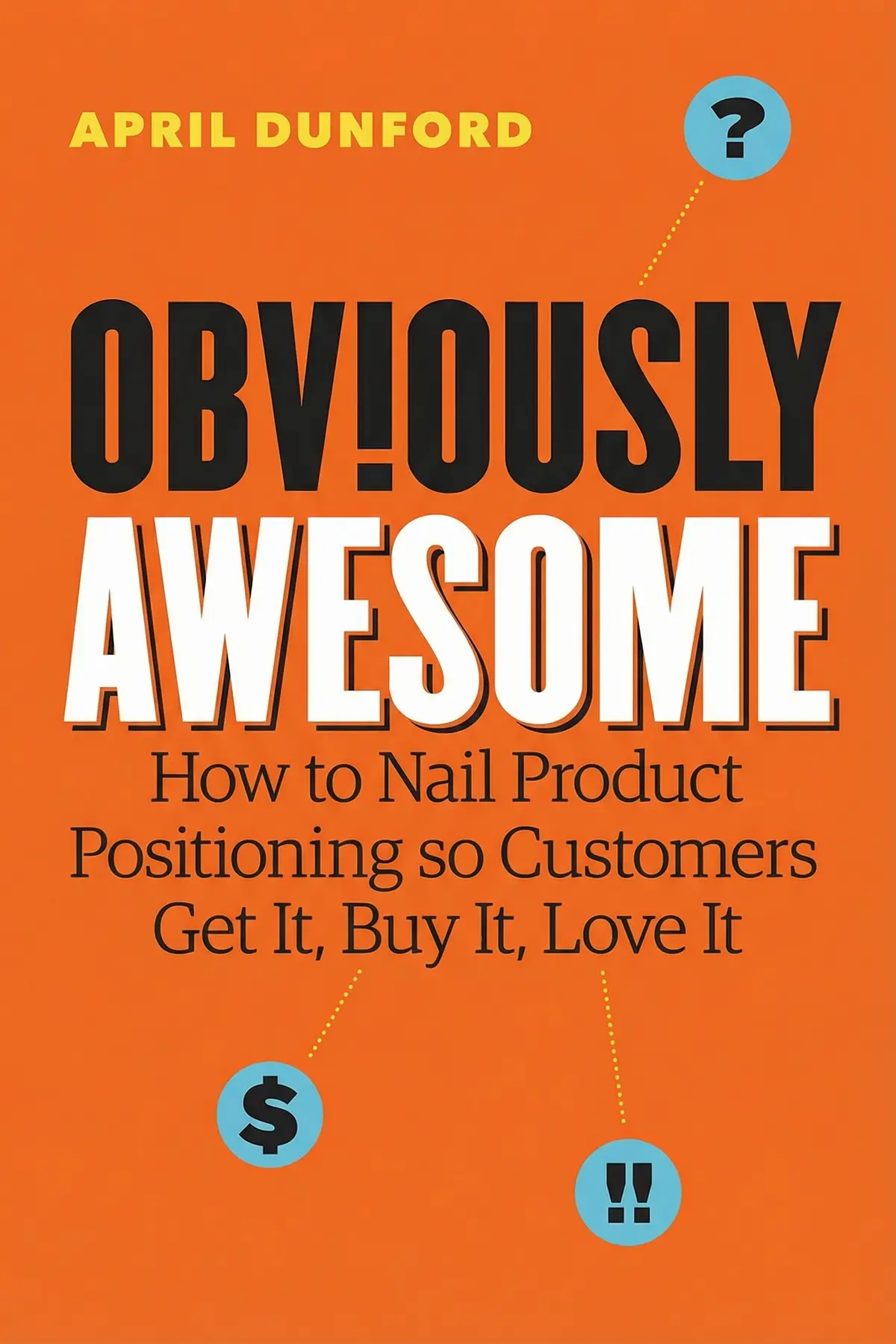
April Dunford is an executive consultant, speaker and author who helps technology companies make complex products easy for customers to understand. She specializes in positioning and market strategy, especially for business-to-business technology. Over more than two decades in marketing, she served as vice president of marketing at several high-growth startups and launched 16 products. She trains leadership, sales and marketing teams through workshops and keynotes, and she sits on boards, invests in and advises growing businesses. Her other book in our catalog is Obviously Awesome.
Ratings & Reviews
Ratings at a glance

What people think
Listeners find the material highly applicable and simple to digest, with one listener noting it offers an excellent structure for creating sales pitches. Furthermore, they value its clear presentation, with one review emphasizing its detailed formula for improving win rates. The work also earns praise for how effective and readable it is, with one listener describing it as essential reading for those in tech and SaaS industries.
Top reviews
Matteo
April Dunford has done it again by bridging the gap between high-level positioning and the actual sales floor. While her first book helped us define what we are, this one provides the tactical blueprint for how to say it without putting the prospect to sleep. The focus on the 'status quo' as a primary competitor resonated deeply because, frankly, most of our lost deals just vanish into the void of indecision. I loved the structure of the 'Setup' versus the 'Follow-Through.' It’s rare to find a business book that gives you a literal slide-by-slide recommendation that doesn’t feel like a cookie-cutter template. It's concise, actionable, and perfect for anyone in Product Marketing who actually cares about sales enablement. Some might find it short, but I prefer the lack of fluff.
Show morePhichai
Picked this up on a Friday and finished it by Saturday morning. It’s that rare business book that you can actually implement immediately without needing a three-month retreat to 'find yourself.' The breakdown of how to group competitors into logical 'alternatives' changed how I think about our market landscape. It’s essentially a masterclass in narrative design for tech companies. If you're struggling with 'no decision' losses, this is your bible. No fluff, just a clear formula for winning.
Show moreTantipat
Stop sending your prospects 50-slide feature decks right now. April Dunford offers a much-needed course correction for B2B sales teams who are drowning in their own technical specifications. The shift from being a 'vendor' to a 'trusted guide' isn't just a semantic change; it's a total overhaul of the sales conversation. The chapter on integrating discovery into the pitch was worth the price of the book alone. It’s short, punchy, and incredibly practical. Some might complain it’s too focused on enterprise sales, but for those of us in that world, it's a godsend.
Show moreWan
I've been using the positioning framework from her first book for years, so I was eager to see how she handled the pitch. This is the missing piece of the puzzle. It takes the abstract concept of positioning and turns it into a weapon for the sales team. The way she integrates market education into the setup phase is brilliant. Since implementing a version of this narrative, our sales team has reported much higher engagement during demos. It’s not just about what the product does, but why the world has changed and why our approach is the only one that makes sense now. Essential reading for any SaaS leader.
Show moreOmar
Finally, a sales book that doesn't feel like a used-car salesman wrote it. Dunford nails the psychological aspect of B2B buying, specifically the paralyzing fear that stakeholders feel when they’re about to sign off on a massive contract. We often forget that our buyers are human beings who don't want to get fired for making a bad choice. This guide shows you how to act as a trusted guide rather than just another vendor pushing a demo. I’ve already started retooling our deck based on the 'insight' section. I'll admit, some parts felt a little repetitive, and the formatting is a bit basic. However, the clarity it brings to the 'why us' conversation is worth every penny for a SaaS team.
Show moreTariq
As someone who lives in the world of Product Marketing, I found the emphasis on 'the status quo' incredibly validating. We spend so much time worrying about Feature A vs. Feature B, but April reminds us that the biggest hurdle is usually the buyer's own inertia. The book provides a very clear, repeatable framework for building a narrative that builds buyer confidence. Look, much of this might feel like table stakes if you've been in the industry for a decade. However, the way she structures the conversation—moving from market insight to differentiated value—is elegant in its simplicity. I did feel like the middle section dragged a bit with redundant examples. But even with the repetition, the tactical value for sales enablement is undeniable.
Show moreMo
The truth is that most B2B sales pitches are essentially the same: a boring company history followed by a list of features nobody asked for. Dunford flips this on its head by focusing on the buyer's perspective. The framework she provides for handling 'alternatives' is particularly clever because it allows you to frame the competition without sounding petty or defensive. My only gripe is that the book is quite short for the price, and the writing style can feel a bit conversational to a fault. However, if you want a clear formula for improving your win rates, this is it. It’s a solid, practical guide for modern sales environments.
Show morePreeda
Wow, this was exactly what our team needed to hear. We’ve been struggling to differentiate ourselves in a crowded market, and this book gave us the language to finally stand out. The emphasis on building buyer confidence through a structured narrative is a game-changer. I especially appreciated the tactical advice on how to run a demo that actually ties back to the value proposition. It’s a very quick read, maybe even a bit too quick, but the density of useful advice is high. Definitely recommended for PMMs and Sales Ops folks.
Show moreWoramet
Is this a book or a long-form essay? To be fair, the core framework is solid, but the text feels stretched to reach a certain page count through constant rephrasing of the same three ideas. If you’ve already mastered 'Obviously Awesome' and listen to April’s podcast regularly, you might find yourself experiencing a bit of déjà vu throughout these chapters. It’s heavily geared toward established B2B corporate environments rather than scrappy, early-stage startups looking for their first ten customers. The idea that we need to lead with insight rather than features is hardly groundbreaking in 2024. Still, having the structure in one place is somewhat useful for training new PMMs who haven't seen this dance before. It’s a quick read, but I expected more new meat on the bones.
Show moreYindee
After hearing April on several podcasts, I had very high expectations for this one. Her first book was a revelation, but this feels a bit like a 'Greatest Hits' album with only one new song. Don’t get me wrong, the methodology for the sales narrative is sound, but it’s definitely targeted at larger organizations with established sales departments. If you are a solo founder at a seed-stage startup, this might feel a bit overkill or even irrelevant to your immediate needs. Not gonna lie, I was disappointed by the amount of repetition across the different sections. It felt like a 30-page whitepaper expanded into a full-length book. It’s a decent reference guide, but it lacked the 'aha' moments of her previous work.
Show moreQuestions about this book
What is the main idea of Sales Pitch by April Dunford?
Dunford argues that buyers of complex business products want a teacher more than a pusher. A winning pitch rests on clear positioning and walks the buyer through the market first: an insight, the honest alternatives and a picture of the ideal solution. Only then does the product appear, with its differentiated value, proof, answers to objections and a clear request for the next step.
What are the eight steps of April Dunford's sales pitch storyboard?
The storyboard opens with a market insight, then the alternatives with their pros and cons, then the perfect world an ideal solution would create. These form the setup. The follow-through introduces the company, shows its differentiated value, backs it with proof, handles common objections such as deployment time and change management, and ends with the ask for a specific next step.
Why do so many sales deals end without a decision?
Dunford reports that between 40 and 60 percent of buying processes finish without a decision. She attributes this to buyer inertia: people facing high-stakes choices often avoid change, even when their current setup is not the best. Her answer is to understand the buyer’s worries and give them clear, useful information about the market so choosing feels safe, instead of pushing harder.
What is positioning in a sales pitch?
For Dunford, positioning defines what makes your value different and who should hear it. It has five parts: competitive alternatives, meaning what the customer uses now and is considering; unique capabilities; differentiated value, found by asking so what of each feature; best-fit customers; and market category. A pitch built without this foundation tends to drift into a feature tour.
How can I apply Sales Pitch with my sales team?
Gather people from sales, marketing, product and customer success to agree on positioning and draft the eight-step storyboard. Give the pitch to a respected salesperson to test, collect feedback from the team and from prospects, and revise. Once it works, roll it out with training material such as a video, and reuse the same story in explainer videos, buyer’s guides and conference talks.
Featured in
Readers also enjoyed






AUDIO SUMMARY AVAILABLE
Listen to Sales Pitch in 15 minutes
Get the key ideas from Sales Pitch by April Dunford, plus 5,000+ more nonfiction titles.
- 5,000+ titles
- Listen as much as you want
- 7-day free trial
- Cancel anytime









