

14 min 06 sec
Available in: English
 ไทย
EnglishไทยRising Strong: How the Ability to Reset Transforms the Way We Live, Love, Parent, and Lead
By Brené Brown
Brené Brown shows how to recover from a fall: name the emotion, write down and test the story you tell yourself about it, and turn what you learn into lasting change, alone or with a team.
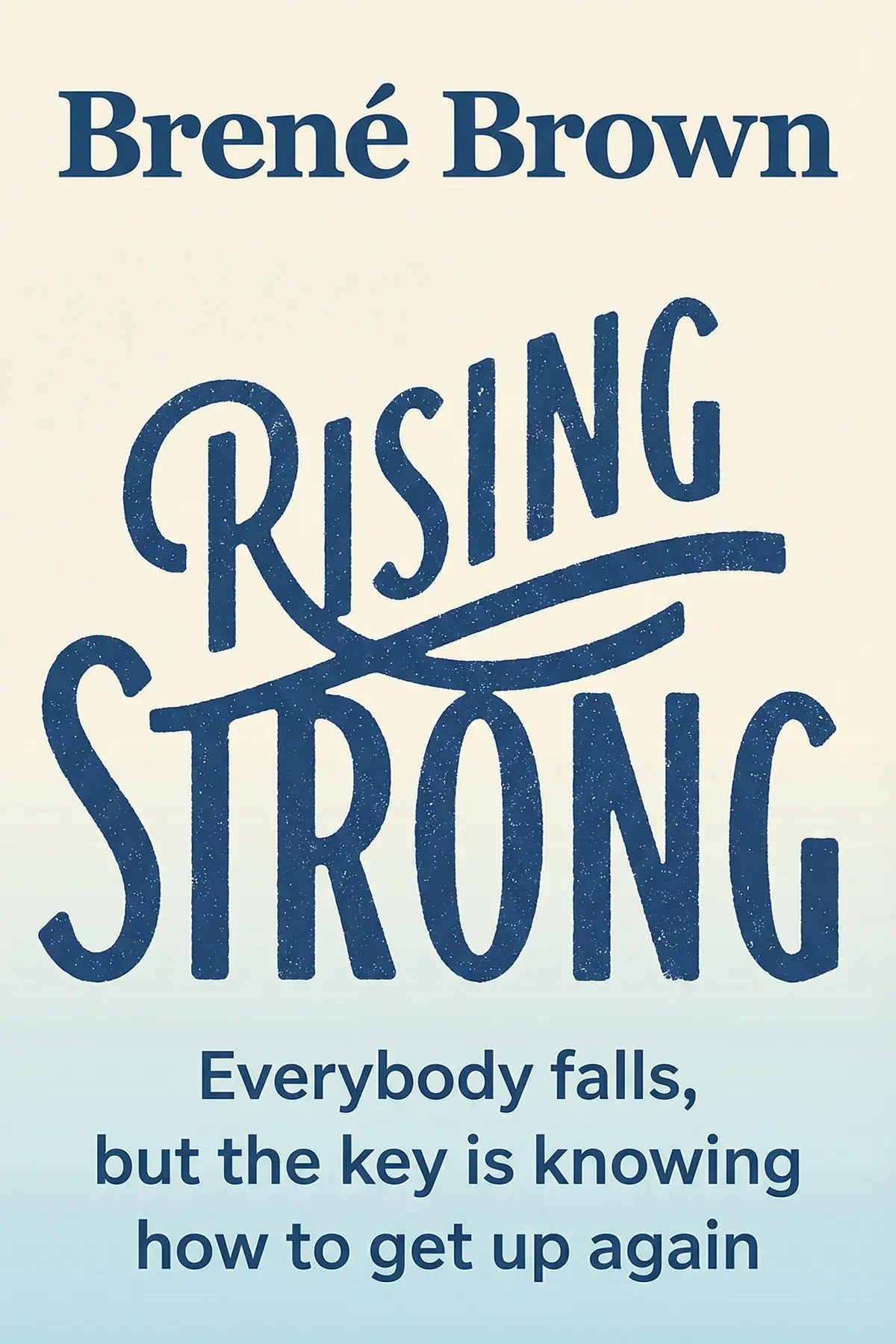
Table of Content
1. Introduction
57 sec
A setback hurts twice: once when it happens, and again in the story you tell yourself afterward. In Rising Strong, researcher Brené Brown argues that the second hurt is the one you can do something about. Recovery, in her account, is a skill with three stages: you reckon with what you feel, you rumble with the story you have built around it, and that honesty sets off a revolution in how you live and work.
The people who rise strong are not the ones who fall less. They stop arguing with their emotions and start questioning their stories. Brown makes the case with ordinary moments: a hotel room shared with a disastrous roommate, one sentence from a pastor at a fundraiser, an advertising leader’s failed project and a reshuffled meeting agenda. Each moment ends in something practical, a way to turn the next fall, at home or at work, into a lesson instead of a scar.
2. Expect to fall before you try anything new
1 min 24 sec
The comfort zone feels safe, yet it is the one place where nothing new gets learned. Brown asks for three commitments before you take a risk, and the first one sounds like giving up.
3. Give yourself permission to feel what you feel
1 min 30 sec
Burying anger or disappointment looks like self-control, but Brown warns it sets up a later explosion. Her remedy involves a scrap of paper and a question most people never think to ask themselves.
4. Catch the story you tell yourself on paper
1 min 32 sec
When something hurts, the mind rushes to explain it, and the explanation it reaches for first is usually the bleakest one. Brown’s tool for catching it is easy to use and asks only for a willingness to write badly.
5. Turn resentment into a boundary you keep
1 min 32 sec
A shared hotel room, a stained couch and a cigarette in a no-smoking room left Brown furious at everyone in an airport. What her rough draft revealed had little to do with her roommate.
6. Say your expectations out loud before they hurt
1 min 41 sec
Most disappointments come from hopes we never knew we had until they failed. Brown shows how naming those hopes early prevents resentment, and why forgiving someone can mean letting a cherished dream die.
7. Asking for help is the braver move
1 min 27 sec
One sentence from a pastor at a fundraiser made Brown uncomfortable, and following that discomfort led her to a belief she had carried since childhood about what needing others says about a person.
8. An apology that leaves a team trusting you more
1 min 33 sec
A trusted strategist sent his team down a path he knew was risky, and it failed. What he said next could have ended his credibility. Instead, the agency came out of it stronger.
9. Rise from failure together and build a stronger team
1 min 29 sec
A leader moved one item down a meeting agenda, and a team member quietly assumed the worst. What happened next in that meeting shows how teams can stop small misreadings from becoming lasting conflicts.
10. Conclusion
1 min 01 sec
What Brown offers is a way to make a fall useful. Much of the damage after a setback arrives later, in what we do with it: the feeling we bury, the story we never test, the expectation we never said aloud. In her accounts, a stained hotel couch became a lesson about boundaries. A pastor’s sentence became permission to ask for help. A failed project became the moment an agency trusted its leader more.
The practice is small enough to start today. When a reaction feels bigger than the moment, name the feeling and allow yourself to have it. Write the story you are telling yourself, rough and unfiltered, and read it back looking for the leap you made. Where resentment appears, look for the boundary or the hope underneath it, and say it to the person involved. If you lead others, own your mistakes first, and give your team room to share the stories they are making up.
You will fall again. Next time, you will know what to write down.
About this book
What is this book about?
Everyone falls. A job disappears, a partner betrays you, a presentation collapses in front of colleagues, or a run of small humiliations wears you down. Most of us are taught to push through and move on. Brené Brown argues that how you get back up matters more than how hard you fell, and that getting up well is a skill anyone can learn. She describes rising strong as three stages. In the reckoning, you notice an emotion and get curious about it. In the rumble, you write out the rough story you have told yourself about the struggle and test it for the leaps and conspiracies it contains. In the revolution, what you learned changes how you live, love, parent and lead. Brown shows the process through ordinary episodes: her own resentment after sharing a hotel room with a nightmare roommate, a pastor's sentence that exposed her fear of asking for help, an agency leader who rebuilt his team's trust with a plain apology, and a meeting where one honest remark prevented a conflict. Readers get simple tools, from permission slips to fill-in-the-blank drafts, and a set of questions teams can use after a setback.
Book Information
Who it's for
Replaying setbacks for weeks
People who replay setbacks for weeks and want a clear way to learn from them.
Rebuilding trust at work
Team leads and managers rebuilding trust after a failed project or a tense meeting.
Stuck in resentment
Anyone stuck in resentment toward a partner, parent or colleague who wants to understand what is underneath it.
About the Author
Brené Brown
Brené Brown is a research professor at the University of Houston's Graduate College of Social Work and a visiting management professor at the McCombs School of Business at the University of Texas at Austin. Her books, including Daring Greatly, Dare to Lead and Atlas of the Heart, have been translated into more than 30 languages. Her TED talk on vulnerability is among the five most viewed ever. She has also hosted podcasts, including Dare to Lead.
Ratings & Reviews
Ratings at a glance

What people think
Listeners find this work both enlightening and very accessible, suggesting it is a mandatory read for every human being. They further describe it as a transformative experience; one listener mentions how it supported them through hardships, while another notes that it instructed them on living more courageously. The book receives acclaim for its narrative technique, with one listener specifically identifying the way it incorporates personal tales and a candid writing style. Listeners also value the emotional resonance, with one noting it offers the language to articulate feelings, and its relatability, as many see themselves in the author’s shared experiences.
Top reviews
Komsan
Rising Strong is basically a survival manual for what to do after you’ve hit the dirt. I was immediately captivated by the way Brown breaks down the 'middle' of the story—that messy Act 2 where everything feels like a failure and you just want to skip to the end. Unlike other self-help books that offer quick fixes, she forces you to sit in the discomfort and actually 'rumble' with your emotions. Frankly, some of her personal anecdotes about her husband and her Texan background felt a bit repetitive, but they made the research feel human. It’s a rare book that provides both the words to describe your internal pain and the actual tools to move through it. I finished it feeling like I finally had permission to be imperfect.
Show moreMarco
Ever wonder why some people bounce back while others stay stuck in their shame? This book dives deep into the mechanics of resilience without sugarcoating how much the process actually sucks. Brown is an incredible storyteller who uses her own 'face down in the arena' moments to illustrate that bravery isn't the absence of fear, but the willingness to engage with it. I found the section on 'the stories we tell ourselves' to be particularly revelatory for my own marriage. While the academic side of me occasionally wanted more hard data and fewer song lyrics, the emotional weight of the work is undeniable. It’s a must-read for anyone trying to live more whole-heartedly in a world that rewards perfectionism.
Show moreKru
The chapter on her experience at Pixar was the highlight of the book for me. It perfectly illustrated how the creative process mirrors our emotional lives—both require a willingness to fail spectacularly before finding the way out. Brown’s writing is open-hearted and courageous, pushing the reader to confront the shame that usually keeps us silent. I’ve read a lot of self-help, but this one felt more like a transformative experience than a simple list of instructions. Some might find her focus on 'the rumble' a bit too idealized for the average corporate workplace, but the 'rising strong' manifesto at the end is genuinely inspiring. It’s a book I’ll probably return to once a year just to keep myself grounded.
Show moreBird
Wow. This was exactly what I needed to hear at this point in my life. Brené Brown has this incredible gift for taking these massive, scary emotions like shame and grief and giving you the words to actually grasp them. The way she talks about the 'shitty first draft' of the stories we tell ourselves was a total epiphany for me. Look, it’s not always a comfortable read—she really pushes you to look at your own behavior—but that’s exactly why it works. I found her personal stories about her family to be deeply relatable, even the small, seemingly petty ones. It’s a brave, open-hearted book that taught me how to live a little more courageously every day.
Show moreSuda
Finally got around to reading this after hearing my therapist mention it, and I’m glad I did. The research Brown conducts on qualitative stories is fascinating, and she has a unique way of making social science feel like a gripping narrative. I specifically appreciated the 'permission slips' idea for meetings; it’s a practical way to bring vulnerability into professional spaces. My only real critique is the formatting of the later chapters, which felt a bit disjointed with the random quizzes and bullet points. It breaks the flow of her otherwise beautiful prose. Still, if you’re looking for a way to navigate life's inevitable face-plants with a bit more grace, this is definitely worth your time.
Show moreOlivia
After hearing so much about Brené Brown's TED talks, I expected something a bit more academic, but this was surprisingly intimate. The truth is, the book often feels like reading someone’s private, unedited diary, which can be polarizing depending on what you're looking for. I appreciated the 'rumble' process even if the lingo felt a little too precious at times. She has this way of weaving qualitative research into storytelling that makes complex psychological concepts feel like a conversation over coffee. My only gripe is that the last third of the book gets bogged down in lists and quizzes that felt a bit like a corporate workshop manual. Still, the core message about facing your own 'shitty first drafts' is something I’ll be thinking about for a long time.
Show moreZanya
Picked this up during a particularly stressful month at work and found it to be exactly the anchor I needed. There’s something about Brown’s voice—even in print—that makes you feel seen and less alone in your struggles. I loved the breakdown of how we try to solve problems from a 'comfortable place' until we realize we have to face the dark middle. To be honest, I did find the repetitive use of her specific terminology like 'MFDs' a bit distracting after a while. It starts to feel like you're learning a secret code rather than just focusing on the psychology. Despite the cheesy quizzes at the end, the insights on vulnerability are profound enough to justify the read.
Show moreTak
As someone who loved Daring Greatly, I was worried this would just be a rehash of the same ideas. While there is definitely some overlap, Rising Strong focuses much more on the specific process of getting back up after a fall. The storytelling style is what makes it work; she doesn't just preach from a pedestal but gets down in the dirt with you. I will say that the middle section drags a bit, and her focus on her own Texan accent or church-going habits might not land with everyone. However, the core concept of 'rumbling with emotions' is a powerful tool for anyone dealing with disappointment. It’s insightful, highly readable, and ultimately very human in its execution.
Show moreGoy
To be fair, I knew I was in for some academic 'truthiness' when I started this, but I didn't expect to be so moved by it. The book is definitely lingo-saturated, and if you aren't ready to 'rumble,' you probably won't get much out of it. But for those of us struggling with the stories we tell ourselves during a crisis, this is life-changing stuff. I loved the focus on mindfulness and the importance of re-framing our initial emotional responses to aversive events. The transition from qualitative research to 80s-style self-help quizzes was jarring, but the gems hidden in the text make it worth the effort. It’s a great resource for being a more emotionally present human being.
Show moreJavier
Not what I expected at all, and to be fair, I struggled to finish it. While the underlying message of being honest with yourself is fine, it’s buried under 300 pages of what feels like 100-proof arrogance. Brown spends an inordinate amount of time complaining about her privileged life—like being annoyed by an email or having a minor spat with her pediatrician husband. It’s hard to find these 'adversities' relatable when they seem so petty compared to real-world struggles. Also, the 'research' feels incredibly squishy, often relying on song quotes or spiritual leaders rather than rigorous data. If you’re a fan of her earlier work, you might enjoy the 'rumbling' lingo, but for me, it just felt like an over-extended, repetitive blog post.
Show moreQuestions about this book
What is the main idea of Rising Strong by Brené Brown?
Brown argues that recovering from a fall is a learnable process with three stages. In the reckoning, you notice an emotion and get curious about it. In the rumble, you write out and test the story you have told yourself about the struggle. In the revolution, what you learn changes how you live, love, parent and lead. She also asks readers to accept failure as part of any real risk.
What is a shitty first draft in Rising Strong?
It is Brown’s name for a rough, uncensored, emotional account of how you see a struggle, written down without polish. It can be as simple as completing prompts about the story you are making up, what your emotions say, how your body feels, how your thinking seems and what you are doing. On paper, the story gains distance, and its leaps and conspiracies become easier to spot.
How does Rising Strong explain forgiveness?
Brown sees forgiveness as more than forgetting a hurtful act. Often it involves letting go of an expectation, like the belief that your parents will not err or the vision of a marriage free of arguments. Recognizing people as individuals with their own struggles lets you release the conflict and move the relationship forward. She also recommends making expectations explicit early to prevent disappointment.
How can teams apply Rising Strong at work?
Brown suggests making rumbling part of the culture. After a setback, a team can ask what people are feeling, what needs curiosity, what stories members are making up, what those stories reveal about relationships, communication and culture, and how to act on the key lessons. In her own company, one team member voicing the story they had made up about a delayed agenda item settled a misunderstanding within minutes.
Who should read Rising Strong?
It suits anyone recovering from a setback, large or small, who tends to bury feelings or replay grievances. Managers will find the story of Andrew, an agency leader who rebuilt trust by openly admitting a mistake, especially useful. Readers who struggle to ask for help or who hold resentments toward family or partners will also find practical tools, from permission slips to written first drafts.
Readers also enjoyed

59 Seconds: Change Your Life in Under a Minute
Richard Wiseman





A Guide to the Good Life: The Ancient Art of Stoic Joy
William B. Irvine


A High-Performing Mind: Strengthen Your Mind and Live Your Best Life
Andrew D. Thompson


Abundance: The Inner Path to Wealth
Deepak Chopra
AUDIO SUMMARY AVAILABLE
Listen to Rising Strong in 15 minutes
Get the key ideas from Rising Strong by Brené Brown, plus 5,000+ more nonfiction titles.
- 5,000+ titles
- Listen as much as you want
- 7-day free trial
- Cancel anytime









