

A River in Darkness: One Man’s Escape from North Korea
Masaji Ishikawa
 English
Andrew Breitbart's case that the American Left shaped politics through newsrooms and Hollywood, where he believed that influence came from, and the new-media tactics he urged conservatives to use, from filming events to staggered releases.
58 sec
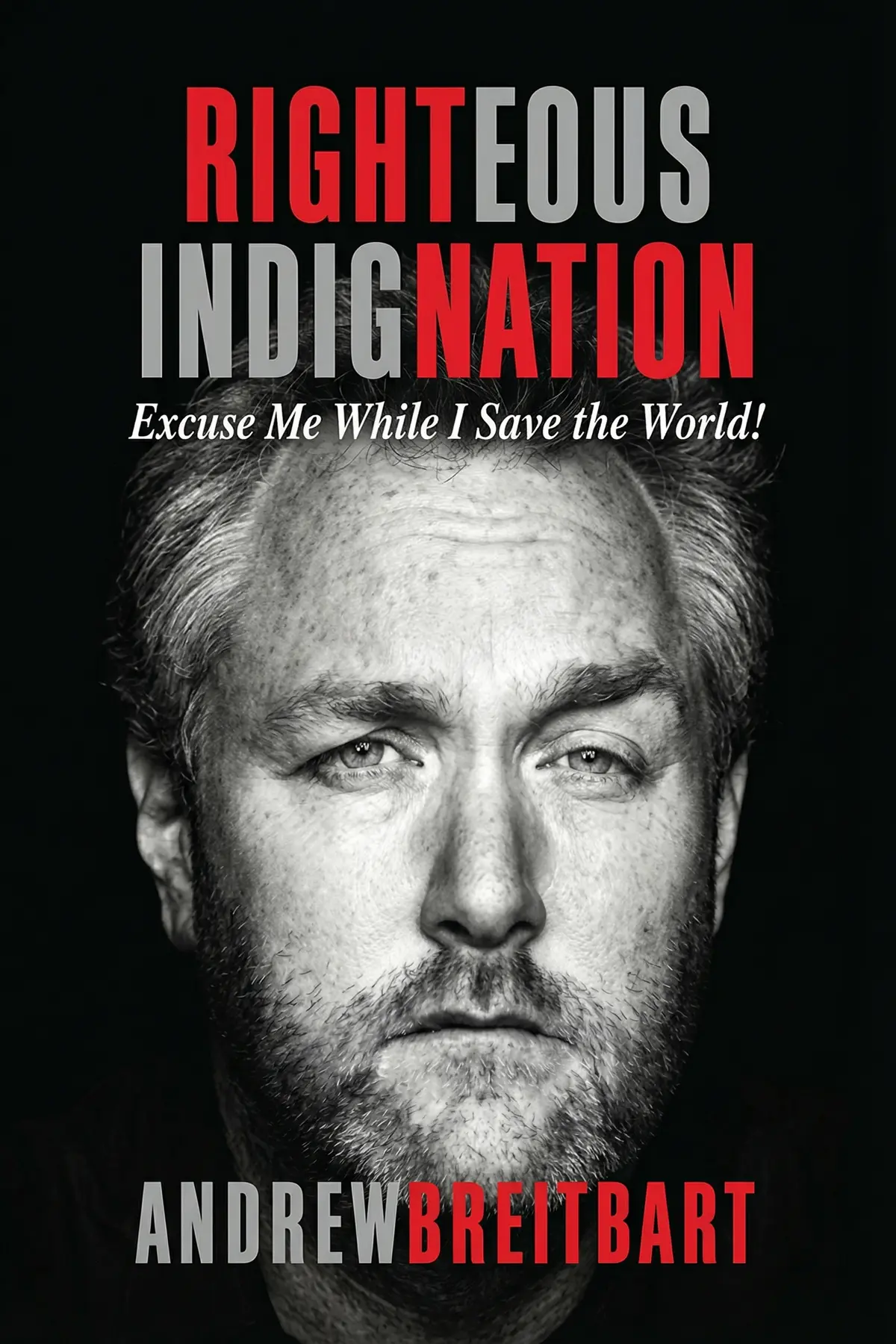
If American political media sounds like a shouting match you cannot decode, Andrew Breitbart offers one side’s account of how that shouting gets organized. In Righteous Indignation, the conservative publisher argues that the political Left built its influence through newsrooms, talk shows and Hollywood, a network he named the Democrat-Media Complex.
His answer, written as a call to arms for fellow conservatives, is to stop pleading with the gatekeepers and go around them with video, blogs and social networks. The book is openly partisan, and its judgments are his own. Taken on those terms, it gives a clear look inside the thinking of the man who ran Breitbart.com and once helped launch The Huffington Post. It covers where his anger came from and which thinkers he blamed. It also lays out the practical tactics he believed could move a news cycle, from releasing footage in stages to filming every event you attend.
1 min 59 sec
A 1991 fight over a Supreme Court nominee turned Breitbart into a media combatant. What he saw in the coverage that year led him to reconsider both his own politics and how political action worked in America.
2 min 08 sec
A circle of European philosophers and an American community organizer sit at the root of Breitbart’s story about the Left. One of them proposed a protest at the symphony that few readers forget.
2 min 11 sec
A babysitter’s bumper sticker and an actor who played a president on television become evidence in Breitbart’s case. Then he made a surprising choice: he helped launch a website for the other side.
1 min 46 sec
Two activists with a hidden camera handed Breitbart footage that could have aired once and faded. The way he chose to release it decided whether anyone would still be talking about it much later.
1 min 42 sec
Eggs thrown at Breitbart’s car and a false report to the police taught him a habit he urged on every reader. It costs almost nothing, and most people already carry the tool in their pocket.
1 min 06 sec
Righteous Indignation is written as a call to action, and its argument moves in a straight line. A single shock, the Thomas hearings, led Breitbart to conclude that the press had chosen a side. He then built a family tree of ideas reaching back to Marcuse and Alinsky and pointed to celebrities piling onto a president. His remedy follows: if the gatekeepers will not carry your story, become your own outlet. Many listeners will reject his picture of the Left, and he offers it as conviction. What lasts beyond his politics is his grasp of how attention works once everyone carries a camera and a publishing platform.
Two of his habits hold up whatever your views. Keep a way to record within reach, because a clip of what actually happened can settle an argument that words cannot. And when something deserves to be seen, release it in many places over time instead of trusting one channel to carry it.
His own story makes the case. Breitbart was accused of staging the attack on his car, and the footage answered for him.
Andrew Breitbart believed that whoever controlled the media in America, from the news to Hollywood, also controlled American society. In Righteous Indignation he tells how the 1991 confirmation fight over Clarence Thomas convinced him that the press had taken the Left's side. He came to call the alliance of Democrats, journalists and filmmakers the Democrat-Media Complex. He traces its ideas back to the Frankfurt School, the philosopher Herbert Marcuse and the organizer Saul Alinsky, whose Rules for Radicals he reads as a manual for personal attacks. He points to Hollywood's treatment of George W. Bush as proof of that alliance's reach. He also explains why he helped Arianna Huffington launch The Huffington Post before declaring himself a Republican. The second half is a playbook. Breitbart argues that Twitter, Facebook, blogs and web portals let conservatives go around traditional gatekeepers. He describes how he released the 2009 ACORN undercover footage in stages across many outlets, and why he told readers to carry a recording device everywhere. The book is a partisan call to action, and it shows how one influential media activist thought about attention, evidence and distribution.
Readers who want to understand the thinking behind modern American conservative media activism.
Communicators and founders curious how staggered, multi-channel releases keep a story alive.
Students of politics comparing partisan accounts of media bias from the Right and the Left.
Andrew Breitbart was born in Los Angeles on February 1, 1969, and died on March 1, 2012. He did research for Arianna Huffington and helped get The Huffington Post off the ground. He went on to run the news aggregation site Breitbart.com and five other websites, including Breitbart.tv and Big Hollywood. He played a central role in how the media covered the Anthony Weiner sexting scandal and the firing of Shirley Sherrod.
Listeners find this book to be essential reading for everyone, particularly for conservatives, and enjoy the intriguing chronicle of Breitbart's personal history. The prose is skillfully written, and listeners value its educational content, with one listener mentioning that it provides great insight into his thinking. The work is praised for its authenticity, as one listener points out how it backs up claims with proof, and listeners view it as an honest conservative perspective. Reactions to the tempo are varied; while some appreciate the historical account, others find it bombastic at times.
Picked this up on a recommendation and was immediately struck by how Breitbart’s voice jumps off the page. The man was clearly an engaging entertainer who understood the power of narrative better than almost anyone else in the political sphere. His journey from being a Hollywood liberal to a conservative firebrand is a fascinating historical account that provides great insight into his thinking. Frankly, the way he deconstructs the 'Democratic Media Complex' is both eye-opening and deeply provocative. He doesn't just complain about bias; he traces it back to the Frankfurt School and thinkers like Marcuse in a way that feels surprisingly academic for such a bombastic book. Some might find his tone a bit much, but I think the passion is what makes it feel so authentic and urgent. It is a must-read for anyone who wants to understand the roots of our current media wars. This isn't just a memoir; it's a blueprint for the future of activism.
Show moreBreitbart provides a masterclass in understanding the roots of modern cultural conflict by tracing things all the way back to European intellectuals. I was surprised by the depth here. This isn't just a collection of blog posts or angry rants. Instead, it is a well-crafted argument about how Critical Theory has permeated our institutions. He explains these complex ideas accurately and then prescribes a direct antidote: conservative activism that isn't afraid to get its hands dirty. The book reads like a history of major American political events, but it’s told through the lens of someone who was right in the middle of the fire. Gotta say, his wit and disarming humor make the more dense sections go by quickly. He was a pioneer who saw where the culture was heading long before anyone else did. Even if you don't agree with his politics, the logic of his media critique is hard to ignore.
Show moreThe chapter on the rise of 'new media' is probably the most essential reading for anyone trying to understand why our political landscape looks the way it does today. Breitbart’s observations on the development of internet blogs and homemade video tapes are truly fascinating. He was a man who lived his life in the thick of the story. I appreciated that he actually backs up his claims with proof rather than just shouting into the void. It’s an honest conservative perspective that feels very refreshing in an age of canned political talking points. The book is fast-moving and compelling, written with a sense of righteous indignation that lives up to the title. He wanted to convince conservatives to join the fight against a biased media complex, and he makes a very persuasive case. It’s a tragic loss that he isn't here to see how his predictions have played out in the years since his death.
Show moreFinally got around to finishing this and I'm left wishing he were still around to comment on today's chaotic news cycle. This book is a must-read for everyone because it exposes the inner workings of the media in a way that is both terrifying and enlightening. Breitbart was a man of immense passion and he didn't care who he offended in the pursuit of what he saw as the truth. His breakdown of the ACORN scandal and how he used new media to bypass traditional gatekeepers is a great story for anyone who feels lost in the political world. The writing is sharp and filled with panache, proving that he was just as much an entertainer as he was a journalist. Personally, I found his account of the Frankfurt School to be the most rewarding part of the book. It gave me a whole new vocabulary for understanding the culture war. It’s an authentic, heart-on-your-sleeve memoir that redefined the genre.
Show moreAs someone who has followed new media for a decade, I found this to be an incredibly authentic look at the battles fought behind the scenes. Breitbart was a force of nature. This book perfectly captures his spirit and his relentless drive to challenge the status quo. The way he breaks down the influence of the Frankfurt School and the rise of political correctness is fascinating and incredibly well-researched. He doesn't just complain; he provides a historical context that makes sense of the modern world. Not gonna lie, some of his statements are extreme, but they are born out of a genuine desire to protect the America he loved. The writing is vibrant, fast-paced, and full of the kind of wit that made him such a polarizing yet effective figure. It’s a fascinating historical account of a man who changed the media landscape forever. If you want to understand the heart of the modern conservative movement, start here.
Show moreAfter hearing so much about the man, I decided it was time to actually read his own words rather than just the headlines. Breitbart proves to be a pretty damn smart guy who knows exactly how to push the buttons of the establishment. The history of the internet’s role in politics is particularly fascinating, especially his behind-the-scenes look at the early days of the Drudge Report and the Huffington Post. Truth is, the pacing can be a little uneven when he dives deep into political theory, but his explanation of Saul Alinsky’s tactics is essential reading. I do think he can be a bit of a contentious loud-mouth at times, and his refusal to acknowledge conservative media bias is a minor weakness. However, the book is incredibly informative and offers a solid understanding of how stories are shaped or suppressed. It definitely challenged my perspective on how 'new media' has redefined the political arena for good.
Show moreLook, you don't have to agree with every single one of his conclusions to realize that Breitbart was way ahead of the curve on media criticism. He lays out his views with total transparency and hides nothing, which I found quite disarming. The way he traces the origins of American progressivism through Lukacs and Gramsci is something you usually only find in a PoliSci textbook, yet he makes it accessible. I did feel that the book was a bit light on building a case against Fox News while railing against the rest of the 'media complex,' which felt like a missed opportunity for a full analysis. Still, his perspective on how the media suppresses stories is solid and backed by his own experiences in the industry. It’s a contentious read, but a necessary one if you want to understand the modern Right. The sentence structure is punchy and keeps you moving through the narrative at a brisk pace.
Show moreEver wonder how a Hollywood liberal becomes the ultimate scourge of the mainstream media establishment? Breitbart tells that story with a lot of grit and even more humor. In my experience, most political memoirs are dry and ghost-written, but this feels like it came straight from his brain to the page. He moves his narrative along astutely, though he sometimes leaves the reader little time to question his underlying assumptions. The critique of Jon Stewart and the 'Democratic Media Complex' is particularly biting and well-reasoned, even if you find it a bit extreme. I would have liked more discussion on actual policy, as he tends to dismiss opposing views without much explanation. However, as a critique of media tactics, it is virtually unparalleled. He was a contentious figure for a reason, and this book shows you exactly why he was so effective at what he did. A very solid, thought-provoking read.
Show moreNot what I expected, as I was hoping for a bit more balanced policy analysis instead of what feels like a prolonged personal vent against the left. While Breitbart is undoubtedly an engaging writer, I found much of the rhetoric to be predictable and aimed strictly at the choir. For example, he often dismisses liberal positions as 'stupid' without providing a real basis for the claim or engaging in an honest debate. To be fair, his insights into the mechanics of the media are sharp, but they are often buried under a sea of personal attacks and disdain. The book serves to affirm conservative doctrines, which is fine for fans, but it didn't do much to convince me as a moderate. It feels a bit like kool-aid for the believers rather than a serious attempt to build a case using independent facts. It's a readable memoir, but the constant hyperbole makes it difficult to take his more serious arguments at face value.
Show moreThis book is little more than a collection of emotional statements and extreme labels used to delegitimize anyone who doesn't subscribe to his specific brand of conservative doctrine. Breitbart calls Democrats 'anarchists' without any real support for the claim, which is just absurd when you think about it. The rhetoric is self-serving and self-aggrandizing throughout. I was looking for a book with actual facts and reasoning, not just personal venting and disdain for the opposing party. He ignores any bias that might exist on his own side, which really undercut my trust in him as an objective narrator. While he is clearly an engaging writer, the message is often lost in a sea of personal attacks and 'fire with fire' tactics. It’s a bit too much like an echo of group-think for me to find it genuinely insightful. May his soul rest in peace, but this book was a disappointment.
Show moreBreitbart argues that the American Left has controlled the media and Hollywood for decades through what he calls the Democrat-Media Complex. He traces its ideas to the Frankfurt School, Herbert Marcuse and Saul Alinsky. His proposed response is for conservatives to go around traditional outlets using new media such as Twitter, Facebook, blogs and web news portals, and above all video.
It is Breitbart’s name for the influence he believed the Left holds through filmmakers, radio and print journalists, and celebrities. In his view, whoever controls the media controls society. He cites the coverage of Clarence Thomas’s 1991 confirmation, Hollywood’s attacks on George W. Bush and Oprah Winfrey hosting Barack Obama twice before the 2008 election as examples of it at work.
When James O’Keefe brought Breitbart secretly filmed footage of ACORN workers in 2009, Breitbart did not release it all at once in one place. He sent pieces of it over an extended period to Fox News, YouTube and other online outlets. He contrasted this with the single-release approach of networks like CNN, and the video went viral.
Breitbart’s most practical advice is to carry a recording device everywhere and bring a camera to events where something could later be denied or ignored, as his own footage did when he was blamed for an egg attack on his car. He also urges readers to choose news sources carefully, contribute to the media themselves and spread important stories to as many outlets as possible.
Breitbart says he had two aims in helping Arianna Huffington start the left-leaning site. He wanted to give the Left a public platform where he believed its reasoning would look weak. He also wanted to show that outlets claiming neutrality looked much the same, noting that the site’s front page closely matched The New York Times on most days. He later grew uncomfortable and declared himself a Republican.
Masaji Ishikawa

John Rawls



Miles Taylor



Tracy Rosenthal

Jessica Valenti

Yanis Varoufakis
AUDIO SUMMARY AVAILABLE
Get the key ideas from Righteous Indignation by Andrew Breitbart, plus 5,000+ more nonfiction titles.









