
14 min 34 sec
Available in: English
 ไทย
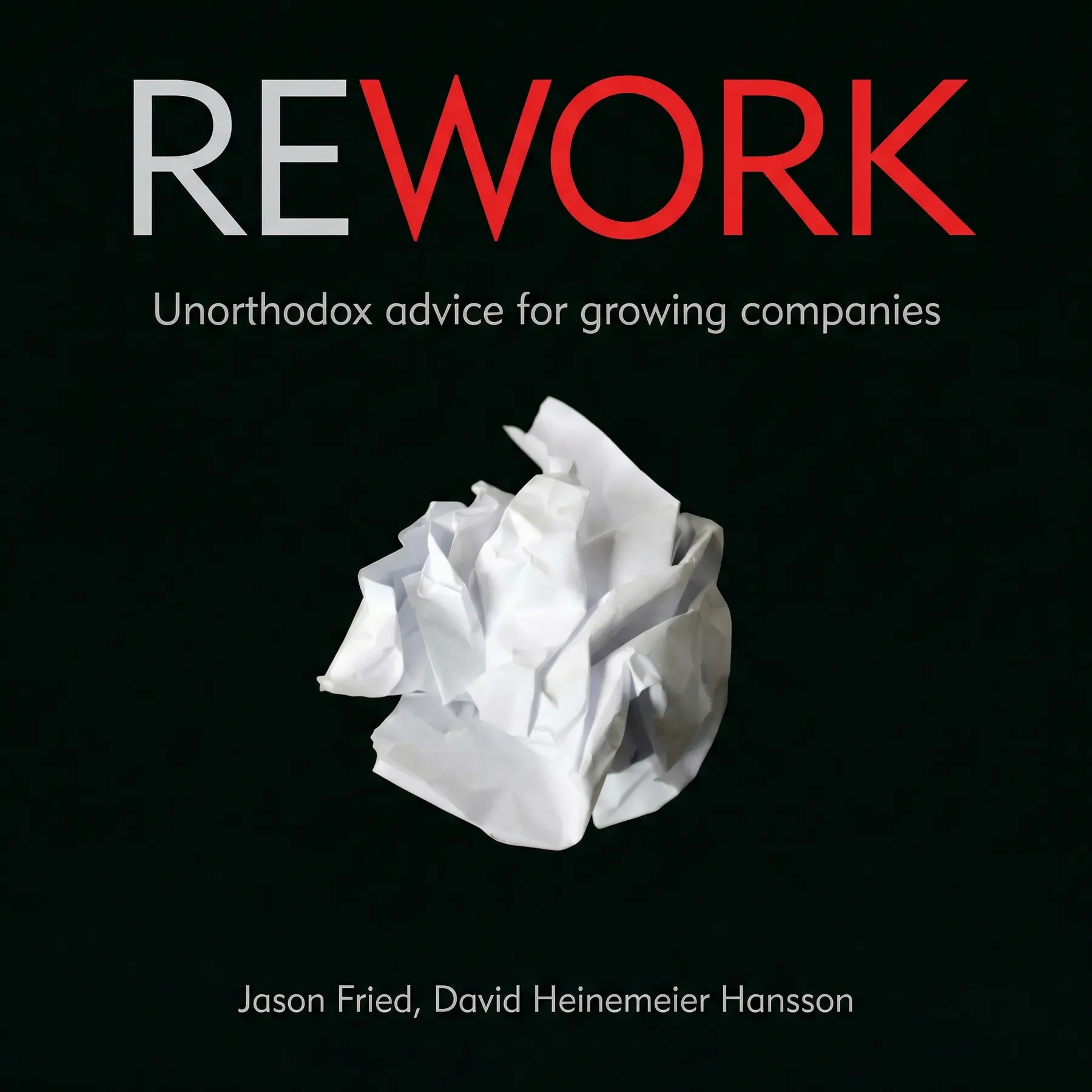
EnglishไทยReWork
Shows how to start and run a business with little money, few people and no grand plan, by launching only the core, cutting features, deciding fast and trusting a small, focused team.
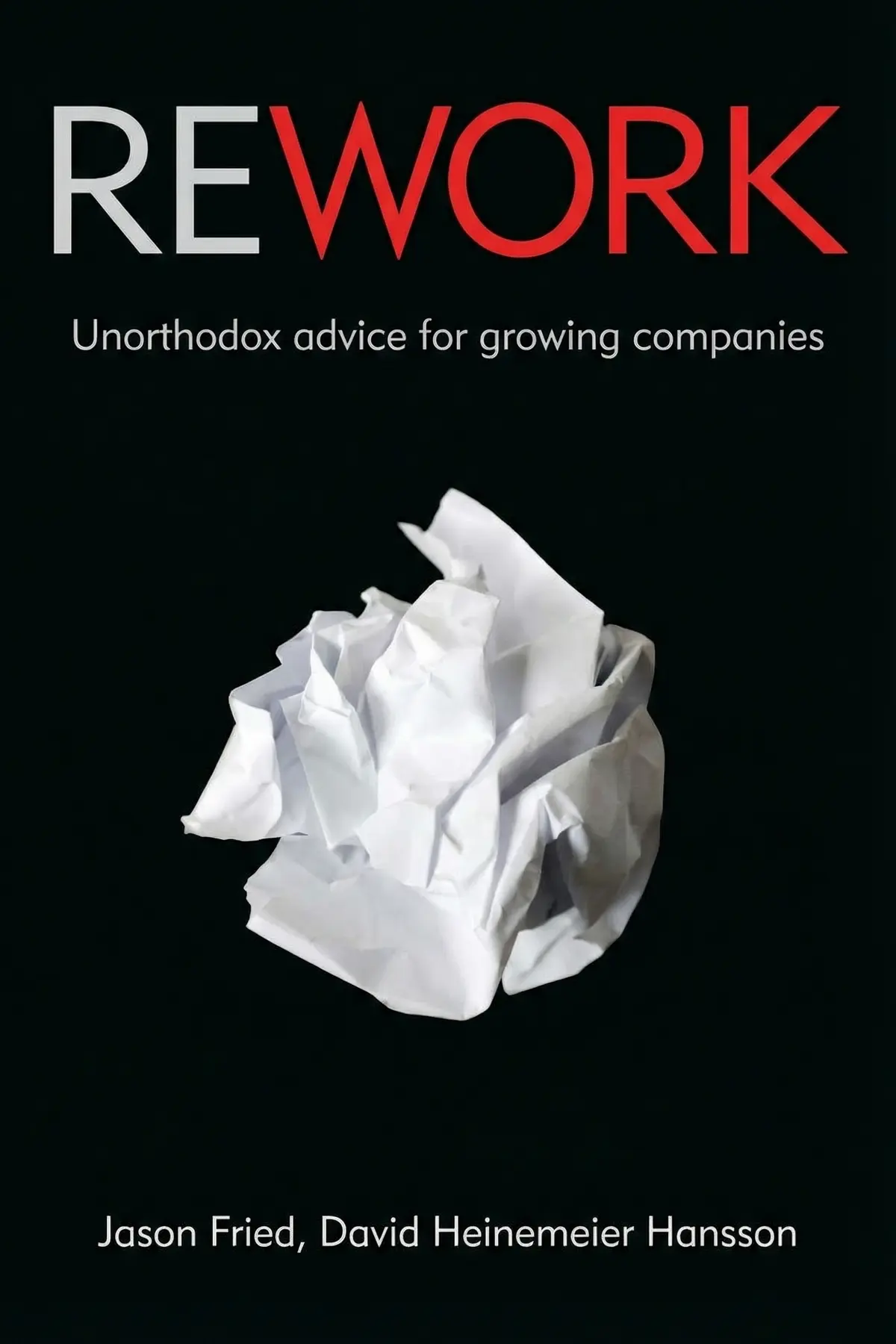
Table of Content
1. Introduction
1 min 01 sec
Most would-be founders stall at the same spot. They are convinced that a real business needs outside money, a finished product and a full-time leap before it can begin. In ReWork, Jason Fried and David Heinemeier Hansson, partners at the software company 37signals, argue that a laptop, an idea and a few spare hours a week are enough to start. Their larger claim is that small size is an advantage to use on purpose.
A lean company, in their account, can launch sooner, stand for something, cut what doesn’t matter and run on trust and focus rather than plans, meetings and headcount. That belief links every piece of advice here, from a Chicago sandwich shop that stops selling in the afternoon to a television chef who slashes menus. What you get is a set of habits to test this week, whether you are planning a side project or already running a small team.
2. Launch with a laptop and your core idea
1 min 28 sec
Most founders believe they need investors, a finished product and a resignation letter before they begin. One software team launched before it could even charge its customers, and the reason that was safe says a lot.
3. Win loyal fans by taking a clear stand
1 min 21 sec
A Chicago sandwich shop turns away paying customers every afternoon on purpose. That costly habit, and a willingness to pick a public enemy, explain how a small business earns fans who stay.
4. Build what rivals cannot copy, then teach it
1 min 36 sec
A shoe retailer sells sneakers anyone can stock, yet competitors cannot match it. The defense against copycats turns out to make giving away your hard-won knowledge safe, and even profitable.
5. Make a better product by cutting features
1 min 35 sec
A famous television chef starts every restaurant rescue with the same blunt move. It points to an uncomfortable rule about customer requests, including the ones that sound brilliant.
6. Turn your small size into an edge
1 min 40 sec
Elite universities stay comfortably small, and Broadway musicals try out in smaller cities before reaching New York. Being small hands a company freedoms big rivals lack, from private mistakes to honest apologies, along with one trap.
7. Decide fast and plan in weeks
1 min 27 sec
Plans feel responsible, yet the authors treat most of them as guesswork in disguise. Their alternative changes how big a decision should be and how far ahead any estimate should reach.
8. Get more done in fewer hours
1 min 34 sec
The colleague who stays latest may be hurting the team. A simple sum about meetings, and a different way to slice big projects, show where productive hours actually come from.
9. Build a team that manages itself
1 min 47 sec
Treating staff like children produces exactly what you would expect. The cure involves banning a few everyday words, looking past resumes and copying a car maker that built a fake assembly line.
10. Conclusion
1 min 05 sec
ReWork adds up to a different idea of what a company is for. Fried and Hansson describe a business you can start this month, shape around what you care about and run with a few trusted people, without debt, grand plans or a crowded office. The Basecamp team launched with no way to bill anyone. A Chicago sandwich shop gives up afternoon sales to protect its pride. Both choices look minor, and both come from the same conviction that smallness, used deliberately, is a strength.
The book supports a few concrete moves. Write the core of your idea in one sentence and launch as soon as it works, leaving the rest for later. Keep a log of customer requests and build only what keeps returning. Before any meeting, count the hours it will cost everyone in the room. And when someone says the team needs another person, ask which painful problem that hire would solve.
The company in ReWork never has to wait until it is big enough. It is ready the moment its core is.
About this book
What is this book about?
Many people with a business idea never start, because they assume they need outside money, a polished product and the nerve to quit their job. Jason Fried and David Heinemeier Hansson, partners at the software company 37signals, argue that a laptop, an idea and a few hours a week are enough. In their view, staying small is an advantage to protect. Their advice runs from the first launch to the daily running of a team. Ship the core of the product and fix the details later, as they did with Basecamp. Stand for something, the way a Chicago sandwich shop stops selling once its bread loses its morning freshness. Cut features the way Gordon Ramsay cuts menus, say no to most requests, speak plainly to customers and aim for profit from day one. Inside the company, the authors favor quick, reversible decisions, estimates measured in weeks, fewer meetings, self-managing people and hiring only when a painful problem demands it. Readers get concrete habits for building a lean, independent business, or for running any small team with less waste.
Book Information
Who it's for
Got a side-project idea
People with a side-project idea who think they need investors or a finished product before they can start.
Small-company founders
Founders of small companies tempted to add features, staff and meetings as they grow.
Hoping for self-managing teams
Team leads who want people to manage themselves and spend less time in meetings.
About the Author
Jason Fried
Jason Fried co-founded 37signals in Chicago in 1999. The company began as a web design firm and from mid-2004 built web applications, starting with Basecamp. Audiences around the world invite him to speak on entrepreneurship, design, management and software. David Heinemeier Hansson, known as DHH, is a Danish programmer, writer, entrepreneur and racing driver who created the Ruby on Rails web framework. He is a partner and chief technology officer at 37signals and a Basecamp cofounder. Together they also wrote Remote and It Doesn't Have to Be Crazy at Work.
Ratings & Reviews
Ratings at a glance
What people think
Listeners find this book to be a vital resource for entrepreneurs, offering a wealth of usable tips and deep reflections. It reframes traditional commercial concepts and shifts viewpoints on how to execute them, all while being highly accessible. They enjoy the concise sections and clear language, with one listener remarking on its ability to transform complicated thoughts into small, manageable segments. Listeners portray it as a galvanizing experience that adds tremendous value to their lives.
Top reviews
Pooja
Finally got around to reading this, and it’s like a breath of fresh air compared to those dry, 400-page business tomes. The authors advocate for being a 'starter' rather than an 'entrepreneur,' which takes the intimidation factor out of launching a project. I loved the emphasis on staying small and focusing on the product instead of obsessive competitor tracking. To be fair, some of the advice feels tailored strictly to software developers, but the mindset shifts are universal. The short chapters make it incredibly easy to digest during a commute or a quick break. It honestly feels like the authors are sitting across from you at a bar, giving you the real talk you need to hear. If you are tired of pointless meetings and 'hustle culture' that leads to burnout, this is essential reading.
Show moreTakeshi
Wow, what a refreshing slap in the face for anyone currently stuck in the soul-crushing 9-to-5 grind or a bloated startup. ReWork cuts through the noise and tells you that you don't need a huge team, a fancy office, or massive funding to build something great. The concept of 'learning from successes' was a total paradigm shift for me. I’ve always been told to analyze my mistakes, but focusing on what went right feels much more actionable. The layout is beautiful, and the straightforward language makes complex organizational theories feel like simple choices. Not gonna lie, I finished the whole thing in one sitting and immediately started pruning my to-do list. It’s motivating, practical, and incredibly easy to implement.
Show moreGoy
After hearing the hype for years, I finally see why this remains a staple on business bookshelves across the world. It’s not just a book about work; it’s a book about reclaiming your time and sanity in an era of constant interruptions. The authors’ disdain for waste is palpable on every page, and it’s infectious. They break down the 'freemium' model and marketing in a way that feels achievable for a one-person shop. I especially liked the advice to speak and write simply, avoiding the jargon that makes most business communication so boring. Truth is, most business books are 300 pages of fluff around one good idea, but ReWork is 200 pages of solid, actionable insights. Highly recommended for anyone who wants to build something meaningful without losing their mind.
Show moreNuk
As someone who has run a small agency for a decade, I found the chapter on hiring 'managers of one' to be worth the price of admission alone. It’s a compelling argument for finding self-directed people who don't need constant hand-holding. The authors challenge the status quo by suggesting that we should actually 'do less' to be more effective. Frankly, the advice to ignore resumes and focus on actual writing skills in cover letters is something I started implementing immediately. I do think they oversimplify the difficulty of raising capital, as not every business can bootstrap from day one. However, the core message about protecting your long uninterrupted times to maximize productivity is spot on. It is a quick read that forces you to question every useless tradition you’ve inherited from corporate culture.
Show moreKasemsan
This book is basically the ultimate no-nonsense manual for people who are allergic to traditional corporate jargon and bloated bureaucracy. Fried and Hansson make a great case for 'de-commodifying' your product by injecting your own personality into it. I really resonated with the idea of being true to a type of customer rather than trying to please every single person who complains. Sometimes the authors come across as a bit boastful about their own success, but their results with Basecamp are hard to argue with. The suggestion to 'pick a fight' with a giant competitor is a fun, actionable marketing strategy. It’s refreshing to see a business book that doesn't demand you work 80 hours a week to be considered successful.
Show moreSofia
Short, punchy, and potentially polarizing for those who love their business plans and five-year projections. The authors essentially tell you to throw your long-term plans in the trash because they are just fantasies. In my experience, that’s a bit extreme, but the point about making tiny decisions instead of big ones is very practical. I loved the sections on 'teaching' your customers as a form of marketing rather than just buying ads. It creates a level of credibility that you just can't get from a press release. While the tone is a bit aggressive, the underlying wisdom about simplicity and focus is something every business owner needs to hear. It’s the kind of book you keep on your desk to flip through when you feel overwhelmed by clutter.
Show moreAisha
Gotta say, the section on hiring great writers changed my entire recruitment process for the better. The authors argue that if you're choosing between a few people for a position, hire the better writer because they communicate clearly and think logically. It’s such a simple, overlooked metric. I also appreciated the 'damage control' section about being open and honest with customers when things go wrong. Most companies try to hide their flaws, but this book suggests that vulnerability actually builds more trust. Some of the chapters felt a little too brief, almost like they were reaching for a word count, but the gems are definitely there. It's a quick read that will definitely make you rethink your daily workflow.
Show moreHiroshi
The chapter on meetings being toxic is brilliant, but other parts of the book felt a bit contradictory. For instance, they tell you to let your grand ideas cool off to see if they stick, but then say inspiration has an expiration date and you must act now. Which one is it? I appreciate the simple language and the lack of buzzwords, but sometimes the 'less is more' approach leaves you wanting more depth. The advice is definitely geared toward digital industries, so if you're in manufacturing or retail, take it with a grain of salt. It’s a good book for a quick kick in the pants, but don't expect a comprehensive business strategy. It’s more of a manifesto than a manual.
Show moreMo
Ever wonder why certain tech leaders seem so dismissive of traditional business school advice? This book explains that mindset perfectly. While I agree that meetings are often a waste of time, the authors' suggestion to just 'say no' to almost everything seems a bit unrealistic for someone just starting out. You can't always afford to turn away customers when you're trying to keep the lights on. To be fair, their perspective on hiring—only as a last resort—is a great cautionary tale for companies that grow too fast. The book is filled with 'out-of-the-box' wisdom that sometimes feels like it's trying too hard to be rebellious. It’s a great perspective, but it shouldn't be the only business book you ever read.
Show moreSun
Look, I wanted to like this because of the hype, but it felt like a collection of blog posts stapled together. The writing style is borderline arrogant, often presenting basic common sense as if it were some groundbreaking revelation. They tell you to 'learn from success' instead of failure, which sounds great on paper but offers zero help when you are actually struggling. Also, those crude drawings throughout the book felt like filler to justify the physical page count. Personally, I found the tone argumentative for the sake of being edgy rather than being genuinely helpful. It’s very much a product of its time, feeling a bit stuck in that early 2000s tech bubble mentality. If you’ve worked in a professional environment for more than a week, you probably already know half of this.
Show moreQuestions about this book
What is the main idea of ReWork?
Jason Fried and David Heinemeier Hansson argue that starting and running a company is easier than most people think, and that being small is an advantage. Launch only the core of the product, stand for something you care about, make the product hard to copy, cut features, speak plainly to customers, and run the team on trust, focus and quick decisions instead of long plans and meetings.
How does ReWork say you should start a business?
Start small. Keep your job and give the idea a few hours a week to test your enthusiasm, avoid heavy debt and treat investors as a last resort. Build the core, the part the business cannot run without, and launch as soon as it works. The authors launched Basecamp before it could bill customers, knowing monthly billing gave them four weeks to fix it.
Why do the authors say to reject customer feature requests?
Reacting to every request makes a product unrecognizable, tuned to existing customers and confusing for new ones. The authors prefer fewer features and a simpler product, the way Gordon Ramsay cuts about two thirds of a failing restaurant’s menu. Say no at first, even to good ideas. A request that truly matters will keep coming back until it cannot be ignored.
What hiring advice does ReWork give?
Hire only to solve a problem that is causing real pain, since extra people create artificial work. Look beyond resumes, grades and years of experience to what candidates have actually learned to do, and trust your instincts. Test them with a small project, as BMW did with a fake assembly line, and hire for jobs you have done yourself so you can judge and manage the work.
How can I apply ReWork if I already run a team?
Protect stretches of uninterrupted time, and count a meeting’s true cost by multiplying its length by the number of people in it. Break big projects into small pieces so the team gets frequent wins. Make small, reversible decisions now, estimate in weeks, avoid words like must and ASAP, and give people the trust and autonomy to manage themselves.
Readers also enjoyed


Alibaba: The House That Jack Ma Built
Duncan Clark


A Bigger Prize: How We Can Do Better Than the Competition
Margaret Heffernan




7 Powers: The Foundations of Business Strategy
Hamilton Helmer


AUDIO SUMMARY AVAILABLE
Listen to ReWork in 15 minutes
Get the key ideas from ReWork by Jason Fried, plus 5,000+ more nonfiction titles.
- 5,000+ titles
- Listen as much as you want
- 7-day free trial
- Cancel anytime









