

12 min 50 sec
Available in: English
Rewire: Break the Cycle, Alter Your Thoughts and Create Lasting Change
Shows how the brain rewires itself around whatever you repeat, then gives practical neurohacks for beating self-sabotage, outlasting fading motivation, rebalancing dopamine and cleaning up your daily information diet.
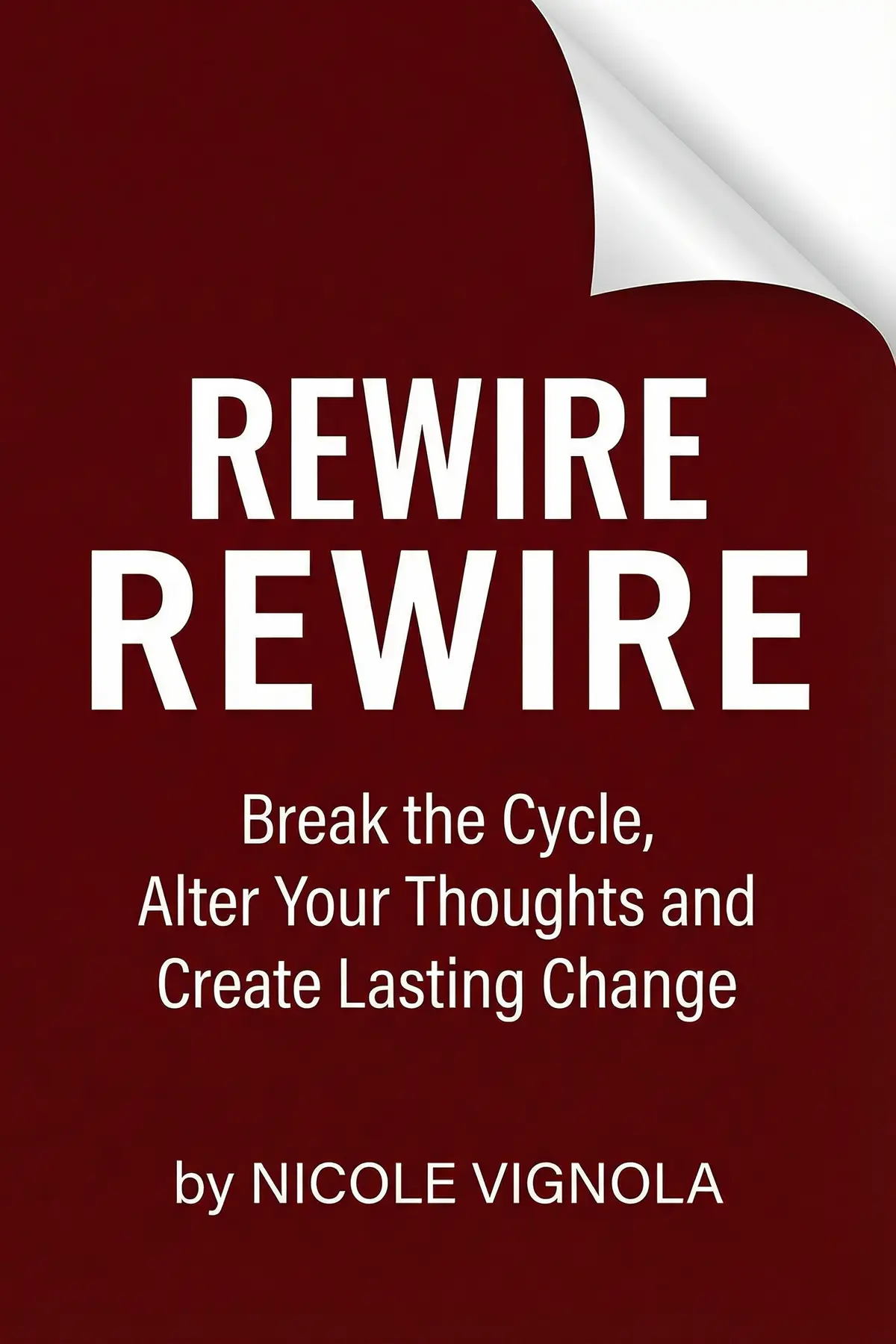
Table of Content
1. Introduction
1 min 01 sec
If you keep starting over, with a new routine that fades by the third week or a harsh story about yourself that replays every morning, the problem may not be your character. In Rewire, neuroscientist and organizational consultant Nicole Vignola argues that the brain physically reshapes itself around whatever you repeat. That makes the habits and beliefs that hold you back worn paths, and worn paths can be rerouted at any age.
Her throughline is simple. Change the inputs you repeat, accept the discomfort of the new route, and the wiring follows. Along the way she explains why the brain clings to familiar misery, why motivation reliably fails, how quick pleasures drain your drive, and how your phone shapes the first minutes of every day.
What she offers is a working picture of your own brain and a small set of neurohacks: what to unfollow, what to stop doing at dawn, and what to do on the day you slip.
2. Your brain can still build new roads
2 min 00 sec
Self-doubt and automatic routines can feel like permanent parts of who you are. A neuroscientist explains what is physically happening when a pattern takes hold, and why that same process leaves the door open.
3. Understand why familiar pain feels safe and change it
2 min 19 sec
You ask for advice, agree with every word, and then do nothing. The reason has little to do with laziness, and a world-famous tennis player shows a better way to handle what is really going on.
4. Lean on discipline when motivation runs out
2 min 15 sec
Most new habits stall at roughly the same point, and the slump arrives so reliably that it can be planned for. Vignola explains what to expect, what to protect and what a missed day really means.
5. Trade quick dopamine hits for rewards that last
2 min 14 sec
An evening of easy pleasures can leave you flatter the next day than you were before. Vignola explains what those pleasures do to your drive over time, and which surprising habits rebuild it.
6. Guard your feed and your first waking minutes
1 min 58 sec
The quickest change to your wiring costs nothing and takes minutes. It involves what you let into your head each day, and one small window every morning that most people give away without noticing.
7. Conclusion
1 min 03 sec
What Vignola offers, in the end, is a new way to read your own failures. The relapse in week three, the advice you asked for and ignored, the evening lost to scrolling: none of these prove you cannot change. They are the brain doing what it does, choosing the familiar road, the easy reward, the known outcome. And because the same brain rebuilds itself around whatever you repeat, every one of those defaults can be worn down.
That makes change a matter of practice. Mute the accounts that make you feel smaller, and leave the phone alone when you first wake. Trade one quick reward each day for something that takes effort, and protect your sleep while you are building something new. When fear shows up, take the step anyway, the way Djokovic plays through his nerves. And on the day you slip, remember that one missed day does not snap the brain back to where it started.
The old road will stay paved for a while. Each day you walk the new one, it gets a little easier to find.
About this book
What is this book about?
Plenty of people know the pattern well. A new routine starts strong and fades by the third week. A harsh story about not being good enough plays again every morning. Nicole Vignola, a neuroscientist and organizational consultant, argues that these loops are not fixed parts of your character. They are well-used pathways in a brain that keeps changing in response to what it experiences, at any age. Rewire explains the mechanism in plain terms and then turns it into tools. Vignola shows why the brain treats familiar misery as safe, which is where self-sabotage comes from, and why motivation fades while discipline lasts. She explains how quick pleasures such as scrolling and fast food shift the brain's reward baseline, and how the media you consume and the first minutes after waking shape the rest of your day. Readers come away with a clear picture of how their own brain resists change and a set of small, concrete moves: muting accounts that feed self-doubt, keeping the phone away at dawn, swapping easy rewards for effortful ones, protecting sleep, and getting back on track after a missed day without treating it as failure.
Book Information
Who it's for
Stuck in self-doubt
People stuck in loops of self-doubt who want to understand why their brain keeps choosing the familiar.
Facing the routine slump
Anyone whose new routines collapse by the third week and who wants a plan for the slump.
Heavy scrollers feeling unmotivated
Heavy phone and social media users who feel drained and unmotivated.
About the Author
Nicole Vignola
Nicole Vignola is a neuroscientist, organizational consultant and keynote speaker. She studied neuroscience at the University of Bristol and organizational psychology at the University of the West of England. Rewire is her debut book. It reflects her aim of helping people understand how their brains work, so they can change the habits and behaviors that hold them back.
Ratings & Reviews
Ratings at a glance

What people think
Listeners find the book accessible and clear, with one listener mentioning that it is especially useful for expecting moms. They also appreciate how effective the content is, with one listener noting that it offers easy-to-understand steps. Furthermore, listeners give positive feedback regarding the scientific approach and neurological insights, while also expressing a fondness for the writing style.
Top reviews
Wipada
Nicole Vignola has managed to distill complex neuroscience into something that feels genuinely accessible for the average person. I’ve always been curious about how our neural pathways function, but most academic texts are far too dense to actually apply to daily life. This book bridges that gap by offering a scientific approach to self-improvement that doesn't feel like a chore to read. Truth is, the way she explains the chemical reactions behind our emotions made so much sense to me. It’s one thing to be told to change your habits, but it’s another thing entirely to understand the biological 'why' behind it. While some of the advice on sleep and exercise is fairly standard, the specific focus on neuroplasticity gives the text a fresh, modern edge. I found the sections on internet usage and digital toxicity particularly eye-opening because it’s a habit most of us ignore. If you want a clear roadmap for mental maintenance, this is it.
Show moreDome
Finally got around to reading this during my second trimester, and it was exactly what I needed to quiet my racing thoughts. Being an expecting mom comes with a lot of anxiety, and Nicole’s breakdown of how our brains process fear was incredibly grounding. The book provides a very scientific approach to mental health, which I prefer over the more 'woo-woo' self-help books on the market. Every chapter feels like a toolkit designed to help you regain control. I especially loved the sections on journaling prompts; they weren't just random questions but felt tied to the biological goals she was explaining throughout the text. It’s easy to read even when you’re exhausted, and the clarity of the writing is a huge plus. Frankly, I think this should be required reading for anyone going through a major life transition. It really helps you realize that you aren't stuck with your current mindset forever.
Show moreWatchara
Wow. This book really hit home for me. I’ve spent years feeling like my brain was just 'wired' to be anxious and pessimistic, but Nicole Vignola explains why that’s simply not true. The focus on neuroplasticity is so empowering because it proves that only you can fix yourself through consistent action. I listened to the audiobook version and the author’s voice is so calm and authoritative; it really helped the information sink in. The steps she provides are easy to understand and even easier to implement into a busy schedule. I didn't find the analogies weird at all—they actually helped me visualize what was happening in my head. Not gonna lie, I finished this and immediately wanted to start it over again to make sure I didn't miss any of the prompts. It’s a scientific, hopeful, and deeply practical manual for the modern human. Highly recommended for anyone ready to change.
Show moreRoydao
Ever wonder why it’s so hard to break a bad habit even when you know it’s hurting you? 'Rewire' answers that question with a brilliant scientific approach that takes the shame out of the struggle. Nicole Vignola does a fantastic job of explaining that our brains are essentially just following a script we've written for them over years of repetition. By understanding how to 'rewire' those scripts, you gain a sense of agency that is truly life-changing. I loved how the book stays grounded in fact while still being incredibly motivating. Every chapter left me feeling like I had a new tool in my belt. Whether it’s the journaling prompts or the deep dive into neuroplasticity, the content is rich and valuable. I’ll be 30 next month and finishing this book feels like the best gift I could have given myself. It’s a 5-star guide for anyone wanting to take their mental health into their own hands.
Show moreKevin
Picked this up because I wanted a practical guide to habit formation, and for the most part, it delivered. The author’s voice is encouraging and the scientific explanations are simplified without feeling too condescending to the reader. However, I did notice some of the weird analogies that other reviewers mentioned, like holding back neurons from firing, which felt a bit scientifically inaccurate given how automatic those processes are. To be fair, these metaphors are likely just there to make the material digestible for non-scientists. The writing can be a little inconsistent at times with the mix of UK and US English, which threw me off a bit during the later chapters. Despite those minor editorial quirks, the core message is incredibly empowering. It’s a solid resource for anyone looking to understand the mechanics of their mind. I specifically appreciated the easy-to-understand steps for breaking toxic feedback loops.
Show morePatcharaporn
The chapter on how our digital lives impact our brain chemistry was worth the price of the book alone. We all know being online too much is bad, but seeing the science behind why it creates such toxic feedback loops was a total wake-up call for me. I’ve read 'The Chemistry of Calm' and other similar titles, and while this isn't quite as deep as those, it’s much more practical for daily application. The tone shifts between being a hard science lesson and a pep talk, which can be a bit jarring, but Nicole’s enthusiasm is infectious. One minor gripe is that the 'tools' provided—like meditation and basic breathing exercises—can feel a bit vague if you're already familiar with them. I would have loved more specific, advanced techniques to work with. Still, for a general audience, this is a fantastic and clear guide. It’s a quick read that leaves you with plenty to think about.
Show moreChamlong
After hearing so much buzz about this on social media, I decided to give it a go. It’s a really useful and practical guide for anyone who feels stuck in their ways. I actually work with teenagers, and I’ve already started using some of the concepts regarding neural pathways to explain to them why their habits matter. The writing is generally very clear, though I did spot some of the punctuation errors and odd sentence structures that others have pointed out. It didn’t ruin the experience for me, but a more thorough edit would have made it a smoother ride. In my experience, the best part of the book is the encouragement to take small, manageable steps rather than trying to change everything at once. It’s not necessarily a 'life-changer' in the sense of providing brand-new information, but it’s a great consolidator of healthy habits that actually works.
Show moreTanawan
This book has such great potential and for the most part, it lives up to it. It’s a very accessible entry point into the world of neuroscience without being overwhelming for the reader. I appreciated the scientific approach to common problems like procrastination and negative self-talk. It’s refreshing to read something that isn’t just 'positive vibes' but actually explains the chemical reactions in our bodies. Personally, I found the advice on internet usage and digital detoxing to be the most helpful part of the entire text. Some of the sentences are a bit clunky, and the punctuation is missing in a few spots, but the information value is high enough to overlook those issues. It’s a solid 4-star read for me. It’s clear, concise, and offers a lot of brain knowledge that is easy to apply to your own life. It’s a good way to refresh your perspective.
Show moreRosa
As someone who has been a lifelong student of psychology and brain health, I found this to be a bit of a mixed bag. There is a lot of great information here, but much of it feels regurgitated from other popular self-help titles. If you’ve read any books on habits or basic neurology in the last five years, you’ve likely encountered these concepts before. I am neurodivergent, and while the author mentions wanting to help our community, the advice sometimes felt a bit shallow. Telling someone with ADHD or autism that they have 'choice' over their emotional reactions is a simplified take that ignores some of our physiological realities. Look, the book isn't bad—it's actually quite clear and well-organized—but it lacks the depth I was personally hoping for. It’s a decent entry point for beginners, but those looking for truly novel information might find themselves shrugging and asking what else is new.
Show morePan
Not what I expected given all the hype. While the core message about rewiring the brain is fascinating, the execution felt a bit messy. The writing frequently switches between different dialects of English, and there were several moments where the author seemed to contradict herself. For example, she explains that neurons fire automatically, but then uses an analogy about manually holding them back—it’s confusing for a reader trying to learn the actual science. I also felt quite uncomfortable with the inclusion of quotes from a certain basketball player associated with sexual assault; it felt unnecessary and took me out of the experience. The tools provided, like journaling and meditation, are things we’ve all heard a million times before. To be fair, if you've never read a self-help book, you might find this revolutionary. But for me, it stayed too much on the surface without offering anything truly ground-breaking.
Show moreQuestions about this book
What is the main idea of Rewire by Nicole Vignola?
Vignola argues that the brain physically changes in response to what you repeat, a property called neuroplasticity. Habits and beliefs that hold you back are well-used neural pathways. They can be weakened through disuse, and new ones can be strengthened, even later in life. The book turns this into practical steps on self-sabotage, discipline, dopamine and the media you consume.
Why do people self-sabotage, according to Rewire?
Vignola describes self-sabotage as a fear response. The brain wants safety and control, and it treats the familiar as safe even when it is harmful, so a known bad outcome can feel less risky than an unknown one. It shows up as ignoring advice you asked for, explaining away the need to change, procrastination and perfectionism. Her answer is to act bravely while afraid, as Novak Djokovic competes despite his fear.
What does plastic, not elastic mean in Rewire?
It is Vignola’s reminder that the brain does not snap back to its old state the moment you miss a day or slip into an old habit. Change is not a straight line, and aiming for perfection often stops people from starting. Even through setbacks, the gap between a trigger and your old response keeps growing, so the right move after a missed day is simply to continue.
How does Rewire suggest fixing low motivation?
Vignola links low motivation to overusing instant rewards like scrolling, gaming and fast food, which shift the brain’s dopamine baseline and make effortful tasks feel harder. She recommends activities that take effort and raise dopamine more steadily, such as exercise, drawing, cooking and cold-water baths. By her account, cold water can raise dopamine by about 250 percent for up to three hours.
What can I do tomorrow to apply Rewire?
Start with your information diet, which Vignola calls the easiest way to rewire the brain. Mute or unfollow accounts that leave you doubting yourself. Keep your phone away in the first minutes after waking, when the brain is in a calm state suited to creativity and reflection. Protect your sleep, since it is when the brain stores new learning.
Featured in
Readers also enjoyed



A Guide to the Good Life: The Ancient Art of Stoic Joy
William B. Irvine




A High-Performing Mind: Strengthen Your Mind and Live Your Best Life
Andrew D. Thompson

Alcoholics Anonymous
Alcoholics Anonymous World Services

Abundance: The Inner Path to Wealth
Deepak Chopra
AUDIO SUMMARY AVAILABLE
Listen to Rewire in 15 minutes
Get the key ideas from Rewire by Nicole Vignola, plus 5,000+ more nonfiction titles.
- 5,000+ titles
- Listen as much as you want
- 7-day free trial
- Cancel anytime









