


60 Seconds & You’re Hired!
Robin Ryan
 English
Shows how to stop mass applying and start choosing: define one target role, present yourself as the low-risk fit for it, get found by recruiters, network through weak ties and negotiate offers as a partner.
1 min 01 sec
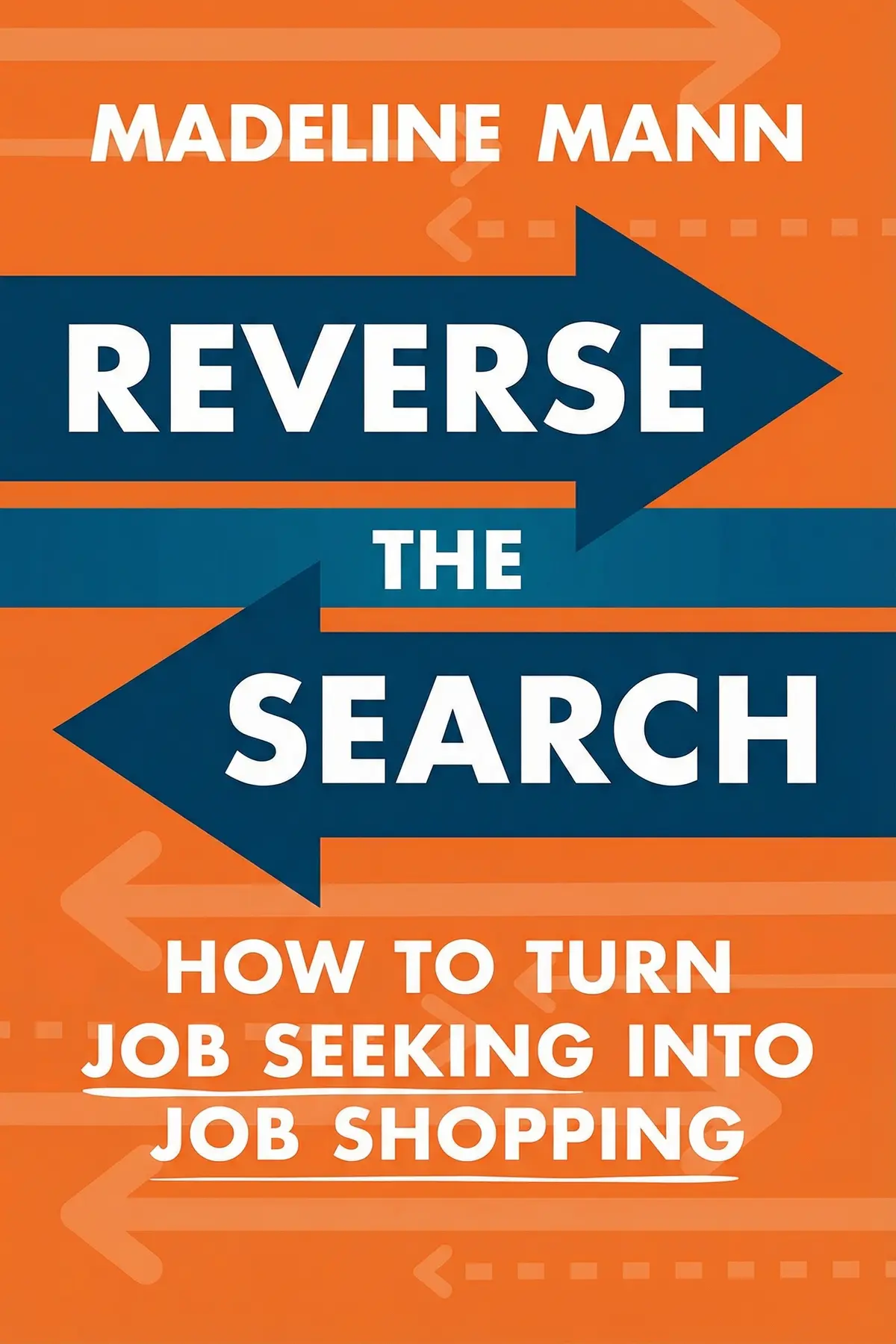
Sending out application after application and hearing nothing back can leave any professional feeling powerless. In Reverse the Search, career strategist and recruiting leader Madeline Mann argues the fix is to stop behaving like a job seeker and start behaving like a Job Shopper, someone who knows what they want and picks the role that fits. Her reasoning is simple: employers mostly want to avoid a costly bad hire, so the candidate who is clearly right for one specific role holds far more power than one who seems available for anything.
That idea shapes every step of her method. Choose a single target, turn your résumé and online profile into a pitch for it, reach the job through people instead of portals, and treat interviews and offers as joint problem solving. Along the way come her working tools: a formula for choosing a direction, a list of twenty contacts, a minute of help offered before any request, and a short story format for interviews.
1 min 38 sec
Two common habits, aiming lower and sending out as many applications as possible, can each feel like an easy, productive path to a job. One job seeker followed them through 500 applications and got nowhere, then changed course and earned a $35,000 raise.
1 min 57 sec
Plenty of people drift from offer to offer without ever asking what they want. A formula with an oddly spelled name helps turn a vague wish for change into one clear target.
1 min 39 sec
A composer applied for a marketing role with a detailed video about his past. It was a good story, and that was exactly the problem hiring managers keep running into.
1 min 27 sec
Companies hiring for skilled roles do not simply wait for applicants; they use recruiters and headhunters who actively search platforms like LinkedIn. Whether they see you can depend on a number most people never think about on their profile.
1 min 39 sec
A former teacher sent hundreds of applications and heard nothing. What he did instead doubled his salary, and the people who help most in this approach are rarely your closest friends.
1 min 36 sec
Contacting near strangers usually feels like begging for favors. A one-minute habit changes that dynamic, and a short email can rescue even an application that disappeared into an online portal.
2 min 00 sec
Interviews feel like exams and salary talks feel like fights. Mann suggests one small change of position that alters what both conversations are for, from your first question to the moment you name a number.
1 min 05 sec
What Mann offers in the end is a change of posture. A seeker waits to be chosen; a shopper decides what they want and makes it easy for the right employer to say yes. Each step of her method lowers the risk a company feels when it looks at you. A clear target suggests you will stay. A pitch-shaped résumé and a findable profile show you fit. A warm introduction puts a person’s word behind your name. A consultant’s manner in the interview shows the work has already started in your head.
The best place to begin is small and specific. Run your values, strengths and market demand through the Well-th Formula until one role is left standing, even if that takes a few weeks of conversations. Write your Golden 20 list and give one person on it a minute of real help before you ask for anything. And the next time you do apply online, find the hiring manager and send that short email.
Nestor needed 500 applications to learn that volume was the problem. You can skip that part and start shopping.
Many job hunts run on volume: hundreds of applications, generic résumés and long silences. Madeline Mann, a career strategist and recruiting leader, argues that this approach throws away the one advantage a candidate has. Employers fear a bad hire, so the person who looks clearly right for a specific role holds real influence. Her Job Shopper method starts with direction. The Well-th Formula combines your values, your strengths and market demand to point you at one target role that pays well and fits the life you want. From there, Mann shows how to rewrite a résumé as a pitch built on keywords and accomplishment statements, how to shape a LinkedIn profile that recruiters actually find, and how to reach jobs through relationships using exercises like the Golden 20 and 60 Seconds of Value. The final stage covers interviews and offers. Mann's Consultative Approach treats the interview as a shared look at the company's problems, backed by short stories and work samples, and frames negotiation as the start of a partnership. Readers get a clear sequence of steps for choosing a job instead of waiting to be chosen.
Professionals who have sent dozens of applications and heard nothing back.
Career changers tempted to aim lower or unsure which role to target next.
Mid-career workers who want recruiters to find them and want to negotiate offers with confidence.
Madeline Mann is a career strategist and a human resources and recruiting leader, so she has seen hiring from the employer's side. She created the YouTube channel Self Made Millennial, founded a coaching business with courses and tools for job seekers, and hosts a reality show called Job Shopper. LinkedIn has named her a Top Voice, she has run job search courses for LinkedIn Learning and Spotify, and her advice has been featured by ABC News, The New York Times and The Wall Street Journal.

Listeners find this career guide enlightening and useful, with one listener mentioning that it assists with interview preparation. Furthermore, the content is simple to digest and listeners view it as an essential resource for those hunting for work. They also value how welcoming it is, with one listener describing it as approachable, and find it empowering, with one review emphasizing how it leverages powerful tools.
Finally, a career guide that doesn't feel like a chore to read. Madeline Mann brings her signature energy to the page, making the daunting task of job hunting feel surprisingly manageable. I particularly loved the concept of "job shopping" versus "job seeking" because it flips the power dynamic back to the candidate. While some might find the networking advice a bit basic if they’re already well-connected, the specific scripts provided for outreach are gold. The book is incredibly easy to digest, and I finished it over a weekend without feeling drained. It’s empowering to have a roadmap that focuses on proactive moves rather than just reactive applying. This is definitely going to be a staple on my shelf for whenever I feel my career needs a nudge. Truth is, her style is so approachable that it feels like a personal coaching session.
Show moreThe chapter on rewriting your resume changed my entire perspective on how I present my ten years of experience. I realized I’d been trying so hard to be "versatile" that I ended up sounding like a generalist who offers nothing specific to recruiters. Mann’s approach to the modern search is refreshing and highly practical. She doesn't just tell you what to do; she explains the psychology behind recruiter behavior. The book is approachable and fast-paced, which is a relief when you’re already stressed about work. In my experience, the interview preparation section alone is worth the price of admission. It gave me the confidence to stop sending out generic applications and start being more intentional. This isn't just a book you read once; it’s a manual you keep open on your desk.
Show moreWow, the shift from "desperate applicant" to "empowered shopper" is a total game changer for my mental health. Looking for work is exhausting, but Madeline Mann makes it feel like you’re finally in the driver’s seat. I’ve already started implementing her networking tips, and the response rate has been night and day compared to my old methods. The book is exceptionally insightful regarding how the 2025 job market actually functions. It’s not just about resumes; it’s about visibility and positioning yourself before you even need the job. I love how she breaks down the timeline for salary negotiation—it takes the fear out of the conversation. If you want to stop feeling like you’re begging for a job and start choosing your next move, get this. It leverages powerful tools that most people ignore.
Show moreEver wonder why your perfectly polished resume is getting zero bites in the current market? This book finally gave me the answer. Mann explains how recruiters scan for specific impact, and it turns out I was focusing on the wrong things entirely. The "Reverse the Search" methodology is brilliant because it prioritizes quality and connection over the sheer volume of applications. I finished the whole thing in under a week because the style is so approachable. It feels more like a toolkit than a textbook. I’ve already recommended it to three colleagues who are currently gainfully employed but feeling stagnant. It’s the proactive advice we need to stay relevant and marketable. Truly a must-read for anyone who wants to navigate their career with intention rather than just luck and hope.
Show moreMadeline Mann has managed to condense years of high-level coaching into a single, punchy volume that feels like a shortcut to success. I’ve been a fan of her LinkedIn Learning content, but this book takes the "Self Made Millennial" philosophy to a new level. The step-by-step breakdowns for networking and referrals are especially powerful because they remove the awkwardness usually associated with reaching out. It’s not just practical—it’s strategic. I appreciate how she tackles the psychology of the job search, moving the reader from a place of desperation to one of selectivity. Whether you are actively hunting or just want to be prepared for the next move, the insights here are invaluable. It’s concise, actionable, and arguably the most relevant career book of 2025.
Show moreNot what I expected from a standard business book, and I mean that in the best way possible. It’s actually fun to read! Madeline’s voice comes through so clearly, and her "job shopping" concept is a breath of fresh air. I spent hours tweaking my resume based on her suggestions, and I can already see how much more impactful it is. Not gonna lie, the revisions were extensive, but the book makes the process feel straightforward rather than overwhelming. The advice on salary negotiation is also top-tier; it gave me the exact language I needed to feel confident in my worth. It’s an empowering resource that helps you stand out. This should be required reading for anyone in the early-to-mid stages of their professional life who feels stuck.
Show morePicked this up on a whim while fearing a layoff, and it’s been the best insurance policy I could ask for. The reality is that no job is truly "safe" today, and this book provides the blueprint for staying employable no matter what. I loved the emphasis on building a network before you actually need it. The timelines for referrals and interviews are incredibly helpful for someone like me who likes to have a plan. While the tips are definitely more geared toward white-collar roles, the core principles of value and positioning are universal. It’s a very encouraging resource that helped me realize I have more leverage than I thought. Madeline has created something truly special here—a career guide that is both accessible and deeply insightful. It's a game-changer.
Show moreAs someone who has followed Madeline on YouTube for years, I had high expectations for this debut. The book definitely delivers on providing a clear, step-by-step timeline for things like referrals and salary negotiation. However, to be fair, if you are a very senior executive or in a highly specialized trade, some of these strategies might feel a bit broad. It’s clearly aimed at white-collar professionals looking to navigate the 2025 market. I found the section on "hollowing out" your resume particularly insightful because I realized I was making that exact mistake! It’s a solid resource that distills complex career coaching into actionable bits. I just wish there was a bit more depth for those in niche technical fields. Still, it's a very worthy read for most people.
Show moreLook, the advice isn't necessarily reinventing the wheel, but the delivery and structure are what make it stand out. Most career books are dry and repetitive, but this one is punchy and distilled. Madeline has a way of making you feel like she’s coaching you over coffee. My only minor gripe is that the focus on office-based professionals makes it less relevant for my friends in retail management or the trades. That said, for the target audience, it’s a goldmine. The section on staying employable even when you have a "stable" job is a wake-up call we all need in this economy. Gotta say, things change in the blink of an eye, and having these tools ready is essential. It’s a very practical, easy-to-read guide that I’ll likely revisit.
Show moreI'll be the outlier here and say this didn't quite hit the mark for my specific career pivot. While the writing style is pleasant and the tone is encouraging, I found the advice a bit too focused on standard office roles. If you’re trying to move into a completely different industry or a super-specialized sector, the "job shopping" philosophy feels a bit optimistic given current market hurdles. Frankly, much of the networking advice is stuff you can find on her social media channels for free. It’s a great, concise guide for someone just starting out or stuck in a mid-level rut, but for those of us in niche categories, it lacked the granular detail I was hoping for. It’s a decent primer, just not the deep-dive transition guide I personally needed right now.
Show moreMann argues that job seekers should act like Job Shoppers: decide exactly which role they want, then present themselves as the clear, low-risk fit for it. Employers mainly want to avoid a costly bad hire, so a focused candidate holds influence. Her method moves from choosing a direction to building a targeted résumé and LinkedIn profile, networking, interviewing as a consultant and negotiating as a partner.
Mann uses it to pick a career direction, combining what you value, what you are good at, and what the market demands. The spelling with two Ls links money with living well. You name your top five values and top five marketable strengths, then check pay and growth in the field by reading industry reports and talking to people in the role, until one target role remains.
Mann reframes networking as building professional relationships and stresses weak ties, casual acquaintances who connect you to new circles. Her Golden 20 exercise lists about twenty helpful contacts and ranks who to approach first. Her 60 Seconds of Value habit means offering small, specific help, such as an introduction or a useful resource, before asking for anything.
She treats negotiation as the start of a partnership. Delay naming a salary early on, or ask for the company’s range first, and wait until they understand your value. When the offer arrives, open with appreciation, ask clarifying questions, state your researched number and pause. If base pay is fixed, try for a sign-on bonus, a better title, vacation, flexible work or an earlier review.
Yes. Mann warns that career changers who apply for roles far below their level can look like flight risks, so she pushes them to pick a clear target instead. The Well-th Formula helps test a new field against pay and demand, as Alice did when she left math teaching for data science, and networking through weak ties helps open doors in unfamiliar circles.
Robin Ryan




Marianne Cantwell
William Vanderbloemen
AUDIO SUMMARY AVAILABLE
Get the key ideas from Reverse the Search by Madeline Mann, plus 5,000+ more nonfiction titles.









