

13 min 17 sec
Available in: English
Renegade: Defending Democracy and Liberty in Our Divided Country
A Republican congressman explains why he voted to impeach a president of his own party after January 6, and how his party changed around him from small-town civility to open combat.
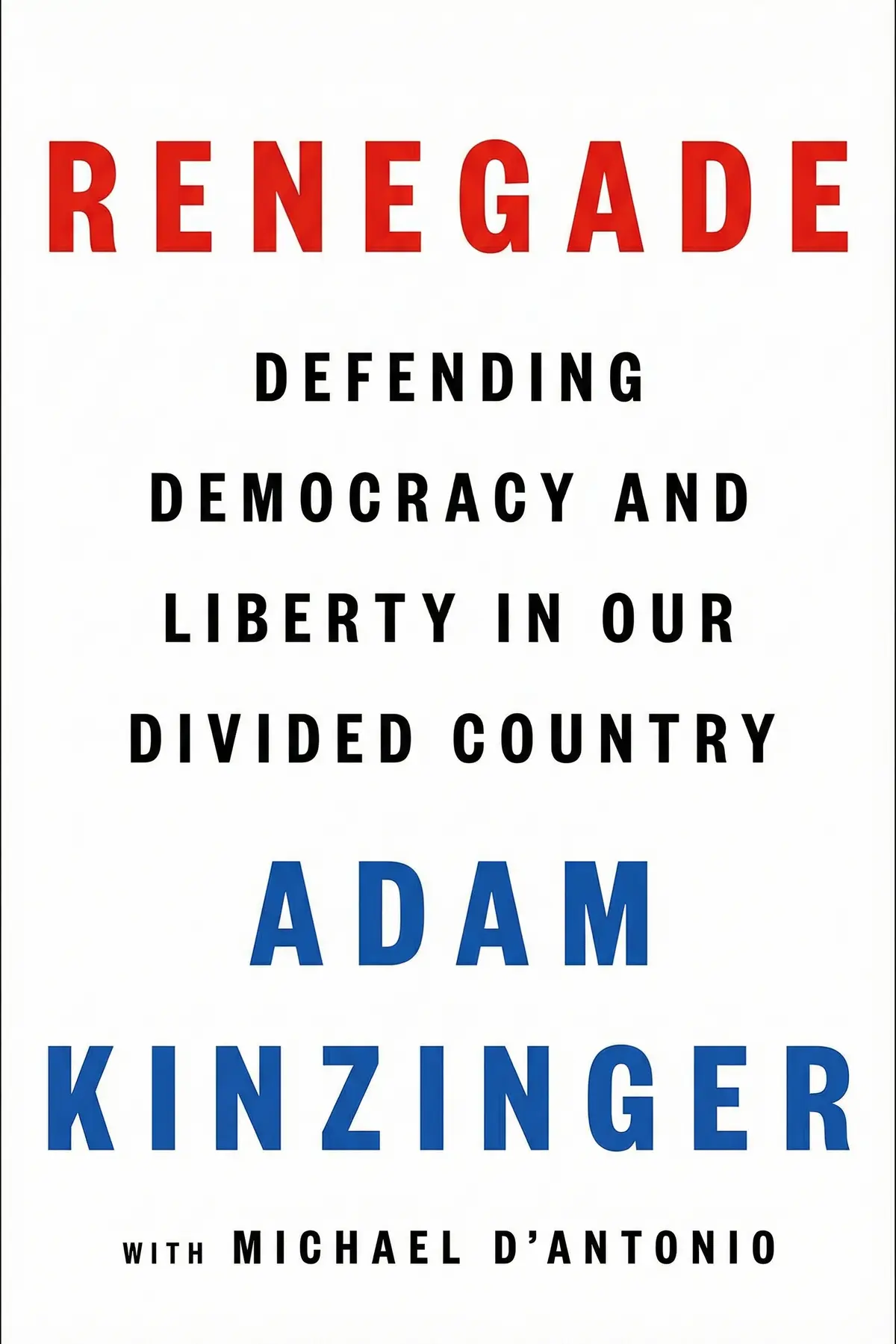
Table of Content
1. Introduction
1 min 02 sec
When the people around you close ranks behind a lie, silence feels safe, and speaking up can cost you everything. In Renegade, Republican congressman Adam Kinzinger, writing with journalist Michael D’Antonio, describes reaching exactly that choice after the January 6, 2021, attack on the Capitol, when he voted to impeach a president from his own party.
His account makes a plain case. Democracy is defended, or lost, by individuals deciding whether their oath to the Constitution outranks loyalty to their team. Kinzinger traces that decision back through his life, from a polite county board race in small-town Illinois to a party that grew more combative every year. He is also honest about the time he failed the test himself.
Follow his path and you get a clear picture of how a major party changed from the inside, along with a sharper sense of what it takes to hold your ground when your own side moves.
2. Spot the moment when loyalty and principle split
1 min 48 sec
After the Capitol was stormed, Republicans in Congress had to choose between party loyalty and the Constitution, and few in the party broke ranks. Kinzinger was one of those rare dissenters, and the book sets his vote beside the Capitol Police officers who defended the building.
3. See where a lawmaker's values were first formed
1 min 51 sec
A college student challenges a sitting official, and the debate is so friendly it now sounds unreal. Yet even in that gentle world, one modest reform ran straight into a wall.
4. Turn early political defeats into useful lessons
1 min 38 sec
A campaign he admired for its honesty lost badly, and his own family’s race ran out of money and know-how. Those twin setbacks led him to start reassessing whether he had a future in politics.
5. Name your ambition honestly, ego included
1 min 47 sec
Most candidates talk only about service and country. Kinzinger admits another motive drove his run for Congress, and his win came with a moderate strategy that his party would soon outgrow.
6. See how the Republican Party changed from within
2 min 05 sec
A brief return to moderation gave way to an inauguration unlike any before it. Kinzinger describes drinking through the strain, and a vote he still wishes he had cast differently.
7. What it takes to establish the truth after January 6
1 min 55 sec
A million documents, thousands of interviews and phone logs that never recorded a single word spoken. Investigating the Capitol attack meant fighting both the size of the evidence and the politics around it.
8. Conclusion
1 min 11 sec
Renegade is the story of a man who learned, slowly and with one painful failure, what his oath was worth. Kinzinger began in a world where a 20-year-old could debate a county board incumbent like a neighbor. He ended in a Congress where telling the truth about an election made him an outcast in his own party. Between those points, the party changed around him, from Reagan’s collegial style to a politics of combat.
His larger point is that institutions do not defend themselves. Officers at the doors, a member willing to cast a lonely vote, a data expert reading through phone logs: each did a part. And the cost of not acting is real, as Kinzinger’s regret over the first impeachment makes plain.
If you work inside any group, decide in calm times which commitments outrank loyalty, so a crisis does not decide for you. And when you catch yourself calculating the backlash for doing the right thing, remember that this is exactly how Kinzinger missed his first chance.
He got a second one. Most people do, if they have decided in advance what they will do with it.
About this book
What is this book about?
After the January 6, 2021, attack on the US Capitol, most Republicans in Congress stayed with Donald Trump. Adam Kinzinger did not. He voted to impeach the president and later joined the committee that investigated the attack. Renegade, written with journalist Michael D'Antonio, explains how he reached that point and what it cost. Kinzinger traces his values to a small Illinois town and a strict Baptist upbringing, then follows his own rise: a county board win at 20, a first taste of rough national politics in John McCain's 2000 campaign, and a 2009 run for Congress that he admits was partly about ego. Along the way he watches the Republican Party move from Reagan's collegial style to the Tea Party, then to Trump. He is frank about his own failure, too. He chose not to vote for Trump's first impeachment, and he came to regret it. Readers get an insider's account of how a major party changed from within, a look at the scale of the January 6 investigation, and a clear case for putting constitutional principle ahead of team loyalty when the two collide.
Book Information
Who it's for
Wondering how Republicans changed
Readers trying to understand how the Republican Party changed from Reagan to Trump.
Professionals pressed to conform
Professionals who have felt pressure to back their group when it was wrong.
Following January 6
Anyone following January 6 who wants an insider's view of the investigation.
About the Author
Adam Kinzinger
Adam Kinzinger, born in 1978 in Kankakee, served as a Republican in the US House from 2011 to 2023, representing Illinois's 11th and then 16th districts, and is a former Air National Guard officer. He became known for rejecting Trump's voter fraud claims after 2020, appears in the documentary The Last Republican, and later joined CNN as a senior political commentator. Co-author Michael D'Antonio is a former Newsday reporter who shared a 1984 Pulitzer Prize and wrote Never Enough, a life of Donald Trump.
Ratings & Reviews
Ratings at a glance
What people think
Listeners describe this as an excellent and beautifully composed book that provides a sense of hope for the future. They value the writer's boldness and truthfulness, with one listener pointing out how it offers a look into the inner workings of Congress. The text shares intriguing viewpoints on current politics, with one listener emphasizing its specific Republican outlook.
Top reviews
Cee
Wow. This isn't just another dry political memoir; it’s a refreshing look at what it means to actually hold onto your principles when everything around you is catching fire. Kinzinger offers a unique Republican viewpoint that is desperately needed in our current landscape, providing a sense of hope that integrity hasn't completely vanished from the halls of power. I found his honesty about the internal pressure within the GOP to be both eye-opening and deeply concerning. It takes a certain kind of person to sacrifice a high-flying career for the sake of the truth, and his account of the January 6th committee shows the heavy toll that choice took. To be fair, some might find the policy discussions partisan, but his commitment to the Constitution is undeniable. This is a well-written, fast-paced read that left me feeling surprisingly optimistic about the future of our democracy.
Show moreMoon
As someone who has felt politically homeless lately, reading Kinzinger’s perspective was like finding an oasis in a desert of partisanship. He writes with a level of honesty that is rare in Washington, particularly regarding how the GOP intertwined religion and politics to a point of no return. The descriptions of his Air Force service and that haunting image of a wounded soldier with blood in his eyes really ground the book in a sense of duty that goes beyond optics. It is a powerful testament to personal courage and the weight of making difficult decisions under extreme scrutiny. I finished this feeling that history will be much kinder to him than his current colleagues are. If you want to understand the moral struggle happening within the American right, this book is an essential resource.
Show moreTang
The chapter on January 6th is absolutely harrowing. It’s one thing to watch the news, but it’s another to read about the physical intimidation and the spinelessness of colleagues from someone who was actually in the room. Kinzinger doesn't hold back when describing how figures like George Santos and Matt Gaetz behaved, which provides a necessary window into the toxicity of modern Congress. I found his transition from a traditional conservative to a 'renegade' to be a compelling arc that felt earned rather than forced. His respect for Liz Cheney is palpable, and their partnership on the committee serves as the emotional core of the book's final act. This is a must-read for any American concerned about the health of our republic. It’s well-written, courageous, and deeply moving in its defense of democratic values.
Show morePichaya
Finally got around to reading this and it left me feeling empowered about the future of our country. Kinzinger’s story is a reminder that one person can make a difference, even if it costs them their seat at the table. I was especially moved by his descriptions of the January 6th committee's work and the legal gymnastics attempted by people like John Eastman. The book offers a unique Republican viewpoint that prioritizes the rule of law over winning at all costs. It’s a well-written memoir that manages to be both a personal story and a warning for the nation. Personally, I think every voter should read this before the next election cycle to understand what was really happening behind the scenes. His bravery is a beacon of hope in a very dark time for American politics.
Show moreNatnicha
Not what I expected from a typical politician's book. Most of these memoirs feel like extended campaign brochures, but 'Renegade' feels like a genuine attempt to reckon with a broken system. His descriptions of the 'inner workings' of the house are candid and often quite funny in a dark way, especially when discussing the ego-driven antics of his peers. The book is an excellent and well-written read that provides a rare look at the intersection of faith, military service, and high-level governance. While I found his earlier views on certain presidents a bit skewed, I can't fault his consistency when it came to defending the Capitol. It’s a story of courage that transcends party lines. I highly recommend it to anyone who values the truth over political convenience.
Show moreSatit
Picked this up because I wanted to see the inner gears of the GOP during the Trump era. Kinzinger provides a fascinating, if sometimes frustrating, look at how leadership like Kevin McCarthy operates behind closed doors. The way he describes the physical intimidation and the 'lemming' behavior of his colleagues is biting and feels authentic to anyone who has watched the news lately. I especially appreciated the 'how the sausage gets made' aspect of the latter half of the book, which details the chaos of Congress. Truth is, I don't agree with all his policy positions, particularly his earlier stances, but his courage in standing up to his own party is undeniable. My only gripe is that the pacing felt a bit uneven, moving from high-stakes drama to mundane details too quickly. Still, it is a very recommended read for anyone trying to understand the current political divide.
Show morePloy
After hearing Adam on a recent interview, I was intrigued enough to buy the book on release day. The section detailing his military career was particularly gripping, especially the story about subduing a knife-wielding attacker in Milwaukee. These chapters help explain the backbone he showed later in Congress. I think it’s important he included his background because it frames his eventual break from the party as a matter of character rather than a sudden shift. Look, the writing style is straightforward and accessible, which makes the complex political maneuvering easier to digest. I did feel like he glossed over some of his own partisan history a bit too quickly, but the insights into McCarthy’s speakership ambitions were worth the price alone. A solid four-star read for anyone interested in the recent history of our government.
Show moreChaiwat
Frankly, I didn't expect to agree with so much of his platform, even though we differ on specific religious and social policies. Kinzinger writes with a refreshing directness about the failures of his own party to live up to their lofty standards. The book does a great job of explaining how the GOP agenda became almost entirely defined by being the opposite of whatever the Democrats wanted. It’s a bit of a tragedy to read about a talented leader being pushed out for simply telling the truth about an election. To be fair, the timeline can be a bit confusing at points, jumping between his deployment and his time in D.C., but the overall message remains clear. He may not be the 'hero' in everyone's eyes, but he provided a necessary voice of reason when most others chose silence.
Show moreAroon
Ever wonder why political memoirs always spend the first hundred pages on childhood? The first half of this book really dragged for me because I wasn't as interested in his early upbringing in a strict Baptist household or every detail of his high school years. I bought this for the insight into the January 6th committee and the internal GOP collapse, which doesn't really kick into high gear until much later. Once it gets there, the content is great and offers a visceral look at the legislative process during a crisis. However, Kinzinger’s tendency to praise people like Jim Jordan in one breath while attacking Democrats for personal slights felt a bit too partisan for a book claiming to be about 'country over party.' It’s an okay read, but you have to be patient to get to the parts that actually matter for today’s political climate.
Show moreNongnuch
This book was a major disappointment for me, especially after following the J6 hearings so closely. While I admire the stance he took publicly, the narrative here is incredibly disjointed with timeline jumps that make it a chore to follow. Frankly, the author does himself no favors by repeatedly attempting to excuse his own past failings while harshly condemning others for the exact same behavior. His ego seems to permeate every chapter, and his lack of self-awareness regarding his own hypocrisy is truly frustrating. It felt like he was trying too hard to be the hero of a story where he was often just a passenger until it was politically convenient to pivot. I expected more substance about the legislative process, but instead, I got a lot of self-congratulatory filler that overshadowed the actual events of the insurrection.
Show moreQuestions about this book
What is Renegade by Adam Kinzinger about?
Renegade tells how Republican congressman Adam Kinzinger came to vote for Donald Trump’s impeachment after the January 6, 2021, Capitol attack. It traces his small-town Illinois roots, his early campaigns, the Republican Party’s shift from Reagan’s collegial style toward combative politics, and his work on the select committee that investigated the attack. The central argument is that the Constitution must outrank party loyalty.
Why did Adam Kinzinger vote to impeach Trump?
Kinzinger saw January 6 as the result of Trump’s campaign of baseless election fraud claims and as a threat to the constitutional order. He judged that his oath to the Constitution came before loyalty to his party. He had declined to vote for Trump’s first impeachment out of political calculation and fear of backlash, a choice he later regretted.
What does Renegade reveal about the January 6 committee?
Kinzinger describes a huge undertaking: more than a million documents, thousands of interviews and a staff of over 120. Former congressman Denver Riggleman analyzed phone and text logs to map contacts. The committee also faced obstacles, including a costly software project that was dropped in a decision thought to have been swayed by Speaker Nancy Pelosi, despite her early promise not to interfere.
What lessons does Renegade offer readers outside politics?
The book shows that principles usually fail through calculation rather than open betrayal, as Kinzinger’s regret over his first impeachment vote reveals. Readers can decide in advance which commitments outrank loyalty to a group, name their own motives honestly, ego included, and treat any urge to weigh the backlash for doing right as a warning sign.
Who should read Renegade?
It suits readers who want an insider’s account of how the Republican Party changed through the Tea Party and Trump years, people following the January 6 investigation, and anyone who has faced pressure to stay loyal to a group that was going wrong. It is a personal story, frank about ambition, strain and one decision its author wishes he could reverse.
Readers also enjoyed

Ali: A Life
Jonathan Eig

Abortion: Our Bodies, Their Lies, and the Truths We Use to
Jessica Valenti

A Life Decoded: My Genome: My Life
J. Craig Venter


Adults in The Room: My Battle With Europe’s Deep Establishment
Yanis Varoufakis

A Long Way Gone: Memoirs of a Boy Soldier
Ishmael Beah

All Creatures Great and Small
James Herriot

AUDIO SUMMARY AVAILABLE
Listen to Renegade in 15 minutes
Get the key ideas from Renegade by Adam Kinzinger, plus 5,000+ more nonfiction titles.
- 5,000+ titles
- Listen as much as you want
- 7-day free trial
- Cancel anytime









