

14 min 54 sec
Available in: English
Reclaim Your Brain: How to Calm Your Thoughts, Heal Your Mind and Bring Your Life Back Under Control
Shows why a mind that buzzes, races or spirals often comes from an imbalance between the brain's control center and its emotional alarm system, and how medical care plus mindfulness and rewritten inner stories can restore calm.
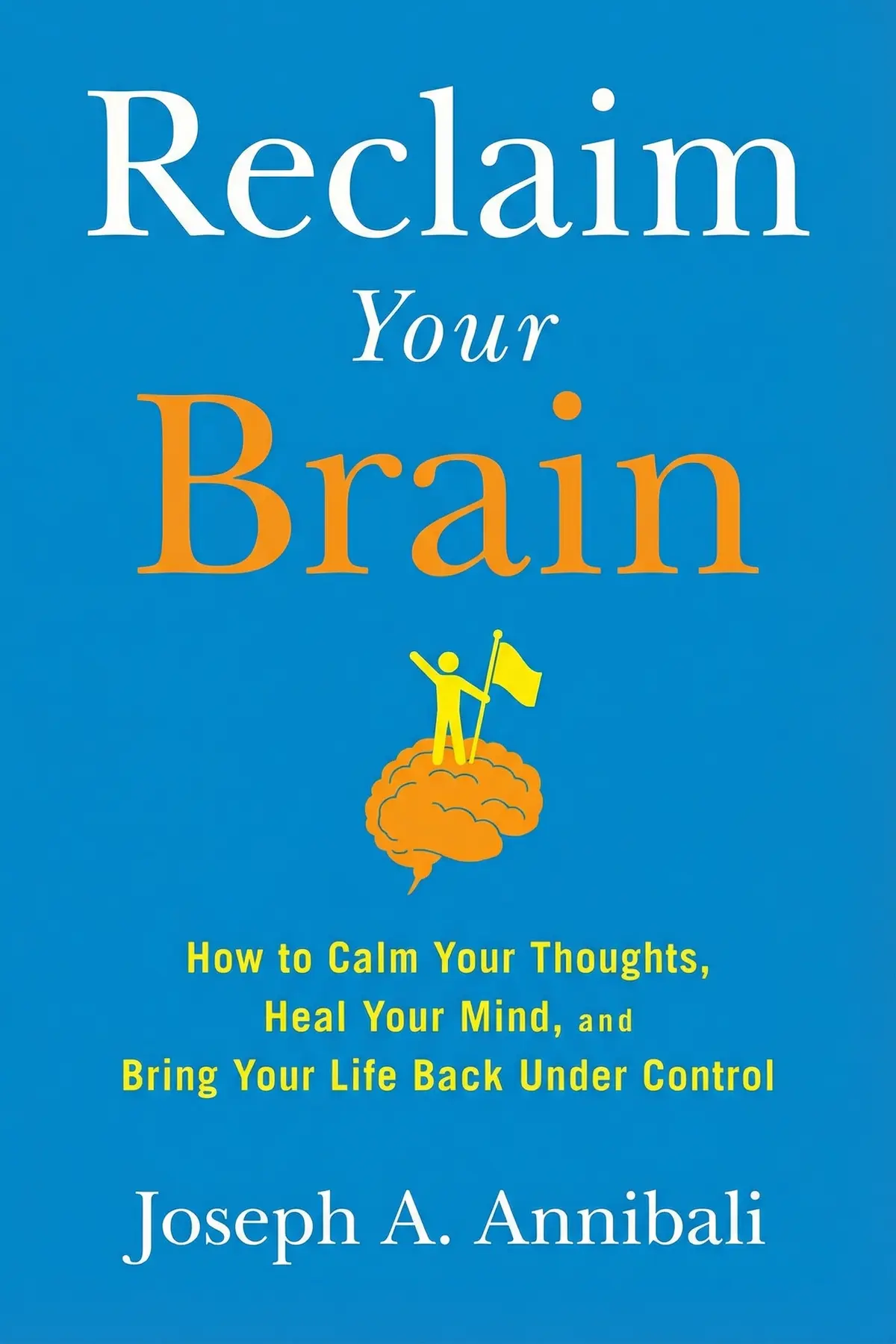
Table of Content
1. Introduction
1 min 06 sec
A mind that buzzes so loudly you cannot focus, rest or decide may not be a character flaw. In Reclaim Your Brain, psychiatrist Joseph A. Annibali argues that it is a too-busy brain, one so overactive it cannot quiet its own chatter long enough to choose well, and that it sits beneath stress, ADHD, anxiety, depression and addiction alike. The cause, in his account, is an imbalance between the thinking prefrontal cortex and the older, emotional limbic system.
Annibali is chief psychiatrist at Amen Clinics and has treated thousands of patients, often using brain scans to see where the imbalance lies. His central claim is hopeful: the brain can change, and a busy one calms when you care for its biology and train the mind at the same time. The patients who proved it include a gambler who owed $100,000 and an accountant convinced he was worthless, and their methods are simple enough to try tonight, from rating your own motivation to putting the story you keep telling yourself on paper.
2. Understand how a racing mind clouds your thinking
2 min 01 sec
One patient heard a beehive, another a runaway train, a third several radio stations at once. Their complaints sounded different, yet a psychiatrist traced all three to the same struggle between two parts of the brain.
3. Find the level of stimulation your brain needs
1 min 47 sec
A medical student could only study with the radio and television blaring at once. For some people, even being near a talkative person can feel like a threat. Both were reacting to the same hidden setting, and it differs for everyone.
4. Learn what anxiety and low mood signal in the brain
1 min 55 sec
Feeling stuck, feeling afraid and feeling flat each leave a different mark inside the head. One severely depressed patient got no help from therapy at all until doctors found the problem was somewhere else entirely.
5. Build the motivation to break an addiction
1 min 35 sec
A gambler ran up a six-figure debt before he asked for help. The method that turned him around started with a single number and ended with one refusal to a relative.
6. Calm your inner alarm with daily meditation
1 min 38 sec
Brain scans show that a simple sitting practice changes activity in the very region that sounds the alarm. The same habit also lets you treat a frightening thought very differently, without needing to argue with it.
7. Rewrite the harsh stories you believe about yourself
1 min 52 sec
An accountant spent years convinced he was lazy and useless at his job. When he finally checked the evidence from his own past, the facts told a very different story from the one in his head.
8. Keep your closest relationship a partnership of equals
1 min 50 sec
Couples slip into parts without noticing, and some of those parts come with a hidden ranking. When one partner always holds the upper hand, the effect reaches deep into both people’s brains.
9. Conclusion
1 min 10 sec
Annibali’s book turns a vague complaint, my head is too loud, into something with a location and a remedy. The beehive Emily described, the freight train Josh could not stop and the radio stations in Corrine’s head are versions of one problem: a control center outvoted by an alarm system. Because the brain can change, that vote can shift, and Annibali insists it shifts best when both sides get attention, the biology through medical care, food, sleep and exercise, and the mind through deliberate practice.
So begin with an honest check. If your moods or habits make no sense to you, especially after an old fall or a blow to the head, ask a neurologist to look. Then give the alarm a daily reason to settle: fifteen to twenty minutes of breathing and a repeated word. And when a cruel sentence about yourself plays on repeat, put it on paper and question it the way Carl questioned his school record.
For years he believed he had never tried. His grades said otherwise, and the record of your life is often kinder than the voice in your head.
About this book
What is this book about?
Some minds never switch off. Thoughts swarm, focus slips, small worries turn into panic, and habits like drinking or gambling start to feel like the only relief. Psychiatrist Joseph A. Annibali calls this the too-busy brain, and he sees it underneath many conditions people usually treat as separate: stress, ADHD, anxiety, depression and addiction. His explanation is a matter of balance. The prefrontal cortex plans, controls impulses and solves problems, while the older limbic system reacts to danger and emotion. When the alarm overpowers the planner, clear thinking stops. Drawing on his clinical work and on brain imaging, Annibali links particular feelings to particular brain regions and argues that some busy brains point to hidden physical damage. Because the brain can change, he offers a two-part remedy: care for the biology through medication, diet, exercise, supplements and sleep, and train the mind through meditation, motivational interviewing, written challenges to negative stories and more equal relationships. Readers get a clear model of what is happening in an overloaded head and practical steps to start calming it.
Book Information
Who it's for
Professionals with racing minds
Professionals whose racing thoughts, scattered focus or late-night worry make work and rest feel impossible.
Adults puzzled by symptoms
Adults who suspect ADHD, anxiety or low mood and want to understand what is happening in their brain.
Leaning on coping habits
Anyone leaning on a drink, a bet or a harsh inner critic to cope with stress.
About the Author
Joseph A. Annibali
Joseph A. Annibali is a psychiatrist at Amen Clinics, near Washington, D.C. He is a leading expert in using SPECT brain imaging in clinical care, which lets him connect what patients feel to how their brains are working. His practice also includes treating neuropsychiatric problems linked to Lyme disease, giving him a close view of how physical illness and mental symptoms interact.
Ratings & Reviews
Ratings at a glance

What people think
Listeners find the book aids in boosting cognitive performance, with one listener noting that it offers renewed hope for those dealing with anxiety. Furthermore, the quality of the content earns high marks, as one listener highlights how it simplifies intricate subjects into plain language. Listeners also value the book’s clear and straightforward readability.
Top reviews
Kiattisak
Ever wonder why your mind feels like it's constantly racing on a treadmill that won't stop? Dr. Annibali provides a refreshing sense of hope for those of us struggling with chronic anxiety by breaking down neurobiology into terms that actually make sense. I found the section on brain capacity particularly enlightening because it didn't just tell me what was wrong, but explained the 'why' behind the chaos. The advice on supplements and mindfulness felt grounded rather than woo-woo. To be fair, some parts get a bit technical with the medical terminology, but the payoff is worth the effort. It’s a solid roadmap for anyone feeling overwhelmed by their own internal static. This book truly helped me understand that my struggles weren't a character flaw but a physiological hurdle.
Show moreChon
Wow. I didn’t realize how much I needed to hear that my 'negative' personality was actually just a series of brain patterns that could be unlearned. The information quality here is top-notch, and the author does a fantastic job of explaining the limbic system and the prefrontal cortex without making my eyes glaze over. It gave me a new sense of hope regarding my chronic anxiety. I’ve started using the techniques for rewriting my internal 'stories,' and the difference in my daily mood is palpable. It’s rare to find a book that balances medical expertise with such a compassionate, readable tone. Highly recommend for anyone feeling stuck in their own head. This is one I will definitely be referencing again.
Show morePot
The chapter on rewriting your negative stories was worth the price of admission alone. Many self-help books tell you to 'think positive,' but this one actually dives into how the brain constructs these false narratives based on past trauma or ADHD struggles. It’s eye-opening to see how a simple 'B' grade in high school can be twisted into a lifelong story of failure. Truth is, I’ve spent years believing things about my own cognitive abilities that simply aren't true. While the author does push brain scans quite a bit—which aren't accessible for everyone—the practical exercises for reframing your perspective are immediately applicable. It’s a very readable guide for the modern, over-stimulated mind. I appreciate the balance between clinical data and actionable advice.
Show moreSirirat
Finally got around to reading this, and the timing couldn't have been better given how much time I spend glued to my phone. Annibali’s discussion on how the internet and our constant influx of digital information over-stimulates the brain is incredibly relevant. We are living in an age of 'too much,' and this book acts as a much-needed manual for hitting the reset button. The writing is clear and avoids the dry, academic tone you might expect from a doctor. Frankly, the suggestions for calming a 'busy' brain are things I started implementing immediately. I do wish there was a bit more depth on the 'butterfly hug' technique mentioned briefly, but overall, it’s a great resource for mental clarity. A solid four stars.
Show moreDaranee
Picked this up during a particularly rough patch with my mental health, and it offered a level of clarity I haven't found elsewhere. Dr. Annibali has a way of making you feel seen without being clinical or cold. I especially appreciated the focus on how physical brain injuries or even sleep apnea can manifest as psychological issues. It shifts the blame away from 'character flaws' and puts the focus on organ health. My only gripe is that some of the treatment suggestions feel a bit out of reach for the average person who can't afford high-end testing. Regardless, the chapters on negativity helped me stop being so hard on myself. It's a very accessible read that I’ve recommended to several friends already.
Show moreNoppadol
This book is filled with case studies that make the science feel much more human and relatable. Seeing how different patients with depression or OCD responded to various treatments helped me understand the diversity of the human brain. Dr. Annibali doesn't offer a one-size-fits-all solution, which I appreciate. Instead, he explores a range of possibilities from mindfulness to medication to neurofeedback. Personally, I found the explanations of how the brain can 'misfire' to be the most helpful part of the book. It’s a well-written guide that helps you understand yourself and the people around you much better. A few sections are repetitive, but the core message is vital for anyone looking to improve their brain capacity and general well-being.
Show moreSara
As someone who prefers holistic approaches, I had mixed feelings about the heavy emphasis on prescription medications in some chapters. Don't get me wrong, the explanation of how the brain becomes overactive or underactive is fascinating and very well-explained. However, I felt like certain sections prioritized clinical interventions over the practical, daily methods I was looking for. Look, the info is quality and the case studies are engaging, but I wanted more 'do-it-yourself' techniques rather than suggestions to see a specialist for a scan. It’s a good foundational text, but it occasionally feels more like a pitch for a specific type of clinical practice than a standalone workbook. It’s useful, but I didn’t walk away with many brand-new tools.
Show moreOlivia
After hearing so much about this title, I was expecting a revolutionary breakthrough in neuroscience for the layperson. In reality, it’s a very competent summary of existing psychological concepts like mindfulness, cognitive behavioral therapy, and basic neurobiology. It’s not bad, and I certainly agree with the author’s stance on how our environment affects our mental health. But if you’ve already read a lot in this genre, you might find yourself skimming through familiar territory. The breakdown of complex concepts into basic terms is great for beginners, but it lacked that 'aha!' moment for me. It’s a useful discussion of how the brain works, just not necessarily a ground-breaking one. Good, but not essential if you're well-versed in the topic.
Show moreNatalie
To be fair, there is a lot of good information here, but the structure felt a bit disjointed. One minute we are talking about serious PTSD and the next we are being told to give ourselves a 'butterfly hug.' It’s a bit of a tonal rollercoaster. I did find the sections on how to calm an over-stimulated mind very practical, especially in our current digital age. However, I struggled with the sections that seemed to contradict what my own physician has told me regarding certain medications. It’s definitely a book you should read with a grain of salt and a conversation with your own doctor. It's informative, but definitely not a replacement for professional personalized care. It's an okay starting point for brain health.
Show moreSai
This book basically tells you that your brain is broken, and if you've ever touched a computer or taken a drug, you've made it worse. It feels incredibly reductive at times, boiling complex human experiences down to 'your brain is too active' or 'not active enough.' While the case studies are interesting, the solutions provided range from expensive brain scans to strangely simple advice like taking a specific supplement or meditating. I found the tone a bit condescending in places, as if every mental health struggle can be fixed with a few quick adjustments. Not gonna lie, I was expecting something more profound than a collection of anecdotes and standard CBT advice. It wasn't my favorite, especially considering the hype.
Show moreQuestions about this book
What is the main idea of Reclaim Your Brain?
Joseph A. Annibali argues that many problems, from stress and ADHD to anxiety, depression and addiction, share one root: a too-busy brain. In his model, the prefrontal cortex, which plans and controls impulses, is too weak to manage an overactive limbic system, the brain’s emotional alarm. Because the brain can change, he says this imbalance can be corrected by treating the biology and training the mind together.
What does Annibali mean by a busy brain?
A busy brain is one so overactive that it cannot quiet its own competing thoughts long enough to choose a good course. Patients describe it vividly: a buzzing beehive, a runaway freight train, several radio stations playing at once. Annibali noticed that people with these complaints showed too much limbic activity on their scans, and he warns that a busy brain can sometimes signal hidden damage to the brain or the body.
How does Reclaim Your Brain suggest using meditation?
Sit somewhere quiet, close your eyes and follow your breath, repeating a word such as om or love on each out-breath. When your mind wanders, let the thought go and return. Annibali’s plan suggests 15 to 20 minutes daily, plus short breathing practice three times a day. He cites MRI studies showing meditation quiets the amygdala and raises prefrontal activity, which helps restore balance.
How can I challenge negative thoughts using this book?
Annibali recommends writing your thoughts down, which slows them enough to examine. Then ask whether each one is true, whose business it is, what believing it costs you and whether the opposite might hold. His patient Carl, an accountant with undiagnosed ADHD, believed he had been a poor student until he checked and found he had earned B and B-plus grades at a respected university.
Readers also enjoyed

ADHD an A-Z: Figuring It Out Step by Step
Leanne Maskell






Alcoholics Anonymous
Alcoholics Anonymous World Services

A Liberated Mind: How to Pivot Toward What Matters
Steven C. Hayes
AUDIO SUMMARY AVAILABLE
Listen to Reclaim Your Brain in 15 minutes
Get the key ideas from Reclaim Your Brain by Joseph A. Annibali, plus 5,000+ more nonfiction titles.
- 5,000+ titles
- Listen as much as you want
- 7-day free trial
- Cancel anytime









