

13 min 40 sec
Available in: English
Raising Men: From Fathers to Sons—Life Lessons from Navy SEAL Training
By Eric Davis
Former Navy SEAL Eric Davis shows fathers how to lead a family like a small team: be present, correct with purpose, repeat lessons until they stick, plan calm responses and teach sons to handle discomfort.
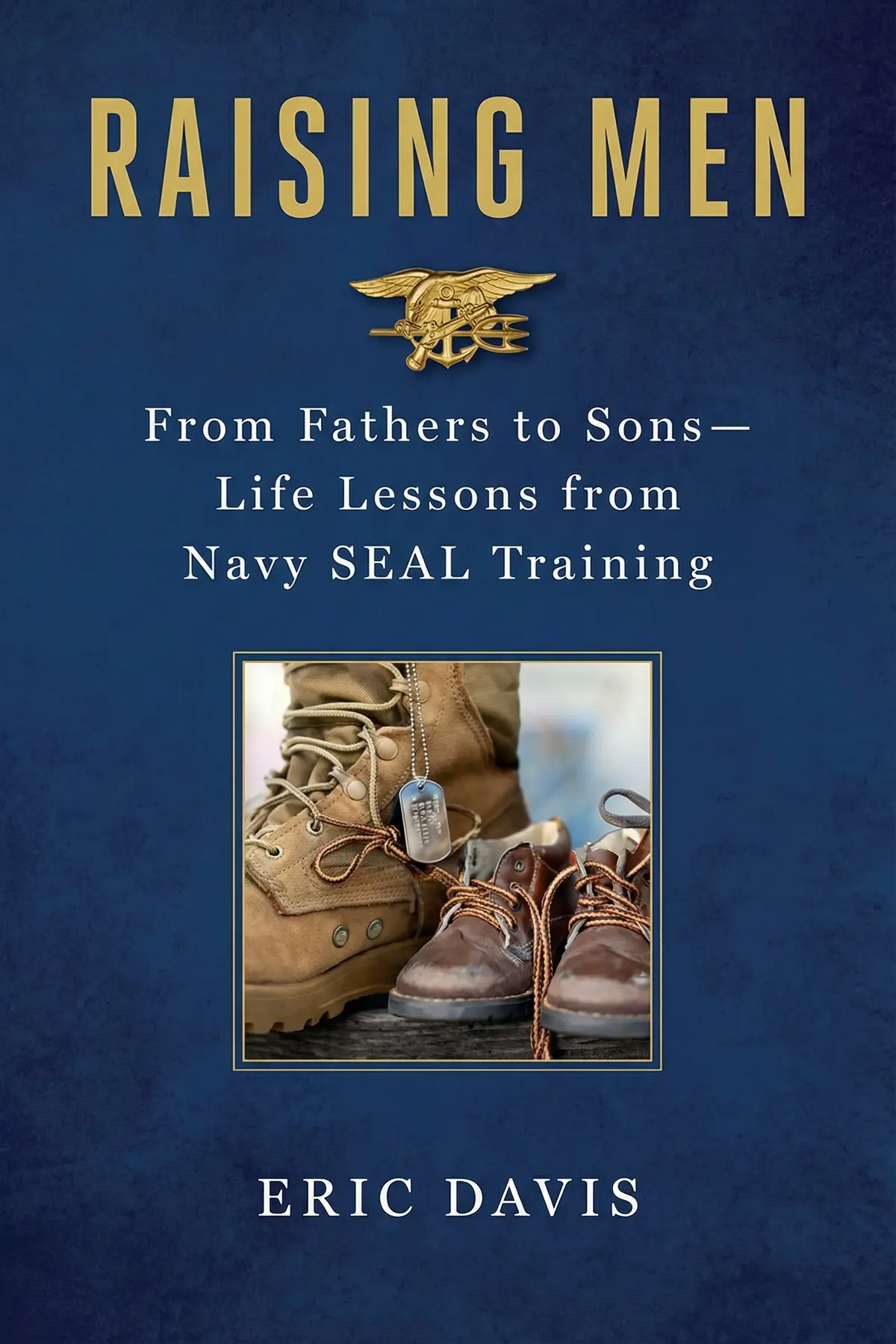
Table of Content
1. Introduction
1 min 03 sec
Plenty of fathers love their sons and still feel unsure how to turn that love into a capable, steady man. Former Navy SEAL Eric Davis believes the method was waiting in his old training ground. In Raising Men, he argues that the habits used to build SEAL teams, from close supervision to responses rehearsed before a crisis, work just as well at home.
Davis spent five years running curriculum at the SEAL sniper school in Coronado, California, and left the teams in 2008 partly to be with his four children more. His worry is that fathers have been drifting out of parenting since the Industrial Revolution, so the craft of manhood no longer passes from father to son. His fix asks a father to teach his son to become a man and to become one himself.
The thread is that a family can be led like a small team: a present leader, steady coaching, quick and calm correction, and a child who learns to manage what happens inside him.
2. Stay close while your son picks his teammates
1 min 47 sec
SEAL divers trust their lives to the person tied to them underwater. At some point your child starts choosing that person himself, and the question is whether you are still watching when he does.
3. Care for yourself so your son can follow you
1 min 48 sec
A father who gives everything to his family can end up with little left worth copying. Davis makes a case for time away from home that many dads will find unexpected, with one clear condition attached.
4. Consequences that change behavior and keep trust
1 min 57 sec
Most punishments are chosen out of habit, and few parents check whether they work. Davis offers a stricter test for discipline, and it begins with a question many parents never ask their child.
5. Coach every day so lessons finally stick
2 min 00 sec
SEAL recruits who fall behind are sent to a group with an unflattering name and an exhausting routine. Fathers fall behind too, and Davis explains why one lesson taught once almost never lasts.
6. Plan your calm response before the next blowup
2 min 03 sec
A smuggling ship slipped past one special forces team and was turned back by another just short of a border. The difference had nothing to do with strength, and it applies directly to a child’s tantrum.
7. Teach your son to sit with discomfort
1 min 51 sec
Protecting a child from every hardship feels like love. Davis asks what that protection does to a boy’s ability to handle his own fear and doubt, and offers a SEAL sequence for building something sturdier.
8. Conclusion
1 min 11 sec
Raising Men treats fatherhood as a team that has to be built, trained and led, and Davis places the first demand on the father. The man who wants a disciplined, humble, resilient son has to show those traits first: guarding his own health, admitting his mistakes out loud, staying calm when the phone fight starts again, and returning to the same lesson for the tenth time without giving up.
That last part may be the most useful. Almost none of Davis’s methods work when used once. A consequence works when it is explained and repeated. A drill works when it is ready before the trouble. A hard hike teaches resilience when a father is beside his son, naming the doubt and staying with it.
So begin small. Plan a calm response for the clash that keeps repeating in your house, and use it the same way every time. Then find one shared challenge where your son can struggle safely with you close by. And if you feel you have drifted away from him, Davis insists the team can still be rebuilt. Fathers, in his words, never quit.
About this book
What is this book about?
Many fathers want to raise sons who are disciplined, humble and resilient, but they are unsure how to do it day to day. Eric Davis, a former Navy SEAL sniper instructor and father of four, argues that fathers have drifted out of parenting since the Industrial Revolution, so the practice of manhood no longer passes from one generation to the next. His answer is to bring the habits of SEAL training home. Davis treats the family as a team. The father stays close as his son chooses friends, looks after his own health so he has something to model, and sets consequences that change behavior without damaging trust. He coaches through a four-phase learning cycle, prepares Immediate Action Drills for the clashes that keep coming back, and rewards good behavior as readily as he corrects bad behavior. The book ends on mental discipline: teaching a boy to notice pain, anxiety and doubt, stay with them and value the grind as much as the goal. Readers get a set of plain, repeatable habits for leading a son, and a reminder that a father who has drifted away can still rebuild the team.
Book Information
Who it's for
Fathers wanting clear structure
Fathers of boys who want a clear, structured way to lead at home.
Dads hoping to reconnect
Dads who feel they have drifted away from their sons and want to reconnect.
Parents wanting calm discipline
Parents worn down by repeated discipline battles who want calm, planned responses.
About the Author
Eric Davis
Eric Davis is a former US Navy SEAL, decorated for his service in the Global War on Terror. He spent five years building and running curriculum at the SEAL sniper school in Coronado, California. In 2008 he left the teams to be with his children more and to work on human performance and writing. He founded Average Frog, a membership site that brings SEAL performance principles to everyday life and leadership. He is a father of four.
Ratings & Reviews
Ratings at a glance
What people think
Listeners find the material highly enjoyable, noting that it is packed with valuable life lessons and practical tips. They also speak highly of the parenting guidance, where one listener highlights the link between tactical training and raising children, and another mentions how the content helps them stay more present with their family. The military narratives are engaging, and listeners appreciate the author's relatable writing style. Nevertheless, the quality of the writing draws mixed reactions, with some regarding it as outstandingly written while others describe it as poorly written.
Top reviews
Hazel
Finally got around to finishing Eric Davis's manual for performance, and it is a breath of fresh air. This isn't your typical soft-spoken parenting guide found in the self-help aisle. Davis applies high-level tactical training concepts to the domestic front in a way that is both challenging and deeply practical. To be fair, the military stories are the highlight here, providing a visceral backdrop for his lessons on leadership. I especially appreciated his focus on being truly present with your children. It’s about more than just being in the room; it’s about active engagement and setting a standard. While the title suggests it is only for sons, these principles are universal for any child you want to see succeed. It’s an operations manual for life that I’ll likely revisit.
Show moreLaddawan
This book isn't for the faint of heart or those who prefer 'gentle' parenting philosophies. Davis provides a rugged operations manual for life that demands accountability from the parent first. The military stories are absolutely engaging and serve as high-stakes metaphors for the lessons he applies to the living room. Truth is, we need more of this proactive, performance-based approach to raising the next generation. I loved the emphasis on 'Learn, Practice, Experience, and Repeat.' It turns character building into a tangible skill set rather than an abstract concept. Whether you have boys or girls, the SEAL performance principles shared here are invaluable. It’s easily one of the most unique books on the shelf today.
Show morePrae
Rarely do I find a book that challenges my own character while teaching me how to be a better father. Davis is a master of performance, and he proves that you cannot lead your children if you cannot lead yourself. The writing is approachable, direct, and doesn't waste time with fluff. I found the military stories to be more than just filler; they provide the 'why' behind his high-intensity parenting style. Not gonna lie, some of the concepts are intense, but they are grounded in the reality of preparing kids for a tough world. It’s an excellent resource for anyone who wants to be more than just a provider. This is about building a legacy.
Show morePongpan
Most parenting books feel like they were written in an ivory tower, but this one feels like it was written in the mud and the trenches. I found the military stories to be completely engaging. They serve as a necessary backdrop for real-life lessons on accountability and grit. Davis isn't interested in being your friend; he wants to give you a framework to be a leader for your family. The book is quite specific in detail, offering a solid mix of theory and actual practice. It helped me realize where I was being lazy in my own parenting. If you want a manual on how to be effective, this is it. It’s outstandingly written and very hard to put down.
Show moreTeng
As a father who often feels distracted by the grind of work, I found the chapter on presence extremely eye-opening. Davis uses his background to show that parenting is the ultimate mission. The idea of treating children like teammates in training rather than just kids helps build early discipline and mutual respect. Some readers might find his tone a bit harsh—especially the 'train them like a dog' comparison—but there is undeniable value in that level of consistency. Personally, I think the writing style is very approachable and keeps things moving at a brisk pace. It’s a solid mix of theory and practice that makes you rethink your daily interactions. It isn't perfect, but it definitely sparks some much-needed self-reflection.
Show moreMaja
Picked this up because the premise of using SEAL principles for family life seemed like a unique angle. Despite the masculine title, these lessons absolutely work for daughters as well. I really gravitated toward the 'Learn, Practice, Experience, Repeat' cycle he outlines. It’s about becoming a more effective human being, not just a 'manly' man. Some sections are a bit repetitive, and the author definitely doesn't suffer from a lack of confidence. In my experience, you have to filter out some of the 'Oohrah' bravado to get to the gold. Once you do, there are great life lessons about being an involved parent. It’s a worthwhile read for anyone looking to raise leaders.
Show moreChatchai
What differentiates this book from other special forces memoirs is its specific focus on applying those elite principles to the home front. It’s not just bluster and war stories. Davis actually gives you a functional framework to follow. While some might find his 'train them like dogs' philosophy controversial, in the context of the book, it’s really just about consistency and positive reinforcement. It made me rethink several of my current parenting decisions. The writing quality is solid, though his personality can be a bit overwhelming at times. To be fair, you want a SEAL to be confident, right? It’s a great improvement over the standard, overly-academic parenting books that usually put me to sleep.
Show moreSeksan
Is this a parenting guide or a SEAL memoir? I found myself asking that several times while navigating the chapters. Eric Davis is clearly an elite achiever, but his ego often overshadows the actual advice. Look, the military anecdotes are definitely thrilling, yet the parallels to raising kids often felt thin or a bit forced. He speaks as if his specific method is the only supreme way to exist. Not every parent wants to treat their household like a clandestine military operation. If you can push past the hyper-macho attitude, there are some useful tidbits on being present that are worth keeping. However, it’s about 80% war stories and only 20% actionable child-rearing tips.
Show moreScarlett
The content itself is decent, but the audiobook narration was a major hurdle for me to overcome. The guy reading it tried way too hard to sound like a stereotypical tough guy, which made good advice sound hokey. Personally, I think the parallels between BUD/S training and the playground are occasionally a bit of a stretch. There is some solid advice about being present and invested in your children's lives, but most involved parents are likely doing these things already. It feels like it was written for a very specific type of 'guy's guy.' If you love military history, you’ll enjoy the anecdotes. If you want a deep dive into child psychology, you should probably look elsewhere.
Show moreMats
Not what I expected at all and, quite frankly, a bit of a struggle to get through. I opted for the audiobook version, which was a mistake because the narrator sounded like he was announcing a monster truck rally. It was incredibly distracting and made the author's tone seem even more aggressive than it already was. Some of the lines, like his suggestion to train your kid like a dog, were just impossible for me to get behind. I understand the value of discipline, but this felt more like chauvinism than modern, empathetic parenting. It's mostly a collection of SEAL stories with very little actionable advice for a normal family. I wanted to like this, but the attitude was a major turn-off.
Show moreQuestions about this book
What is Raising Men by Eric Davis about?
Former Navy SEAL Eric Davis argues that fathers have been pulling back from parenting since the Industrial Revolution, so sons no longer inherit the practice of manhood. He brings SEAL training principles home: lead the family like a team, stay close as your son picks friends, discipline for results, coach through repetition, plan calm responses and teach self-regulation. His central demand is that fathers model the man they want their son to become.
What is an Immediate Action Drill in parenting?
Davis borrows the Immediate Action Drill from military practice. It is a response planned in advance so a parent does not freeze or improvise under pressure. A discipline drill might be staying calm and nonconfrontational, assessing the situation with the desired outcome in mind, and being firm but fair. Drills can also help a child respond to peer pressure or bullying, and they work best alongside positive reinforcement for good behavior.
How does Raising Men suggest disciplining a child?
Davis wants consequences that are safe, preserve the relationship and actually change behavior. If a son uses his phone instead of doing homework, take the phone away during study time and explain why the rule helps him. Ask the child to reflect on what happened, question his beliefs and make amends. Fathers should model accountability by admitting their own mistakes.
What are the four phases of learning in Raising Men?
Davis describes high-level learning as Learn, Practice, Experience and Repeat. You study what you want to teach, practice it until it feels natural, apply it where it brings results, and repeat the cycle to make it stick. With a task like tidying up after play, that means the same expectation, demonstration and praise every time, since inconsistent correction is, in his view, why children resist discipline.
Who should read Raising Men?
It suits fathers of boys who want concrete habits for leading at home, especially those who feel distant from their sons or stuck in repeated conflicts. Single fathers and co-parents are both addressed. Readers drawn to military discipline and mental toughness will find SEAL stories, from the Goon Squad to a boarded smuggling ship, turned into everyday parenting steps.
Readers also enjoyed








AUDIO SUMMARY AVAILABLE
Listen to Raising Men in 15 minutes
Get the key ideas from Raising Men by Eric Davis, plus 5,000+ more nonfiction titles.
- 5,000+ titles
- Listen as much as you want
- 7-day free trial
- Cancel anytime









