
13 min 53 sec
Available in: English
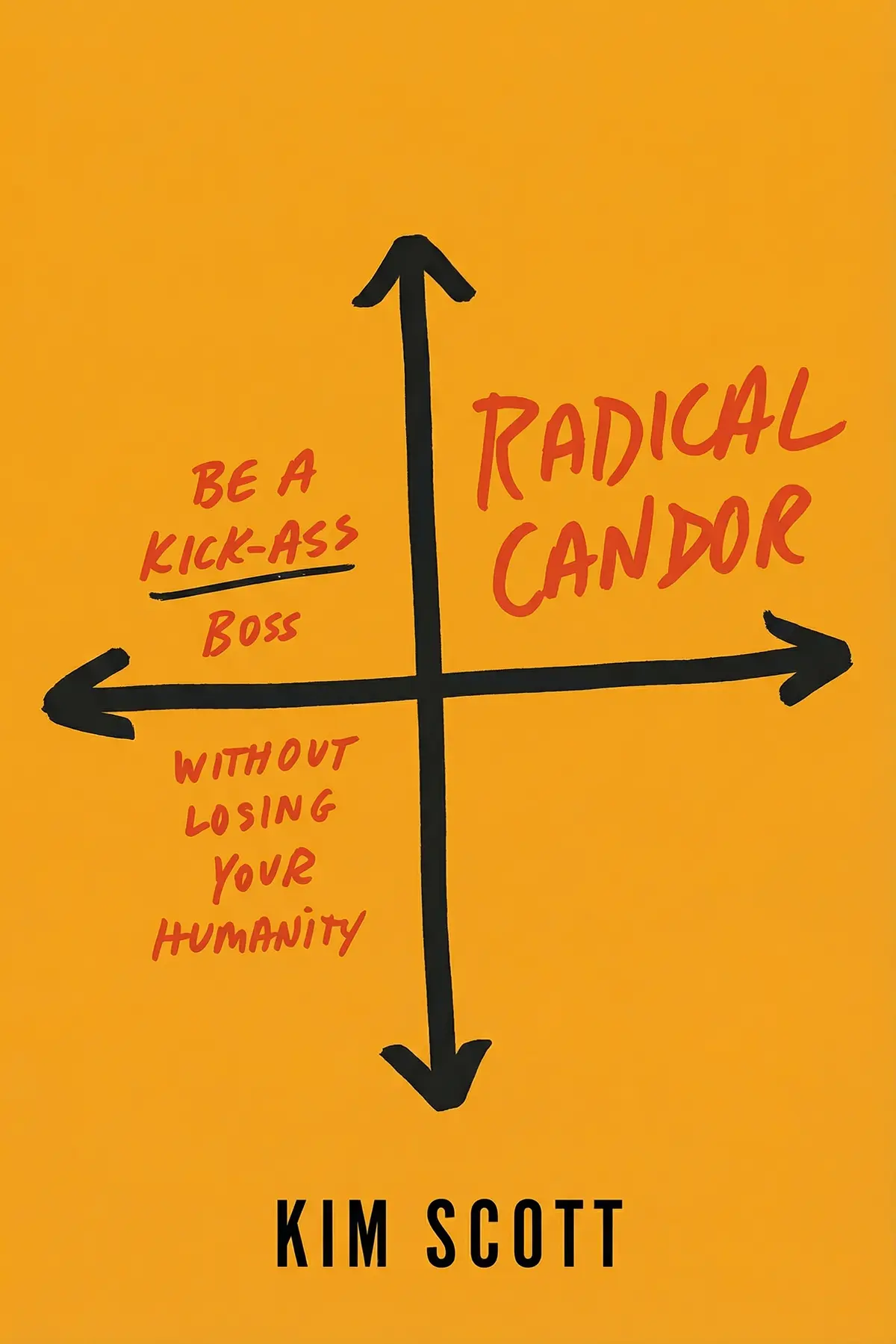
Radical Respect: How to Work Together Better
By Kim Scott
Shows how to break a toxic workplace into separate problems (bias, prejudice and bullying) and how to answer each one with the right words, whether you were harmed, saw it happen, caused it or lead the team.
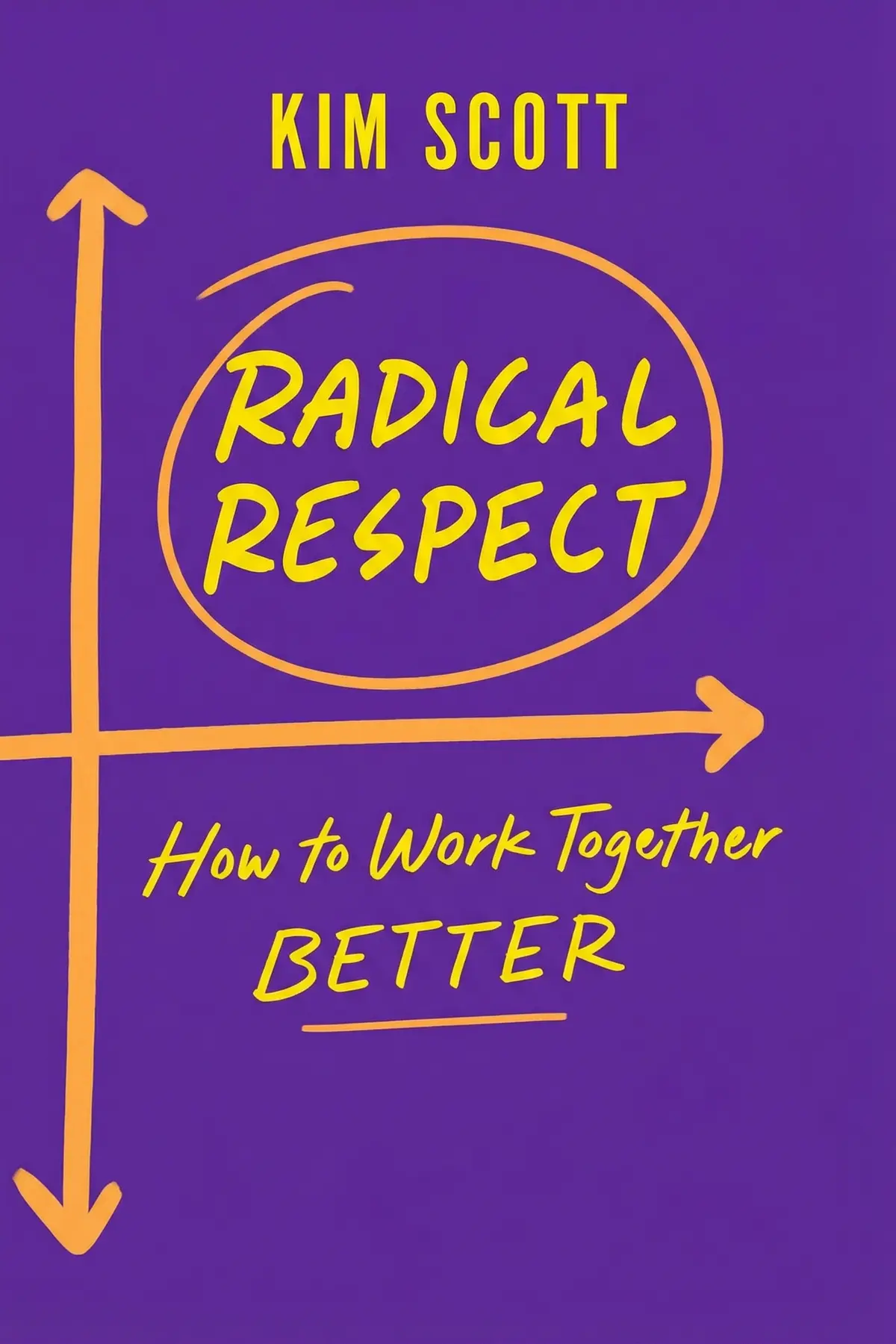
Table of Content
1. Introduction
1 min 04 sec
Most people who call a workplace toxic are describing several different problems at once, and that is why their fixes so often fail. In Radical Respect, Kim Scott, a former Google leader and CEO coach, splits workplace disrespect into separate parts, each with its own cause and its own best response. In her short definitions, bias is not meaning it, prejudice is meaning it, and bullying is simply being mean. Add power to any of them and you get something worse: discrimination, harassment or physical violation.
Her argument is easy to state and hard to practice. Disrespect becomes fixable once you name which kind you face, know which role you are playing and, if you lead, build systems that do not rely on good intentions. Scott writes from her own failures as much as her successes. By the end you will have three short sentences for three different moments, a fair test for telling sharp disagreement from bullying, and a few numbers every leader should start tracking.
2. Split a toxic workplace into problems you can fix
1 min 57 sec
One word gets used for a rude comment, a biased review and a boss who humiliates people. Using that word may be the reason nothing improves, and Scott shows what happens when you take it apart.
3. Respect people even when you reject their views
2 min 09 sec
Some colleagues think respect must be earned before it is given. Scott argues that belief confuses two very different things, and the confusion lets whole teams slide into one of three unhealthy patterns.
4. Match your response to the kind of harm
1 min 44 sec
The same reply that calms one difficult colleague can delight another and enrage a third. Scott offers a simple way to choose your words, and it comes down to a single small word at the start of a sentence.
5. Know which of four roles you are playing
2 min 06 sec
A colleague’s painful remark showed Scott she had been a bystander, a silent target, sometimes the one causing harm, and a leader who had not acted. Each of those positions asks something different of you.
6. Tell healthy conflict apart from bullying
1 min 49 sec
Managers fear that cracking down on bullies will silence honest debate. Scott draws a line between the two that is fair to everyone, and she shows what one company did with star performers who crossed it.
7. Build systems that make fairness the default
1 min 51 sec
Kind, well-meaning leaders still preside over unfair pay and lopsided promotions. Scott explains why decency is not enough, and which few numbers and rules expose problems that no amount of goodwill will catch.
8. Conclusion
1 min 13 sec
Radical Respect asks for something that sounds modest and turns out to be rare: treat everyone as a full human being while you still disagree, compete and hold each other to account. Scott shows that the word toxic hides the path there. Break it apart and each piece has its answer. Bias meets a mirror, prejudice meets a rule, bullying meets a firm reply, and power, the force that makes each of them worse, meets systems that check it.
The book also refuses to let anyone stand outside the problem. Scott opens with her own silence and her own mistakes, and that honesty is the model she offers. This week, notice one moment of disrespect and name its kind before you respond, then choose the pronoun that fits. If you caused the harm, make amends without waiting to be asked. If you lead, count something real, such as offers, raises or promotions, and act on what the numbers show.
Scott calls this book the step that comes before candor, because you cannot care personally or challenge directly someone you do not first respect. Respect is the ground the rest of good work stands on.
About this book
What is this book about?
Calling a workplace toxic feels accurate, but it hides the fact that several different problems are at work, and each needs a different fix. Kim Scott, a former Google leader and CEO coach, splits disrespect into its parts. Bias is unconscious, prejudice is a belief held on purpose, and bullying is simple meanness. Add power, and they turn into discrimination, harassment and even physical violation. The book began with a hard conversation. A longtime colleague told Scott that even gentle feedback from her got her called an angry Black woman. Scott saw that her earlier book, Radical Candor, had barely looked at this, and that she herself had stayed silent, looked away and sometimes caused harm. Radical Respect gives readers a short sentence for each kind of harm: an I statement for bias, an It statement for prejudice and a You statement for bullying. It explains what the person harmed, the observer, the person who caused harm and the leader can each do. For leaders, it sets out systems that measure bias, give a code of conduct real consequences and check the leader's own power.
Book Information
Who it's for
Managers and team leads
Managers and team leads who sense something is wrong on their team but cannot name it.
Employees who faced mistreatment
Employees who have been on the receiving end of bias or bullying and want words that work.
Building fairness that scales
Founders and HR leaders designing hiring, pay and promotion systems that stay fair at scale.
About the Author
Kim Scott
Kim Scott is a CEO coach who has worked with tech companies such as Dropbox, Qualtrics and Twitter, and she has taught at Apple University. Before that she led Google's AdSense, YouTube and DoubleClick teams. Early in her career she managed a pediatric clinic in Kosovo and started a diamond-cutting factory in Moscow. She wrote the best seller Radical Candor, co-founded a company of the same name with Jason Rosoff, and co-hosts the Radical Candor and Radical Respect podcasts.
Ratings & Reviews
Ratings at a glance
What people think
Listeners find the book impactful, with one noting it is an essential read for improving professional connections. They also value the book’s worth relative to its cost.
Top reviews
Ratree
Look, if you want to fix toxic dynamics at work without sounding like a corporate robot, buy this book immediately. Radical Respect takes the foundation of Kim Scott's earlier work and applies it to the much messier world of diversity and inclusion. Not gonna lie, some of the personal stories she shares are hard to read, but that’s the point—workplace harassment is brutal. The book is effective because it moves beyond platitudes and offers a set system for fair pay and promotion tracking. It’s a total must-read for leaders who are tired of 'culture fit' being used as an excuse for exclusion. Personally, I found the chapter on 'upstanding' to be worth the price of the book alone. It’s great value for money if you actually implement the strategies.
Show moreSuphan
Finally, a business book that addresses the 'asshole tax' and gives real scripts for when things get uncomfortable in the boardroom. Kim Scott has produced a spectacular resource that breaks down how to deal with workplace bullying and oblivious exclusion in a way that feels tangible. In my experience, most DEI training is forgettable, but the 'impact vs. intention' framework here is something I’ve already started using with my team. The book is effective because it empowers the 'upstander' to intervene rather than just being a silent bystander. You get a lot of value for money here, especially with the sections on removing stereotype threats during the hiring process. It's a must-read for anyone who wants to ensure their 'culture add' doesn't get crushed by 'culture fit' gatekeeping.
Show moreKiattisak
This isn't just another dry management manual; it’s a toolkit for anyone who actually wants to enjoy their job again. Radical Respect provides excellent value for money by offering a clear path out of the 'code of misogyny' that often stunts career growth. The phrases she suggests, like 'it is a violation of company policy to,' are so much more effective than the vague suggestions I've seen in other DEI books. To be fair, the author’s background is very tech-heavy, but the lessons on collaboration over coercion are universal. I think this is a must-read for better workplace relationships, especially if you’re in a position to influence hiring and promotions. It’s rare to find a book that handles the topic of 'clumsy curiosity' with such grace and practical advice.
Show moreFang
Wow—Scott doesn't pull any punches when describing the institutional betrayal and harassment that still plagues modern offices. This book is a must-read because it moves past the 'color-blind' theory and explains why we must actively see and respect our differences. The strategies for dealing with bullies who 'kiss up and kick down' are among the best I’ve ever read in a business context. I found the book to be highly effective at giving me the confidence to stand up for myself and others. It’s great value for money because it functions as both a memoir and a tactical manual for organizational change. If you want to create a workplace that actually appeals to the 'better angels of our nature,' this is the roadmap you need. Truly impressive work.
Show moreKet
Kim Scott’s follow-up to her previous bestseller is exactly what my office culture needed right now to bridge the gap between performance and empathy. Unlike typical corporate training, this feels more like a guide for human beings who actually care about their colleagues' well-being. I particularly appreciated the specific scripts provided for interrupting bias in real-time meetings. To be fair, some sections feel a bit repetitive, but the value for money is undeniable given the actionable 'bias interrupters' she details. It is a must-read for anyone looking to build better workplace relationships without the usual HR fluff. Scott’s willingness to admit her own leadership failures makes the advice feel grounded rather than preachy. It’s an effective framework for anyone tired of the standard company mandate approach.
Show moreSangduan
Truth is, we’ve all been the perpetrator of bias at some point, and Scott’s vulnerability in admitting her own leadership mistakes makes this a hard but necessary pill to swallow. This book is far more than a company mandate training; it’s a deep exploration of how to foster better workplace relationships through genuine accountability. I found the section on 'white women’s tears' particularly poignant and long over-due in mainstream business literature. While the writing style is a bit dense in places, the strategies for eliminating workplace harassment are top-notch. It’s an effective guide for anyone who felt that Radical Candor needed more nuance regarding power dynamics. Got to say, the practical tips on how to apologize—shut up and listen—are something every manager needs to hear.
Show moreManee
The structure of this book is a bit lopsided, with the most impactful content appearing in the final third, but the 'bias interrupters' are worth the price of admission alone. I struggled with the first few chapters because they felt like a series of disjointed confessions, but once Kim Scott gets into the systemic issues, the book really finds its stride. Frankly, I think it’s an important evolution of her previous ideas, even if the execution is a bit messy at times. It offers a much-needed look at how unchecked power leads to institutional betrayal. The advice on how to gently interrupt an over-talker or ensure quiet voices are heard is incredibly practical for daily use. Not perfect, but certainly a 4-star resource for any serious leader.
Show moreRome
As a professional working outside the United States, I found some of the assumptions here quite jarring, even though the core message is vital. The author seems to believe that her specific American context applies globally, which can feel a bit narrow when you’re dealing with different cultural norms. However, I did appreciate the focus on 'good people in bad systems' that emerges in the final third of the book. It reminded me of the systemic dysfunction shown in 'The Wire,' where the institutional issues are just as important as individual actions. Personally, I think the book is a bit of a mixed bag; the definitions of bias and prejudice are helpful, but the personal anecdotes sometimes overshadow the actual business advice. It’s a decent 3-star read that sparked some good internal debates.
Show moreSaengdao
While the intent behind this rebranding of 'Just Work' is noble, the actual reading experience felt like slogging through a disjointed memoir. I felt that the book couldn’t quite decide if it wanted to be an apology for the holes in Radical Candor or a 101-level textbook on DEI. Some of the advice boils down to 'everyone should just get along,' which feels incredibly reductive when dealing with people who question your very humanity. To be fair, the structure is a bit of a mess, and the author often comes across as a novice in a space where others have been doing deeper work for decades. The content occasionally contradicts itself, leaving the reader confused about whether the focus is on systemic change or individual behavior. It’s an okay read, but far from her best.
Show moreKomsan
I really wanted to enjoy this because I’m an aspiring manager, but the 'bathroom standoff' story was where I had to check out completely. It felt incredibly tone-deaf to demand that a local culture change their religious beliefs just so the author could make a point about gender. Frankly, much of the book reads like a manifesto for white feminism, often ignoring the intersectional complexities that people of color face every day. There is a lot of privilege on display here that went unexamined for far too long. While I appreciated her previous work on candor, this volume feels like a clumsy attempt to address DEI without having a deep understanding of systemic issues. I cringed through several chapters that felt more like a confessional than a helpful business guide. It just didn't work for me.
Show moreQuestions about this book
What is the main idea of Radical Respect by Kim Scott?
Scott argues that workplace disrespect is not one problem but several. Bias is unconscious, prejudice is a belief held on purpose, and bullying is plain meanness. Combined with power, they become discrimination, harassment and physical violation. Naming the kind of harm lets you choose the right response, and leaders must back that up with management systems instead of relying on good intentions.
What are the I, It and You statements in Radical Respect?
Scott matches a response to each behavior. For bias, an I statement holds up a mirror, because the person did not mean it and usually backs off. For prejudice, an It statement points to the law, a company policy or common decency, since the person endorses the belief. For bullying, a You statement such as telling the person they cannot talk to you that way avoids giving them the reaction they want.
How is Radical Respect related to Radical Candor?
Scott frames it as a prequel to Radical Candor. The book grew from a colleague’s experience of being called an angry Black woman for gentle criticism while rolling out candor. Scott concluded that caring personally and challenging directly are impossible without first respecting the other person, and that her earlier book had barely addressed bias, prejudice and bullying.
How does Kim Scott tell conflict apart from bullying?
Scott sees conflict as normal and healthy, and ignoring it as disrespectful. Bullying is repeated behavior that continues after the person has been told it harms someone. She cites Bob Sutton’s research that removing a teammate who bullies peers improves team performance, and describes a company whose reviews gave a poor overall rating to anyone with a poor teamwork score.
What can leaders do to apply Radical Respect?
Scott says leaders must build systems, not trust their own goodness. She urges measuring bias in who gets interviews, offers, pay, promotions and mentoring; setting a code of conduct with real consequences; putting checks and balances on leaders’ own power; and hiring for culture add rather than culture fit, which she says forces people to pretend and shuts out valuable contributors.
Readers also enjoyed




A Year with Peter Drucker: 52 Weeks of Coaching for Leadership Effectiveness
Joseph A. Maciariello





Acting with Power: Why We Are More Powerful Than We Believe
Deborah Gruenfeld

All In: How Great Leaders Build Unstoppable Teams
Mike Michalowicz
AUDIO SUMMARY AVAILABLE
Listen to Radical Respect in 15 minutes
Get the key ideas from Radical Respect by Kim Scott, plus 5,000+ more nonfiction titles.
- 5,000+ titles
- Listen as much as you want
- 7-day free trial
- Cancel anytime









