
13 min 49 sec
Available in: English
 ไทย
EnglishไทยRadical Candor: Be a Kickass Boss Without Losing Your Humanity
By Kim Scott
Shows managers and colleagues how to care about people and challenge them at the same time. That pairing lets them ask for and give honest guidance, motivate each person and reach decisions together without issuing orders.
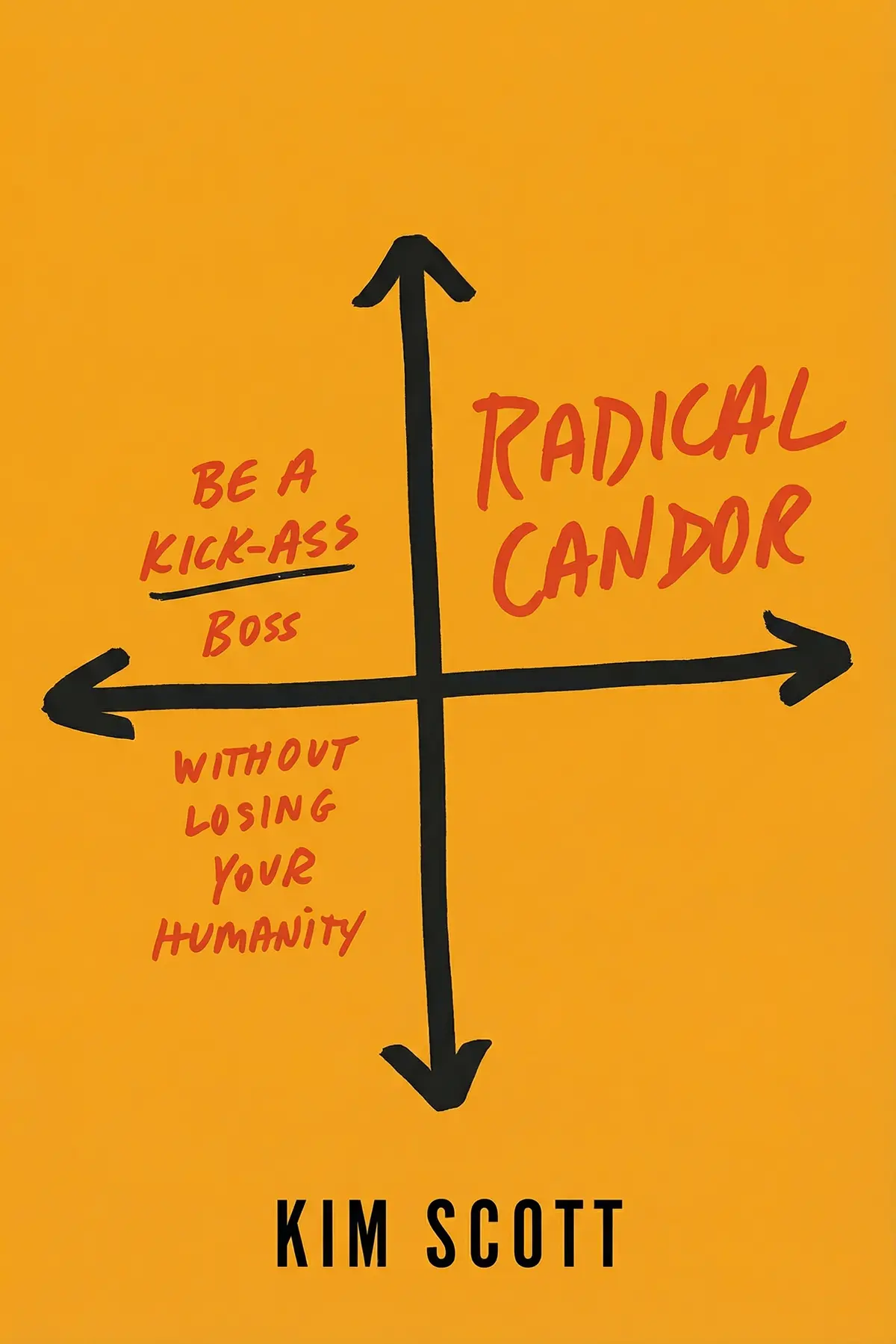
Table of Content
1. Introduction
1 min 01 sec
Most new managers believe that kindness and honesty pull in opposite directions, so they pick one and pay for it later. In Radical Candor, Kim Scott, a former Google leader and coach to tech CEOs, argues that the best bosses refuse that trade. They care personally about the people they lead and challenge them directly, in the same moment. Scott calls the pairing radical because it is so rare, and candid because it is clear and humble.
Every part of her method grows from those two moves. They shape how you invite and give criticism and how you learn what drives each person. They guide how you plan careers around real ambitions and how a team reaches decisions without being ordered around. The tools work for peers and employees as much as for bosses. By the end, you will know the two-minute conversation that changed how Scott managed. You will also have a question to ask your own team tomorrow and a seven-stage loop that turns arguments into results.
2. Treat the hallway conversation as the real job
1 min 47 sec
A CEO with an urgent pricing decision spent her whole morning listening to colleagues instead. She called her coach to complain, and the reply changed her idea of what a leader’s day is for.
3. Spot the three ways feedback goes wrong
2 min 01 sec
A short walk between meetings, after a nervous presentation, showed Scott what good criticism sounds like. It also exposed three traps that catch well-meaning people, and the worst of them can pass for politeness.
4. Ask for criticism before you give it
2 min 07 sec
When an engineer started shouting at Google’s cofounder during a policy argument, a watching manager braced for an explosion. The cofounder grinned instead, and his reaction holds the first rule of guidance people actually want.
5. Read what drives each person on your team
1 min 48 sec
Three bricklayers on the same London building site gave three very different answers about their work. Leaders often quote the story to make one point, and Scott thinks they take the wrong lesson from it.
6. Plan careers around your people's real dreams
1 min 58 sec
An employee told her manager she wanted to be a boss just like him. He sensed there was more, asked one more question and heard an ambition that had nothing to do with selling advertising.
7. Get results together without giving orders
2 min 02 sec
Scott reorganized a chaotic Google team into neat units with clear goals, and soon people were complaining and some were leaving. Her boss spotted a simple misstep, and fixing it meant building a seven-stage cycle.
8. Conclusion
1 min 05 sec
Radical Candor asks managers to give up a comfortable belief: that they must choose between being liked and being useful. Scott’s boss managed both in two minutes on a walk after that Google presentation. The people who lead well in this book do the same thing at every scale. Scott’s hour with a worried employee, Larry Page’s grin and Russ Laraway’s extra question about Sarah’s dreams all repeat one move. Show you care, then say or ask the harder thing.
The method is small enough to start this week. Pick one thing you want to improve, tell your team, and ask what you could change to be easier to work with. Then count to six and wait. The next time you notice a problem in someone’s work, describe the moment, what you saw and what it caused, and offer a next step. Do it in private, and do it right away. And sit down with one person to hear their life story, listening for what drives them.
None of this needs a new title. It needs you to treat the conversations you once called distractions as the work itself.
About this book
What is this book about?
Many managers feel they must choose between being kind and being honest. Some soften every message until it means nothing. Others deliver hard truths in ways that leave people bruised. Kim Scott, a former Google leader and coach to tech CEOs, argues that the choice is false. Good bosses, and good peers, care personally and challenge directly in the same conversation. Scott builds her method from stories of her own career. A frantic morning as a CEO taught her that listening to people is the job. Her boss used a two-minute walk to praise and correct her. Google's cofounder grinned while being shouted at. She maps three ways guidance goes wrong and shows how to ask for criticism and how to give it. She explains how to learn what drives each person and how to run three career conversations. Finally, she sets out a seven-stage cycle for reaching decisions as a team. Readers get a clear model and a set of concrete habits. These include a question to ask the team, a frame for criticism that targets behavior and a routine for turning debate into results.
Book Information
Who it's for
New managers giving criticism
New managers who swing between being too soft and too harsh when they give criticism.
Team leads
Team leads who want honest debate, real career conversations and decisions their people actually support.
Coworkers wanting candid feedback
Employees and peers who want to give and ask for candid guidance without damaging working relationships.
About the Author
Kim Scott
Kim Scott has coached CEOs at tech companies including Dropbox, Qualtrics and Twitter, and she taught on the faculty at Apple University. Before that she ran the AdSense, YouTube and DoubleClick teams at Google. Earlier still, she ran a children's medical clinic in Kosovo and set up a diamond-cutting factory in Moscow. With Jason Rosoff she cofounded the company Radical Candor. She also wrote Radical Respect, and she cohosts podcasts on both themes.
Ratings & Reviews
Ratings at a glance
What people think
Listeners find this management title to be essential reading, especially for those in leadership, and appreciate the concrete advice and usable tools provided. The book allows listeners to transform their management capabilities through authentic case studies that make the principles simple to grasp. Listeners also value the focus on making professional interactions more human, and one listener mentions how the text offers a roadmap for success throughout every tier of an organization.
Top reviews
Vipawan
If I could mail this back to my younger self before I took my first management role, I would do it immediately. The quadrant system is such a helpful mental model for understanding why certain conversations go off the rails so quickly. I used to fall into the 'Ruinous Empathy' trap constantly, thinking I was being kind when I was actually doing a disservice to my team. This book gave me the permission and the tools to be direct while still maintaining a deeply human connection with my colleagues. The rebrand to 'Compassionate Candor' in the new edition really clarifies that this isn't about being a jerk. It is about being a professional who actually gives a damn about the growth and success of other people.
Show moreHom
Scott manages to make the sterile world of corporate management feel profoundly human again by focusing on authentic relationships. Most management books treat employees like cogs in a machine, but this approach centers on getting to know people as individuals. I loved the distinction between 'superstars' on a steep growth trajectory and 'rockstars' who provide the steady foundation for every successful team. Not gonna lie, the name-dropping is a bit much at times, but the core message about humanizing our daily interactions is vital. Since applying these principles, my team's communication has improved significantly, and we are catching problems before they turn into full-blown disasters. This is a must-read for anyone who wants to lead with both a heart and a backbone.
Show moreSomsak
The quadrants provided here are the most effective mental models I have encountered in over a decade of leadership experience. Truth is, most of us are terrified of conflict, and we end up hurting people more by staying silent than by being honest. Radical Candor provides a clear path out of that fear-based management style by prioritizing both honesty and human compassion. I found the section on the 'male colleague' who got caught in a firestorm over gender politics to be particularly intriguing and nuanced. The book avoids being a sequence of useless anecdotes by grounding every story in a practical tool you can use tomorrow. It has completely revolutionized the way I approach performance reviews and daily feedback sessions with my direct reports. If you want to build a high-performing culture, you need this framework in your toolkit immediately.
Show morePatchara
Stop what you’re doing and read the chapter on the 'dog’s tail' immediately if you want to understand real leadership. This book is a masterclass in how to stop avoiding the hard conversations that actually help people grow and thrive. I appreciated the honest look at gender bias and the specific challenges women face when trying to be both direct and caring. Kim Scott has learned from the best in the business, and she distills that high-level experience into something any manager can use. The idea that we should let our long-term relationships compound rather than rust is a powerful way to view team dynamics. It is rare to find a business book that is this practical while also being this focused on human dignity. Every new manager in our organization is getting a copy of this book on their first day.
Show moreCarlos
After years of struggling with how to give feedback without feeling like a bully, I finally found the framework I needed. This book totally shattered the delusion that being 'nice' means never hurting anyone's feelings or avoiding necessary, difficult criticisms. Scott’s writing style is engaging and the way she structures the 'Care Personally' and 'Challenge Directly' axes makes perfect sense. I loved the emphasis on sincere and specific praise, which is an area where I realized I was significantly lacking as a leader. Although some of the Silicon Valley stories are a bit over the top, the underlying principles are universal and highly effective. It has changed the way I show up for my team every single day, and the results have been incredible. This is easily one of the most important management books of the last decade.
Show moreTar
Finally, a business book that doesn't feel like a bloated TED talk with three hundred pages of filler text. Kim Scott provides actual, actionable guidance that you can implement in your next one-on-one meeting without feeling like a corporate robot. Look, the Silicon Valley elitism is definitely there, and you have to filter out some of the more extreme privilege to find the gold. But once you do, the framework of challenging people directly while caring about them personally is a total game-changer for team health. I particularly appreciated the specific cycle of meetings she suggests for ensuring decisions are made efficiently and transparently. It’s not a perfect manual, but it is a highly practical one for anyone trying to navigate the messy reality of management.
Show moreRatree
Skip the fluff and focus on the bold text if you are short on time, because the core concepts are absolute gold. I picked this up because our company culture was becoming increasingly passive-aggressive and we desperately needed a new way to communicate. The framework for success at all levels is clearly laid out, and the real-world examples make the complex concepts very easy to digest. Personally, I found the chapter on skip-level meetings to be a bit intense, but the underlying logic is solid and worth considering. Even though the author’s career at Google and Apple sounds like a fantasy world, her advice on feedback is grounded and useful. It is a refreshing departure from the usual esoteric management theories that never work in the real world.
Show moreNutnicha
Let’s be real: the name-dropping is exhausting, but the core message about communication is undeniable and deeply impactful for any leader. I struggled with the author's privileged perspective, yet I cannot deny that her tactical advice on giving criticism is the best I've read. The Russian dog tail analogy is something I will never forget because it perfectly illustrates the cruelty of being 'vaguely nice' during tough times. While some parts feel like a love letter to Silicon Valley, the actual tools for 2-minute guidance between meetings are incredibly useful. It is a solid resource that helps you move away from obnoxious aggression and toward a more balanced, effective style of leadership. It’s a bit of a drag in the middle, but the practical takeaways make it worth the effort.
Show moreYothaka
Is it possible to be a servant leader while constantly reminding everyone exactly how many people report to you? I struggled with the internal inconsistency of this book, as it vacillates between genuine care and a rigid, top-down hierarchy. To be fair, there are some brilliant nuggets of wisdom buried under the self-aggrandizement and the tech-bro culture worship. However, the author’s attempt to fit Steve Jobs into the Radical Candor framework felt forced and frankly a bit delusional given his reputation for aggression. I fear that bullying managers will use this 'management bible' as a shield to justify being obnoxious under the guise of directness. It is a dangerous tool in the hands of someone who lacks the self-awareness to actually care personally about their direct reports.
Show moreSupranee
This book felt like a high-speed tour through a very exclusive Silicon Valley gated community. While Kim Scott clearly knows her stuff, I found the constant name-dropping of Sheryl Sandberg and Steve Jobs to be more alienating than inspiring. It feels like the advice is tailored specifically for organizations with infinite resources and a very specific, white, privileged demographic. Frankly, the anecdotes about her team flying to her during pregnancy made me roll my eyes considering the reality for most working mothers. The way POC are used as mere props for feedback examples felt shallow and deeply out of touch with modern workplace dynamics. If you aren't part of the 'white friends club' in tech, this will likely feel like a collection of elitist stories.
Show moreQuestions about this book
What is the main idea of Radical Candor by Kim Scott?
Scott argues that good bosses and good colleagues do two things at once: they care personally about people and challenge them directly. Caring builds the trust that makes honest criticism land, and challenging helps people grow. When one is missing, behavior slides into Obnoxious Aggression, Ruinous Empathy or, worst of all, Manipulative Insincerity. The rest of the book applies the same pairing to guidance, motivation, careers and team decisions.
What is Ruinous Empathy?
Ruinous Empathy is caring personally without challenging directly. You hold back criticism to avoid hurting feelings or creating conflict, so the person never learns what would help them succeed. Scott warns that this damages the quality of the team’s work. It also harms the relationship eventually, which is exactly what the silence was meant to protect.
How do you give feedback using Radical Candor?
Scott suggests giving more praise than criticism and following her HHIIPP habits. Be humble and helpful, and speak immediately. Talk in person or live on a call. Praise in public, criticize in private and never target personality. Frame the comment as context, observation, result and next step. Her old boss did this by noting that Scott said um constantly in a meeting, explaining that it made her sound stupid and offering to help with her presentation skills.
How can a manager ask for honest feedback from their team?
Start by sharing what you are working to improve and asking for help. Keep a ready question about what you could start or stop doing to be easier to work with. Then count slowly to six and let the silence work. Listen to understand, ask follow-up questions and then act: fix the problem if you agree, or explain respectfully if you do not.
Who should read Radical Candor?
It suits first-time managers and experienced leaders who struggle to balance kindness with honesty. Scott also stresses that it is not only for bosses. Peers and employees can use the same ideas to strengthen working relationships. Readers who manage careers will value the three conversations about life story, dreams and an 18-month plan. Anyone frustrated by top-down decisions will find the seven-stage get stuff done wheel useful.
Readers also enjoyed




A Year with Peter Drucker: 52 Weeks of Coaching for Leadership Effectiveness
Joseph A. Maciariello





Acting with Power: Why We Are More Powerful Than We Believe
Deborah Gruenfeld

AUDIO SUMMARY AVAILABLE
Listen to Radical Candor in 15 minutes
Get the key ideas from Radical Candor by Kim Scott, plus 5,000+ more nonfiction titles.
- 5,000+ titles
- Listen as much as you want
- 7-day free trial
- Cancel anytime









