

A Liberated Mind: How to Pivot Toward What Matters
Steven C. Hayes
 English
 ไทย
Shows why even moderate drinking harms women, how brain chemistry locks the habit in, and how a recovery built on self-compassion, new rituals and forgiveness for slips can replace the evening glass.
1 min 01 sec
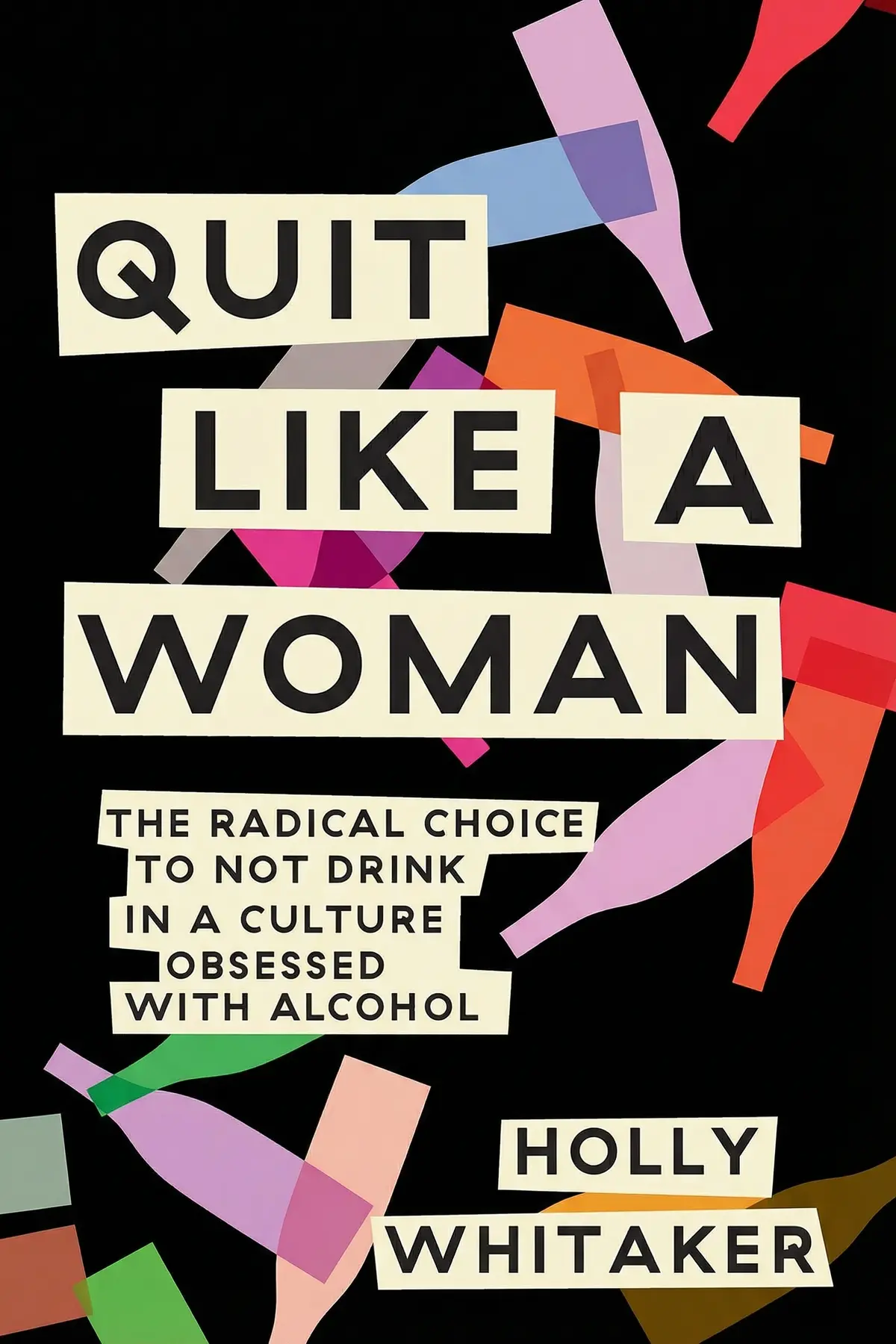
If you have ever lain awake at 3 a.m. wondering whether your drinking is a problem, Holly Whitaker’s answer is that you are asking the wrong question. In Quit Like a Woman, the founder of the recovery program Tempest argues that no amount of alcohol is good for you, so the line between alcoholic and moderate drinker matters far less than people think.
Whitaker knows this from the inside. In her mid-30s she had a stylish San Francisco apartment, ambitious friends, a well-paid startup job and a fondness for green juice and yoga. She also left work early to drink alone at home and kept tiny airline bottles in her handbag, just in case.
Her argument is that alcohol holds women back from their own power, and that recovery works best when it starts from the belief that you are whole, not broken. Along the way comes a plain account of why cravings beat good intentions, a kinder way to treat a slip, and rituals that can take the corkscrew’s place.
1 min 25 sec
Most drinkers sort themselves into one of two boxes and feel relieved to land in the safe one. Whitaker argues that the sorting itself is the trap, and that a different question gives a far more useful answer.
1 min 31 sec
The wine sold as a reward after a long day shares its main ingredient with engine fuel. Whitaker lists what a single glass sets in motion, and why the risks land harder on women.
1 min 30 sec
Most people who quit have quit before, then found the bottle open again weeks later. Whitaker traces those relapses to a question almost everyone skips, and the answer is usually not about alcohol.
1 min 40 sec
You can wake up certain that last night’s drinking was a mistake and still pour a glass by evening. Two brain chemicals explain how that happens, and the explanation takes much of the shame away.
1 min 36 sec
The best-known sobriety program asks members to practice humility and list their flaws. Whitaker argues that for many women this is exactly the wrong medicine, and proposes a starting point that changes everything after it.
1 min 26 sec
Years of sobriety can seem to vanish with a single sip. Whitaker rejects that rule, and her alternative changes what a slip means, what to do during a craving, and when to change your plan.
1 min 47 sec
Removing the evening drink leaves a hole, and an empty hole tends to refill itself. Whitaker’s answer involves baths, morning lemon water, a thirty-day rule and permission to binge on the right things.
1 min 28 sec
Many women believe their sense of fun and rebellion lives inside a bottle. Whitaker thinks the opposite is true, and she points to friendships, thrills and forms of defiance that alcohol only dulled.
1 min 14 sec
Whitaker’s book turns a private worry into a larger argument. The question at 3 a.m. was never really about a label. It was about power: the power alcohol takes from women’s bodies, judgment and safety, and the power a culture keeps selling back to them as a glass of wine and a night off. Her own story, the startup job and the green juice sitting alongside the airline bottles in her handbag, shows how well that trade can hide inside a life that looks under control.
What she offers in its place is gentler than most sobriety advice. Ask whether alcohol is keeping you from your best life, and answer honestly. Name what you are trying to escape, since that is the wound beneath the habit. Choose one evening ritual, a bath or a yoga class, and keep it for 30 days. When you slip, forgive it and keep practicing, because a skill grows with use.
The midbrain can be rewired and the root cause can be healed. Whitaker’s bet is that once both happen, the bath runs itself, and the woman who used to reach for the corkscrew finds she no longer wants to.
Many women drink in a way nobody would call a problem: wine with dinner, a few cocktails on Friday, a glass to come down after a hard day. Holly Whitaker argues that the label is beside the point. Any amount of alcohol harms body and brain, women face particular risks, and a culture that markets wine as self-care keeps them coming back. Whitaker writes from experience. In her mid-30s she had a stylish San Francisco apartment and a high-paying startup job, and she carried tiny bottles of alcohol in her handbag. After getting sober she founded the recovery program Tempest. In this book she explains the two forces behind dependence: the pain you drink to escape, and the dopamine cycle that teaches your brain to want more. She then sets out an alternative to Alcoholics Anonymous, a program she says was never built with women in mind. Her recovery assumes you are already whole, treats a slip as part of the practice, and replaces drinking with rituals, self-care and new kinds of fun.
Women who drink moderately but wonder whether wine is quietly costing them sleep, calm and confidence.
Professionals who use the evening glass to come down from stressful days and want rituals to replace it.
Anyone who tried Alcoholics Anonymous or quitting cold and slipped, looking for a kinder approach.
Holly Whitaker got sober in 2013 and a year later founded Tempest, a trauma-informed recovery program that departs from the traditional, male-dominated models of recovery. Her work has been covered in the New York Times and Vogue, among other outlets, and Inc. named her to its 2019 Female Founders 100 list. Quit Like a Woman combines her own memoir of drinking with practical guidance for women who want to stop.
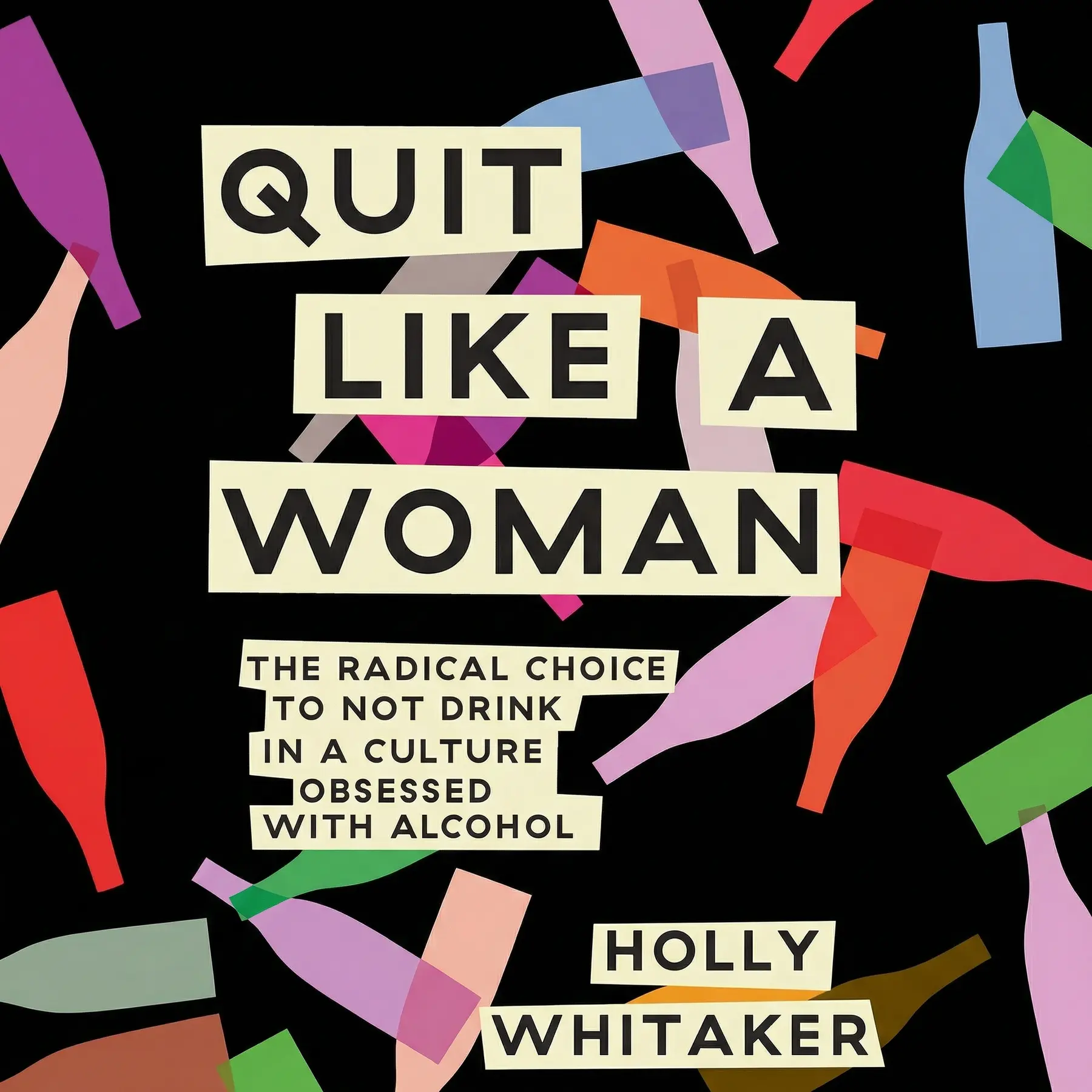
Listeners consider this work a premier resource for sobriety, highlighting its deep research and actionable guidance. Furthermore, they find it empowering as it clarifies the connection between alcohol and culture while sharing a genuine personal narrative. Listeners also value the book’s sincerity and feminist viewpoint, which effectively challenges established societal conventions.
Finally got around to reading this, and frankly, it’s the shift in perspective I desperately needed. Whitaker doesn't just talk about 'not drinking'; she deconstructs why we think we need to drink in the first place, exposing the predatory nature of 'Big Alcohol.' The way she frames alcohol as a toxic poison marketed specifically to women through a 'pink-washed' lens is eye-opening and deeply empowering. I felt like I was being deprogrammed from decades of social conditioning that equates wine with self-care. While her personal story is definitely rooted in a specific kind of privilege, the core message about reclaiming your power from an industry that profits off your numbness is universal. It’s a fierce, feminist manifesto that makes you want to build a life you don’t need to escape from. The practical advice on building a toolkit is exactly what I needed.
Show moreThis book completely shifted my internal landscape regarding my nightly glass of wine. I never considered myself an 'alcoholic,' but Holly’s argument that alcohol is inherently addictive for everyone—not just a broken few—hit me like a ton of bricks. Her writing is sharp, witty, and unapologetically feminist, which is a breath of fresh air in a recovery world that often feels dated and masculine. Truth is, I stopped seeing my sobriety as a 'loss' and started seeing it as a radical act of rebellion against a society that wants women quiet and sedated. The tools she provides are practical, though I do agree some are a bit high-end. Still, the mental shift alone is worth the price of the book. It’s easily one of the most transformative things I’ve read this year, and I feel more authentic than ever.
Show moreWow, just wow. I’ve read a lot of quit-lit, but nothing has resonated quite like this. Holly Whitaker manages to weave together her messy, relatable personal story with a scathing indictment of how our culture normalizes a literal poison. She makes a convincing case that we shouldn't have to hit 'rock bottom' to decide that we deserve better than a liquid that causes cancer and anxiety. I loved the focus on trauma-informed care and the acknowledgment that recovery isn't one-size-fits-all. It’s empowering to see someone speak so candidly about the intersection of social justice and sobriety. This isn't just a book about quitting booze; it's a guide to waking up to your own life and understanding the 'why' behind our drinking culture. It's fresh, empowering, and absolutely necessary for anyone questioning their relationship with the bottle.
Show moreI'll admit, I opted for the audiobook and it was an incredible experience; hearing Holly’s own voice added so much authenticity to her story. This book is a radical departure from traditional recovery literature. It doesn't ask you to admit you are powerless; it asks you to realize how powerful you actually are. I felt deeply seen in her descriptions of social anxiety and the pressure to drink to be 'fun.' While some critics point out the cost of her methods, I think the mindset shift she offers is actually free. It’s about choosing yourself over a substance that's designed to keep you small and quiet. This is essential reading for the modern woman who is tired of the 'Mommy Wine' culture and wants to reclaim her health and her time. Simply life-changing.
Show moreEver wonder why we hold opioid manufacturers accountable while celebrating the companies that sell us 'Mommy Juice'? Whitaker asks the hard questions that the alcohol industry would rather we ignore. I found her critique of the AA model particularly compelling, especially her point that asking marginalized people to 'surrender their ego' might be counterproductive. In my experience, the first half of the book is a 5-star masterpiece of cultural criticism. The second half dips a bit into 'navel-gazing' territory, and her grudges against old grade-school bullies felt a bit petty for a book on spiritual enlightenment. Nonetheless, the core message is vital. She isn't just telling you to quit; she's teaching you how to live. It's about building a foundation of meaningful recovery that focuses on acquiring power rather than diminishing what little we have.
Show moreAfter hearing so much hype, I finally dived in and I’m mostly impressed. Whitaker is a talented writer who knows how to pace a memoir-style narrative with educational bits. I especially liked the part where she dismantles the idea that sobriety is a 'boring' sentence, instead framing it as a luxury and a privilege. Not gonna lie, some of the science felt a little shaky and 'woo-woo' toward the end—like the bits about chakras and the misspelling of 'yoke' as 'yolk' in the yoga section—but the emotional resonance stayed strong. I would recommend this to any woman who feels like their relationship with wine is 'fine' but deep down knows it’s holding them back. It’s a call to action to stop playing small and start taking up space. It's not perfect, but it's important.
Show morePicked this up during a month-long break from drinking and it was exactly the companion I needed. The way Whitaker describes the 'Big Alcohol' machine is genuinely terrifying and makes you look at every liquor ad with a newfound skepticism. I did find the second half a bit repetitive, and she definitely has a chip on her shoulder regarding her past relationships and her brief encounter with AA. However, the first several chapters are some of the best writing on addiction I’ve ever encountered. It’s a mix of a feminist manifesto and a practical toolkit. Just be prepared for a very specific, high-society vibe that might not click with everyone's reality. If you can get past the 'Rome and spas' of it all, there is real substance here that can change your life.
Show moreThe chapter on Big Alcohol and the cultural history of drinking was absolutely brilliant and well-researched. I loved the first half where she challenges the 'alcoholic' label and points out that the substance itself is the problem, not just the person. However, the second half of the book felt like a massive pivot into a very expensive, 'California-esque' lifestyle that simply isn't accessible to most people. To be fair, not everyone can afford multiple yoga certifications, international trips to Rome, or a $500+ sobriety school. It started to feel less like a guide for everyone and more like a luxury lifestyle brand for a very specific demographic. I still think the insights on the patriarchy of AA are worth reading, but the 'extreme mothering' section was a bit much for me. It felt like parenting advice for people who don't actually have to worry about the grocery bill.
Show moreLook, I appreciate what Holly is trying to do here by offering an alternative to the 12-step world. The way she breaks down the 'sobriety is a business' aspect while simultaneously promoting her own pricey Tempest school is a bit ironic, though. I found the sections on yoga and meditation helpful, but the constant references to luxury self-care felt a bit tone-deaf to the average person struggling with bills. It’s hard to prioritize 'extreme mothering' when you’re working two shifts just to make ends meet. That said, her writing is engaging and the way she reframes alcohol as 'rocket fuel' is a great mental tool. It's a good book if you can filter out the L.A. fluff and focus on the sociological insights. It’s definitely not a one-size-fits-all solution, but there’s enough wisdom here to make it worth a read.
Show moreAs a health professional, I went into this with high hopes, but the lack of clear citations really bothered me throughout. Whitaker makes a lot of bold scientific claims about trauma being 'unprocessed energy' or addiction being a 'chakra dysfunction,' yet the bibliography is a chaotic mix of reputable journals and lifestyle blogs like Man Repeller. Personally, I found the tone to be quite polarizing; she oscillates between being deeply vulnerable and oddly condescending toward anyone who doesn't subscribe to her specific brand of 'enlightened' recovery. It’s frustrating because she offers a valid critique of traditional 12-step programs, but replaces them with a model that requires significant financial resources. If you aren't a single woman with a high-paying job and a lot of free time for five-hour baths and expensive essential oils, you might find this more alienating than helpful.
Show moreHolly Whitaker argues that the question of whether you are an alcoholic misses the point, because any amount of alcohol harms body and brain, and women face particular risks. She explains dependence as two things: a root cause you drink to escape and a dopamine cycle that teaches the brain to crave more. Recovery, in her view, means healing both, starting from the belief that you are already whole.
Whitaker says AA, founded in 1935, was not designed with women in mind. It assumes the addict is broken and asks members to practice humility and list their faults, which many women already do too much. Her approach assumes you are whole, reshapes beliefs about sobriety, and treats it as a practice built on forgiveness, so a single drink does not erase years of effort.
She notes that alcohol’s main ingredient, ethanol, also appears in paint solvents and engine fuel. One glass of wine, she argues, can disrupt sleep, raise anxiety, burden the liver, affect weight, unsettle hormones, harm gut bacteria and impair the brain’s memory and self-control centers. She also cites sharply higher risks for women, including links between drinking and sexual assault.
Start by asking whether alcohol keeps you from your best life, then identify what you drink to escape. Replace the evening drink with a ritual such as a bath or online yoga, plus a morning routine of hot water and lemon and a short meditation, and repeat it for 30 days. Ask others for help so you can rest, lean on harmless comfort habits, and plan sober outings with friends.
Steven C. Hayes


Leanne Maskell




AUDIO SUMMARY AVAILABLE
Get the key ideas from Quit Like a Woman by Holly Whitaker, plus 5,000+ more nonfiction titles.









