

12 min 31 sec
Available in: English
Quick Confidence: Be Authentic, Boost Connections, and Make Bold Bets on Yourself
A practical guide to building everyday confidence through small habits: warmer first impressions, short and firm refusals, quick calming techniques for anxious moments, and ways to stay steady among difficult coworkers and after setbacks.
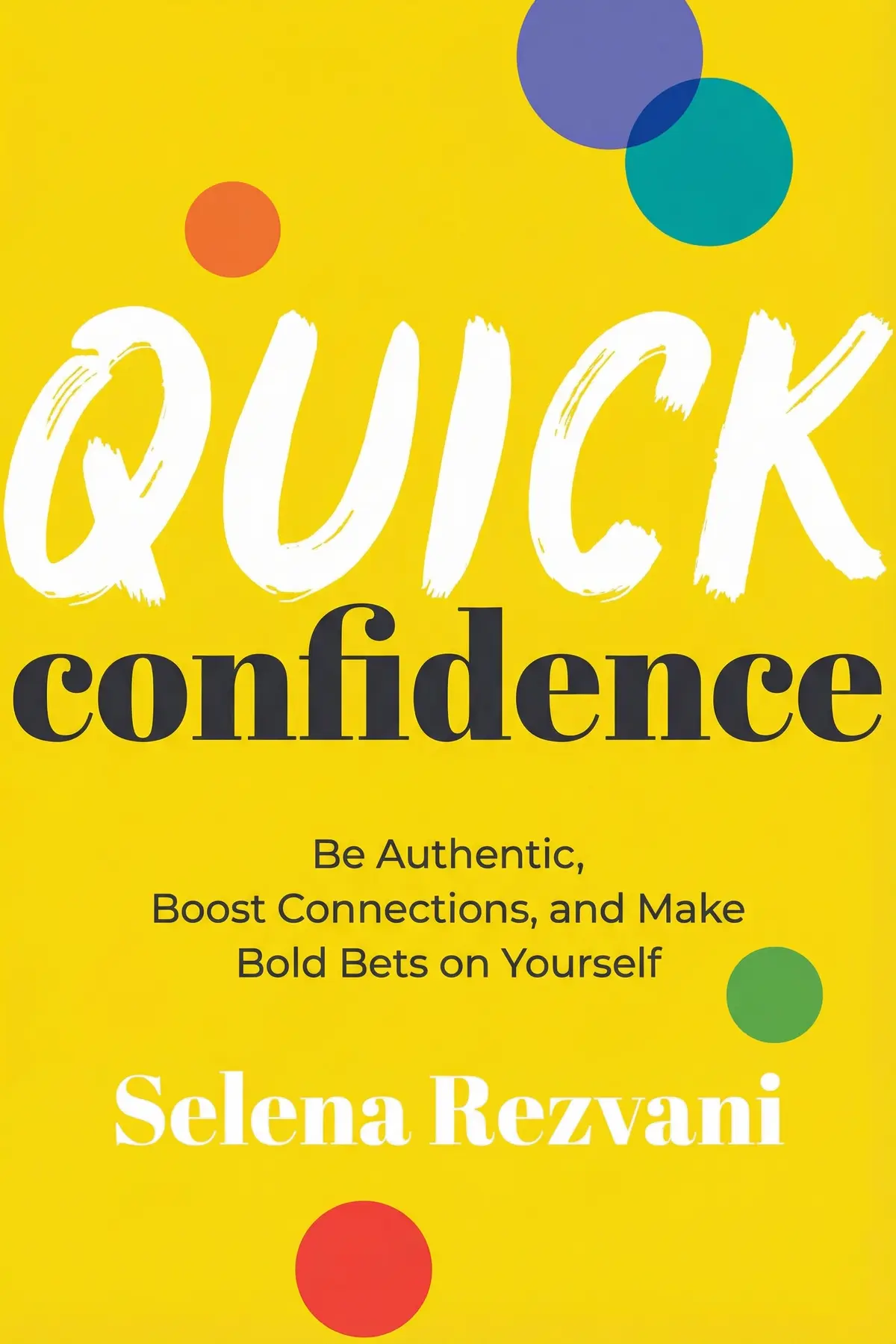
Table of Content
1. Introduction
1 min 00 sec
If you walk into meetings rehearsing what could go wrong, or say yes to work you have no time for, the fix may lie in your habits rather than your character. In Quick Confidence, leadership speaker and journalist Selena Rezvani argues that most people are not born self-assured. They build it one small, repeatable behavior at a time, starting with something as simple as walking up to a stranger first, the way a friendly dog does.
Rezvani’s book grew from short everyday tips she shared online, and it keeps that practical spirit. Her case is that confidence comes from habits in a handful of places: how you greet people, how you guard your time, how you calm your own body and mind, and how you keep going when work gets messy. Each idea that follows is one such habit. By the end you will have a way to greet a room, refuse a request, steady a racing heart and handle a sour colleague, all with tools you can try before the week is out.
2. Win the first minute with the dog code
1 min 18 sec
Most people at a networking event wait to be approached and hope they come across well. Rezvani’s model for a better first impression comes from an unlikely teacher, and it starts by dropping the effort to impress.
3. Help others belong and you stand taller
1 min 25 sec
Feeling at ease in a group seems like something that happens to you. Rezvani argues it often works the other way around, and the person who gains most may be the one who makes room for others.
4. Speak up to your boss with less fear
1 min 29 sec
Feedback from a manager can feel like a verdict you simply have to accept. Rezvani suggests a few changes in timing and preparation that shift who steers the conversation, plus one reminder that shrinks any intimidating room.
5. Say no without the long explanation
1 min 29 sec
Saying yes to everyone feels generous and safe, until the calendar fills and the energy runs out. Rezvani makes the case for a habit most helpful people avoid at all costs, and for keeping it brief.
6. Calm a racing mind with a clap and a breath
1 min 31 sec
A comment from a meeting replays at midnight, and each replay gets worse. Rezvani offers two techniques that take under a minute, need no equipment and work by pulling you out of your head and into your body.
7. Keep your balance among difficult coworkers
1 min 36 sec
Some colleagues and leaders cannot be avoided, and some workplaces wear everyone down. Rezvani suggests a desk object, a notebook and a head-to-toe exercise for staying steady, plus the habits that quietly keep a bad culture alive.
8. Turn setbacks and small promises into momentum
1 min 35 sec
A failed project can make you doubt everything you do well. Rezvani shows how to recover from it, how to keep goals from collapsing under their own weight, and why helping someone else may raise your self-belief most of all.
9. Conclusion
1 min 08 sec
Rezvani never asks anyone to become a different person. Her bet is that confidence collects in small, everyday habits, and that building them takes practice and perseverance. A wagging tail at the door, a no without a speech, a square traced with the breath, a rock in the hand: each is modest on its own, and each makes the next hard moment a little lighter.
Under all of it runs one reassuring fact she keeps returning to. Everyone is human and a bit awkward, your boss included, so your own imperfections are no reason to stay quiet.
A good place to begin is the moment you dread most this week. If it is a meeting with someone new, walk over first and turn toward them. If it is a request you cannot take on, answer in one sentence and let the silence sit. If it is a goal that keeps slipping, write one small step on a note you can see and tell a friend about it.
Keep the promise you make to yourself, and confidence has something solid to grow from.
About this book
What is this book about?
Many capable people lose their nerve in ordinary moments: meeting someone new, facing a boss, turning down extra work or sitting through a tense meeting. Selena Rezvani argues that most of us are not born confident. We build confidence through habits that slowly change how we think and how we deal with others. Her book grew out of short, everyday tips, and it stays practical. She offers the dog code for first impressions, regular one-on-one meetings to stand your ground with a manager, and permission to disappoint people so you stop overcommitting. For anxious moments there are the stop-clap, box breathing, a desk touchstone, progressive muscle relaxation and free writing. She also covers how to avoid feeding a toxic workplace, how to treat failure as learning and how to keep the promises you make to yourself. Readers get a set of small tools they can try in a single week, mostly aimed at work but useful almost anywhere, and a steady reminder that everyone in the room is human and a little awkward too.
Book Information
Who it's for
Early-career professionals
Early-career professionals who freeze when meeting new people or speaking to their boss.
Saying yes to everything
People-pleasers who say yes to everything and feel close to burnout.
Stuck with difficult coworkers
Employees stuck with difficult coworkers who want quick ways to stay calm and focused at their desk.
About the Author
Selena Rezvani
Selena Rezvani is a leadership speaker, author and journalist. Quick Confidence grew out of a popular LinkedIn newsletter in which she shared short, everyday confidence tips. She has trained leaders at organizations including The World Bank, Microsoft and Pfizer and speaks to thousands of professionals each year. Fast Company named her a Top Content Creator in 2021. She also wrote Pushback and The Next Generation of Women Leaders, and holds a BS, a Master of Social Work and an MBA from New York University and Johns Hopkins University.
Ratings & Reviews
Ratings at a glance

What people think
Listeners find the book perceptive and useful, with one listener noting it is filled with vital advice. Furthermore, the work offers excellent direction for building self-assurance; one listener mentions it assists in discovering the bravery to perform at their peak. Listeners also value the book's pacing, with one review emphasizing its ability to connect with the audience via applicable anecdotes. They also commend its clear style, accessibility, and enjoyable tone.
Top reviews
Milk
As someone who identifies as a chronic overthinker, I found Rezvani's insights on the physical cues of stress to be remarkably eye-opening. The book argues that we often ignore what our bodies are telling us, which only makes the spiral of self-doubt worse. Truth is, the concept of 'just enoughness' changed my perspective on rest—the idea that you don't have to earn your downtime is revolutionary in our hustle-obsessed culture. I loved the practical advice on how to stop over-explaining your 'no.' It feels uncomfortable at first, but sitting with that awkward silence is how you actually protect your time. The writing is snappy and devoid of the usual corporate fluff. It’s a fast read but packed with enough data to make the strategies feel grounded. If you're tired of 'girl boss' platitudes and want actual tactics to feel more secure in your skin, this is the one.
Show moreSayan
Picked this up specifically for the salary negotiation tips and wow, the University of Idaho study mentioned really blew my mind. I hadn't realized that asking for an 'implausibly high' number could actually lead to a better offer than being modest. Rezvani encourages you to find the highest number you can say without laughing out loud, which is such a visceral way to gauge your own bravery. Look, I’ve always been the person to wait until I felt 100% ready before asking for anything, but this book pushed me to 'do it afraid.' Security is an illusion anyway, right? The chapter on defying time pressure was also huge for me. Learning that I don't have to agree to a deadline just because someone else threw it at me was incredibly liberating. This isn't just theory; it’s a toolkit for making bold bets on yourself.
Show moreChon
Wow. I didn't expect a book titled Quick Confidence to hit me so hard on an emotional level. The quote about how 'if your compassion doesn't include yourself, it's incomplete' really stuck with me throughout the whole read. We are so often our own worst critics, especially when we fall into the trap of guilt-motivated work. Rezvani’s approach to breaking the cycle of burning out and then feeling bad about it is so much more relatable than the usual 'just work harder' advice. I particularly liked the 'exercise silence' tip—counting to seven after making a request in a negotiation is terrifying, but it works. It’s about owning the room without having to fill every second with noise. This book is a beautiful reminder that we are already enough. It’s empowering, authentic, and genuinely transformative for anyone feeling stuck.
Show moreBae
After hearing Selena on a podcast, I knew I needed the full book, and it didn't disappoint. The way she handles invasive questions is genius—asking 'What makes you ask that?' or simply stating you aren't comfortable answering is so much better than awkward laughing. I've always struggled with 'time pressure' during sales calls, so the reminder that I can delay an answer on an 'exploding offer' was a huge relief. You don't have to agree to their timeline! The writing style is very engaging and conversational, making it feel like you're getting advice from a very smart friend. I also loved the specific advice on 'making an entrance' and projecting that you belong in the room before you even speak. This book isn't just about feeling better; it's about acting differently to get better results.
Show moreKung
Gotta say, I've read a lot of self-help, but this one actually gave me scripts I can use. Avoiding phrases like 'I hope that's okay' and replacing them with 'Thanks for considering' has made a noticeable difference in how my emails are received. I also really appreciated the section on compartmentalizing failure. Rezvani points out that victims often feel like failure in one area means failure in life overall, and learning to box that off is crucial for resilience. The book is fun, fast-paced, and doesn't take itself too seriously while still delivering high-value strategies. It’s helped me find the courage to do my best work without the constant weight of imposter syndrome dragging me down. Truly a must-read if you want to stop apologizing for your existence and start owning your expertise.
Show moreCameron
Ever wonder how to handle those awkward, slightly offensive comments at work without burning bridges? The section on 'calling people in' versus 'calling them out' is worth the price of the book alone. Instead of jumping to an accusation, Rezvani suggests asking, 'What was your intention when you said that?' It shifts the power dynamic instantly. I've already started using the 'What-So What-Now What' framework for when I'm put on the spot during meetings, and it helps me stay focused instead of rambling. Frankly, some of the advice on avoiding apologies like 'sorry to bother you' felt a bit repetitive if you've read other career guides, but the delivery here is much more actionable. The layout is great for flipping through when you need a quick boost before a big presentation. It's a solid, practical manual for anyone struggling to take up space in professional environments.
Show moreOksana
Finally got around to reading this after seeing it on the WSJ bestseller list, and the LARA method is definitely something I'll be implementing with my team immediately. Listen, Affirm, Respond, and Ask Questions—it sounds simple, but it’s a game-changer for conflict resolution. The author does a great job of explaining how to compartmentalize failure so that a mistake in one area doesn't bleed into your entire self-image. My only minor gripe is that a few of the anecdotes felt a little too 'perfect,' but the science-backed data usually balances it out. The pacing is excellent; you can easily finish this in an afternoon. It’s rare to find a professional development book that feels this personal and empathetic. Rezvani manages to be an expert without being condescending, which makes the advice much easier to swallow.
Show moreUbolwan
The chapter on salary and professional presence really changed my mindset. I’ve always been someone who over-explains whenever I have to say no, feeling this deep-seated need to justify my boundaries. Rezvani explains that you don't owe anyone an over-explanation, and that simple shift has already saved me so much mental energy. To be fair, I struggled a bit with the 'count to seven' rule during my last meeting because it felt like an eternity, but I could see the other person reconsidering their stance. It’s all about rebalancing power. The book is very well-structured with these little experiments you can try out in the real world. I appreciate that it's grounded in research rather than just 'vibe-based' coaching. A few parts felt a bit rushed, but overall, it’s a very helpful guide for the modern workplace.
Show moreLuke
Selena Rezvani has written a remarkably accessible guide that manages to avoid the dense jargon typical of the genre. I loved the user-friendly structure; you can tell a lot of thought went into the font and layout to make it readable. The book focuses on nine common obstacles, and the way she navigates through them is both systematic and encouraging. Personally, I found the section on 'just enoughness' to be the most impactful, especially the reminder that rest is a right, not a reward. My only minor critique is that some of the 'bravery' exercises felt a bit daunting for someone with high anxiety. However, the overall message of doing things afraid is probably exactly what I need to hear. It’s a great resource for anyone looking to polish their professional presentation and build more authentic connections.
Show moreYanin
Not what I expected, to be honest. While the writing is clear and the tone is pleasant enough, much of the advice felt like things I’ve seen on LinkedIn infographics a hundred times before. Phrases like 'don't apologize for things you haven't done wrong' are common sense at this point. I was hoping for deeper psychological dives into the root of confidence, but this is very much a 'quick tips' kind of book. For a total beginner or someone early in their career, it might be a five-star read, but for a mid-career professional, it felt a bit elementary. The salary negotiation section was the highlight, but even that felt brief. I also found the 'calling people in' questions to be a bit robotic for real-life conversation. It’s not a bad book, just didn’t offer much new for me personally.
Show moreQuestions about this book
What is the main idea of Quick Confidence by Selena Rezvani?
Rezvani argues that most people are not born confident. They build confidence through small habits that change their mindset and how they treat others. Her book gathers these habits into practical tools: the dog code for warm first impressions, regular one-on-ones with your boss, short refusals instead of long explanations, calming techniques like box breathing, and clear goals broken into small steps.
What is the dog code in Quick Confidence?
The dog code is Rezvani’s model for first impressions. A friendly dog walks straight up to people without waiting, and almost everyone smiles. She suggests doing the same: be the one who starts the contact and make connection your priority. Pair it with open body language, such as turning toward the person, standing to greet them and matching their walking pace.
How do you do box breathing as described by Rezvani?
Breathe out for four seconds, then wait four seconds before breathing in. Breathe in slowly for four seconds, hold for four, then breathe out for four to start again. Picture each stage as one side of a square. Rezvani says the slower rhythm lowers your heart rate and brings your focus back to the present, which helps you think clearly and feel less anxious.
How does Quick Confidence help with people-pleasing?
Rezvani sees overdoing as a habit that leads toward burnout and a reputation for never saying no. Her advice is to get comfortable disappointing people, since nobody can always get what they want. When you refuse, keep it short and resist explaining at length, since over-explaining and overthinking often go together. Noticing the pattern in yourself is already the first step.
Who should read Quick Confidence?
It suits professionals who lose their nerve in everyday work moments: meeting new people, giving or asking for feedback, turning down requests or sitting through tense meetings. It also helps people stuck with difficult coworkers, since it offers calming tools like a desk touchstone, progressive muscle relaxation and free writing, plus advice on avoiding gossip and complaining.
Featured in
Readers also enjoyed

A Guide to the Good Life: The Ancient Art of Stoic Joy
William B. Irvine


A High-Performing Mind: Strengthen Your Mind and Live Your Best Life
Andrew D. Thompson


Abundance: The Inner Path to Wealth
Deepak Chopra

60 Seconds & You’re Hired!
Robin Ryan


AUDIO SUMMARY AVAILABLE
Listen to Quick Confidence in 15 minutes
Get the key ideas from Quick Confidence by Selena Rezvani, plus 5,000+ more nonfiction titles.
- 5,000+ titles
- Listen as much as you want
- 7-day free trial
- Cancel anytime









