
13 min 58 sec
Available in: English
 ไทย
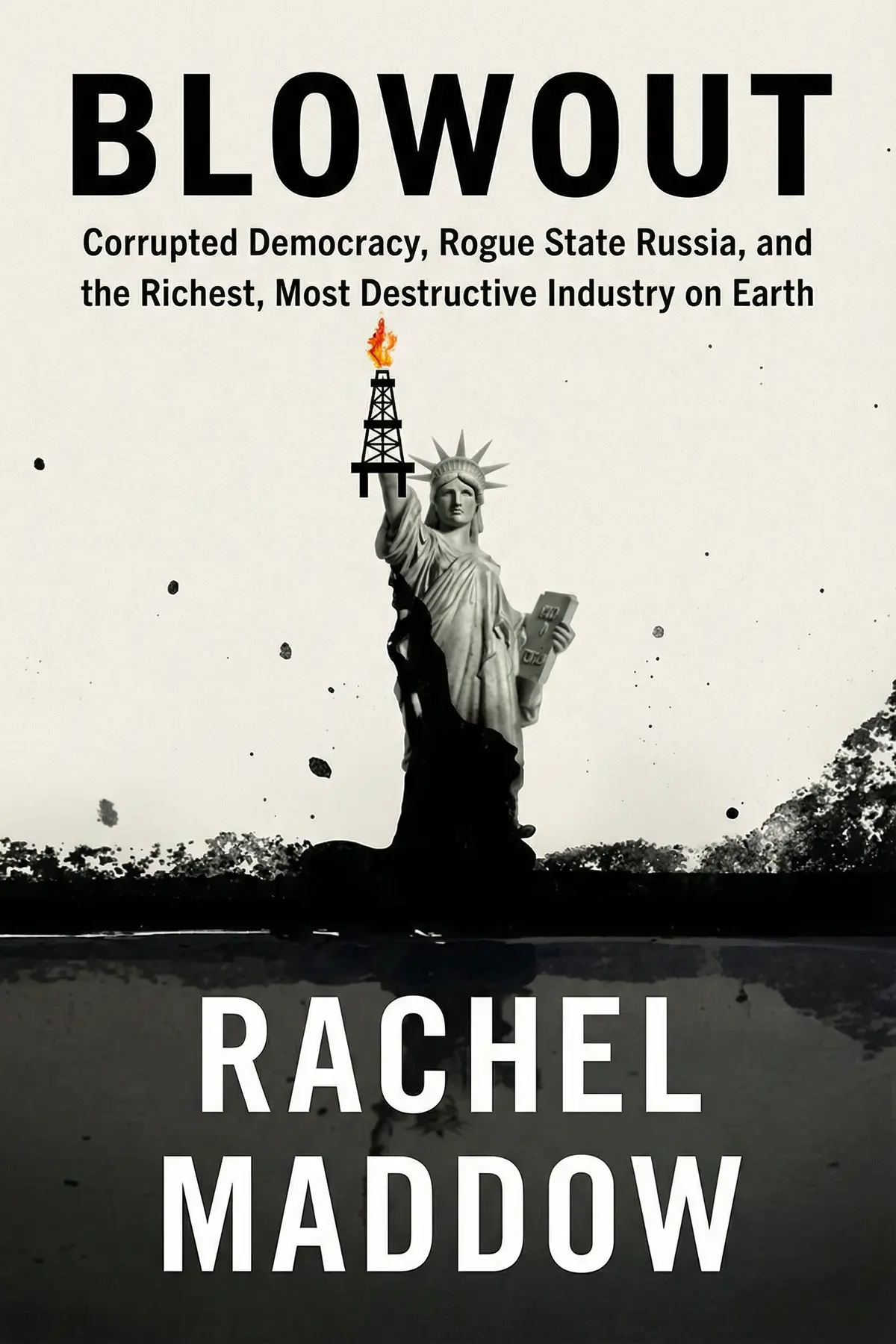
EnglishไทยPrequel: An American Fight Against Fascism
Rachel Maddow tells how a Nazi-funded movement tried to end American democracy in the 1930s and 1940s, and how ordinary citizens exposed it. She also explains what that earlier fight teaches anyone worried about democracy today.
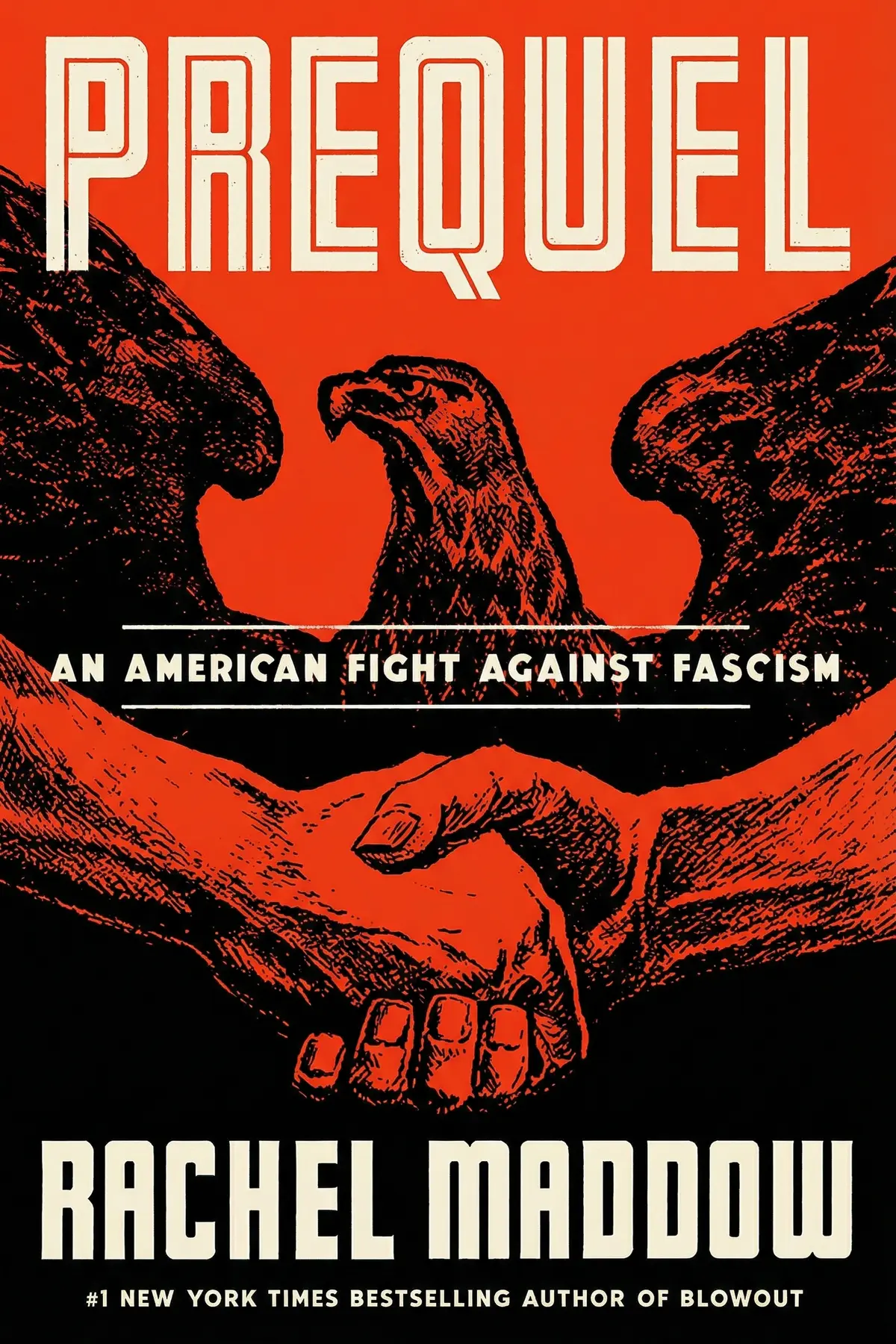
Table of Content
1. Introduction
1 min 02 sec
Worrying about democracy is easy. Knowing what one person can actually do about it is much harder. In Prequel, broadcaster and political scientist Rachel Maddow shows that America already faced a homegrown fascist movement in the 1930s. It was financed from Berlin and backed by members of Congress, and private citizens did much of the work of defeating it.
Maddow reads today’s attacks on elections and civil rights as the rise of a new fascist movement, and she treats the earlier fight as the best guide available. Her argument is that the plot against American democracy came much closer to working than most people remember. It failed because ordinary people watched, gathered proof and kept going when their government looked away.
Along the way you meet a German poet who left state secrets on a train, a flood of millions of pamphlets, armed militias with patriotic names and a Los Angeles lawyer who turned his friends into spies. Each offers a sharper way to read the news.
2. Spot the wish that lets voters end democracy
1 min 50 sec
A French philosopher saw a hidden weakness in American freedom almost two centuries ago. Maddow believes events at the Capitol made his warning urgent again, and she argues the country has faced this enemy once before.
3. A lost briefcase shows how foreign meddling works
2 min 16 sec
He interviewed Henry Ford and Sigmund Freud and claimed royal blood. Then one careless moment in Manhattan revealed what he really was, and showed how a foreign government was trying to steer American opinion.
4. Follow the money behind a propaganda flood
2 min 22 sec
Members of Congress mailed pamphlets to voters under their own names. The words inside came from somewhere else entirely, and a gap in American law made the whole arrangement perfectly possible.
5. See through extremism hiding behind familiar flags
2 min 02 sec
The first American Nazi rally looked foreign, with brown shirts and German voices. What followed looked far more familiar, and that familiarity helped a dangerous movement escape the attention of the people paid to watch for threats.
6. Gather the proof that officials refuse to hear
1 min 43 sec
A Los Angeles lawyer asked four friends and their wives to join extremist meetings in disguise. What they heard was alarming, yet the police chief had a very different idea of where the city’s danger lived.
7. Remember that defeating fascism was never guaranteed
1 min 37 sec
The plotters lost, and so history mostly forgot them. Maddow sees a risk in that tidy ending, and the evidence that finally brought these networks down tells a story about who really protected democracy.
8. Conclusion
1 min 06 sec
Prequel is finally a story about who keeps a democracy alive. Tocqueville saw that free people also carry a wish to be ruled, and the 1930s showed what that wish can attract: a foreign government with deep pockets, members of Congress willing to sign its words, militias with patriotic names and stolen weapons. Maddow’s point is that none of it was bound to fail. It failed because enough people refused to be spectators.
That gives the book a use beyond history. When a message arrives with heavy funding and a trusted name attached, it is worth asking who wrote it and who paid. When a group hides hard intentions behind a familiar cause, judge it by what its members actually plan. And when you see something dangerous that officials wave away, Leon Lewis offers the patient path: write it down carefully, find a few people you trust and keep the record ready.
Lewis and his veteran friends did not win the war. They made sure that when the government finally looked, the evidence was already there.
About this book
What is this book about?
Many people worry that democracy is fragile, but few know what one citizen can actually do about it. In Prequel, Rachel Maddow argues that the United States has met this danger before. In the 1930s, a homegrown fascist movement, financed in large part by Hitler's Germany, set out to replace American democracy with a dictatorship. Maddow follows the people behind that effort. George Sylvester Viereck was a German-born poet who became a paid propagandist for Berlin. At least 24 members of Congress mailed out pamphlets written by Nazi officials, and armed militias with patriotic names stole weapons and planned attacks. She also follows the people who stood in the way, above all Leon Lewis, a Los Angeles lawyer who sent volunteer spies into fascist groups when the police refused to listen. Readers get a little-known chapter of history and a clear reason it was forgotten: the plotters lost. Maddow insists their defeat was never certain. The book offers practical ways of seeing the present, from asking who funds a message to noticing when extremists hide behind a familiar cause.
Book Information
Who it's for
Uneasy about democracy
Readers uneasy about the state of democracy who want a historical precedent rather than headlines.
History buffs
History lovers curious about the forgotten Nazi networks inside prewar America.
Wondering how to act
Citizens and activists wondering what ordinary people can do when officials ignore a threat.
About the Author
Rachel Maddow
Rachel Maddow hosts The Rachel Maddow Show on MS NOW, formerly MSNBC, and is also the network's special event co-anchor. From 2005 to 2010 she hosted a radio show of the same name on Air America Radio. Her broadcasting has won several Emmy Awards. She studied public policy at Stanford University and earned a doctorate in political science at the University of Oxford. She is a number one New York Times bestselling author whose books include Drift, Blowout and Bag Man, and the Blowout audiobook won her a Grammy Award in 2021.
Ratings & Reviews
Ratings at a glance
What people think
Listeners find the book to be an absorbing and extensively documented account, offering skillfully written historical insights into the Second World War. They prize its narrative quality and educational benefits, mentioning how it assists in applying historical lessons to modern political landscapes. Reactions are divided concerning the intensity of the book, with several listeners calling the content frightening.
Top reviews
Kung
Wow, I am actually kind of shaken by how much I didn't know about our own country's past. We like to think of the WWII era as a time of total American unity against fascism, but Maddow shows us a much darker reality. The influence of figures like Father Coughlin and the sheer reach of pro-Hitler sentiment in the 1940s is frightening to contemplate. She paints a picture of a nation teetering on the edge of a very different path. The research is deeply impressive, yet the storytelling is so engaging that it never feels like a dry academic text. It’s an essential read for anyone trying to understand the current political environment through the lens of history. Truly a sobering and powerful work.
Show moreYui
After hearing the 'Ultra' podcast, I wasn't sure if the book would offer enough new material to justify the purchase, but I was wrong. The depth of the archival work here is staggering. Maddow connects the dots between the early 'America First' isolationism and the coordinated effort by German agents to undermine our democracy from within. Seeing how the Nazis used Jim Crow laws as a blueprint for their own racist policies was a gut-punch. It's a heavy subject, but Maddow’s tone remains accessible and even occasionally witty despite the grim content. This is history that feels like a thriller. It’s educational, disturbing, and ultimately vital. I haven't been this gripped by a non-fiction book in years.
Show moreKofi
Why didn't we learn this in school? The story of how Philip Johnson and Henry Ford were involved in these movements is absolutely wild to me. Maddow is one of our leading public intellectuals for a reason; she knows how to construct a narrative that keeps you hooked while delivering a massive amount of information. The book is scary because it shows that the 'it can't happen here' mentality is exactly what the fascists count on. It’s a fast read but one that requires some digestion because the implications are so massive. I appreciated the way she highlighted the private citizens who fought back when the government was too slow to act. This is a must-read for any history buff or concerned citizen.
Show moreAiden
Ever wonder how close the US came to choosing a different side in WWII? This book answers that question with a resounding 'too close.' Maddow documents the rise of fascist tendencies with a precision that is both impressive and terrifying. The section on Charles Lindbergh was particularly eye-opening for me, as I only knew him as the 'lone eagle' aviator, not as a man promoting 'race purity.' The book is a fast read despite the heavy subject matter, and the audio version is even better because you get Maddow’s signature delivery. It’s an invaluable historical lesson that feels like it was written for this exact moment in time. Highly recommended for anyone who values democracy and wants to see the patterns of the past clearly.
Show moreIngrid
A fast and troubling read that bridges the gap between the forgotten past and our chaotic present. Maddow proves she is a master storyteller by weaving together the lives of various Nazi sympathizers into a cohesive warning for today. I loved the focus on the unsung heroes—the journalists and investigators who risked everything to expose the plot. The book reminds us that while the threats are real, there have always been people willing to fight back. It’s a captivating work of history that I think everyone should read before the next election cycle. It's frightening, yes, but knowledge is the best defense against the return of these ideologies. Five stars for the research and the impeccable delivery.
Show moreEye
This wasn't just a history lesson; it felt like a warning bell. Rachel Maddow has a gift for taking dusty, forgotten archives and making them feel incredibly immediate and urgent. I was shocked by how much of this history was left out of my high school textbooks. The level of Nazi-funded propaganda flowing through the U.S. mail—subsidized by our own taxpayers—is a detail that will stick with me. While it’s based on her podcast, the book goes much deeper into the 'Ultra' stories. My only gripe is that it can feel a bit repetitive when she’s listing every single minor operative, but the narrative drive is strong enough to keep you turning pages. It is a compellingly readable look at how fragile our system was then, and likely still is.
Show moreChan
Looking at the 1930s and 40s through this lens makes you realize how thin the ice of democracy really is. Maddow focuses heavily on the 'Sedition Trial' and the various political players like Huey Long who flirted with authoritarianism. Truth is, I found the chapters on the franking system scandals—where Congressmen were essentially helping Nazis distribute hate mail—to be the most infuriating part of the book. It’s well-written and flows at a great pace, though some might find the lack of direct comparison to today a bit frustrating. She lets the history speak for itself, and frankly, the parallels are loud enough on their own. It’s a very smart piece of journalism that avoids being overly partisan by sticking strictly to the historical record.
Show moreSudarat
The chapter on the 1940 Republican National Convention was the highlight for me. I had no idea that Nazi agents were actively trying to write party platforms in the United States. Maddow’s writing style is punchy and direct, and she doesn't pull any punches when describing the cruelty inherent in these movements. It’s not a comfortable book to read, but it’s an important one. Personally, I would have liked a bit more focus on the aftermath of the sedition trial, but I understand she wanted to keep the focus on the lead-up. It's an insightful look at the 'prequel' to our current era. The book is definitely startling, but it also gives you a sense of hope that we can face these things down again.
Show moreWoramet
Not what I expected from a cable news host, in the best way possible. This isn't a collection of monologues; it’s a serious, scholarly-adjacent piece of history that feels like it belongs alongside the works of Howard Zinn. She does a great job of showing how the Nazi regime exploited 'racial controversies' and 'petty jealousies' to divide Americans. The ironies of history are everywhere in these pages. While the book is deeply researched, it remains fast-paced and keeps the reader engaged with a 'whodunnit' feel regarding the various spies and traitors. It’s a troubling read, especially considering how many of the villains were sitting members of Congress. Definitely worth your time if you want to understand the roots of American extremism.
Show moreRania
To be fair, the sheer volume of names and obscure political operatives can be a lot to juggle. I think the book is excellently researched, but at times I found myself getting lost in the sea of secondary characters and their various front organizations. It’s a bit of a dense read in the middle sections, which might turn off some casual readers who were expecting something more like her TV show commentary. That said, the core message is vital. The way she describes the media-bombing of the US with leaflets and conspiracy theories is fascinating. It’s a solid 3.5 stars for me, rounded down because the pacing felt a little uneven in parts. Still, it's very educational if you have the patience for it.
Show moreQuestions about this book
What is Prequel by Rachel Maddow about?
Prequel tells the story of a 1930s and early 1940s effort to bring fascism to the United States. Germany funded propaganda through agents like George Sylvester Viereck, members of Congress mailed pamphlets written in Berlin, and armed militias planned attacks. Maddow argues this plot came closer to success than most people remember and was defeated largely by ordinary citizens who exposed it.
Who was George Sylvester Viereck?
Viereck was a German-born poet, novelist and journalist who came to America at twelve and moved easily in high society. In 1915 he left a briefcase of secret German plans on a Manhattan train, exposing himself as a paid agent. Later he admired Hitler and channeled a large share of Germany’s propaganda money in the United States, working with members of Congress to spread isolationist pamphlets.
Who was Leon Lewis in Prequel?
Leon Lewis was a Jewish lawyer in Los Angeles and a founder of the Anti-Defamation League. After a pro-Hitler rally in 1933, he recruited four fellow World War One veterans and their wives to infiltrate fascist groups. They uncovered plans to seize armories and a plot to kill 24 prominent Jewish Americans. Police ignored him, but his evidence later helped authorities dismantle Nazi networks.
Why was the American fascist plot of the 1930s forgotten?
Maddow’s short answer is that it failed. Once the United States entered the war in 1941, the plotters lost, and many ended in disgrace or prison. She warns that this ending makes their defeat look inevitable when it was not. The tide turned because citizens spent years gathering evidence while intelligence agencies focused mainly on Communists.
What lessons does Prequel offer for today?
Maddow sees the present as the rise of a new fascist movement and offers the 1930s as a guide. The book suggests asking who funds and writes political messages, judging groups by their plans rather than their patriotic names, and documenting threats patiently even when authorities refuse to act. Above all, she argues, democracy depends on many citizens willing to stand up.
Readers also enjoyed



A Promised Land
Barack Obama


A River in Darkness: One Man’s Escape from North Korea
Masaji Ishikawa

A Splendid Exchange: How Trade Shaped the World
William J. Bernstein

A Theory of Justice
John Rawls

A Spy Among Friends: Philby and the Great Betrayal
Ben Macintyre


AUDIO SUMMARY AVAILABLE
Listen to Prequel in 15 minutes
Get the key ideas from Prequel by Rachel Maddow, plus 5,000+ more nonfiction titles.
- 5,000+ titles
- Listen as much as you want
- 7-day free trial
- Cancel anytime









